


You've seen the breathtaking trailers, read the hype about the metaverse, and you're finally ready to take the plunge. But a simple search for "what's the best VR headset" instantly reveals a dizzying array of options, each with its own specs, features, and price tag. The truth is, the quest for the single "best" headset is a mirage. The real question is, what's the best VR headset for you? Your perfect portal to virtual reality isn't defined by a universal ranking, but by a personal equation of your budget, your hardware, your desired experiences, and your comfort. This definitive guide will cut through the marketing jargon and equip you with the knowledge to solve that equation and find your ideal match.
Beyond the Hype: Defining Your VR "Why"
Before we dissect pixels and processors, the most critical step is to look inward. Your journey starts not with a spec sheet, but with intention. How do you envision yourself using this technology?
The PC VR Power User
Are you a hardcore gamer chasing the most graphically intense, immersive experiences available? Do you demand the highest fidelity textures, the most complex physics, and the absolute lowest latency? If your goal is to play the latest AAA VR titles and you already own, or are willing to invest in, a powerful gaming computer, then your path leads toward a PC-connected headset. This route offers unparalleled power and a vast library of mature, deep games, but it comes with the tethered constraint of a cable and the prerequisite of a capable PC.
The Untethered Explorer
Is your dream to have a large, clear play space where you can spin, duck, and dive without ever worrying about yanking a cable? Do you value convenience, portability, and the ability to jump into VR anywhere, whether in your living room or a friend's basement? If so, a standalone headset is your calling. These all-in-one devices have the computer built directly into the headset, offering incredible freedom and ease of use. The trade-off has traditionally been in graphical fidelity, but the gap is closing rapidly with each new generation of mobile processors.
The Hybrid Adventurer
Why choose? A growing category of headsets offers the best of both worlds: the ability to operate as a powerful, untethered standalone device for convenience and simpler games, but also the option to connect to a gaming PC when you want to access its vast library and raw horsepower. This flexibility is incredibly appealing but often comes at a premium price point.
The Productivity and Social Butterfly
Maybe your primary interest isn't gaming at all. Perhaps you're fascinated by the potential of virtual meetings, collaborative 3D design, massive virtual monitors for coding, or immersive social spaces. For you, resolution and display clarity for reading text become paramount, and comfort for long sessions is non-negotiable. Your needs point toward high-resolution headsets, often with a stronger emphasis on passthrough AR capabilities.
Deconstructing the Specs: What Actually Matters?
Once you know your "why," you can intelligently parse the technical specifications. Here’s what to look for and why it’s important.
Resolution and Display Clarity: The Window to the Virtual World
This is often the first spec people look at, and for good reason. Measured in pixels per eye (e.g., 1832 x 1920), a higher resolution generally means a sharper, clearer image with less noticeable "screen door effect" (the fine mesh-like lines between pixels). However, resolution is only part of the story. The type of display panel (LCD vs. OLED) and the lens quality are equally crucial.
- LCD vs. OLED: LCD panels are more common and offer higher sub-pixel density, reducing screen door effect. They provide bright, vibrant colors but can struggle with true blacks, leading to darker scenes looking more grayish. OLED panels offer perfect blacks and incredibly rich contrast, making them ideal for space sims or horror games, but they can sometimes have a slightly softer image and a higher risk of "mura" (visual noise).
- Lenses: Cheap Fresnel lenses can cause god rays and glare in high-contrast scenes. The latest generation of pancake lenses is a game-changer. They are thinner, lighter, and provide a much larger "sweet spot" of clarity with drastically reduced glare, making the entire experience more comfortable and visually consistent.
Field of View (FoV): Expanding Your Horizon
FoV is the extent of the observable world seen at any given moment, measured diagonally in degrees. A typical human FoV is roughly 210 degrees. Most consumer headsets range from 90 to 120 degrees. A higher FoV is more immersive, making you feel more "inside" the virtual world rather than looking through a pair of binoculars. However, achieving a wide FoV without distortion, requiring more processing power, and adding weight and cost are significant engineering challenges.
Refresh Rate: The Key to Smoothness and Comfort
Measured in Hertz (Hz), the refresh rate is how many times per second the image on the display is updated. A higher refresh rate (90Hz, 120Hz, and now up to 144Hz in some headsets) results in smoother motion, which is critical for fast-paced games and overall comfort. A low refresh rate can lead to judder and is a primary contributor to VR-induced motion sickness for many users. For a comfortable experience, 90Hz is considered the baseline, with 120Hz being the new gold standard for high-end devices.
Tracking: How the Headset Sees You and Your World
This is the magic that translates your real-world movements into the virtual one. There are two primary methods:
- Inside-Out Tracking: Cameras on the headset itself look outward to track the environment and the controllers. This is the standard for modern standalone and hybrid headsets. It requires no external sensors, making setup a breeze. The technology has become exceptionally accurate and robust, though it can struggle if the controllers are held very close to the headset or in areas with very poor lighting or featureless walls.
- Outside-In Tracking: External sensors or base stations placed around your room track the position of the headset and controllers. This method is renowned for its millimetre-accurate, rock-solid tracking, especially crucial for competitive esports or full-body tracking. The downside is the more complex setup and being confined to the area covered by the sensors.
Passthrough AR: Blending the Real and Virtual
Almost all modern headsets feature cameras that can show you a black-and-white or color view of your real-world surroundings. This is essential for safety, allowing you to see your play space boundaries without removing the headset. However, advanced color passthrough with high resolution is the foundation for Mixed Reality (MR). This technology allows digital objects to be anchored convincingly in your real room, enabling experiences like virtual screens on your walls, interactive learning with 3D models on your table, or games where enemy robots burst through your actual walls.
Audio: The Other Half of Immersion
3D spatial audio is not a luxury in VR; it's a necessity. Hearing a sound cue from exactly the direction it originates is critical for gameplay and presence. Some headsets have excellent built-in directional speakers that don't cover your ears, keeping you aware of your surroundings. Others offer high-quality built-in headphones or a jack for your own. Poor audio can shatter immersion as quickly as a blurry display.
Comfort and Ergonomics: The Long-Haul Factor
This is arguably the most overlooked yet vital spec. A headset can have the most amazing display in the world, but if it's a front-heavy, face-pinching, forehead-pressuring nightmare, you won't want to wear it for more than 20 minutes. Look for:
- Weight Distribution: A counter-weight at the back or a top strap can pull weight from your face onto your head.
- Facial Interface: The material that touches your face. Plush, breathable foam is preferable to cheap rubber. Many companies now offer optional VR covers for hygiene and comfort.
- IPD Adjustment: Interpupillary Distance is the distance between your pupils. A physical IPD adjustment (sliding the lenses) is vastly superior to a software-only solution for achieving a clear, comfortable image and avoiding eye strain.
The Content Conundrum: Where Will You Play?
The hardware is just a vessel; the software is the journey. The ecosystem you buy into determines the experiences you can access. The landscape is divided into a few major camps, each with its own exclusive titles and storefronts. Your choice of headset often locks you into one of these ecosystems, so it's vital to browse their digital stores to see if the games and apps you want are available there. A headset with no content you desire is a very expensive paperweight.
The Price of Presence: Budgeting for Your Reality
Your budget is the final, and for many, the most decisive variable. The VR market has stratified into clear tiers:
- Entry-Level / Standalone: This tier offers the most accessible, all-in-one experience. The price is all-inclusive, requiring no additional hardware. This is the best way for newcomers to experience VR with minimal friction.
- Enthusiast / Hybrid: This is the mid-to-high range, occupied by devices that often function as superb standalone units but can also connect to a PC. They feature the latest advancements like pancake lenses and high-resolution color passthrough. The headset itself is a significant investment, and if you use the PC-tethering feature, you must factor in the cost of the gaming PC itself.
- PC VR / Niche: This includes both older wired models and specialized, ultra-high-end headsets aimed primarily at professionals, sim racers, and flight enthusiasts. These often require not only a powerful PC but also the purchase of additional external tracking stations and specialized controllers, pushing the total cost into the upper echelons.
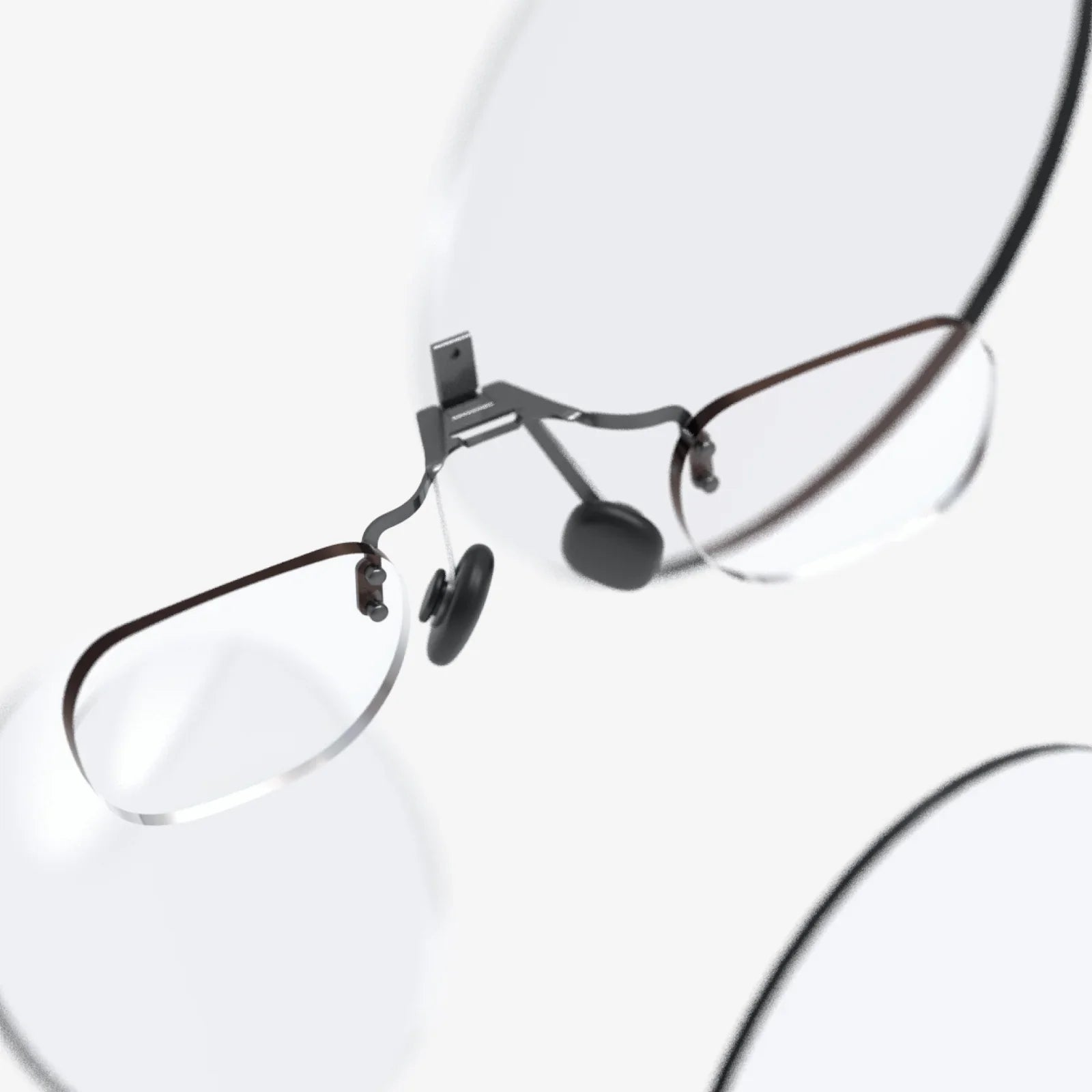
Remember to budget for the inevitable extras: a better head strap, additional face interfaces, prescription lens inserts if you wear glasses, and of course, the games and apps themselves, which can range from $10 to $60 or more.
The Future is Now, But It's Evolving Rapidly
The VR hardware landscape is not static. New announcements and iterations happen with staggering speed. While waiting for the "next big thing" can mean waiting forever, it's wise to be aware of the technological trajectory. Eye-tracking and foveated rendering (which dramatically boosts performance by rendering only the spot you're looking at in full detail) is a technology on the cusp of mainstream adoption. Similarly, advancements in haptic feedback for controllers and even vests are adding a crucial layer of tactile sensation. Buying into a platform with a strong track record of software support and iterative hardware updates can help future-proof your investment.
So, what's the best VR headset? The answer is uniquely yours. It's the one that aligns with your gaming PC's capabilities (or lack thereof), fits snugly within your budget, feels comfortable on your head for hours of exploration, and, most importantly, grants you access to the virtual worlds you're most excited to step into. Stop searching for a mythical number one. Instead, armed with this knowledge, you can now confidently find the headset that is number one for you—your perfect personal gateway to infinite realities.
Share:
Best Current VR Headset: A Deep Dive into the Pinnacle of Immersive Technology
What Is XR vs VR: Demystifying the Digital Realities Shaping Our Future