


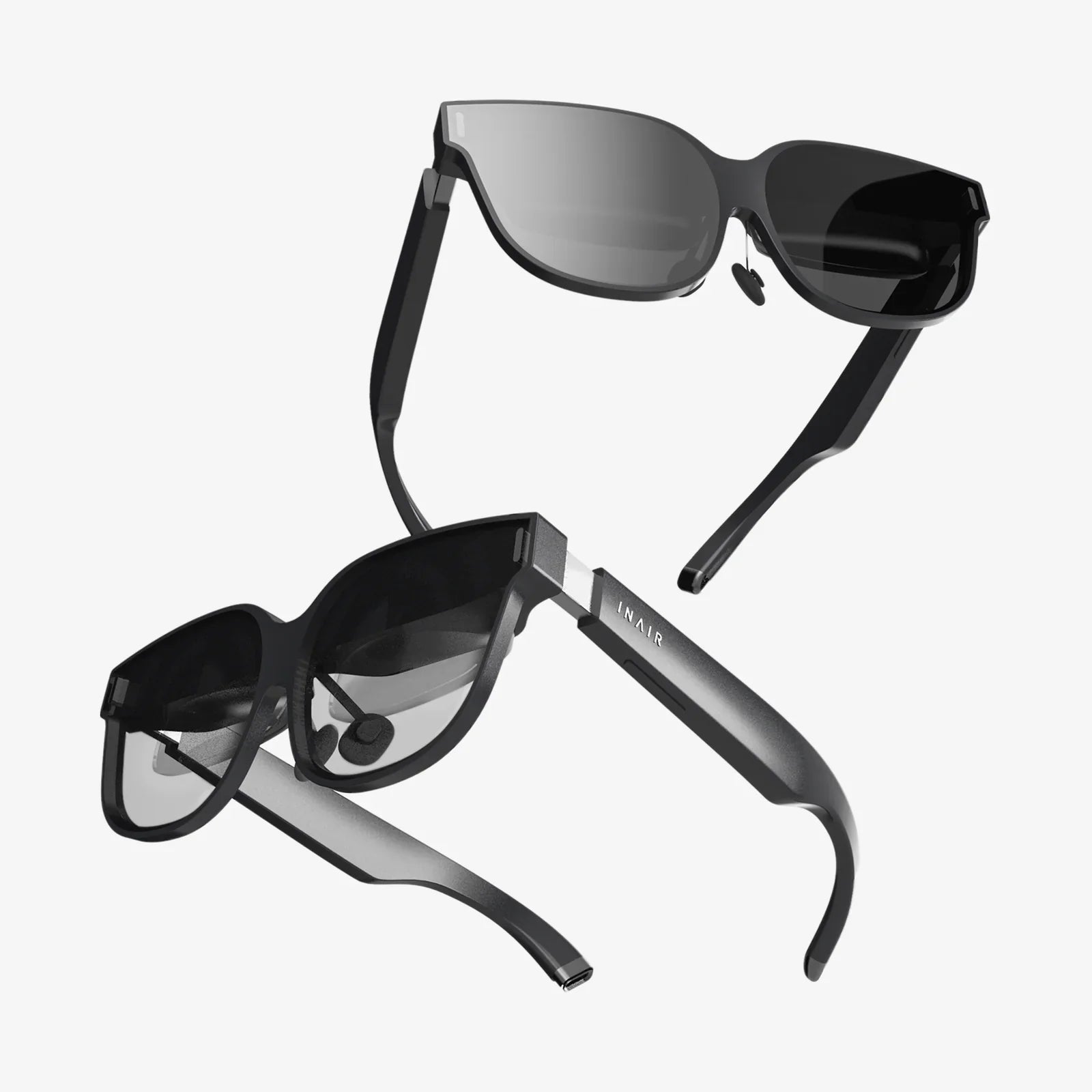
You’ve seen the hype, you’ve heard the buzzwords, and maybe you’ve even experienced the thrill yourself. The realms of 3D and Virtual Reality (VR) are often lumped together in conversations about the future of technology, entertainment, and even work. But here’s the truth bomb: they are not the same thing. Not even close. Confusing the two is like equating a spectacular, detailed painting of a mountain with actually strapping on your hiking boots and climbing it. One is a representation you admire; the other is an experience you inhabit. This fundamental distinction is the key to unlocking a proper understanding of these two powerful technologies. So, if you’ve ever asked, "What's the difference between 3D and Virtual Reality?" and received a fuzzy answer, prepare for ultimate clarity. We're about to dive deep into the core of spatial computing, separating the visual trickery from the truly transformative experiences.
The Foundation: Understanding 3D Technology
At its heart, 3D, or three-dimensional technology, is a method of representation. It’s a way of creating an image or an environment that has the illusion of depth on a two-dimensional surface. Our real world has three dimensions: width, height, and depth. 3D technology tricks our brains into perceiving that third dimension—depth—on a flat screen.
How Does 3D Work? The Magic of Stereoscopy
The primary mechanism behind most 3D visuals is stereoscopy, which mimics how human vision works. Our two eyes are spaced slightly apart, so each one sees a slightly different perspective of the same object. Our brain then merges these two two-dimensional images into a single, coherent three-dimensional picture with depth perception.
3D technology replicates this by presenting two distinct images, one intended for the left eye and one for the right. This can be achieved in several ways:
- Active Shutter Glasses: These glasses rapidly alternate blocking the left and right lenses in sync with a screen that alternates the left-eye and right-eye perspectives. This creates the illusion of a continuous 3D image.
- Polarized Glasses: Used in most modern cinemas, the screen projects two images with different light polarizations. The glasses have lenses that filter each polarization, ensuring each eye only sees the correct image.
- Autostereoscopy: This is the technology behind glasses-free 3D, like on the screens of some older handheld devices. It uses a special filter (a parallax barrier or lenticular lens) over the screen to direct different images to each eye based on the viewer's position.
The critical takeaway is that 3D is a visual effect. You are an observer looking at a window into a world that has depth. Your interaction is limited to watching. You can’t lean in to examine an object from a different angle; the perspective is fixed by the camera or artist that created the content.
The Experience: Defining Virtual Reality
If 3D is a window, Virtual Reality is a teleportation device. VR is an immersive, interactive simulation of a three-dimensional environment. It doesn’t just show you a world; it puts you inside it. VR is an experience built on the foundation of 3D but adds the critical components of immersion and interactivity.
The Pillars of a True VR Experience
For an experience to be considered true Virtual Reality, it typically requires several key technologies working in concert:
- A Head-Mounted Display (HMD): This is the VR headset. It contains a screen (or two, one for each eye) that displays the virtual world. It completely blocks out your physical surroundings, replacing them with the digital environment.
- Head Tracking: This is what makes VR feel real. Sensors in the headset (like gyroscopes, accelerometers, and external or inside-out cameras) track the rotation and translation of your head. When you turn your head left, the view in the headset pans left. When you lean forward, the world gets closer. This 6-degrees-of-freedom (6DoF) tracking is non-negotiable for presence.
- Motion Tracking: Beyond the head, VR often tracks the movement of your hands and body using controllers or cameras. This allows you to reach out, grab, throw, and manipulate objects within the virtual space.
- Stereoscopic 3D Vision: The HMD uses the same stereoscopic principles described above, presenting a unique image to each eye to create a powerful and convincing sense of depth and scale.
The goal of VR is to achieve a state of "presence"—the undeniable, visceral feeling that you are actually there in the virtual environment. Your brain is tricked into suspending disbelief and accepting the digital world as your reality, if only for a moment.
Head-to-Head: The Core Differences Broken Down
Now that we have clear definitions, let's contrast these technologies directly across several key axes.
| Feature | 3D Technology | Virtual Reality (VR) |
|---|---|---|
| Core Principle | Visual representation of depth on a 2D plane. | Immersive simulation of a 3D environment. |
| User Perspective | Observer. You look at the scene. | Participant. You are in the scene. |
| Immersion Level | Low to Moderate. The real world is still visible and present. | High to Total. The real world is completely replaced. |
| Interactivity | None or Limited (e.g., controlling a 3D character on a screen). | Central to the experience. You interact directly with the world. |
| Primary Technology | Stereoscopic displays (TVs, monitors, projectors). | Head-Mounted Displays (HMDs) with advanced tracking systems. |
| Example Experience | Watching a 3D movie like Avatar in a cinema. | Using a VR headset to explore a virtual museum and pick up ancient artifacts. |
The Overlap and Symbiosis: Where 3D and VR Meet
To say they are completely separate would be misleading. There is a vital symbiotic relationship between them. Think of 3D as the basic language, and VR as a complex, interactive novel written in that language.
VR is built upon 3D. Every virtual reality experience is, at its graphical core, a 3D environment. The models of objects, the landscapes, and the characters are all created using 3D computer graphics. Without 3D, VR would be a flat, 360-degree video—which is a distinct category often confused with true VR.
Furthermore, the stereoscopic display is a fundamental component of the VR headset. The HMD takes the principles of 3D vision and supercharges them by placing the screens mere centimeters from your eyes and perfectly aligning the perspective with your head movements, making the 3D effect infinitely more convincing than any cinema screen could achieve.
Beyond the Hype: Practical Applications and Use Cases
Understanding their differences becomes even clearer when we look at how they are used in the real world.
Applications of 3D Technology
- Cinema and Home Entertainment: 3D movies and broadcasts for a more engaging viewing experience.
- Gaming: Many console and PC games are rendered in 3D, played on a standard TV or monitor.
- Design and Architecture: CAD software uses 3D modeling to allow architects and engineers to visualize and iterate on designs before anything is built.
- Medical Imaging: 3D reconstructions from CT or MRI scans help surgeons plan complex procedures.
Applications of Virtual Reality
- Gaming and Entertainment: This is the most well-known use case, offering deeply immersive games and narrative experiences.
- Training and Simulation: From training pilots on flight simulators to preparing surgeons for operations, VR provides a risk-free, highly realistic practice environment.
- Virtual Tourism and Real Estate: Explore a hotel room before booking, or take a walk-through of a house for sale on another continent.
- Therapy and Rehabilitation: Used for exposure therapy to treat phobias, PTSD, and for physical rehab by making exercises more engaging.
- Remote Collaboration: Teams distributed across the globe can meet in a virtual boardroom as lifelike avatars, interacting with 3D models of products they are designing.
The pattern is clear: 3D is largely for visualization, while VR is for simulation and interaction.
Common Misconceptions and Related Technologies
The spatial computing landscape is filled with similar terms, adding to the confusion.
- 360-Degree Video vs. VR: A 360 video is a recorded panorama that lets you look around in every direction, but you are a passive observer with a fixed perspective. You can't move through the space or interact with it. This is a form of 3D media, not true VR.
- Augmented Reality (AR): AR overlays digital 3D objects onto your view of the real world through a smartphone screen or transparent glasses. It blends the digital and physical, whereas VR replaces the physical entirely.
- Mixed Reality (MR): A more advanced form of AR where digital objects can interact with and be occluded by the real world, feeling more anchored in reality.
These all use elements of 3D graphics but offer vastly different experiences from both traditional 3D and full virtual reality.
Choosing Your Reality: Which One is Right for You?
The choice between experiencing something in 3D or in VR isn't about which is "better"—it's about the goal of the experience.
Choose 3D when you want an enhanced viewing experience. If you want to watch a blockbuster movie with more visual pop, play a traditional video game with a greater sense of depth, or analyze a 3D model on your computer, 3D technology is the perfect, accessible, and often more social tool.
Choose VR when you want to be transported. If your goal is to fully escape into a game, practice a skill in a realistic simulator, collaborate with colleagues in a shared virtual space, or experience a place you can't physically go, then VR is the only technology that can deliver that profound sense of presence.
One is a spectacular view of a new world. The other is your first-person story within it. One asks for your attention; the other demands your participation. The next time you see a breathtaking 3D movie, appreciate the artistry of the depth on display. And when you strap on a VR headset, get ready not just to see, but to do, to feel, and to be. The difference is everything.
Share:
Best AR Glasses for Sale: The Ultimate Buyer's Guide to Navigating the Future
Best AR Glasses for Sale: The Ultimate Buyer's Guide to Navigating the Future