


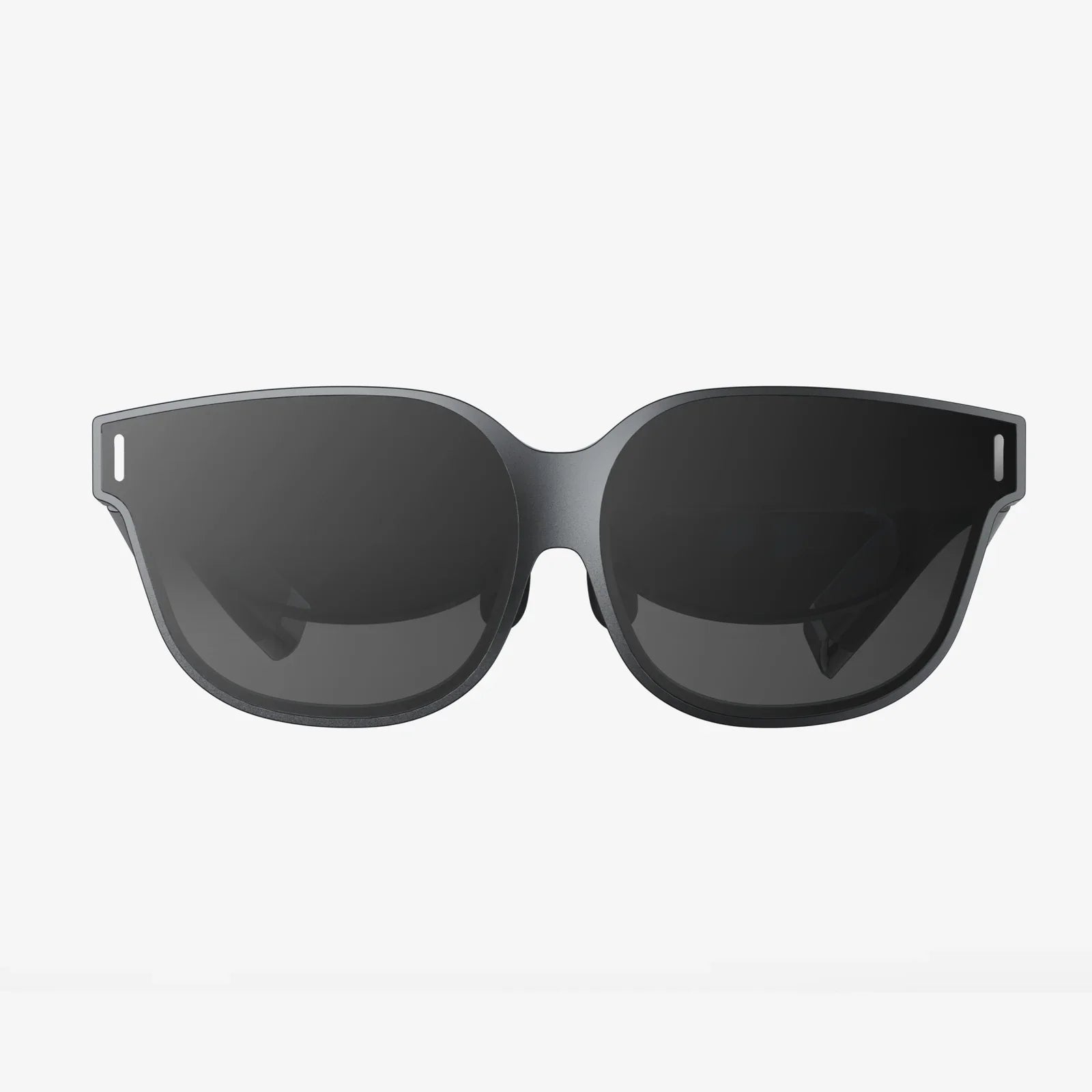
You’ve strapped on a headset, ready to be transported to another world. But will you be diving completely into a digital realm, or will the ghosts of the digital world start to inhabit your living room? The line between the next big things in computing seems blurry, but the distinction is everything. Understanding the difference between Mixed Reality and Virtual Reality isn't just tech jargon—it's the key to unlocking which immersive experience is right for you and how you'll interact with the future of technology itself.
Defining the Realms: Core Concepts Unpacked
Before we can contrast them, we must first clearly define what we mean by Virtual Reality and Mixed Reality. These are not interchangeable terms; they represent fundamentally different approaches to simulated experiences.
Virtual Reality: The Complete Digital Escape
Virtual Reality (VR) is the art and science of crafting a fully digital, computer-generated environment that completely replaces the user's real-world surroundings. The primary goal of VR is isolation—to shut out the physical world and immerse the user in a simulated one. When you don a VR headset, your visual and auditory reality is entirely generated by a computer. You are, for all intents and purposes, no longer in your room; you might be on the surface of Mars, on the edge of a fantasy castle, or inside the human bloodstream. This total immersion is achieved through a combination of hardware: a head-mounted display (HMD) that blocks out external light and sound, motion tracking sensors that follow your head movements, and controllers that translate your hands into the digital space.
Mixed Reality: The Seamless Blend of Real and Virtual
Mixed Reality (MR), sometimes used interchangeably with the broader term Augmented Reality (AR), is more precisely a advanced subset of AR. It refers to the technology that enables digital objects to not only overlay the real world but to interact with it in real-time. Unlike VR, MR does not seek to replace your reality but to augment it. The magic of MR lies in its ability to understand and respond to the physical environment. A digital character can hide behind your real sofa. A virtual pet can jump onto your actual coffee table, recognizing it as a surface. Your real-world walls can become the screens for digital portals. This requires a significantly more complex technological stack, including advanced cameras, depth sensors, and powerful computer vision algorithms to continuously map and understand the geometry, lighting, and physics of the user's space.
The Technological Chasm: How the Hardware Diverges
The philosophical differences between VR and MR are made manifest in their hardware. The devices built for each experience are engineered with vastly different goals in mind.
Virtual Reality Hardware: Built for Immersion
VR headsets are, first and foremost, isolation chambers. They are typically opaque, with no view of the outside world. Their primary technical focus is on delivering high-resolution, high-refresh-rate visuals to prevent simulator sickness and sell the illusion of presence. They employ precise internal positional tracking (using technologies like inside-out or outside-in cameras) to track the user's head movements with extreme low latency. While many modern VR headsets now feature passthrough cameras, allowing a black-and-white or sometimes color video feed of the real world, this is primarily a safety feature to avoid bumping into walls. It is not the core experience and lacks the spatial understanding and persistence that defines true MR.
Mixed Reality Hardware: The World as a Platform
MR headsets, often called holographic devices or spatial computers, are transparent or use high-fidelity video passthrough. They are packed with a suite of sensors that act as their "eyes." This sensor array almost always includes:
- Depth Sensors: To scan and create a 3D mesh of the environment, understanding the distance and shape of every surface.
- High-Resolution Cameras: To capture the real world for video passthrough and analyze the environment.
- IMUs (Inertial Measurement Units): Accelerometers and gyroscopes for tracking orientation and movement.
- Advanced AI Processors: To handle the immense computational load of simultaneous localization and mapping (SLAM), which is the process of understanding the device's position within a space while continuously mapping that space.
This allows digital content to be "locked" in place in the real world. If you place a virtual television on your wall and leave the room, when you return, the TV will still be there. This persistence and environmental awareness is the hallmark of MR.
The Spectrum of Experience: From Augmented to Virtual
A useful model for understanding this landscape is the Reality-Virtuality Continuum, a concept introduced by Paul Milgram and Fumio Kishino in 1994. This spectrum charts the progression of experiences from the completely real environment to the completely virtual one.
On the far left, you have the unadulterated Real Environment—the physical world as we perceive it. A step to the right enters the realm of Augmented Reality (AR), where digital information is overlaid onto the real world. Think of smartphone apps that place a static dinosaur in your garden or navigation arrows on your street view. This overlay is often a 2D layer that doesn't truly understand or interact with the 3D space.
Further along the spectrum is Mixed Reality (MR). This is where the digital and physical objects not only co-exist but can interact with each other in real-time. The virtual dinosaur in an MR experience would be able to walk behind your real tree, its footsteps affected by the slope of your real yard. The environment is aware and responsive.
On the far right of the spectrum lies the Virtual Environment, which is the domain of VR. Here, the physical world is entirely absent, replaced by a synthetic reality. Everything you see and hear is computer-generated. VR is a destination; MR is an enhancement of your current location.
Applications and Use Cases: Solving Different Problems
The unique strengths of VR and MR make them suited for different tasks. One is not inherently better than the other; they are different tools for different jobs.
Where Virtual Reality Excels
VR's power is in its ability to create controlled, repeatable, and fully immersive experiences. Its primary applications include:
- Gaming and Entertainment: This is VR's flagship domain. Full immersion is ideal for narrative-driven games, terrifying horror experiences, and breathtaking simulations where the real world is a distraction.
- Training and Simulation: From training surgeons for complex procedures to preparing soldiers for combat missions or pilots for flight, VR provides a risk-free environment to practice high-stakes tasks. The ability to control every variable is crucial.
- Therapy and Exposure Treatment: Therapists use VR to safely expose patients to phobias (like fear of heights or flying) in a gradual, controlled manner.
- Virtual Tourism and Real Estate: Offering virtual walkthroughs of remote locations or unbuilt property designs provides an unparalleled sense of scale and presence.
Where Mixed Reality Shines
MR's value is in its contextuality—its ability to bring digital information and capabilities into your real-world workflow. Its killer applications are often practical:
- Remote Assistance and Collaboration: An expert engineer can see what a field technician sees and draw holographic arrows and instructions directly onto the malfunctioning machinery, visible to the technician in real-time. Teams in different locations can collaborate on a 3D holographic model placed on a real conference table.
- Design and Prototyping: Architects and industrial designers can place full-scale 3D models of their designs into a real physical space to assess aesthetics, scale, and fit before a single physical resource is spent.
- Step-by-Step Guidance: In manufacturing, maintenance, or complex assembly, holographic instructions can be superimposed directly onto the equipment, showing the exact placement of parts and the sequence of actions.
- Data Visualization: Imagine financial data or network security dashboards not confined to a 2D screen but arranged as interactive 3D holograms around your office, allowing for more intuitive pattern recognition and analysis.
The Future Trajectory: Convergence or Divergence?
As technology evolves, the lines are beginning to blur from a hardware perspective. Many modern VR headsets are incorporating the sensor suites necessary for MR experiences through color passthrough capabilities. This is creating a new category of devices often referred to as "VR/MR headsets" that can toggle between a fully immersive virtual experience and a mixed reality one.
However, while the hardware may converge, the fundamental experiences will remain distinct. Developers will still create content specifically designed for full immersion (VR content) and content designed to augment the real world (MR content). The choice for users won't be about which headset to buy, but which experience is right for the task at hand: a complete escape or a contextual enhancement.
The ultimate goal of spatial computing is to have a device that can seamlessly slide along the entire reality-virtuality continuum, adapting to the user's needs instantaneously. We are moving toward a future where the digital and physical will be intertwined in ways we are only beginning to imagine, with MR acting as the indispensable bridge.
So, the next time you consider stepping into an alternate layer of reality, ask yourself the defining question: are you looking to escape your world, or are you looking to empower it? The answer will guide you to the perfect realm of experience, where digital creations either replace your surroundings or work in harmony with them to redefine what's possible right where you stand.
Share:
AI Driven Tools: Reshaping Industries and Redefining Human Potential
3 Facts About AI That Will Change How You See the Future