


Imagine slipping on a headset and instantly being transported to the surface of Mars, feeling the desolate red sand beneath your feet and the vast, star-dusted silence of space. Now, imagine another scenario: you’re looking at a complex engine in a repair shop, and through a pair of sleek glasses, digital schematics and animated repair instructions are overlaid directly onto the machinery, guiding your every move. Both experiences are transformative, both are powered by immersive technology, yet they represent two distinct pillars of a digital revolution: Virtual Reality and Augmented Reality. While their names are often lumped together, confusing consumers and professionals alike, the chasm between them is vast and significant. Understanding this difference is not just a matter of semantics; it’s about grasping the future of human-computer interaction, the next evolution of the internet, and the very way we will work, learn, and play.
Defining the Realms: A Tale of Two Worlds
At its most fundamental level, the difference between Virtual Reality (VR) and Augmented Reality (AR) boils down to one core concept: immersion versus augmentation.
Virtual Reality: The Total Digital Escape
Virtual Reality is an entirely simulated, computer-generated environment. Its primary goal is to shut out the physical world completely and immerse the user in a digital one. When you don a VR headset, your physical surroundings are replaced. You are no longer in your living room; you are inside the experience. This is achieved through a combination of hardware and software:
- Headsets: These devices use stereoscopic displays, showing a slightly different image to each eye to create a convincing sense of depth and three-dimensionality.
- Head Tracking: Sophisticated sensors (gyroscopes, accelerometers, and often external cameras or base stations) track the movement of your head. When you look up, down, left, or right, the view within the virtual world adjusts in real-time, creating a seamless and believable connection between your movement and the digital environment.
- Controllers: Hand-held controllers tracked in 3D space allow you to interact with the virtual world—to pick up objects, push buttons, wield tools, or gesture.
- Audio: Spatial 3D audio is crucial. Sounds come from specific directions and distances, further selling the illusion that you are somewhere else.
The ultimate ambition of VR is presence—the undeniable, psychological feeling of "being there." It’s a powerful trick on the senses, making a purely digital experience feel tangibly real.
Augmented Reality: The Digital Overlay on Reality
Augmented Reality, by contrast, does not seek to replace the real world. Instead, it enhances it by superimposing digital information—images, text, data, 3D models—onto your view of the physical environment. The world remains your canvas, and AR adds a digital layer of paint. The technology works by:
- Understanding the Environment: Using cameras and sensors, AR devices scan and map the physical space around you. They identify surfaces like floors and tables, understand lighting conditions, and track objects.
- Alignment and Anchoring: Digital content is then anchored to specific points in the real world. A virtual dinosaur might appear to stand on your coffee table, or navigation arrows might be painted onto the street in front of you.
-
Display Technologies: AR can be experienced through various means:
- Heads-Up Displays (HUDs): Simple projections on surfaces like car windshields.
- Smartphones and Tablets: Using the device’s camera and screen to display the augmented view. The phenomenon of people chasing digital creatures on their phones is a prime example.
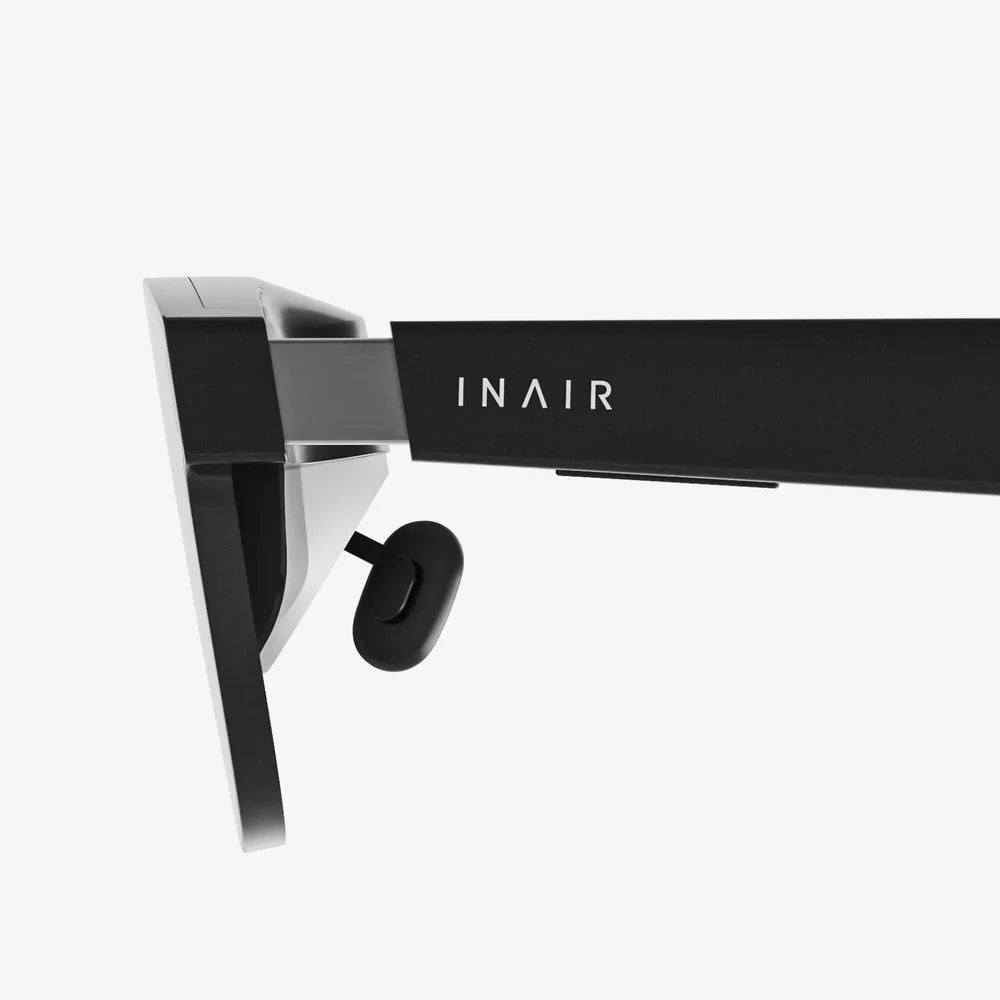
- Smart Glasses: The most advanced form, where digital content is projected directly onto the lenses of eyeglasses, allowing for a hands-free, always-available experience.
The goal of AR is not escape but utility and enhancement. It provides contextually relevant information exactly when and where you need it, blending the digital and physical into a cohesive hybrid experience.
The Hardware Divide: How We Access These Realities
The technological requirements for VR and AR, while overlapping in some areas like processing power, lead to significantly different hardware designs.
VR Hardware: Built for Immersion
VR headsets are typically bulky, fully enclosed units. They are designed to block out all ambient light and sound, creating a blank slate for the virtual world. They fall into a few categories:
- PC-Connected Headsets: These offer the highest fidelity experiences. They are tethered to a powerful computer that handles the intense graphical processing, allowing for incredibly detailed and complex virtual worlds. They often require external sensors for precise tracking.
- Standalone Headsets: These all-in-one devices have the computer, displays, and sensors built into the headset itself. They are wireless and more accessible, though they sometimes sacrifice some graphical power for portability.
- Console-Based Headsets: Designed to work with specific video game consoles, offering a high-quality, streamlined experience within that ecosystem.
The common thread is a focus on high-resolution displays, wide fields of view, and advanced tracking systems to maintain immersion and prevent motion sickness.
AR Hardware: Built for Integration
AR hardware prioritizes blending into the user’s life and environment. The design challenge is making the technology unobtrusive and socially acceptable.
- Smartphones and Tablets: The most ubiquitous AR devices. They leverage their cameras, screens, and powerful chipsets to deliver AR experiences to billions of people instantly. The limitation is that they require holding up a device, breaking the natural flow of interaction.
- Smart Glasses: This is the holy grail of AR—normal-looking glasses that can project digital information. Current technology involves using waveguides or micro-projectors to beam images onto the lenses. The major hurdles are achieving a wide field of view, all-day battery life, and a consumer-friendly form factor at a reasonable cost.
- Specialized Enterprise Gear: In industrial settings, more robust head-mounted displays are used. These are often helmet-mounted or designed for durability in harsh environments, prioritizing function over form.
The hardware evolution for AR is a journey from held devices to worn devices, aiming for a seamless and constant digital companion.
A Spectrum of Experience: From AR to VR and the Mixed Reality Middle Ground
It’s helpful to think of these technologies not as a binary choice but as points on a spectrum, often referred to as the Reality-Virtuality Continuum. On one end lies our pure physical reality, and on the other lies a fully virtual environment.
Augmented Reality sits closer to the reality end, adding digital elements to the real world. Virtual Reality sits at the opposite end, creating a fully digital world. However, between them exists a crucial middle ground: Mixed Reality (MR).
Mixed Reality is more advanced than simple AR. It doesn’t just overlay digital content; it allows digital objects to interact with the physical world in real-time. In MR, a virtual character could jump off your real table and hide behind your real sofa. The virtual object understands and responds to the geometry, physics, and lighting of your actual environment. This requires incredibly sophisticated sensors and environmental understanding, blurring the line between what is real and what is digital more than ever before. Some high-end headsets are now capable of passthrough VR, where cameras on the headset feed a live video feed of your surroundings to the displays inside, allowing developers to create MR experiences that combine the immersion of VR with the context of the real world.
Transforming Industries: The Practical Applications
The distinct strengths of VR and AR make them suited for different professional and consumer applications.
Virtual Reality's Domain: Training, Simulation, and Deep Design
VR excels in situations where you need to practice in a high-risk environment without any actual risk, or where you need to visualize something at scale.
- Healthcare: Surgeons practice complex procedures on virtual patients. Medical students explore detailed, interactive 3D models of the human body.
- Military and Aviation: Pilots train in full-motion flight simulators that are a form of VR. Soldiers prepare for combat scenarios in virtual recreations of urban environments.
- Architecture and Real Estate: Architects and clients can walk through a full-scale 3D model of a building before the foundation is even poured. Real estate agents offer virtual tours of properties across the globe.
- Corporate Training: Employees can practice public speaking to a virtual audience or learn safety procedures for dangerous factory equipment.
- Therapy: Used for exposure therapy, helping patients confront phobias like fear of heights or flying in a controlled, safe setting.
Augmented Reality's Domain: Information, Guidance, and Overlay
AR shines in providing just-in-time information, remote collaboration, and enhancing real-world tasks.
- Manufacturing and Repair: Technicians see wiring diagrams overlaid on machinery. Warehouse workers have the most efficient picking routes displayed on their smart glasses, with items highlighted on shelves.
- Healthcare: Nurses can find veins more easily with an AR overlay projecting a map of vasculature onto the skin. Surgeons can see critical patient data, like heart rate, without looking away from the operating field.
- Retail and E-Commerce: Users can "place" virtual furniture in their own home to see how it fits and looks before buying. Try on clothes, glasses, or makeup virtually through a phone camera or webcam.
- Navigation: GPS directions are projected onto the windshield of a car or, in the future, onto the street in front of you through smart glasses, making navigation intuitive and heads-up.
- Remote Assistance: An expert thousands of miles away can see what a field technician sees and draw annotations directly into their field of view, guiding them through a repair step-by-step.
The Social and Ethical Horizon: A Future of Blurred Lines
As these technologies mature and become woven into the fabric of daily life, they will raise profound questions. VR challenges our notions of presence and identity—what does it mean to "be" with someone when you are both digital avatars? It offers incredible escapism, but what are the psychological effects of preferring a curated virtual world to an imperfect real one?
AR, potentially more pervasive as it integrates into eyewear, raises even more immediate concerns about privacy and data. If devices are constantly scanning our environments, what information are they collecting, and who owns it? Will we be subjected to a constant stream of digital advertising painted onto our reality? The always-on, augmented world could lead to information overload and further blur the boundaries between work and personal life.
Both technologies represent a massive shift in how we consume content and interact with data. They are the likely stepping stones to the "spatial web" or "metaverse," a persistent network of interconnected virtual and augmented spaces that will succeed the two-dimensional internet of today.
Choosing Your Reality: Which One is Right for You?
For the consumer trying to choose between these experiences, the decision is simple: it depends on what you want to do.
- Choose Virtual Reality if you want to be fully immersed in games, travel to impossible places, experience narrative storytelling from within the story, or escape into dedicated social virtual worlds for meetings or concerts.
- Choose Augmented Reality if you want useful information layered onto your daily life, help with DIY projects, try products before you buy them, or play games that interact with your physical environment like your living room is the game board.
They are not competitors but companions on the same journey, each offering a unique and powerful lens through which to experience the fusion of the digital and the physical.
The line between our physical existence and the digital realm is not just blurring; it is being actively redrawn by the twin forces of virtual and augmented reality. One offers a ticket to anywhere, a total escape from the constraints of the mundane. The other promises to make the mundane itself more informative, efficient, and magical. This isn't a competition to see which technology will win; it's an awakening to the fact that our future will be a rich tapestry woven from both threads, changing not just what we see, but how we see everything.
Share:
Top Automation Tools: The Ultimate Guide to Streamlining Your Workflow in 2024
Best Ultra Wide Screen Monitor for Mac: The Ultimate Guide to Seamless Integration