


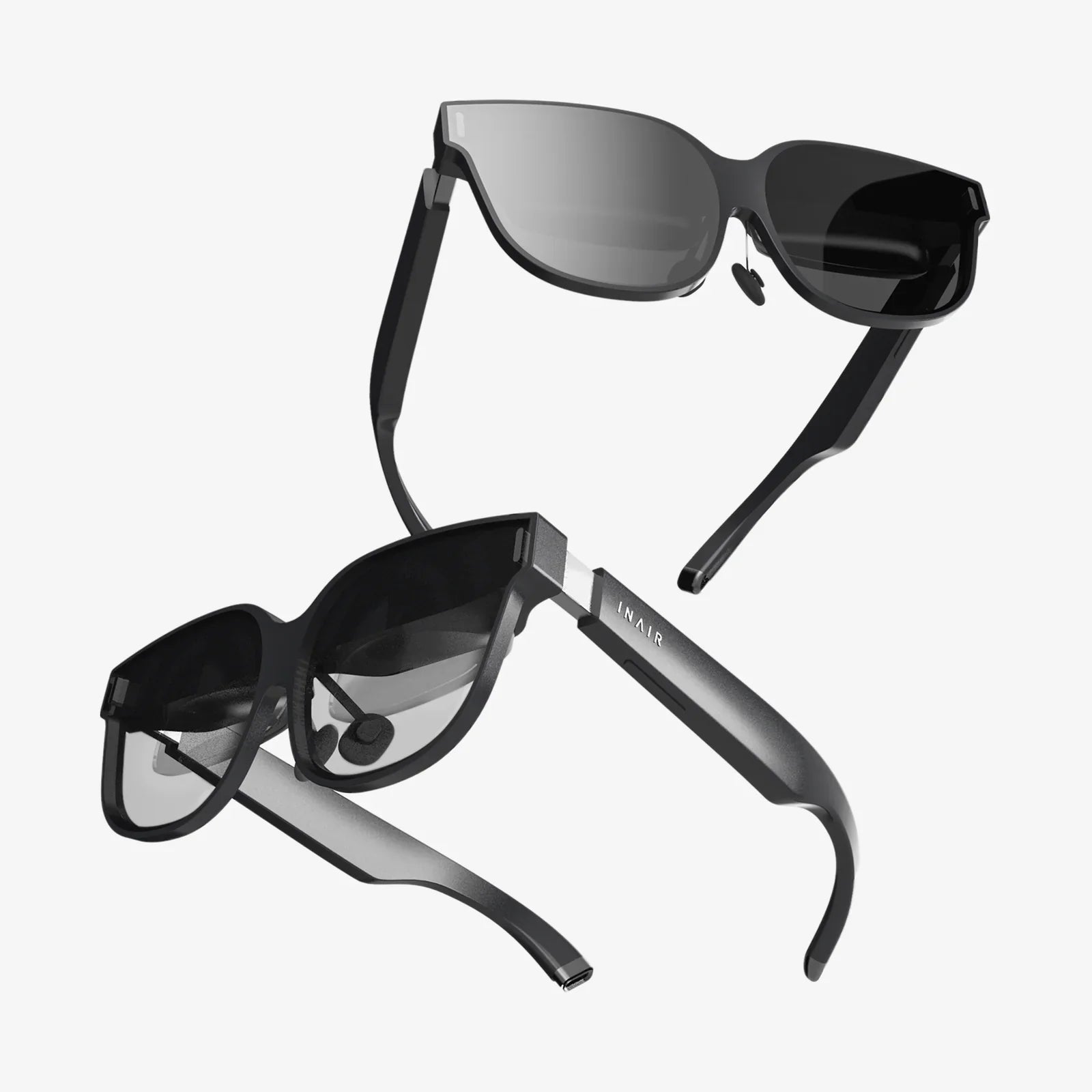
- by wangfred
What's The First VR Headset? The Surprising Origin Story of Virtual Reality
- by wangfred
You strap on a sleek, modern visor, your hands gripping two ergonomic controllers. In an instant, you're transported—scaling a Himalayan peak, exploring a distant galaxy, or standing center stage in a roaring concert. Virtual reality feels like a magic trick from the future, a testament to the breakneck speed of 21st-century innovation. But what if the dream of VR, the very concept of escaping into a digital world, isn't a modern invention at all? The search for the first VR headset doesn't lead to a Silicon Valley tech giant's sleek laboratory, but rather back through decades of technological evolution, into a past filled with clunky prototypes, military research, and the boundless imagination of a handful of pioneers who dared to envision a reality beyond our own. The true origin story is a surprising tapestry woven from Cold War pressure, counterculture philosophy, and engineering brilliance, long before the term "virtual reality" was ever coined.
To understand the first headset, we must first expand our definition of VR. The core desire—to simulate an experience for the senses—is ancient. Panoramic paintings like those in the 19th century aimed to fully immerse viewers in a scene, surrounding them with a fictional environment. The stereoscope, invented by Sir Charles Wheatstone in 1838 and later popularized by Oliver Wendell Holmes, was a household device that created a convincing illusion of depth by presenting a slightly different image to each eye. It was, in essence, a passive, static form of VR, proving the power of binocular vision to create a simulated world.
The 20th century introduced the crucial element of motion. In 1929, Edward Link created the "Link Trainer" for airplane instrumentation practice. While not a visual headset, it was the first true flight simulator, using pumps, bellows, and valves to physically mimic the movement of an aircraft. It provided a tactile, kinesthetic immersion that was vital for pilot training. This concept of a practical simulator would become a primary driver for military investment in immersive technology later on. Then came Morton Heilig's visionary "Sensorama" in 1962. This colossal arcade-style cabinet was a theater for one, engaging four of the five senses. It featured a stereoscopic 3D display, fans, smell generators, and a vibrating chair to simulate experiences like riding a motorcycle through Brooklyn. Heilig, a cinematographer, called it "Experience Theater" and patented a head-mounted display to go with it, though it was never built. The Sensorama was the first concerted effort to create a fully immersive, multi-sensory experience, making Heilig one of the most important, yet often overlooked, grandfathers of VR.
While the aforementioned inventions set the stage, the device most universally credited as the first true head-mounted virtual reality system is the Ultimate Display, created by Ivan Sutherland and his student Bob Sproull in 1968. Its unofficial, and far more iconic, name was "The Sword of Damocles." The name was apt; the headset was so heavy and intimidating that it was mechanically counterbalanced from a large metal arm suspended from the ceiling of the lab, poised over the user's head like the legendary sword.
What made the Sword of Damocles the "first"? It wasn't its graphical fidelity—it displayed simple, wireframe 3D shapes like cubes and rooms. Its revolutionary nature lay in its architecture, which established the core principles that all modern VR and AR systems still follow today:
The Sutherland system was an Augmented Reality device as much as it was VR; users could see the virtual wireframe cubes superimposed over their real physical environment. It was monstrously expensive, requiring a multi-million-dollar mainframe computer that could fill a room, just to render those basic shapes. It was impractical, uncomfortable, and never left the lab. But it was complete. It proved the concept was possible and provided a blueprint that would inspire every researcher who followed.
Ivan Sutherland provided the blueprint, but it was Jaron Lanier who built the house and gave it a name. In the mid-1980s, Lanier, a charismatic and brilliant computer scientist and musician, co-founded VPL Research (Visual Programming Language). VPL is arguably the first company to sell VR products, and it was Lanier who popularized the term "Virtual Reality."
VPL commercialized the key components of a VR system, creating a suite of products that, for the first time, offered a complete and interactive experience:
VPL's systems were used by NASA for teleoperation research and captured the imagination of the media and the public. For a brief moment in the late 1980s and early 1990s, VR was the next big thing, featured in movies like Lawnmower Man and seen as the future of computing. However, the technology was still too expensive, too low-fidelity, and too computationally demanding for a mass market. VPL eventually filed for bankruptcy, but its impact was immense. It moved VR from military and academic labs into the public consciousness and established the commercial language for the industry.
Buoyed by the hype from VPL, the 1990s saw a wave of attempts to bring VR to the living room. This era is defined by a significant gap between the promise of VR and the disappointing reality of the technology available at the time. Companies released gaming consoles with optional head-mounted displays. These devices were characterized by their extremely low-resolution LCD screens (often with a noticeable lag), lack of proper head tracking, and a tendency to cause nausea. They were marketed with incredible hype but delivered a poor experience, often being little more than stereoscopic displays strapped to the face. The public's first taste of consumer VR was, for many, a bitter one. The technology simply wasn't ready, and the era ended with VR being dismissed as a failed fad, a technological dead end that retreated back into academia and high-end industrial simulators for the next two decades.
The failure of 1990s consumer VR cast a long shadow. For years, the technology was considered a joke. Its revival is a story of parallel progress. In the 2000s and early 2010s, several key technologies matured independently, creating a perfect storm that made high-quality VR finally viable:
The acquisition of Oculus by a major tech company in 2014 signaled that VR was back, and this time it was serious. This kicked off a new arms race, with numerous companies launching their own PC-powered and standalone headsets. These modern systems, with their high-resolution, low-persistence displays, sub-millimeter accurate inside-out tracking, and six degrees of freedom (6DoF), finally delivered on the smooth, immersive, and comfortable experience that the pioneers of the 1960s could only dream of.
The journey from the Sword of Damocles to today's wireless all-in-one devices is not one of a single eureka moment, but of gradual, iterative evolution. Each generation built upon the lessons of the last. Sutherland's head tracking, Lanier's focus on interaction, the hard lessons learned from the consumer failures of the 90s—all were essential steps. The first VR headset isn't a single product you can find on a shelf. It is a concept, a lineage of ideas. It is the culmination of military research into flight simulation, a cinematographer's dream of experiential art, a computer scientist's proof-of-concept held together by wires and ambition, and a visionary's attempt to sell a new reality. The clunky, ceiling-suspended Sword of Damocles and the sleek, self-contained headsets of today are part of the same story, connected by a continuous thread of human ingenuity and the timeless desire to explore worlds beyond our own.
So, the next time you witness a child utterly captivated by a virtual whale swimming in their living room or a surgeon practicing a delicate procedure in a risk-free digital space, remember the mechanical arm suspended from a lab ceiling in 1968. That clunky contraption of wires and glass wasn't just a prototype; it was a prophecy. It was the moment the foundational code for an entirely new layer of human experience was written, a seed planted that has now, decades later, finally burst into bloom. The journey to answer 'what was the first VR headset' reveals a truth far more compelling than a simple name and date: it uncovers the enduring power of an idea whose time, after many long years, had finally come.
Share:
Extended Reality XR Hardware Market Size: A Deep Dive into the Next Digital Frontier
3D Virtual Goggles: A Portal to New Realities and the Future of Human Experience