


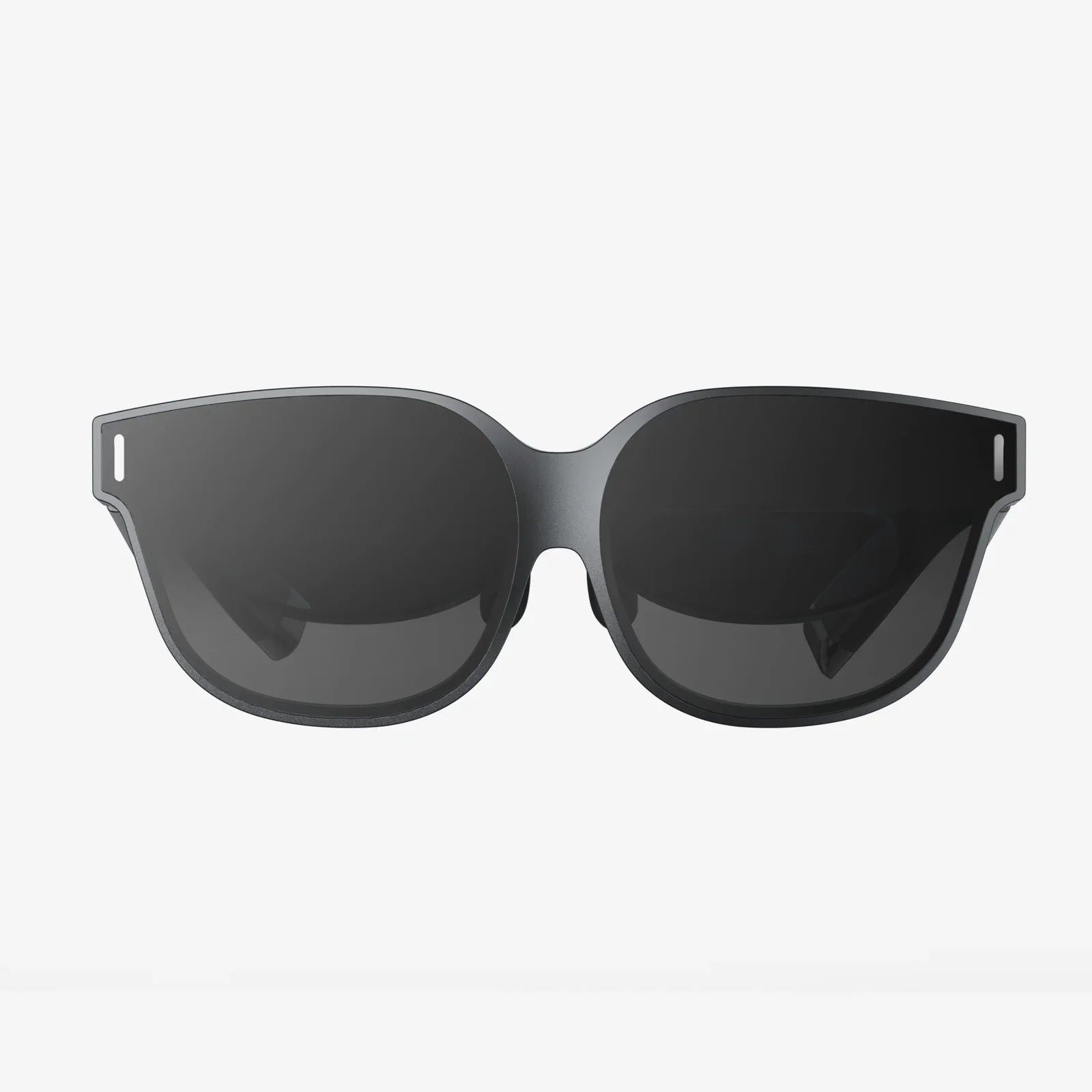
You strap on a sleek, futuristic device, and the real world melts away. You're transported to a concert front row, the surface of Mars, or the depths of the ocean. This is the promise of the modern VR headset, a piece of technology that feels like it leaped from the pages of a sci-fi novel. But the dream of virtual reality is far older than the sleek hardware of today. To truly understand when the VR headset came out, we must embark on a journey not through decades, but through centuries of innovation, failure, and resurgence. The answer is not a single date but a series of breakthroughs that built upon the dreams of pioneers to create the immersive experiences we know today.
The Proto-VR: Early Seeds of an Idea (18th - Mid-20th Century)
Long before silicon chips and LCD screens, the human desire to simulate reality was already flourishing. The foundational concepts of VR—immersing a viewer in an artificial environment—can be traced back to surprising origins.
In the late 18th century, Irish painter Robert Barker created the Panorama, a 360-degree painted landscape housed in a rotunda. Viewers would stand on a central platform, completely surrounded by the massive artwork, creating a powerful, if static, illusion of being elsewhere. This was arguably the first mass-produced attempt at visual immersion.
The next major leap came with the development of stereoscopic photos and viewers in the 19th century. Using the slightly different perspectives seen by each eye, these devices created a convincing illusion of depth. The famous View-Master, patented in 1939, was a direct descendant of this technology, allowing users to “travel” to distant places through 3D reels. While not interactive, it perfected the crucial binocular vision that all modern headsets use.
Perhaps the most significant pre-digital precursor was the Sensorama, developed by cinematographer Morton Heilig in the 1950s. Patented in 1962, this enormous arcade-style cabinet was a “Experience Theater” that engaged multiple senses. Users would watch a stereoscopic 3D film while experiencing stereo sound, wind, vibrations, and even smells. Heilig’s vision, detailed in his 1955 paper “The Cinema of the Future,” was breathtakingly prescient. He envisioned an art form that would surround the participant, a concept he later encapsulated in a head-mounted display patent filed in 1960.
The Birth of the HMD: A Revolutionary and Daunting Debut (1968)
While Heilig’s work was groundbreaking, it was still a largely passive experience. The true genesis of the interactive, head-mounted VR display as we conceptualize it today occurred in 1968 at the hands of computer scientist Ivan Sutherland and his student Bob Sproull.
Their creation, known as The Sword of Damocles, is universally regarded as the first functional head-mounted display (HMD) system that offered true augmented and virtual reality. The name was apt; the device was so heavy it had to be suspended from the ceiling with a mechanical arm, literally poised over the user’s head like the legendary sword.
The technology was primitive by today’s standards. It used wireframe graphics—simple lines and shapes—to render a virtual cube that users could interact with. The system employed ultrasonic trackers to follow the user’s head movements, updating the crude graphics in near-real time. It was a monumental achievement, proving that a digital world could react to and be explored by a user. However, it was also so computationally intensive that it reportedly brought the powerful (for its time) computer running it to its knees. Sutherland’s system established the core blueprint that all VR would follow: a stereoscopic display, head-tracking, and a computer-generated interactive world.
The 1980s and 1990s: Branding the Dream and The First Commercial Wave
The 1980s saw the concept of VR enter the public lexicon. The term “Virtual Reality” was popularized by Jaron Lanier, founder of VPL Research, in the mid-1980s. VPL developed and sold the first commercial VR gear, including the EyePhone HMD and the DataGlove, which allowed users to manipulate virtual objects with their hands. This era saw VR explode into popular culture, featured prominently in films like “Tron” (1982) and “The Lawnmower Man” (1992), which painted a picture of its transformative—and sometimes terrifying—potential.
This hype led to the first major wave of consumer VR in the early 1990s. Companies, sensing a new technological gold rush, rushed to bring VR to arcades and living rooms. Arcades featured large, expensive VR pods for experiences like “Dactyl Nightmare.” For the home market, several companies released VR headsets designed to connect to popular consoles and PCs.
These early consumer devices were characterized by their ambition and their profound technical limitations. They suffered from:
- Extremely Low Resolution: Blocky, pixelated graphics that were far from immersive.
- Severe Latency and Lag: The graphics would often delay in responding to head movements, leading to disorientation and nausea—a phenomenon now known as simulation sickness.
- Prohibitive Cost: The systems were still very expensive for the average consumer.
The public’s initial excitement quickly turned to disappointment. The technology simply couldn’t deliver on the sci-fi promise, and the market collapsed by the mid-1990s. VR entered a long “nuclear winter,” a period of dormancy where it was kept alive primarily in academic, military, and high-end industrial simulators (e.g., for flight training and surgical practice), where cost was less of an obstacle.
The 2010s: The Smartphone Fuels a Phoenix-like Resurrection
For nearly two decades, VR remained a niche interest. Its resurgence was triggered by an unrelated technological revolution: the smartphone. The mass production of components for smartphones—high-resolution displays, miniature motion sensors, powerful mobile processors—provided the perfect, cost-effective foundation for a new generation of VR.
The spark that reignited the fire was the Oculus Rift Kickstarter campaign in 2012. Palmer Luckey, a young enthusiast, designed a prototype HMD in his garage that offered an unprecedented field of view and dramatically reduced latency. His company, Oculus VR, sought $250,000 in funding but raised over $2.4 million, demonstrating a massive pent-up demand for credible VR. The development kit that followed, the DK1, was crude but captivated developers and enthusiasts alike by delivering a level of immersion that had previously been impossible without a military budget.
This success triggered an arms race. In 2014, tech giants acquired Oculus VR, signaling a serious corporate belief in the technology’s future. Soon after, other major players entered the market with their own platforms. The modern VR era had truly begun, splitting into two distinct paths:
- PC/Console-Powered VR: These headsets, connected to powerful external computers, deliver the highest-fidelity experiences with full positional tracking.
- Standalone VR: Headsets with all computing power built-in, offering untethered freedom and accessibility, which drastically lowered the barrier to entry for millions of users.
This period also saw the rise of accessible mobile VR through holders like Google Cardboard and the more advanced Gear VR, which used a smartphone as the screen and brain of the headset.
The Modern Landscape and The Metaverse Horizon
Today, VR is a established, though still evolving, sector of the tech industry. The focus has shifted from mere existence to refinement and ecosystem building. Key developments include:
- Inside-Out Tracking: Modern headsets use outward-facing cameras to track their position in the real world, eliminating the need for external sensors and simplifying setup.
- Mixed Reality (MR): Passthrough camera technology allows users to see their physical environment blended with digital objects, creating a spectrum of experiences between pure VR and augmented reality (AR).
- Eye and Face Tracking: Advanced sensors can now track a user’s eye movements and facial expressions, enabling more natural social interaction in virtual spaces and more efficient rendering.
- Haptic Feedback: Development of gloves and suits aims to provide a sense of touch, further deepening immersion.
The concept of the “metaverse,” a persistent network of shared virtual spaces, has become the new north star for the industry, with major investments aiming to create the foundational platforms for future work, social interaction, and play.
So, When Did It *Really* Come Out?
The story of the VR headset is not one of a single invention but of a continuous evolution. If we must assign dates, we have several pivotal answers to the question “When did the VR headset come out?”:
- 1968: For the first functional, head-tracked HMD system (The Sword of Damocles).
- 1980s: For the first commercial HMDs and the coining of the term “Virtual Reality.”
- Early 1990s: For the first attempt at a consumer market (which failed).
- 2012-2016: For the successful rebirth and establishment of the modern consumer VR market.
Each era built upon the lessons and failures of the last. Sutherland proved it was possible. The 90s commercial efforts proved what wasn’t yet possible and taught hard lessons about user experience. The 2010s renaissance leveraged a perfect storm of available technology, passionate indie development, and massive corporate investment to finally deliver on the dream.
The journey of virtual reality is a testament to the power of a persistent idea. It’s a story of a dream that refused to die, surviving technological limitations and commercial failures, only to re-emerge stronger each time. From the panoramic paintings of the 1700s to the bleeding-edge headsets of today, the goal has always been the same: to open a doorway to another world. The next time you step through that doorway, remember you're participating in a history centuries in the making—and the most immersive chapters are still being written.
Share:
VR Headset Accessories: The Ultimate Guide to Unlocking Your Virtual Potential
What VR Headset Should I Buy: The Ultimate 2024 Buyer's Guide