


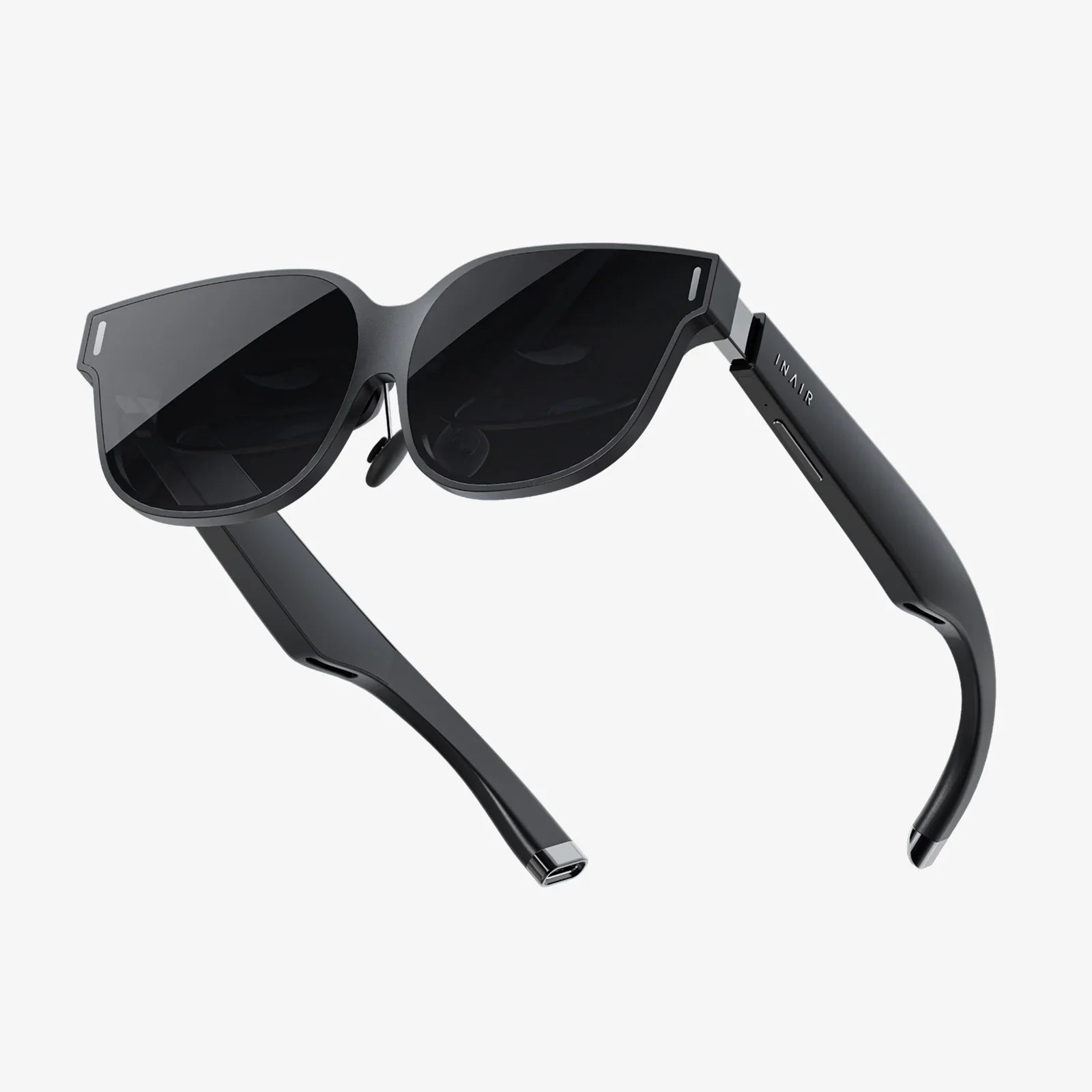
Imagine a world where digital information seamlessly blends with your physical reality, enhancing everything from how you work and learn to how you play and connect. This isn't a glimpse into a distant future; it's the burgeoning present of augmented reality. But to truly appreciate this technological marvel, one must journey back in time to answer a pivotal question: when was this transformative technology first introduced? The answer is a complex tapestry woven from decades of research, science fiction inspiration, and sheer human ingenuity, beginning far earlier than most would ever suspect.
The Conceptual Genesis: A Vision Before Its Time
Long before the hardware existed to make it a reality, the seed of augmented reality was planted in the fertile ground of imagination. While many point to the 1990s as the dawn of AR, its intellectual foundations were poured much earlier. The concept of overlaying data onto our view of the real world can be traced directly to the work of visionary scientist and inventor Ivan Sutherland. In 1968, Sutherland, with the help of his student Bob Sproull, created what is widely considered the first head-mounted display system, which he called "The Sword of Damocles." This contraption was a monumental achievement, albeit a primitive one by today's standards. It was so heavy it had to be suspended from the ceiling, and it displayed simple computer-generated wireframe graphics that were overlaid onto the user's physical surroundings. Though it was a form of virtual reality in its purest sense, the principle of mediating a user's view of reality with digital information established the core tenet of all augmented and virtual systems to follow. Sutherland didn't just build a device; he authored the blueprint for a new way of interacting with computers and information, a blueprint that would take decades to fully realize.
The 1970s and 1980s: Laying the Groundwork in Labs and Literature
The two decades following Sutherland's demonstration were a period of quiet but crucial incubation. Computing power was nowhere near sufficient for the real-time image processing and graphical rendering required for practical AR. However, the theoretical and practical groundwork was being laid. In 1975, computer artist Myron Krueger established the Videoplace laboratory, an artificial reality laboratory that explored the concepts of human interaction with computer-generated inputs. While not AR in the modern sense, it was a critical step in developing the philosophy of interactive, responsive environments. The term "augmented reality" itself had yet to be coined. It was science fiction that often provided the most compelling visions of this future technology. Authors described characters using eyewear to access data about people and places, and films depicted holographic interfaces long before the technology to create them existed. This period was less about a single "introduction" and more about a slow, steady convergence of increasing computational power, miniaturized components, and a growing cultural awareness of the potential for a merged digital-physical existence.
The Birth of the Name and the First True AR System
The pivotal moment that truly introduced augmented reality as a defined, practical field of study arrived in 1990. This is when two Boeing researchers, Tom Caudell and David Mizell, first coined the term "augmented reality." They were working on an experimental project to assist assembly line workers in the complex task of wiring aircraft harnesses. Instead of relying on bulky, physical boards and expensive printed diagrams, they proposed a head-mounted display that would project the blueprint of the wiring schematics directly onto the panels where the workers were installing them. This system would digitally augment the worker's field of view with crucial information, improving accuracy and efficiency. It was in their research papers that the phrase "augmented reality" was formally used to describe this new paradigm. While their system was functional primarily in a research context, it marked a critical shift. AR was no longer just a theoretical concept or a cumbersome university experiment; it had a name and a clear, industrial application. This moment is arguably the official "introduction" of AR as a named technology with a defined purpose.
The 1990s: Emergence from the Laboratory
With a name and a proven concept, augmented reality began to emerge from research labs in the 1990s. The decade saw a series of world-firsts that demonstrated the expanding potential of the technology. In 1992, Louis Rosenberg developed the first fully immersive AR system, known as Virtual Fixtures, for the U.S. Air Force. This complex robotic system allowed users to physically interact with and manipulate real-world objects in a environment that was augmented by virtual overlays, providing guidance and enhancing human strength and precision. Perhaps more significantly for the public's understanding of AR, the decade saw its first major foray into entertainment and sports. In 1998, the sport of football saw a virtual yellow first-down line superimposed onto the field during a live broadcast. This single application, now taken for granted, was a revelation. It was the first time millions of people witnessed a seamless and useful AR application, making the technology tangible and understandable. It demonstrated that AR didn't require a headset to be effective; it could enhance experiences through any screen, a concept now known as markerless or location-based AR.
The 2000s and 2010s: The Mobile Revolution and Mainstream Acceptance
The new millennium unlocked the next great leap for augmented reality: mobility. The advent of powerful smartphones, equipped with high-resolution cameras, fast processors, GPS, and motion sensors, provided the perfect platform for AR to reach a mass audience. No longer tethered to specialized, expensive hardware, AR applications could run on devices already in billions of pockets. The release of software development kits (SDKs) and open-source tracking libraries empowered a global community of developers to create a new wave of AR experiences. This period saw the explosion of interactive marketing campaigns, educational tools, navigation aids, and, most famously, gaming. A global phenomenon in 2016 demonstrated the staggering mainstream potential of mobile AR, captivating hundreds of millions of users who used their phones to see and interact with digital creatures placed firmly in their real-world environment. This was the moment AR became a household term, proving its appeal was universal. Concurrently, development continued on advanced head-worn displays, with tech giants and startups alike developing glasses aimed at professionals and, eventually, consumers.
The Enduring Legacy of a 1960s Vision
So, when was augmented reality first introduced? The answer is not a single date but a timeline of revelation. It was introduced conceptually by Ivan Sutherland's groundbreaking hardware in 1968. It was introduced nominally by Tom Caudell and David Mizell's research at Boeing in 1990. And it was introduced culturally through a series of public demonstrations, from the first-down line to global gaming phenomena. The story of AR is a testament to the fact that technology often evolves on a continuum, where a visionary idea must wait for the rest of the world to catch up. From the suspended Sword of Damocles to the powerful supercomputer in your pocket, the journey of augmented reality is a profound reminder that the most transformative technologies are not invented in a single moment but are patiently built, piece by piece, by generations of innovators who dare to see a different layer of reality. The next chapter is being written now, moving beyond screens and toward seamless, contextual, and intelligent overlays that will further blur the line between the physical and the digital, forever changing our perception of what is real.
Share:
Glasses with AI in Them: The Dawn of a Seamless Augmented Reality
5G AR VR Use Cases: Redefining Reality Across Industries