


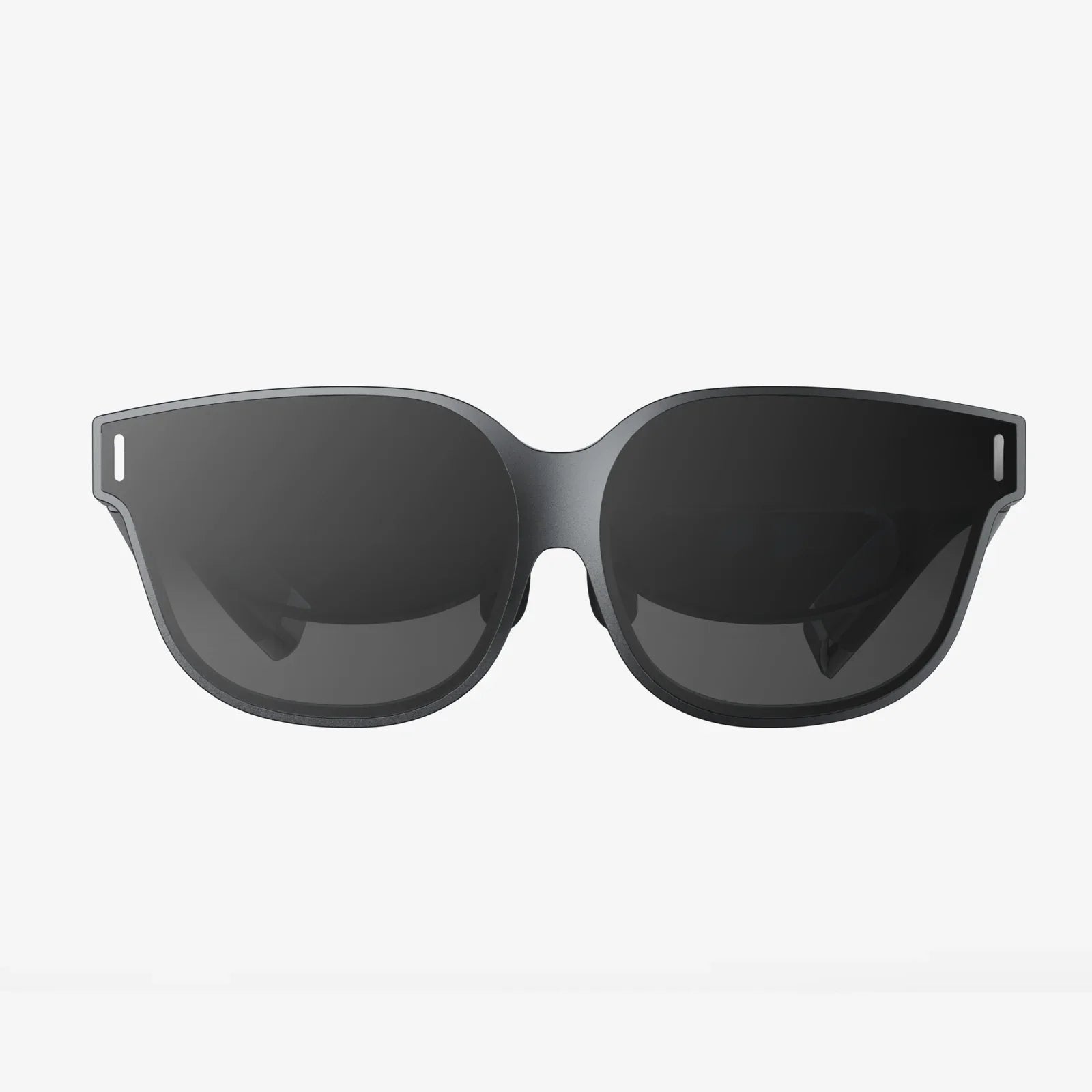
You’ve strapped on a modern headset, felt the weight of it on your face, and been transported to another world. But have you ever stopped to wonder where it all began? The story of virtual reality is far older, stranger, and more fascinating than you might imagine. It’s a tale not of a single eureka moment, but a slow, winding evolution of art, science, and sheer human ingenuity, stretching back not just decades, but centuries. To truly understand the sleek device you hold today, we must embark on a journey to answer a deceptively simple question: when was the first VR headset?
The Deep-Rooted Seeds: A Pre-History of Immersion
Long before silicon chips and LCD screens, humans were obsessed with the idea of escaping their reality through illusion. The true origin of VR isn't found in a garage in Silicon Valley, but in the salons and galleries of the 18th and 19th centuries. These early attempts at simulated reality were mechanical, yet their goal was identical to today's: to trick the senses and transport the viewer.
One of the most significant precursors was the panorama, invented by Robert Barker in 1787. These were massive, 360-degree paintings that encircled viewers, often placed on the walls of a cylindrical rotunda. With carefully crafted perspectives and lighting, they created an incredibly immersive experience, convincing visitors they were standing in the midst of a famous battle or a distant landscape. It was the IMAX of its day.
Then came the stereoscope, invented by Sir Charles Wheatstone in 1838. This was a monumental leap forward because it directly addressed the principle of stereopsis—how our brain combines the two slightly different images from our left and right eyes to perceive depth. The stereoscope used twin mirrors or prisms to present a unique image to each eye, merging them into a single, startlingly three-dimensional picture. Later popularized by the View-Master toy, the stereoscope established the fundamental binocular display technology that every single VR headset still uses today.
The Birth of a Genre: Science Fiction Predicts the Future
While inventors tinkered with hardware, writers were dreaming of the software. Science fiction authors began to conceptualize what fully immersive, interactive experiences might look like, often decades before the technology to create them existed.
In 1935, Stanley G. Weinbaum’s short story Pygmalion’s Spectacles described a pair of goggles that let the wearer experience a fictional world that engaged all their senses, including smell and touch. It was a remarkably prescient vision of a holistic VR experience. These fictional accounts were crucial; they provided a blueprint and a cultural appetite for the technology, inspiring the engineers who would eventually build it.
The Sensorama: A Cinematic Dead End
In the mid-1950s, a new contender emerged that, for a time, seemed like the obvious path to virtual reality. Cinematographer Morton Heilig was a visionary who believed the future of film was total immersion. He didn’t just want people to watch a story; he wanted them to be inside it.
His culmination of this idea was the Sensorama, patented in 1962. The Sensorama was a bulky, mechanical arcade cabinet that users would sit at, placing their head into a hooded enclosure. It featured a stereoscopic 3D color display, oscillating fans, a vibration seat, stereo sound, and even devices to emit smells. Heilig created several short films for the device, like a motorcycle ride through Brooklyn that simulated the wind, the rumble of the engine, and the smell of pizza from a passing restaurant.
While the Sensorama was a breathtakingly innovative multi-sensory experience, it had a critical limitation: it was not interactive. It was a passive, pre-recorded film. It simulated reality but did not create a virtual one that responded to the user. Heilig also developed a prototype for a head-mounted display to go with it, but the Sensorama ultimately failed commercially. Despite its failure, it remains a legendary and important stepping stone, proving that the concept of multi-sensory immersion had serious merit.
The Father of VR: Ivan Sutherland’s Sword of Damocles
This brings us to the moment that most historians of technology point to as the true birth of the head-mounted virtual reality system. The year was 1968. The man was Ivan Sutherland, a computer scientist at Harvard University, with the help of his student Bob Sproull.
Sutherland’s creation was called The Sword of Damocles, and the name was perfectly fitting. This was not a consumer device. It was a terrifying and magnificent contraption so heavy it had to be suspended from a mechanical arm bolted to the ceiling. The user would be strapped into the device, which would hang precariously over their head, evoking the ancient parable of the sword suspended by a single hair.
But what it did was nothing short of magic. The headset displayed simple, wireframe computer graphics—think 3D shapes made only of glowing lines, like a blueprint drawn in light. This primitive virtual world was not pre-recorded; it was generated in real-time by a computer. Crucially, the system used head-tracking technology. As the user moved their head, the graphics would update accordingly, creating an illusion of being inside a stable, three-dimensional space. This was the ultimate difference from the Sensorama: interactivity.
The Sword of Damocles was the first system to combine all the essential elements we now associate with VR:
- A stereoscopic, head-mounted display.
- Computer-generated graphics (albeit primitive).
- Real-time head tracking to update the perspective.
- The creation of an interactive, virtual world.
For these reasons, 1968 is widely accepted as the answer to 'when was the first VR headset?' Ivan Sutherland didn’t just build a device; he defined a paradigm. He created the blueprint that every VR innovator would follow for the next five decades.
The Long Winter and a Glimmer of Hope
After the brilliance of the Sword of Damocles, one might expect VR to have taken off immediately. It did not. The technology was simply too expensive, too complex, and too computationally demanding. For the 1970s and most of the 1980s, VR remained largely confined to high-budget government and military simulators, particularly for flight training, where cost was no object.
The dream, however, was kept alive. In 1985, NASA's Ames Research Center developed the VIVED (Virtual Visual Environment Display), a modernized HMD for exploring scientific data. This project later evolved into a much more advanced system they called the VIEW (Virtual Interface Environment Workstation), which incorporated data gloves for manipulating virtual objects. This work brought VR back into the consciousness of the research community.
The 1990s: Hype, Crash, and Valuable Lessons
The late 1980s and early 1990s saw VR’s first major attempt to break into the consumer market. Jaron Lanier, founder of VPL Research, popularized the term "Virtual Reality" and developed a suite of expensive equipment, including the EyePhone headset and the DataGlove. The technology captured the public's imagination, featuring heavily in movies like Lawnmower Man and Disclosure.
Several companies raced to bring arcade VR experiences and home consoles to market. Unfortunately, the technology of the time was a profound disappointment. The graphics were laggy and low-resolution, the headsets were nauseatingly heavy, and the computing power needed was astronomically expensive. The public’s first taste of VR was a bitter one, and the hype collapsed under the weight of its own impossibility. The market crashed, and VR entered a long period of dormancy, seen as a failed fad.
The Modern Renaissance: A Perfect Storm of Technology
The rebirth of VR in the 2010s wasn't the result of a single new invention, but rather the convergence of several technologies finally maturing to a point of affordability and capability.
- Smartphone Revolution: The massive production of smartphones drove down the cost of high-resolution, low-latency displays, miniature motion sensors (gyroscopes, accelerometers, magnetometers), and powerful, compact processors. A modern VR headset is, in many ways, a smartphone repackaged for your face.
- Computer Graphics: The relentless march of Moore's Law meant that powerful graphics cards capable of rendering two high-resolution scenes at 90 frames per second became accessible to consumers.
- Precise Tracking: Advancements in outside-in and inside-out tracking solved the critical issue of accurate, low-latency positional tracking, drastically reducing the simulator sickness that plagued earlier systems.
This perfect storm allowed a new generation of engineers to finally deliver on the promise that visionaries like Heilig and Sutherland had made decades earlier. The release of development kits and subsequent consumer products marked the true beginning of VR as a viable, accessible medium.
From Wireframes to Living Worlds: The Legacy Continues
Today's virtual reality is a universe away from the glowing green wireframes of the Sword of Damocles. We now have photorealistic environments, haptic feedback controllers, social VR platforms, and standalone wireless headsets. Yet, the core principles remain unchanged. Every time someone puts on a headset and experiences that moment of 'presence'—the undeniable feeling of being somewhere else—they are participating in a legacy that stretches back over sixty years.
The question of 'when was the first VR headset' is therefore complex. If we define it by the idea of immersive art, we look to the panoramas of the 1700s. If we define it by stereoscopic vision, we look to Wheatstone in 1838. If we define it by multi-sensory immersion, we look to Heilig's Sensorama in 1962. But if we define it as an interactive, computer-generated, head-tracked virtual world, then the undeniable answer is Ivan Sutherland’s awe-inspiring and terrifying Sword of Damocles in 1968. It was the first true VR headset, a glimpse of a future that is now, finally, our present.
So the next time you step into a virtual meeting, explore a digital museum, or battle aliens on a distant planet, remember the long and winding road that brought you there. That sense of wonder you feel was first conjured not by code, but by canvas and lightbulbs, by mirrors and mechanics, and by the brilliant, relentless minds who dared to dream of worlds that did not yet exist. The journey from Sutherland's hanging monstrosity to the sleek visor on your shelf is one of technology's greatest stories, and it’s a story that is still being written with every new experience.
Share:
Augmented Reality Innovations 2025: The Year the Digital and Physical Worlds Truly Merge
Budget PC VR Headset 2025: The Ultimate Guide to Affordable Immersion