


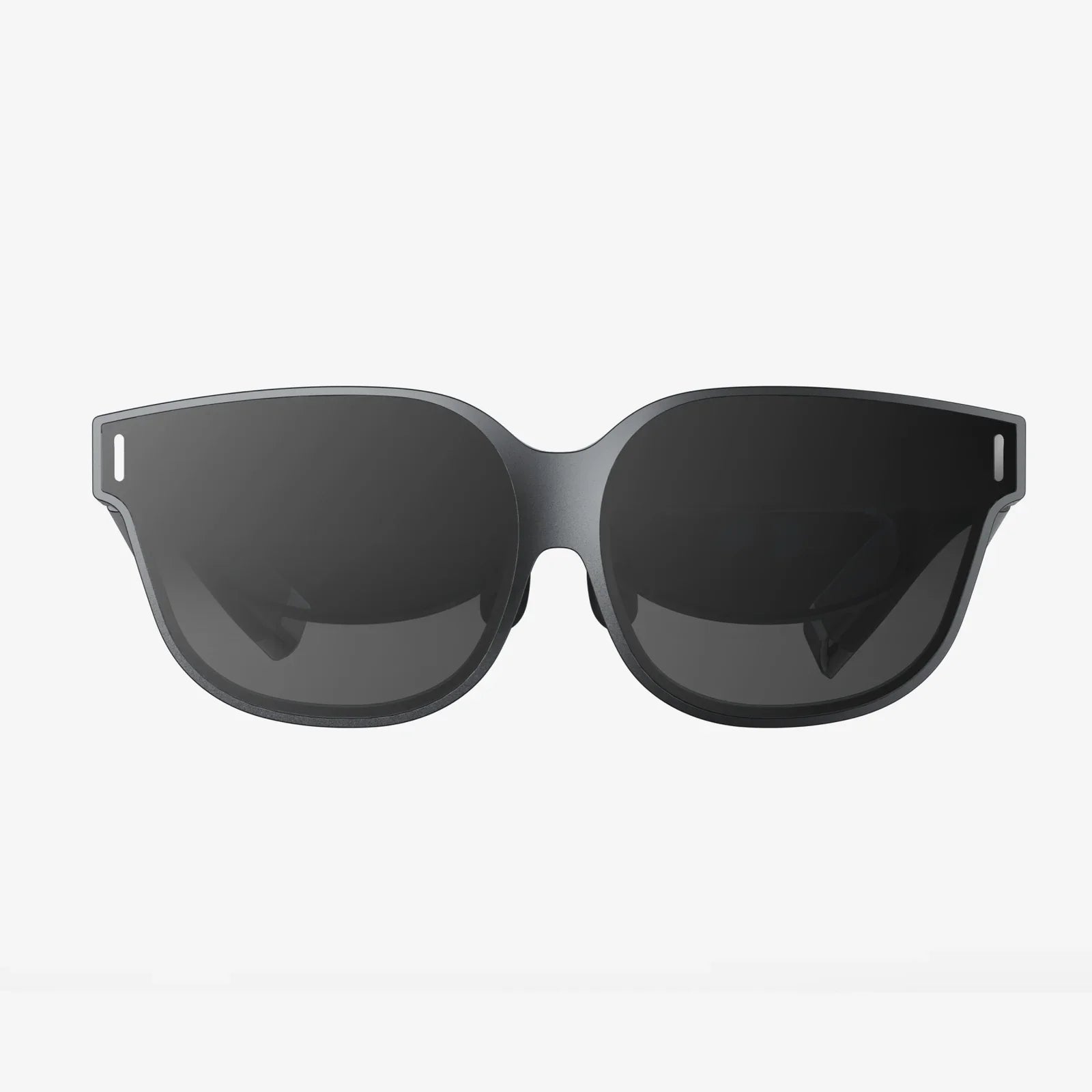
You strap on the headset, and the real world dissolves. You’re transported—to a fantastical game world, a surgical training simulation, or the surface of Mars. This is the power of virtual reality, a technology that feels quintessentially modern, a child of the 21st century. But what if the burning ambition to create artificial worlds, to answer the fundamental human desire to be somewhere else, is centuries older than the silicon chip? The true story of when virtual reality was first used is a surprising tale of artistic illusion, philosophical conjecture, and mechanical ingenuity that long predates the computer.
The Seeds of an Idea: Illusion and Immersion Before Electricity
To understand the origins of VR, we must first broaden our definition beyond digital technology. At its core, virtual reality is about the creation of an immersive, artificial environment that simulates a user's physical presence in a world that does not exist. This concept, the artistic and technological pursuit of illusion, has deep historical roots.
One could argue that the earliest attempts at visual immersion began with the grand panoramic paintings of the 18th and 19th centuries. These massive, 360-degree murals, often depicting famous battles or cityscapes, were housed in dedicated circular buildings. Viewers would stand on a central platform, surrounded by the detailed artwork, with the sky and ceiling often obscured to enhance the feeling of being ‘within’ the scene. While static, these panoramas were a powerful proto-VR experience, designed to evoke a visceral sense of presence and transport the viewer to another place and time.
The philosophical underpinnings also emerged long before the technology could realize them. In the 1930s, science fiction author Stanley G. Weinbaum penned a short story, Pygmalion’s Spectacles, which described a pair of goggles that allowed the wearer to experience a fictional world through holography, smell, taste, and touch. This was a remarkably prescient vision of a multi-sensory virtual experience, planting the seed in the public consciousness.
The Father of a Concept: Sensorama and the Telesphere Mask
While the ideas were swirling, the first true, functional attempt at a multi-sensory virtual reality system came from a man named Morton Heilig. A cinematographer by trade, Heilig was a visionary who believed that film should be an experience that engaged all senses, not just sight and sound. He wanted to make the audience feel like they were "in the movie."
In the late 1950s, Heilig developed his masterpiece: the Sensorama. Patented in 1962, the Sensorama was a bulky, mechanical arcade cabinet that offered a short, multi-sensory film experience. A user would sit in the machine and view stereoscopic 3D films shot with a custom camera Heilig built. But it went far beyond vision. The experience included:
- Stereo sound from speakers
- Wind effects from a fan
- Smells released from odor generators
- Vibrations in the motorized seat
One of the films, a motorcycle ride through Brooklyn, combined the 3D visuals with the rumble of the bike, the wind on the rider's face, and the smells of the city. This was not just a movie; it was a concerted, mechanical effort to create a complete virtual experience. While the Sensorama was a commercial failure, it stands as a monumental milestone. It was the first system to practically demonstrate the core principle of multisensory immersion that defines modern VR.
Concurrently, Heilig also developed the Telesphere Mask (patented in 1960), which is widely considered the first head-mounted display (HMD). It provided stereoscopic 3D wide vision and stereo sound. However, it was not interactive and lacked motion tracking—it was a passive viewing device, but its form factor eerily predicted the future of VR headsets.
The Digital Dawn: The Sword of Damocles and the Birth of Interactive VR
If Morton Heilig was the father of the sensory experience, then Ivan Sutherland is the undisputed father of computer-generated virtual reality. In 1968, Sutherland and his student, Bob Sproull, created what is widely considered the first head-mounted display system that used computer graphics instead of filmed video. They called it The Sword of Damocles—a name earned by the intimidating, ceiling-mounted mechanical arm needed to track the user's head movements.
The system was primitive by today's standards. The graphics were simple wireframe shapes—a cube, a 3D model of an airplane—that floated in space. It was not the lush, textured worlds we know today. However, its significance cannot be overstated. The Sword of Damocles was:
- Computer-Generated: It used a computer to create the environment in real-time.
- Interactive: The world responded to the user; as they moved their head, the perspective of the wireframe graphics would change accordingly.
- Truly Immersive: It completely replaced the user's view of the real world with a computer-generated one.
This was the crucial leap from Heilig's passive films to an active, digital universe. Sutherland’s 1968 paper, A Head-Mounted Three Dimensional Display, laid the foundational blueprint for all VR and AR research that followed. He had effectively defined the ultimate goal: "The Ultimate Display," a virtual world indistinguishable from reality.
From Lab to Living Room: The Long Road to Commercialization
The 1970s and 1980s saw VR technology primarily developed and used by government agencies, particularly NASA and the military, for flight simulation, astronaut training, and vehicle remote control. The technology was incredibly expensive and confined to research labs.
The first major attempt to bring VR to the consumer market came in the late 1980s and early 1990s. Companies like VPL Research, founded by Jaron Lanier (who popularized the term "virtual reality"), developed the first commercial HMDs and data gloves. This era generated massive media hype. The technology appeared in movies and was showcased in arcades with large, expensive VR pods. However, the hardware of the time was simply not ready. The graphics were poor, the latency was high (causing nausea), and the systems were astronomically expensive. The hype bubble burst, and VR entered a "winter" period for nearly two decades.
The catalyst for its triumphant return was a combination of factors: the proliferation of powerful smartphones (which provided cheap, high-resolution displays and motion sensors), the gaming industry's relentless drive for new experiences, and a renewed interest from tech giants. The 2012 Kickstarter campaign for the Oculus Rift, a modern, PC-powered HMD, reignited the industry. Its success led to a new arms race in VR development, resulting in the powerful, accessible, and consumer-ready systems we have today from numerous major tech companies.
Defining the "First Use": A Matter of Perspective
So, when was virtual reality first used? The answer depends on how strictly one defines the term.
| If you define it as... | Then the "first use" was... | Key Figure/Invention |
|---|---|---|
| The philosophical concept of an artificial world | 1930s (Science Fiction) | Stanley G. Weinbaum |
| A multi-sensory, immersive experience | 1962 (Mechanical System) | Morton Heilig's Sensorama |
| A head-mounted, interactive, computer-generated world | 1968 (Digital System) | Ivan Sutherland's Sword of Damocles |
| A commercially available consumer product | Late 1980s / Early 1990s | VPL Research et al. |
| Modern, high-fidelity VR as we know it | 2010s (Post-Smartphone Era) | Oculus Rift Kickstarter & subsequent industry growth |
Most historians and technologists point to Ivan Sutherland's 1968 system as the pivotal "first" because it established the digital, interactive framework that all subsequent VR systems are built upon. Morton Heilig's work is revered as the crucial, pioneering precursor that established the philosophy of immersion.
The journey of VR is a stunning example of how technology evolves. It is not a single invention but a convergence of ideas—from art, philosophy, cinema, and computing—that slowly coalesced over centuries. Each pioneer stood on the shoulders of those who came before, adding a critical piece to the puzzle. The panoramas sought visual immersion, Heilig added the senses, Sutherland added the computer, and modern engineers finally added the affordability and fidelity. This long and collaborative history suggests that the VR experiences of tomorrow will be built upon the foundational work being done in labs today, continuing a cycle of innovation that is far from over.
From the smoky aroma of a Sensorama ride through 1960s Brooklyn to the breathtaking, photorealistic landscapes you can explore today with a wireless headset, the evolution of virtual reality is a testament to a human dream centuries in the making. The next time you step into a virtual world, remember you're participating in a story that began not with a microchip, but with a paintbrush and a dream.
Share:
How Has Virtual Reality Impacted Our Lives: A Deep Dive Into The Digital Revolution
AI vs Virtual Reality: The Defining Technological Duel of Our Time