


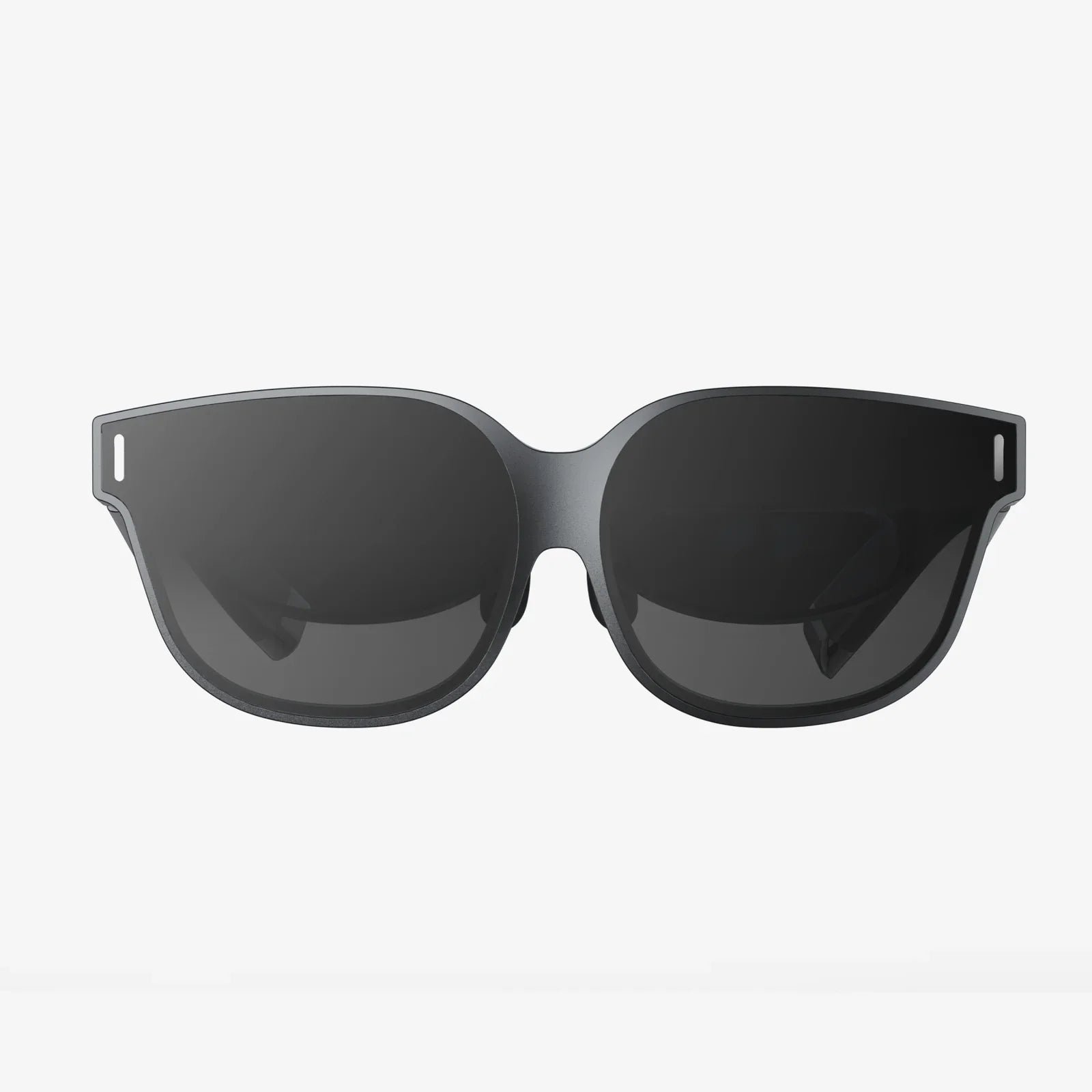
Imagine slipping on a headset and stepping into a world so perfect, so utterly convincing, that every sight, sound, and sensation is accepted by your mind as absolute truth. The dream of a perfect simulation, a digital existence indistinguishable from our biological reality, has captivated humanity for decades, from science fiction novels to cutting-edge labs. We are on a relentless march toward this pinnacle of technological immersion, but the path is strewn with monumental challenges that span far beyond mere pixels and processors. The quest to answer 'when' is a deep dive into the very nature of perception, consciousness, and what it means to be human.
The Pillars of Perfect Deception: Beyond Visual Fidelity
For most, the journey toward indistinguishable virtual reality begins and ends with graphics. We have made staggering progress, moving from blocky polygons to near-photorealistic environments in just a few decades. High dynamic range, ray tracing, and ever-increasing resolutions have brought us to the brink of visual authenticity. However, true indistinguishability demands more than a static, high-resolution image.
The human visual system is an exquisite and nuanced instrument. Fooling it requires mastering dynamic elements: the way light refracts through a glass of water, the subtle caustics dancing on a pool floor, the perfect micro-shadow cast by an eyelash, and the way atmosphere and particulate matter affect distant objects. It requires a complete absence of visual artifacts—no screen door effect, no motion blur that feels unnatural, and absolutely no latency between your head movement and the world's adjustment. The frame rates must soar into the hundreds, perhaps even thousands, to match the fluidity of natural sight. We are solving these problems incrementally, but the computational power required to render such complexity in real-time is currently the stuff of supercomputers, not consumer devices.
The Unseen Symphony: Auditory, Haptic, and Olfactory Immersion
Vision may be our primary sense, but it is not our only one. A perfect reality is a multi-sensory symphony. Today's spatial audio technology is remarkably advanced, capable of convincingly simulating sound sources in a 3D space. Yet, true auditory indistinguishability would need to replicate the acoustic properties of every material and environment with perfect accuracy—the echo in a grand cathedral versus the muffled silence of a snow-blanketed forest.
More daunting are the realms of touch and smell. Haptic feedback currently consists of vague rumbles and vibrations. Indistinguishability requires the ability to feel the grain of wood, the chill of ice, the pressure of a handshake, and the gentle brush of a breeze against your skin. This likely necessitates a combination of advanced force-feedback exoskeletons, ultrasonic mid-air haptics, and perhaps even neural interfaces to bypass the limbs entirely and simulate sensation at the source. Olfaction, the most primal and memory-linked sense, presents its own wild challenge. A convincing reality would need to generate a complex, dynamic bouquet of smells on demand—from coffee and rain to exhaust fumes and perfume—a feat far beyond simple scent cartridges.
The Brain's Boot Sequence: The Latency Problem
The most critical and often overlooked barrier is latency—the delay between an action and the sensory feedback. The human brain is exquisitely tuned to detect even the slightest lag. A mere 20-millisecond delay between turning your head and the image updating can be enough to cause disorientation and nausea, breaking the illusion entirely. This is known as the vestibular-ocular conflict.
Achieving true indistinguishability requires latency figures that are virtually unmeasurable, likely well below 5 milliseconds. This is not just a graphics processing problem; it's a systems engineering nightmare. Every step in the chain—from tracking your movement, processing the physics, rendering the scene, transmitting the signal (if wireless), and displaying it on the screens—must occur with near-instantaneous speed. It demands a holistic rethinking of computer architecture, prediction algorithms, and display technology. Until our systems can operate at the speed of thought, a faint but perceptible veil will always hang between us and the simulation.
The Final Frontier: Neural Interfaces and The End of The Headset
Ultimately, the limitations of screens, speakers, and gloves may be insurmountable for achieving a perfect facsimile of reality. The light entering your eyes in reality comes from external sources; in VR, it's emitted from a screen inches away. This fundamental difference means our current approach might always have a ceiling.
The true endgame, the point where virtual reality becomes truly indistinguishable, lies in bypassing the senses altogether. This is the realm of brain-computer interfaces. Instead of crafting elaborate external stimuli, the simulation would directly interface with the brain's sensory cortex, feeding it perfectly crafted electrical signals that are identical to those generated by the real world. You wouldn't 'see' a display; your visual cortex would be convinced it is seeing a real tree. You wouldn't 'feel' a haptic vibration; your somatosensory cortex would be convinced it is touching real bark.
This technology is in its absolute infancy. While we can rudimentarily interpret neural signals and create simple visual perceptions in labs, we are light-years away from the complex, high-bandwidth, bidirectional communication required for full immersion. The ethical and philosophical implications are profound, raising questions about identity, agency, and the very definition of reality itself.
The Philosophical and Psychological Hurdles
Even if we solve all the technical challenges, a final barrier remains: the human mind itself. Our perception of reality is not a perfect recording; it is a constructed model heavily influenced by context, expectation, and prior knowledge. This is why we can still enjoy a black-and-white film or a cartoon—our brain accepts the rules of the medium.
Would we ever truly forget we are in a simulation, even a perfect one? The knowledge that we willingly entered the experience might always linger in the back of our consciousness, a 'safety blanket' that prevents total belief. Furthermore, creating a reality that is truly indistinguishable means simulating not just pleasant experiences, but also pain, grief, boredom, and discomfort. Would users accept such an experience? The psychological impact of living in a perfectable world, where the harshness of reality can be switched off, could have profound and unpredictable consequences for the human psyche.
A Timeline of Convergence
So, when will it happen? Predictions are inherently flawed, but we can forecast based on trajectories. Incremental improvements in display, audio, and haptic technology will likely deliver stunningly realistic experiences within the next 10-20 years. These will be compelling, powerful, and transformative, but they will not be indistinguishable. A trained eye (and ear, and hand) will still know it is synthetic.
The leap to true indistinguishability via direct neural integration is a different matter. It represents a fundamental paradigm shift, not an iteration. Given the immense scientific hurdles, this is unlikely to occur before the second half of this century, if then. It will not arrive as a single product launch but as a gradual convergence of technologies from neuroscience, computing, materials science, and AI.
The journey to answer this question reveals that the goal is not a mere technical spec sheet. It is a moonshot project that forces us to confront the deepest questions about our own consciousness. We are not just building better gadgets; we are attempting to reverse-engineer the human experience itself, and in doing so, we are learning what makes that experience real in the first place.
The line between the born and the built is set to blur in ways we can scarcely imagine. The ultimate VR headset won't be a device you hold in your hands, but one that seamlessly merges with the very fabric of your perception, challenging everything you know about your place in the universe. The countdown to that moment has already begun, and its arrival will redefine reality not as a constant, but as a choice.
Share:
Smart Work Space: The Ultimate Guide to Building a Future-Proof and Productive Environment
Smart Work Space: The Ultimate Guide to Building a Future-Proof and Productive Environment