


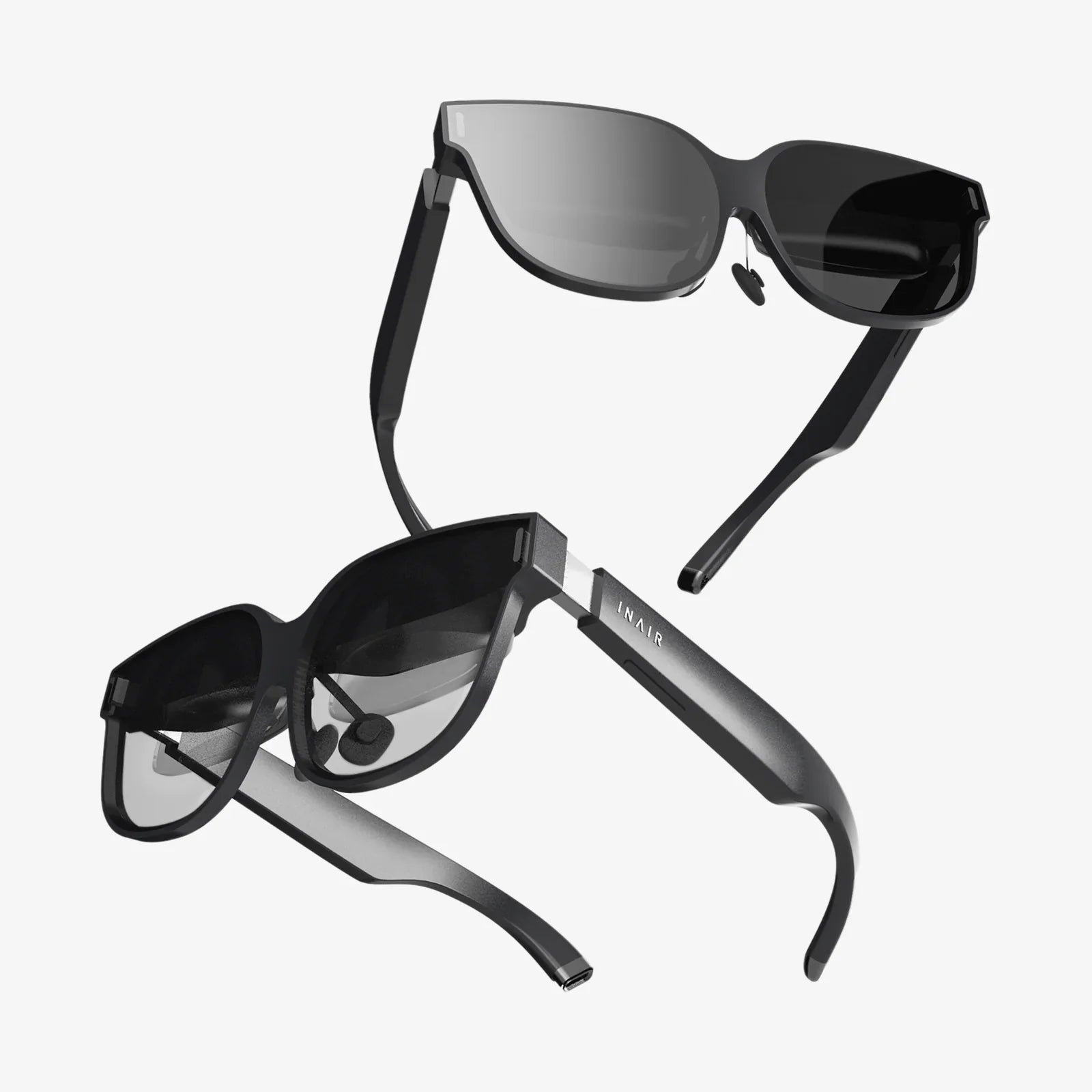
Imagine a world where digital information doesn't just live on a screen but is seamlessly woven into the fabric of your physical reality, enhancing everything you see, do, and learn. This is no longer the stuff of science fiction; it's the powerful promise of augmented reality (AR), a technology poised to revolutionize nearly every facet of our personal and professional lives. From the moment you wake up to the way global corporations design and build, AR is unlocking potentials we are only beginning to understand. The question is no longer if AR will be impactful, but rather, just how vast its reach will be.
Transforming the Classroom and the Training Ground
The educational sector represents one of the most profound and impactful arenas for augmented reality. By overlaying digital information onto textbooks, models, and even the classroom itself, AR transforms passive learning into an interactive, immersive experience.
Imagine a history lesson where students can point a device at an ancient ruin in their textbook and watch a detailed, 3D reconstruction spring to life, complete with animated figures going about their daily routines. Biology students can dissect a virtual frog, exploring complex anatomical systems layer by layer without the need for physical specimens. Complex mathematical concepts become tangible as 3D graphs and geometric shapes materialize on a student's desk, allowing them to manipulate variables and see the results in real-time. This interactive approach caters to diverse learning styles, boosts engagement, and fosters a much deeper understanding of abstract subjects.
Beyond K-12 and higher education, AR is revolutionizing professional training and skill development. Medical students can practice intricate surgical procedures on virtual patients, receiving real-time feedback on their technique without any risk. Mechanics-in-training can see internal components of an engine highlighted through their AR headset, with step-by-step repair instructions superimposed directly onto the machinery they are working on. This "see-what-I-see" capability is also invaluable for remote mentoring, where an expert can guide a novice through a complex task by annotating their live field of view from thousands of miles away.
Revolutionizing Healthcare and Saving Lives
In the high-stakes world of healthcare, augmented reality is moving from a novel tool to a critical component of patient care, medical training, and complex procedures. Its ability to provide clinicians with intuitive, hands-free access to information and visualization is proving to be a game-changer.
One of the most promising applications is in surgery. Surgeons can wear AR headsets that project critical patient data—such as heart rate, blood pressure, and oxygen levels—directly into their line of sight, eliminating the need to look away at monitors. More advanced systems can overlay 3D reconstructions from CT or MRI scans directly onto the patient's body, effectively giving the surgeon "X-ray vision" to see beneath the skin and navigate around critical structures like blood vessels and tumors with unprecedented precision. This enhances accuracy, reduces operation time, and minimizes invasiveness.
AR also offers significant benefits for patient education and rehabilitation. A doctor can use an AR model to explain a diagnosis or a planned surgical procedure to a patient, making a complex medical situation much easier to understand. In physical therapy, patients can perform exercises while an AR system tracks their movements and provides corrective feedback, ensuring they are performing repetitions correctly to maximize recovery. Furthermore, AR can assist in vein visualization, making it easier for nurses to locate veins for injections, especially in patients with difficult venous access, thereby reducing patient discomfort and improving success rates.
Powering the Future of Retail and E-Commerce
The retail landscape is undergoing a seismic shift, and augmented reality is at the forefront, blurring the lines between online browsing and in-store shopping. It solves a fundamental problem of e-commerce: the inability to try before you buy, thereby reducing purchase hesitation and minimizing returns.
The most common application is virtual try-on. Customers can use their smartphone cameras or webcams to see how glasses, makeup, jewelry, or hats would look on their own faces. In the fashion industry, AR mirrors in fitting rooms allow shoppers to try on different colors and sizes of clothing without physically changing. The furniture and home decor sector has been massively transformed by AR apps that enable users to place true-to-scale 3D models of sofas, tables, and lamps into their own living spaces. You can walk around a virtual piece of furniture, see how it fits with your existing decor, and check that it's the right size before committing to a purchase.
Inside physical stores, AR can enhance the shopping experience through interactive displays. By scanning a product with their phone, a customer might see detailed specifications, customer reviews, demonstration videos, or information about sustainable sourcing. This creates a rich, informative, and engaging shopping journey that empowers consumers to make more confident purchasing decisions.
Driving Efficiency in Manufacturing and Industrial Design
In industrial settings, often referred to as Industry 4.0, augmented reality is a key technology for improving efficiency, reducing errors, and streamlining complex processes. It provides workers with contextual information right at the point of need, hands-free.
Assembly line workers can use AR glasses to see digital work instructions overlaid directly onto the physical components they are assembling. Instead of consulting paper manuals or computer screens, they see animated arrows highlighting the next part to install, along with torque specifications and safety warnings. This drastically reduces assembly time and error rates, especially for complex or low-volume production runs.
Maintenance and repair technicians benefit enormously from AR. When servicing a complex machine, they can see internal parts highlighted, access the relevant schematics, and follow a guided step-by-step procedure with animations showing the exact tools and movements required. Remote experts can see what the on-site technician sees and provide visual annotations to guide them, reducing downtime and the need for expensive travel.
Furthermore, AR is used extensively in the design and prototyping phase. Engineers and designers can project full-scale 3D models of new products into a physical space, allowing them to evaluate ergonomics, identify potential design flaws, and make collaborative decisions long before a physical prototype is ever built, saving significant time and resources.
Redefining Navigation and Urban Exploration
Augmented reality is set to change how we navigate and interact with our cities and built environments. It transforms the world itself into an intuitive and informative interface.
Imagine walking through an unfamiliar city and holding up your phone to see directions to your hotel superimposed as a floating path on the live camera view of the street. Restaurant reviews and ratings could pop up above their entrances, and historical facts about a monument could appear next to it as you approach. This contextual layer of data turns every walk into an interactive discovery tour.
Inside large and complex buildings like airports, hospitals, or university campuses, AR can provide intuitive indoor navigation. Instead of confusing signs, users can follow a digital path on their screen that guides them precisely to their gate, a specific department, or a professor's office. For drivers, AR navigation systems can project turning arrows and lane guidance directly onto the windshield, integrated with the real road ahead, making navigation safer and more intuitive than looking at a separate 2D map.
Creating Immersive Entertainment and Gaming Experiences
While gaming is often the first association with AR, its applications in entertainment extend far beyond catching virtual creatures in a park. It is creating new forms of interactive storytelling and blended experiences.
Location-based AR games encourage players to explore their real-world environment, turning parks, streets, and landmarks into game boards. Live events, such as concerts and sports games, are being enhanced with AR. Spectators at a stadium could point their phones at the field to see player stats overlay in real-time, or enjoy immersive visual effects that are only visible through their device. Museums and art galleries are using AR to bring exhibits to life, allowing ancient artifacts to tell their stories or enabling paintings to step out of their frames and perform.
In the home, AR is enabling new forms of interactive entertainment, from board games that incorporate digital characters and effects to streaming filters that allow viewers to participate in game shows or see themselves in the scene of a movie they are watching. The line between audience and performer is becoming increasingly blurred.
Enhancing Tourism and Cultural Heritage
For the tourism industry, augmented reality acts as a powerful digital tour guide, enriching the experience of exploring historical sites, museums, and new cities. It can resurrect the past and provide deep context to the present.
At a historical ruin, tourists can use their devices to see a site not as a crumbled foundation, but as a complete, bustling structure from centuries ago, rebuilt in stunning detail over the live camera feed. They can witness historical reenactments play out on the very ground where events occurred. Museums can use AR to provide additional layers of information about artifacts—watching a pot being forged, seeing a fossilized skeleton regain its flesh, or listening to a curator's explanation pop up as they view a painting.
This technology makes cultural heritage more accessible and engaging for all ages and backgrounds. It allows for personalized tours where visitors can choose what information they want to see, creating a unique and memorable experience that goes far beyond a placard on a wall.
Building Smarter Real Estate and Architecture
The real estate and architecture sectors are leveraging AR to visualize the future, market properties, and plan spaces with incredible accuracy. It allows stakeholders to see potential before a single brick is laid.
Real estate agents can offer virtual staging for empty properties, allowing potential buyers to use their phones to see how different furniture would fit and look in each room. For properties under construction or in the planning phase, developers can use AR to walk clients through a full-scale 3D model of the proposed building on the actual site, evaluating sightlines, spatial relationships, and the flow of the design.
Architects and urban planners use AR to project large-scale building designs into a real environment to assess their visual impact on the skyline and how they fit with the surrounding community. This facilitates better public consultations and more informed decision-making. Interior designers can experiment with different color schemes, lighting fixtures, and layouts in real-time, giving clients a true feel for the proposed design.
Optimizing Logistics and Warehouse Management
In the fast-paced world of logistics and warehouse management, where speed and accuracy are paramount, augmented reality is providing a significant competitive advantage by streamlining the picking, packing, and shipping processes.
Warehouse workers equipped with AR smart glasses can receive order information directly in their field of view. The most efficient route through the massive warehouse is displayed, guiding them to the exact shelf location. Once there, the system can highlight the correct item and indicate the quantity to be picked, virtually eliminating errors. This technology, known as vision picking, reduces training time for new employees, increases picking speed by up to 30%, and dramatically lowers error rates.
AR also assists in the loading phase. By scanning a pallet, an AR system can show the loader the optimal way to arrange packages for maximum stability and space utilization. It can also verify that the correct items have been loaded onto the correct truck, ensuring shipping accuracy. This entire hands-free system allows workers to operate more efficiently and safely without being tied to handheld scanners or clipboards.
The true power of augmented reality lies not in replacing our world, but in amplifying it. It is a bridge between human intuition and digital intelligence, offering a new lens through which to solve problems, acquire skills, and experience connection. As the technology becomes more sophisticated, affordable, and integrated into our daily devices, its applications will continue to expand in ways we can scarcely imagine today. We are standing at the threshold of a new, augmented epoch, and the view through that lens is nothing short of extraordinary.
Share:
What Is Augmented Reality Development: The Ultimate Guide to Building the Digital Overlay of Our World
VR AR Brand Strategies for Market Domination in the Immersive Age