


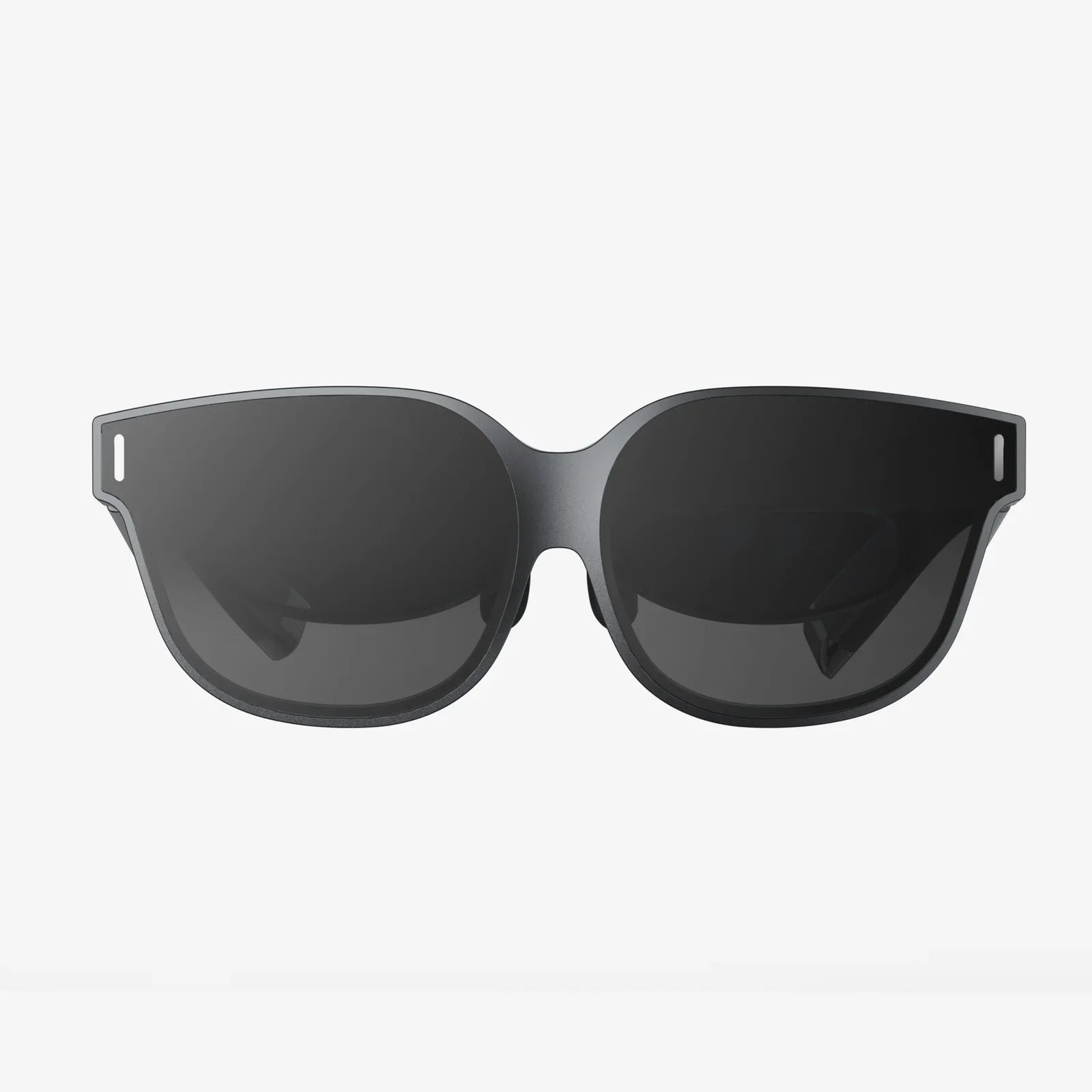
Imagine a world where digital information doesn't just live on a screen but is seamlessly woven into the fabric of your everyday life. You look at a complex machine and see floating diagnostic data pinpointing an issue. You point your device at a historical ruin and watch it rebuild itself before your eyes. You try on a new piece of furniture, seeing it perfectly scaled and placed in your living room before you buy a single screw. This is no longer the stuff of science fiction; it is the present and rapidly expanding reality of augmented reality (AR). The question is no longer if AR will become mainstream, but rather, where is augmented reality used right now, quietly revolutionizing industries and redefining human capability?
The Digital Layer on the Physical World
At its core, augmented reality is a technology that superimposes computer-generated images, sounds, and other sensory enhancements onto a user's real-world view. Unlike virtual reality, which creates a completely artificial environment, AR starts with the real world and adds to it. This is typically achieved through cameras and sensors on devices like smartphones, tablets, smart glasses, and headsets, which recognize the environment and project relevant digital content onto it. This fundamental principle of overlaying information is being applied in astonishingly diverse and impactful ways.
Transforming the Retail and E-Commerce Experience
One of the most visible and rapidly adopted applications of AR is in the retail sector. It directly addresses a critical limitation of online shopping: the inability to physically interact with a product.
- Virtual Try-On: Consumers can now ‘try on’ everything from makeup and sunglasses to watches and hats using their smartphone cameras. For apparel, advanced solutions allow users to see how clothing fits and moves on a digital avatar calibrated to their body measurements, drastically reducing sizing uncertainty and return rates.
- Furniture and Home Décor: This is perhaps one of the most compelling uses of AR. Applications allow users to place true-to-scale 3D models of sofas, tables, lamps, and art directly into their living space. They can walk around the virtual object, see how it looks from different angles with their existing décor and lighting, and make confident purchasing decisions without ever leaving home.
- In-Store Navigation and Information: Large retail stores are implementing AR through apps that help customers navigate aisles to find specific products. By simply pointing their phone, a user can see digital arrows guiding them to an item. Furthermore, pointing a phone at a product can trigger an overlay with additional information, customer reviews, or even similar alternative items.
Revolutionizing Healthcare and Medicine
In healthcare, AR is moving beyond novelty to become a critical tool for saving lives, improving outcomes, and enhancing medical training.
- Enhanced Surgical Precision: Surgeons are using AR headsets to overlay critical information—such as CT scans, MRI data, or 3D models of organs—directly onto their field of view during procedures. This allows them to see ‘through’ the patient’s tissue to locate tumors, arteries, or nerves with pinpoint accuracy without constantly looking away at a separate screen. This ‘X-ray vision’ reduces risk and improves surgical outcomes.
- Medical Training and Education: AR provides an unparalleled tool for teaching human anatomy and complex surgical procedures. Medical students can interact with detailed, life-sized 3D holograms of the human body, peeling back layers of muscle, bone, and organ systems. This interactive learning is far more effective than studying static textbooks or 2D screens.
- Patient Care and Rehabilitation: AR applications can help patients better understand their conditions by visualizing their own medical scans. In physiotherapy, AR games can guide patients through prescribed exercises, making rehabilitation more engaging and ensuring movements are performed correctly by providing real-time visual feedback.
- Vein Visualization: Devices using AR projection can map a patient's veins onto the surface of their skin, making it significantly easier for nurses to insert IVs or draw blood, especially in patients with difficult-to-locate veins.
Powering Industrial and Manufacturing Innovation
Perhaps the most mature and financially significant use of AR is in industrial settings, where it is streamlining complex processes and boosting productivity.
- Assembly, Maintenance, and Repair: Technicians working on complex machinery, from aircraft engines to industrial printers, can use AR glasses to see digital instructions and animations overlaid directly onto the physical components they are working on. This hands-free guidance can highlight the next step, show the correct torque settings for a bolt, or display a wiring diagram exactly where the wires are, reducing errors, training time, and downtime.
- Remote Expert Assistance: When a field technician encounters a problem they cannot solve, they can use AR glasses to stream their live point-of-view to an expert located anywhere in the world. The remote expert can then draw digital annotations—arrows, circles, notes—that appear in the technician's field of view, guiding them through the repair process as if they were standing right there. This saves enormous costs on travel and delays.
- Design and Prototyping: Engineers and designers use AR to visualize and interact with 3D prototypes at full scale before any physical prototype is built. They can examine the fit and function of parts within a larger assembly, identify potential design flaws early, and make iterative changes quickly and cheaply.
- Logistics and Warehousing: In massive warehouses, workers equipped with AR smart glasses can have the most efficient picking route displayed in their vision. The technology can highlight the exact shelf and bin where an item is located, significantly speeding up order fulfillment and reducing errors.
Redefining Education and Training
AR is breaking down the walls of the traditional classroom, turning abstract concepts into interactive, immersive experiences.
- Interactive Learning: Students studying astronomy can hold the solar system in their hands, watching planets orbit the sun. Chemistry students can combine virtual atoms to see molecular structures form. History classes can take AR-enabled field trips to historical sites, seeing ancient buildings reconstructed over the present-day ruins.
- Skill-Based Training: Beyond academics, AR is used for vocational training. Mechanics can learn to repair engines, welders can practice their techniques, and electricians can simulate wiring a circuit—all with virtual guidance and without the risk, cost, or waste of physical training tools.
- Accessible Education: AR can provide additional layers of information and context that make learning more accessible for students with different learning styles and abilities, turning passive learning into an active discovery process.
Enhancing Navigation and Travel
AR is beginning to change how we navigate both the digital and physical worlds.
- Windshield Navigation: Automotive heads-up displays (HUDs) are an early form of AR, projecting speed, directions, and safety alerts onto the windshield so drivers don't have to look away from the road. More advanced systems are in development to highlight hazards, pedestrians, and lane markings.
- Urban Exploration: Tourists exploring a new city can point their phone's camera at a street and see floating labels and information about restaurants, historical landmarks, and public transit options. Museums are using AR to bring exhibits to life, allowing artifacts to tell their stories through animation and narration.
- Indoor Navigation:
Large complexes like airports, shopping malls, and university campuses can use AR for precise indoor wayfinding, guiding users to their specific gate, store, or classroom with arrows overlaid on the live camera feed.
Entertainment, Gaming, and Social Media
This is the arena where most consumers first encountered AR, and it continues to be a powerful driver of adoption and innovation.
- Interactive Gaming: The phenomenal success of location-based AR games demonstrated the mass-market appeal of blending digital gameplay with physical exploration. Players navigate real-world neighborhoods to find and interact with virtual characters and objects.
- Social Media Filters and Lenses: Fun, whimsical, and often viral, AR filters on social media platforms allow users to add digital accessories, change their background, or apply playful effects to their selfies and videos. This has become a fundamental part of modern digital communication and expression.
- Live Events and Broadcasting: Sports broadcasts have used AR for years to overlay first-down lines on football fields or racing stats next to a driver's car. Concertgoers at live events can use AR apps to get additional information about the performance or see stunning digital effects layered over the stage.
The Future is Overlaid
The trajectory of AR points towards even deeper integration into our daily lives. The current reliance on handheld smartphones will gradually give way to more elegant, wearable form factors like stylish smart glasses. This will make the digital layer a constant, context-aware companion, providing information exactly when and where it's needed without requiring us to look down at a device. The convergence of AR with artificial intelligence and 5G connectivity will unlock even more powerful applications, from real-time language translation overlaid on street signs to hyper-personalized information about the world around us. The question of where augmented reality is used is evolving daily, expanding from specific industrial and consumer applications to a foundational technology that will redefine our relationship with information and with each other. The invisible digital layer is here, and it's permanently changing how we see everything.
Share:
Purpose of Augmented Reality: Bridging Our Digital and Physical Worlds
Presentation on Augmented Reality: Merging Our Digital and Physical Worlds