


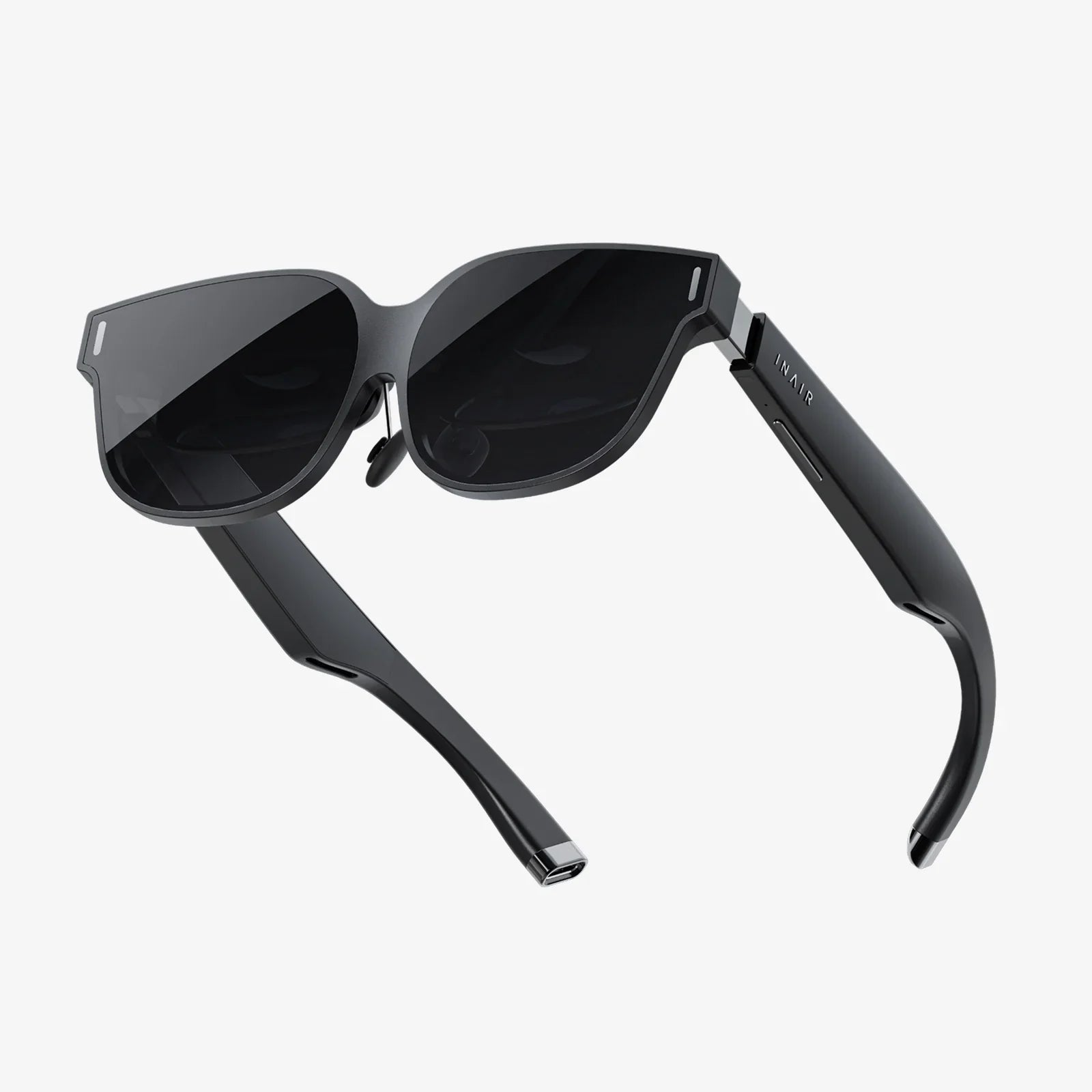
Imagine a world where the digital and the physical are no longer separate realms, but a seamless, interactive tapestry. This is the promise of Augmented Reality (AR), a technology not of distant science fiction, but of our immediate present and a future it is actively shaping. It’s a silent revolution overlaying our perception, and the question is no longer if it will become ubiquitous, but how it will redefine everything from how we work and learn to how we connect and perceive the world itself. The journey into this augmented world is one of the most significant technological narratives of our time, and understanding its depth is crucial for navigating the future it is building.
The Core Principle: A Layer of Digital Intelligence
At its essence, Augmented Reality is a technology that superimposes computer-generated perceptual information—be it visual, auditory, haptic, or even olfactory—onto our view of the real world. Unlike Virtual Reality (VR), which seeks to replace the user's environment with a simulated one, AR aims to enhance and augment the existing world. It adds a digital stratum of data and experience, making the invisible visible and the complex comprehensible. This is achieved through a sophisticated interplay of hardware and software designed to blend these two worlds convincingly.
The magic of AR lies in its ability to understand its environment. Through a combination of cameras, sensors, and advanced algorithms, an AR system performs a constant, real-time dance of tracking and registration. It maps the physical space, identifies surfaces like floors and tables, and understands depth and perspective. This allows digital objects to not only appear in your room but to sit convincingly on your desk, occluded by real objects, and remain locked in place as you move around them. This precise alignment is what sells the illusion and makes the augmentation feel like a natural part of the environment.
The Engine Room: How AR Technology Works
The seamless experience for the user is powered by a complex technological backbone. We can break down the core components that make AR possible.
Sensing and Perception
This is the system's window to the world. Cameras capture the live video feed of the user's surroundings. Inertial Measurement Units (IMUs), including accelerometers and gyroscopes, track the device's orientation and movement. More advanced systems employ depth sensors (like time-of-flight cameras or structured light projectors) to create a detailed 3D map of the environment. This sensor fusion—combining data from all these sources—is critical for creating a stable and accurate augmented experience.
Processing and Computation
The raw data from the sensors is meaningless without immense computational power. This is where Simultaneous Localization and Mapping (SLAM) algorithms come into play. SLAM allows the device to both map the unknown environment (mapping) and understand its own position within that environment (localization) at the same time. This real-time processing is computationally intensive, handled either by powerful onboard processors in dedicated headsets or, increasingly, by offloading tasks to cloud computing platforms for more complex rendering.
Display and Projection
This is how the user sees the augmentation. There are several primary methods:
- Smartphone and Tablet Displays: The most accessible form, using the device's screen as a viewfinder onto the augmented world.
- Smart Glasses and Headsets: These wearable devices use optical see-through or video see-through displays. Optical see-through uses semi-transparent mirrors or waveguides to project images directly into the user's eyes, allowing them to see the real world naturally. Video see-through uses cameras to capture the real world and then blends digital content onto the video feed shown on opaque displays.
- Spatial Projectors: Less common but emerging, this method projects light directly onto physical surfaces, turning any wall or table into an interactive display without the need for a headset.
Interaction Modalities
How does a user interact with a digital object that isn't physically there? AR systems employ innovative methods:
- Touch and Gesture: Touchscreens are common for mobile AR, while advanced systems use hand-tracking cameras to interpret gestures, allowing users to grab, push, or manipulate virtual objects with their hands.
- Voice Commands: Natural language processing enables users to summon information or control the interface through speech.
- Gaze and Dwell: Eye-tracking technology can allow a user to select an object simply by looking at it for a moment.
The Applications: Transforming Industries and Daily Life
The potential of AR extends far beyond playful filters. It is proving to be a powerful tool with profound applications across countless sectors.
Revolutionizing Enterprise and Industry
Perhaps the most immediate and valuable impact of AR is in the industrial workspace. It is creating a paradigm shift in how complex tasks are performed.
- Manufacturing and Maintenance: Technicians can wear smart glasses that overlay digital schematics, animated repair instructions, or performance data directly onto the machinery they are servicing. This reduces errors, slashes training time, and allows less experienced workers to perform complex procedures guided by remote experts who can see their view and annotate the real world.
- Logistics and Warehousing: AR can visually guide warehouse pickers to the exact shelf location of an item, displaying the most efficient route and verifying the correct product is selected, dramatically improving fulfillment speed and accuracy.
- Design and Prototyping: Engineers and designers can project full-scale 3D models of new products into a physical space, allowing them to evaluate ergonomics, fit, and aesthetics long before a physical prototype is built.
Redefining Retail and E-Commerce
AR is closing the gap between online shopping and the in-store experience. Consumers can now use their smartphones to see how a new sofa would look in their living room, accurately scaled and colored. They can virtually try on glasses, makeup, or even clothes, increasing confidence in online purchases and reducing return rates. In physical stores, AR can unlock additional product information, reviews, or styling suggestions simply by pointing a device at an item.
Transforming Education and Training
AR brings learning to life. Instead of reading about the solar system, students can have a miniature, accurate model orbit around their classroom. Medical students can practice procedures on detailed, interactive holograms of the human body. This interactive, visual form of learning enhances engagement and improves knowledge retention, moving education from passive absorption to active exploration.
Enhancing Healthcare
In healthcare, AR is more than a training tool. Surgeons can use head-mounted displays to overlay critical patient information—such as MRI data or vital signs—directly into their field of view during procedures, keeping their focus on the patient. It can also assist in precise vein location for injections or provide rehabilitative therapy through guided AR exercises.
Navigation and Wayfinding
Forget looking down at a blue dot on a map. The future of navigation is AR arrows and directions painted onto the road itself through your smartphone or glasses. This intuitive guidance can be used indoors at vast airports or shopping malls, or outdoors to highlight points of interest, creating a more contextual and seamless navigational experience.
The Challenges and Considerations: The Road Ahead
For all its promise, the path to a truly augmented world is not without significant hurdles and serious questions.
Technical Hurdles
The hardware must become smaller, lighter, more powerful, and more socially acceptable. Battery life remains a constraint for wearable devices. Achieving photorealistic rendering that perfectly matches the lighting and physics of the real world is incredibly difficult. Furthermore, creating a persistent and shared AR experience, where digital objects remain anchored in a location for multiple users to see and interact with, requires robust and ubiquitous connectivity and cloud infrastructure.
The Privacy Imperative
AR devices, by their very nature, are data-collection machines. They have constant cameras and sensors scanning your environment, your home, your workplace, and the people around you. This raises monumental privacy concerns. Who owns this spatial data? How is it stored and used? The potential for persistent surveillance is unprecedented, demanding robust ethical frameworks and clear, transparent regulations to prevent misuse and protect individual privacy before these devices become widespread.
The Social and Psychological Impact
What happens when we all see a different, personalized version of reality? Will it enhance our shared experience or fracture it? There is a risk of digital addiction and a further retreat into personalized digital bubbles. The line between the real and the virtual may blur to a point where it becomes difficult to distinguish, potentially impacting mental health and our fundamental relationship with the un-augmented world. Furthermore, the digital divide could widen into an experiential divide, where access to AR information and tools creates new socioeconomic disparities.
A Glimpse into the Future: The AR Horizon
The ultimate evolution of AR points toward a concept often called the spatial web or mirrorworld—a pervasive, internet-connected digital layer over the entire physical planet. In this future, every place and object could have a digital twin, rich with information and interactivity. This would fundamentally change how we access information, which would no longer be confined to screens but embedded in the world around us.
The long-term vision involves technology so seamless it becomes almost invisible. Think of lightweight, stylish glasses, or even contact lenses, that can project high-fidelity holograms. This would untether us from handheld devices, allowing for truly immersive and hands-free augmented interactions. In this world, the physical and digital will be inextricably linked, creating new forms of art, entertainment, social connection, and commerce that we are only beginning to imagine.
The journey into our augmented future is already underway, its foundations being laid in our phones, factories, and classrooms today. It's a future brimming with the potential to solve real-world problems, amplify human capability, and unlock new forms of creativity and connection. But it is also a future that demands our careful consideration, proactive ethical discussion, and thoughtful guidance. The technology itself is neutral; its impact is defined by us. The question is not just which AR, but which future we will choose to build with it.
Share:
Black VR Goggles: A Portal to New Realities and the Future of Immersion
Digital Video Products Are Reshaping Our Reality: A Deep Dive into the Revolution