


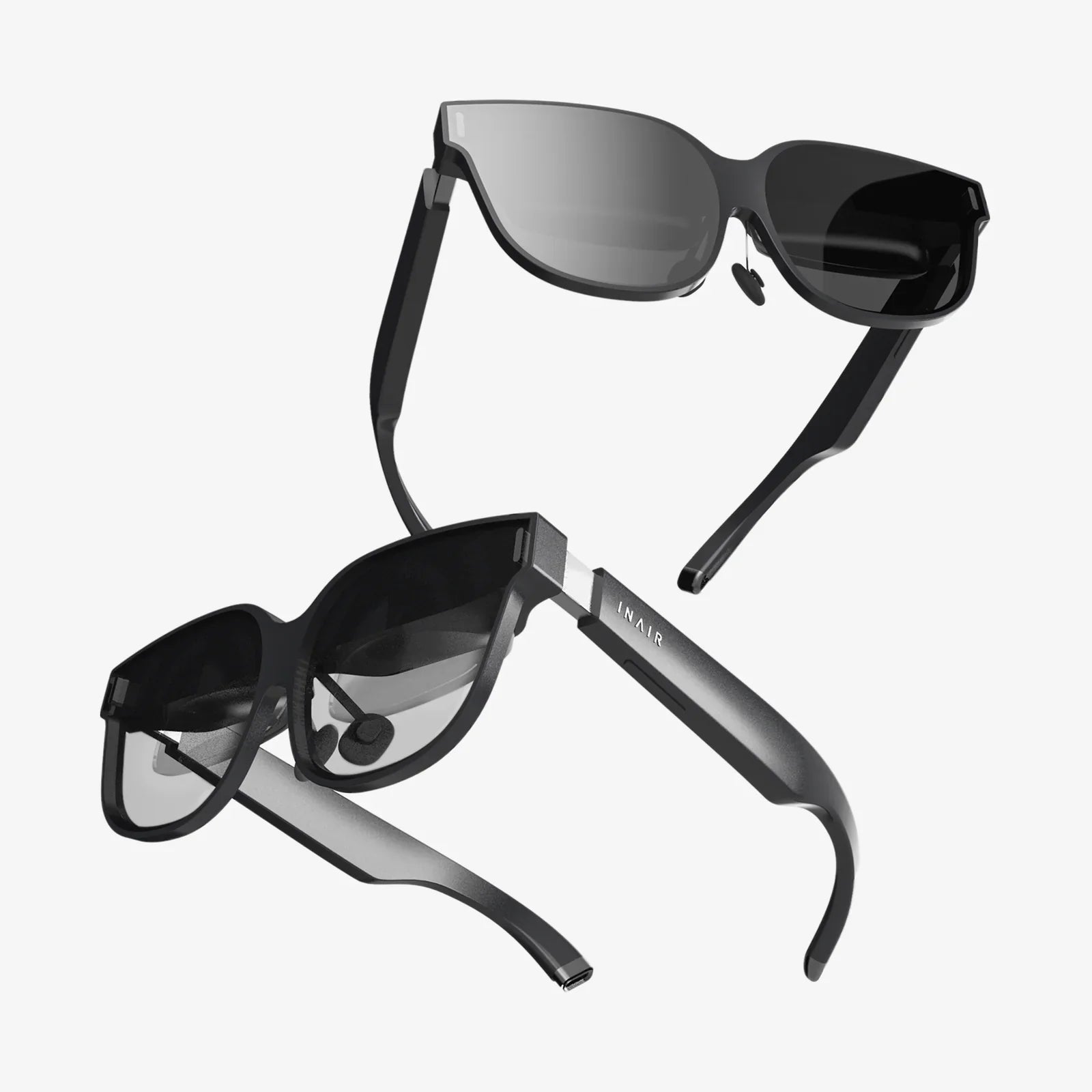
You put on a headset, expecting to be transported to a new world, but instead, you’re peering through a cramped, narrow window. The magic fades instantly. This is the single biggest immersion-breaker in augmented reality, and the quest to solve it hinges on one crucial technical specification: the field of view. If you've ever wondered which AR headsets offer the widest field of view, you're asking the right question to unlock true digital immersion. The answer is more complex—and fascinating—than a simple list of specs.
The Immersive Gateway: Why Field of View Is Everything
Field of View, or FoV, is the extent of the observable world a user can see at any given moment through their AR headset's display. Measured as an angular distance, typically in degrees diagonally (and sometimes horizontally or vertically), it is the digital equivalent of your peripheral vision. A human's natural binocular field of view is approximately 210-220 degrees horizontally. Any AR experience that falls significantly short of this figure creates what developers call the "binoculars" or "scuba mask" effect—a persistent, distracting reminder that you are looking at a simulation, not living an experience.
A wide FoV is not a mere luxury; it is the foundational pillar of presence—the sensation of truly "being there" in a virtual environment. It enables practical, real-world applications. An architect visualizing a full-scale building model needs to see it in its entirety without turning their head constantly. A surgeon overlaying guidance data onto a patient requires an unobstructed, comprehensive view. A technician repairing complex machinery needs contextual information across their entire visual field, not just a small box in the center. A narrow FoV cripples these use cases, forcing constant, awkward head movements that break concentration and induce fatigue.
The Technical Hurdles: The Physics of Expanding Your Vision
Creating a wide field of view is one of the most significant engineering challenges in AR hardware. It's not as simple as just using a bigger display. The pursuit of a wide FoV involves a delicate and often expensive balancing act between several competing factors.
Optical Waveguide Limitations
Many modern AR headsets rely on waveguide technology, where light from a micro-display is "piped" through a transparent glass or plastic substrate before being projected into the user's eye. While excellent for creating sleek, socially acceptable form factors, waveguides inherently struggle with FoV. The physics of in-coupling and out-coupling light within the waveguide places a hard limit on the maximum achievable angle. Pushing beyond approximately 50-55 degrees diagonally requires incredibly complex and expensive nanostructuring on the waveguide surface, dramatically increasing manufacturing difficulty and cost.
The Form Factor Trade-Off
Other optical architectures, like free-space combiners or birdbath optics, can achieve a wider FoV more easily. However, they often do so at the expense of size and weight. These systems typically require more space between the display engine and the eye, resulting in bulkier, more protrusive headsets. The eternal trade-off in AR design is therefore between a wide, immersive field of view and a small, lightweight, comfortable form factor. You simply cannot have both with today's technology.
Resolution and Performance Cost
A wider FoV doesn't just mean more pixels; it means a lot more pixels. Doubling the FoV can quadruple the number of pixels the graphics processor needs to render to maintain the same level of detail and pixel density (pixels per degree). This places an enormous strain on the processing unit, demanding more powerful—and more power-hungry—chips. This leads to increased heat generation and reduced battery life, creating a thermal and power management nightmare that must be solved alongside the optical challenge.
Beyond the Numbers: What the Spec Sheet Doesn't Tell You
When comparing specifications, it's vital to understand that not all FoV measurements are created equal. A manufacturer might list a diagonal FoV, a horizontal FoV, or sometimes just a single number without context. A headset with a 50° diagonal FoV offers a vastly different experience from one with a 50° horizontal FoV. Furthermore, the shape of the FoV matters. Is it a perfect circle, a rounded rectangle, or an irregular shape? These nuances dramatically affect the perceived immersion.
Perhaps even more critical is the concept of eye-box. A headset might boast a 90-degree FoV on paper, but that measurement is only valid if your eye is perfectly positioned within a specific, often small, three-dimensional volume in front of the lens. Move your eye slightly outside this "eye-box," and the image will vignette, distort, or disappear entirely. A wide FoV is useless if it isn't accessible and stable for a wide range of facial structures and head movements. High-quality headsets design their optics and mechanical adjustments to maximize the usable eye-box, ensuring the promised FoV is actually delivered consistently.
The Current Landscape: Pushing the Boundaries of Perception
While specific brands cannot be named, the market can be segmented into categories based on their approach to FoV, highlighting the different philosophies at play.
The Consumer & Enterprise Mainstream
Many popular headsets in the consumer and enterprise space currently occupy a FoV range between 40 and 55 degrees diagonally. This represents the current sweet spot, balancing acceptable immersion with compact design, reasonable processing requirements, and manufacturable optics. For many productivity and communication applications, this range is sufficient, providing a stable window into the digital world without being overly cumbersome.
The High-End Immersive Segment
This is where the boundaries are being pushed. A select group of headsets, often designed for specialized industrial, medical, or defense applications, prioritize immersion above all else. These devices leverage alternative optical designs, such as free-form optics or multi-element lens groups, to achieve fields of view that can exceed 70, 90, or even 100 degrees diagonally. The trade-off is immediate and obvious: these headsets are significantly larger, heavier, and far more expensive. They are not meant for all-day wear but for specific, high-value tasks where maximum situational awareness is critical. They represent the current bleeding edge of what is commercially possible.
The Research Frontier
Looking beyond commercial products, research labs and startups are demonstrating technologies that promise to shatter these barriers. Concepts involving holographic optics, advanced laser beam scanning, and even direct retinal projection are in active development. These technologies aim to deliver a human-like FoV in a form factor resembling regular eyeglasses. While these are not yet consumer-ready, they signal a future where the FoV compromise may finally be overcome.
The Future Is Wide: Where FoV Technology Is Headed
The industry is not standing still. Several key technological advancements are poised to make wide-field-of-view AR more accessible and affordable.
Advances in nanofabrication will allow for the creation of more efficient and complex waveguide structures that can support larger exit pupils and wider angles. The development of specialized foveated rendering techniques, where only the center of the user's gaze is rendered in full resolution, will drastically reduce the GPU load associated with wide FoVs. Breakthroughs in micro-LED displays offer incredibly bright and efficient light sources that are ideal for coupling into next-generation waveguides. Finally, the integration of varifocal and light-field technologies will not only manage FoV but also solve other critical immersion issues like vergence-accommodation conflict, making prolonged use in wide-FoV headsets comfortable and natural.
Choosing Your Window to the World
So, which AR headset offers the widest field of view? The true answer depends on your priorities. The absolute widest FoVs are found in specialized, high-performance units designed for professionals where cost and size are secondary to capability. For the broader market, the widest available FoVs are found in devices that explicitly prioritize this specification, often accepting a larger form factor as a result.
The most important takeaway is to look beyond the marketing number. When evaluating a headset, consider the quality of the FoV just as much as the quantity. How stable is the image? How large is the eye-box? What are the trade-offs in resolution, brightness, and battery life? The ideal headset provides a wide, stable, and bright window into the digital world, making the technology itself disappear and leaving only the magic of augmented reality. The race to achieve this perfect vision is driving the most exciting innovations in the industry today.
Imagine an AR experience where the digital and physical worlds blend so seamlessly that you can't tell where one ends and the other begins—where information and imagination fill your entire vision without borders or boundaries. This is the promise held by the relentless pursuit of a wider field of view, and it's a future that is coming into focus faster than ever before. The next time you try a headset, you won't just be looking for a screen; you'll be evaluating a portal, and its size will define your entire reality.
Share:
Best AR Headsets for Developers 2025: The Ultimate Toolkit for Spatial Computing Pioneers
Web AR App: The Future of Accessible Augmented Reality is Here