


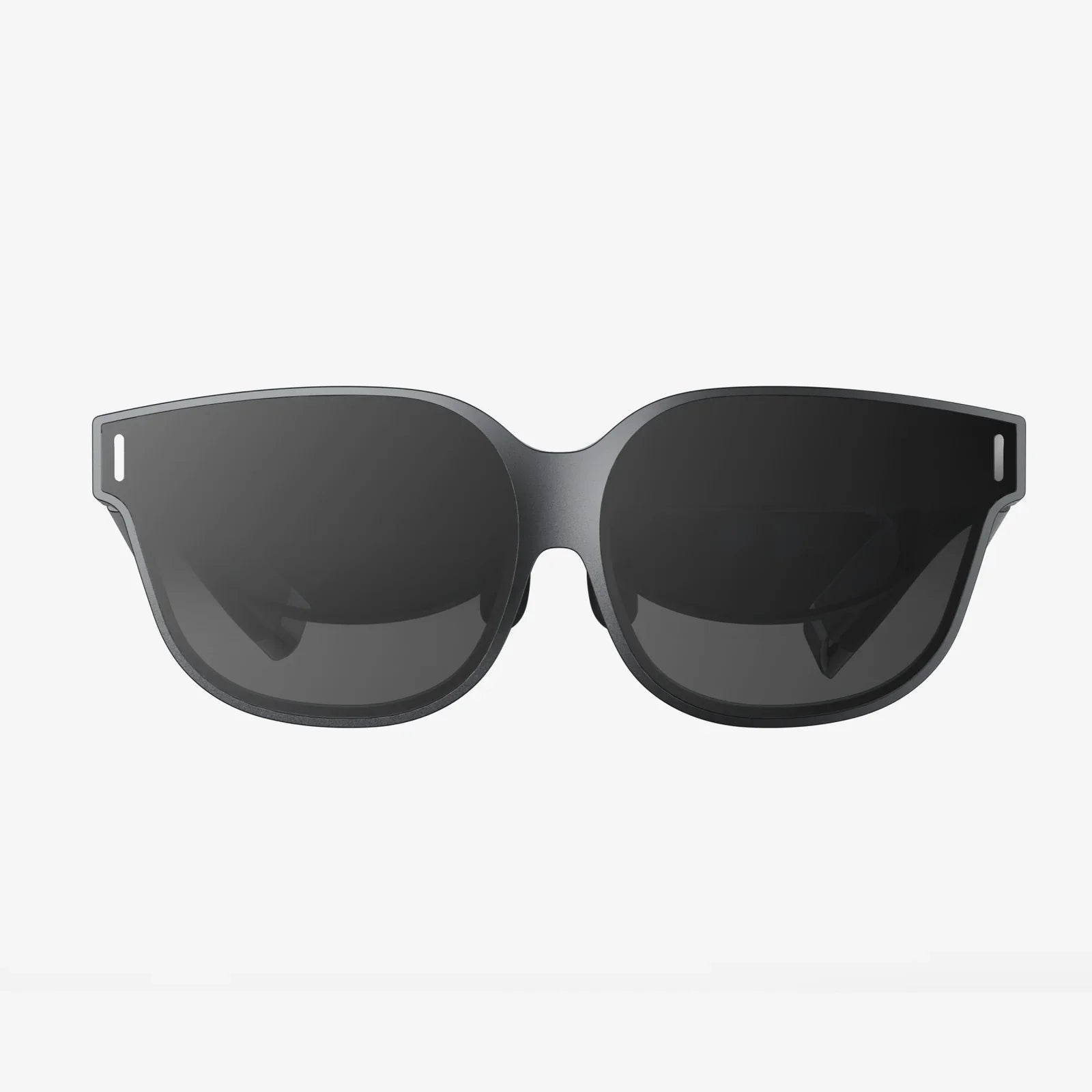
Imagine stepping into a breathtaking augmented world where digital dinosaurs roam your living room and interactive tutorials float before your eyes, all in perfect, crystal-clear focus tailored specifically to your vision. For the millions who rely on prescription glasses, this seamless immersion has often felt like a distant dream, hindered by the clumsy reality of wearing a headset over spectacles. But the tide is turning. The critical question for anyone with less-than-perfect eyesight is no longer just about processing power or field of view, but a more fundamental one: which AR headsets support prescription lenses? The answer unlocks the door to true comfort and unparalleled visual fidelity in the metaverse, and it’s more accessible than you might think.
The Fundamental Challenge: Blending the Digital and Optical Realms
Augmented reality technology operates on a simple yet profound principle: overlaying computer-generated imagery onto the user's perception of the real world. This requires precise optical systems, including waveguides, holographic lenses, and micro-displays, all engineered to project light directly into the user's eyes. For individuals with common refractive errors like myopia (nearsightedness), hyperopia (farsightedness), or astigmatism, these fixed-focus optical systems render the digital content blurry and unusable. It’s akin to a person with 20/20 vision trying to read text on a screen placed at the wrong distance; the information is there, but it’s fundamentally inaccessible without correction.
Historically, users have resorted to three less-than-ideal workarounds:
- Wearing Glasses Inside the Headset: This is often uncomfortable, creates pressure points on the nose and temples, can scratch both the headset's lenses and the user's own glasses, and frequently compromises the headset's light-sealing design, allowing external light to bleed in and ruin immersion.
- Using Contact Lenses: While effective for some, contacts are not a universal solution. They can cause dry eyes, especially during extended headset use, and many people simply find them irritating or cannot wear them due to medical reasons.
- Purchasing Third-Party Adapter Kits: Various companies offer magnetic inserts or custom-made lens adapters. While these can be effective, they add cost, complexity, and another potential point of failure. Users must also trust a third party with the precise measurements and quality of a critical optical component.
These solutions are functional stopgaps, but they fall short of the seamless, integrated experience that modern technology promises. This is why native support for prescription lenses is becoming a key differentiator and a major focus for headset manufacturers aiming for mainstream adoption.
Methods of Prescription Lens Integration
Not all headset designs approach the problem the same way. The industry has settled on a few primary methods for integrating corrective vision, each with its own advantages and trade-offs.
1. The Magnetic Insert System
This is currently the most popular and user-friendly method adopted by several leading AR headset creators. The headset is designed from the outset with a small recess or mount points around its primary optical assembly. Custom-made prescription lens inserts, crafted to the user's exact prescription, are then equipped with powerful, slim magnets that allow them to snap securely into place directly in front of the headset's built-in lenses.
Advantages:
- Non-Permanent: The inserts can be easily removed in seconds, allowing multiple users with different vision needs to share the same headset effortlessly.
- Secure Fit: The magnetic connection is strong enough to withstand vigorous movement but weak enough for intentional removal without tools.
- Protection: The inserts act as a protective barrier, preventing dust, sweat, and fingerprints from reaching the headset's more expensive and complex native lenses.
Considerations: This system requires users to purchase the inserts as a separate accessory, representing an additional cost on top of the headset itself.
2. Custom-Built Prescription Lenses
Some manufacturers, particularly those creating headsets for enterprise and professional use, offer a much more integrated solution. In this model, the headset's original lenses are not generic plano lenses but are instead manufactured to the user's specific prescription from the very beginning. The prescription is literally baked into the core optical stack of the device.
Advantages:
- Optimal Performance: By being part of the primary optical path, these custom lenses can potentially offer the best possible visual clarity and minimal distortion, as they are optimized in tandem with the display system.
- Seamless User Experience: There is nothing extra to attach or remove; the headset is simply ready to use with perfect vision correction out of the box.
Considerations: This is a permanent, non-removable solution. The headset becomes personalized to a single user, making it impractical for shared environments. It also typically involves a more complex and lengthy ordering process.
3. Adjustable Diopter Dials
A less common but highly convenient mechanical solution is the inclusion of a physical dial on the headset that allows users to adjust the optical focus, much like binoculars or a microscope. By turning the dial, users can add a certain range of positive or negative diopter correction to compensate for their nearsightedness or farsightedness.
Advantages:
- Instant Adjustment: No need for additional accessories or custom orders. Users can dial in their perfect focus in moments.
- Sharing Friendly: Different users can quickly readjust the headset to their vision needs.
Considerations: This method typically only corrects for spherical power (myopia/hyperopia) and cannot correct for astigmatism or more complex prescriptions, limiting its usefulness for a significant portion of the population. The range of adjustment is also finite, often capping at around -6.0 to +2.0 diopters.
Key Considerations When Choosing a Headset for Vision Correction
Beyond just checking a "yes" box for prescription support, savvy users should dig deeper into the specifics of the implementation.
- Your Full Prescription: It is imperative to know your complete prescription, including Sphere (SPH), Cylinder (CYL) for astigmatism, Axis, and Pupillary Distance (PD). Not all support systems can handle high CYL values or complex prescriptions. Magnetic inserts are generally the most accommodating for a wide range of vision needs.
- Lens Coatings: When ordering custom inserts, inquire about available coatings. Anti-reflective (AR) coating is essential for reducing glare from the headset's internal displays. Blue light filtering and anti-fog coatings can also significantly enhance comfort during long sessions.
- IPD Adjustment: Interpupillary Distance (the distance between your pupils) is a critical setting for visual comfort and preventing eye strain. Many high-end headsets feature physical or software-based IPD adjustment. Ensure your chosen headset's IPD range comfortably encompasses your measurement for the best experience, with or without prescription inserts.
- The Ordering Process: For magnetic inserts, the process is typically straightforward. The headset manufacturer will partner with a certified optical lab. You input your prescription details and PD into a secure online form, and the inserts are shipped directly to you. For custom-built headsets, you will likely need to provide a prescription from your optometrist directly to the manufacturer.
- Cost and Availability: Prescription inserts usually range in cost, representing a meaningful but necessary investment for clear vision. Check the availability for your region and the estimated production time.
The Future is Clear: Accessibility as a Standard
The conversation around prescription support is part of a larger movement in technology: universal design and accessibility. As AR technology evolves from a niche enthusiast product into a general-purpose computing platform, designing for the full spectrum of human ability is no longer optional—it's imperative. Forward-thinking companies now view built-in support for vision correction not as a premium add-on, but as a core feature, akin to supporting different languages or offering colorblind modes.
Future innovations may include electro-active lenses that can change their correction on the fly, dynamic focus systems that mimic the human eye's ability to shift between near and far objects (solving the vergence-accommodation conflict), and even more seamless integration of eye-tracking with vision correction for advanced interfaces. The goal is a future where putting on an AR headset is as natural and personalized as putting on a pair of glasses, with the digital world rendered in perfect clarity for every individual, regardless of their physical vision.
So, the next time you marvel at a demo of virtual furniture in your real home or a complex engineering schematic hovering in mid-air, remember that the magic isn't just in the pixels themselves, but in the ability to see them with razor-sharp precision. The era of straining to see the future through blurry, awkward lenses is finally coming to a close. The leading headsets are now embracing a simple truth: for augmented reality to truly enhance our world, it must first see us clearly, and that means building a future where perfect vision is built right in, ready to welcome everyone into the experience.
Share:
Hologram in PC: The Future of Immersive Computing is Here
AR Software: The Invisible Layer Reshaping Our Reality