


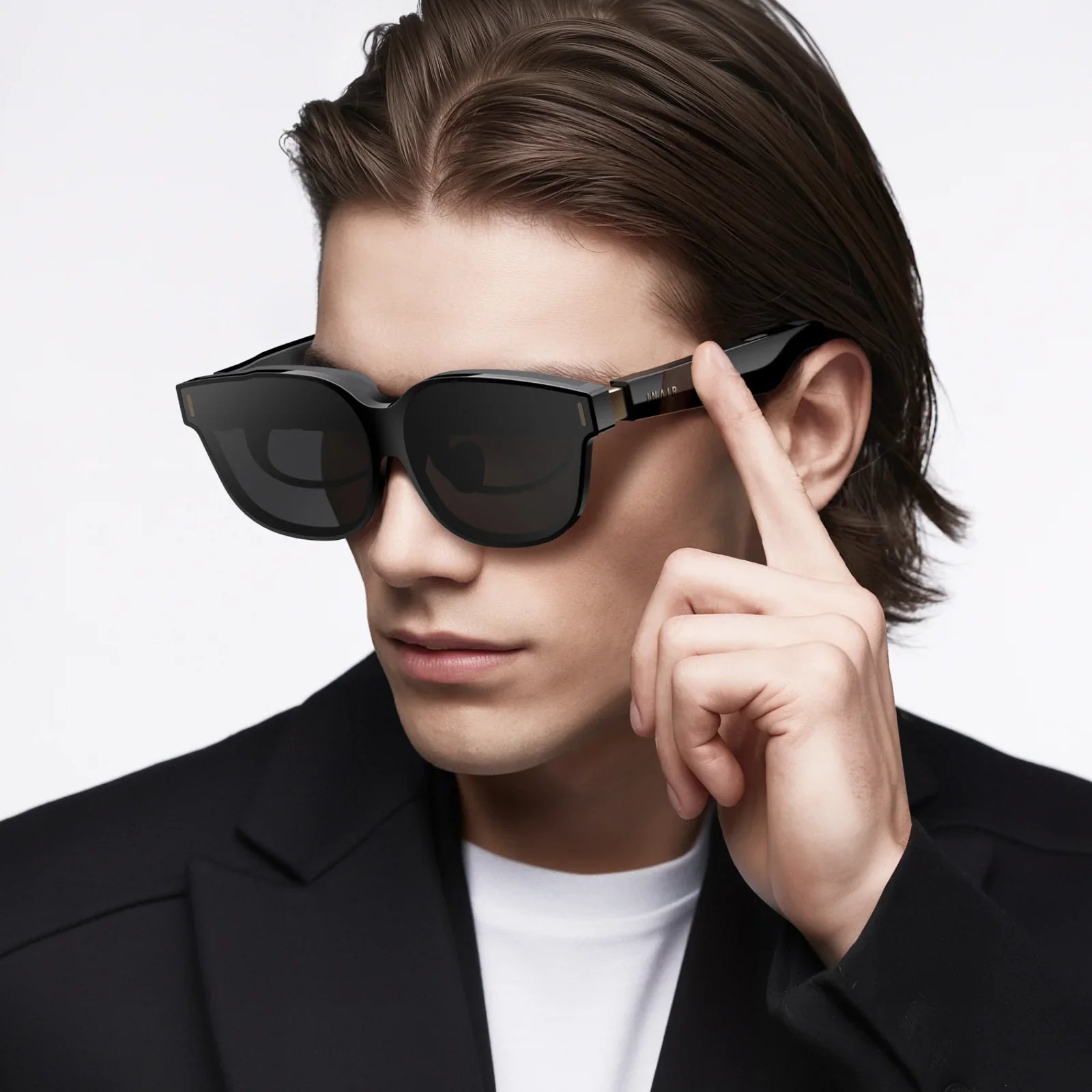
You slip the headset over your eyes, and the real world vanishes, replaced by a breathtaking digital landscape that feels tangibly real. But have you ever stopped to wonder what tiny, intricate marvel of engineering is responsible for translating streams of data into this convincing window to another universe? The magic, it turns out, lies not just in the screens but in the precise, carefully calculated piece of glass or plastic mere centimeters from your eyes. The question of which lens is used in VR headset is the key to unlocking the very soul of the immersive experience, governing everything from the sharpness of a distant star to the comfort of a multi-hour gaming session.
The Gateway to Virtual Realms: Why Lenses Are Indispensable
At its core, a VR headset presents a unique optical challenge. Two miniature high-resolution displays are positioned extremely close to the user's eyes. The human eye cannot focus on an object that is virtually touching its cornea; it's an unnatural and straining act. This is where the lens system performs its first and most vital function: acting as a intermediary. The primary job of these lenses is to take the image from the close-up screen and bend the light rays so that they appear to be coming from a distance, typically a few meters away or even at infinity. This process, known as creating a "virtual image," allows the eye's muscles to relax into a more natural focal state, preventing immediate strain and making prolonged immersion possible. Without this optical correction, VR would be a blurry, painful, and utterly impractical technology.
The Optical Trinity: Unveiling the Primary Lens Architectures
While numerous custom and hybrid designs exist, the VR market is predominantly dominated by three distinct lens types, each with its own philosophy for solving the challenges of magnification, field of view, and form factor.
Fresnel Lenses: The Pioneers of Wide-FOV Immersion
Inspired by lighthouse designs from the 19th century, Fresnel lenses have been the workhorse of the VR industry for years. Their genius lies in their construction. Instead of being a single, thick, and heavy curved piece of glass, a Fresnel lens is carved into a series of concentric grooves or ridges. Each groove acts as a small, individual prism, bending light at a specific angle. This design replicates the light-bending effect of a much thicker and heavier conventional lens but in an incredibly thin and lightweight package.
Advantages:
- Reduced Weight and Thickness: This is their defining triumph, allowing for more comfortable headsets that don't strain the user's neck.
- Wider Field of View (FOV): The thin profile enables designers to place the lenses closer to the screens and the user's eyes, facilitating a broader FOV that is crucial for deep immersion.
- Cost-Effectiveness: They are generally cheaper to manufacture, especially in plastic, which helped democratize early VR.
Disadvantages:
- Visual Artifacts: God Rays and Ringing: This is the most significant trade-off. The grooved structure can scatter light, especially in high-contrast scenes (e.g., white text on a black background). This creates a distinctive "god ray" effect—streaks of light emanating from bright objects—and a slight loss of overall contrast.
- Chromatic Aberration: The design can sometimes separate white light into its colored components, creating color fringing on the edges of objects, though this is often corrected in software.
- Fixed Focus: Like most VR lenses, traditional Fresnel designs have a single fixed focal plane.
Pancake Lenses: The Compact Revolution
As the industry pushes for more compact and socially acceptable headset designs, pancake lenses have emerged as the leading solution. They operate on a completely different principle called folded optics. In a pancake lens, polarized light is emitted from the display. This light passes through a half-mirror and then through a quarter-wave plate, which changes its polarization. The light reflects off a mirror back through the quarter-wave plate and the half-mirror again, finally reaching the eye. This complex path of folding the light trajectory allows the lens to have a very short focal length while maintaining the necessary optical power.
Advantages:
- Dramatically Reduced Form Factor: This is their killer feature. Headsets using pancake optics can be incredibly slim, resembling large sunglasses rather than bulky goggles.
- Superior Sharpness and Contrast: With a continuous, non-grooved surface, pancake lenses largely eliminate the god rays and glare associated with Fresnel lenses, offering a clearer, more contrast-rich image.
Disadvantages:
- Light Inefficiency: The folding process results in significant light loss. This means manufacturers must use brighter, often more power-hungry displays to compensate, which can impact battery life in standalone devices.
- Increased Cost and Complexity: The precision required and the need for additional polarization films make them more expensive to produce.
- Potential for Mura: The polarization layers can sometimes make the screen's underlying uniformity (or lack thereof) more visible.
Aspheric and Hybrid Lenses: The Quest for Purity
Seeking to avoid the artifacts of Fresnel lenses without the light loss of pancake optics, some manufacturers turn to high-end aspheric lenses. Unlike simple spherical lenses with a uniform curve, aspheric lenses feature a complex, progressively changing curvature from the center to the edge. This sophisticated shape is designed to correct for optical distortions like spherical aberration, where light rays passing through the edge of a spherical lens focus at a different point than those passing through the center.
Advantages:
- Exceptional Clarity and Fidelity: They provide a very "clean" image, free from the ring patterns and scattering of Fresnel lenses.
- Optical Efficiency: They do not suffer from the light loss inherent in pancake designs.
- Wider Sweet Spot: The improved distortion correction can make the area of perfect focus larger, reducing the need for constant adjustment.
Disadvantages:
- Weight and Thickness: To achieve their power, they can be thicker and heavier than an equivalent Fresnel lens, working against the goal of a lightweight headset.
- Extremely High Cost: Designing and manufacturing precise, glass aspheric elements is a complex and costly process, often reserving them for professional or high-end consumer applications.
Beyond the Basics: Advanced Optical Considerations
The choice of lens type is just the beginning. Several other factors are meticulously engineered in tandem with the lens to create the final experience.
Adjustability: IPD and Diopter
No two users are alike. The distance between a person's pupils (Interpupillary Distance or IPD) varies significantly. High-quality headsets include a mechanical IPD adjustment that physically moves the lenses laterally to align perfectly with the user's eyes. Misalignment causes blurriness, eye strain, and can break immersion. Furthermore, some specialized headsets offer diopter adjustment wheels, similar to binoculars, which allow users with mild near- or farsightedness to use the headset without their prescription glasses, enhancing comfort and visual clarity.
The Screen-Door Effect and Its Mitigation
This phenomenon, where users can perceive the fine gaps between pixels on the display, making the image look like it's viewed through a screen door, is primarily a function of display resolution. However, the lens plays a role. A very sharp lens can actually make the screen-door effect more apparent by providing a clearer view of the pixel grid. Conversely, some lenses are deliberately designed with specific blur characteristics or use a technique called a "diffuser" to slightly blend the pixel edges, reducing the perception of the grid at the cost of absolute sharpness. It's a delicate balancing act.
The Future: Varifocal and Light Field Optics
The current generation of VR lenses, for all their brilliance, suffers from the Vergence-Accommodation Conflict (VAC). Your eyes converge (point inward) to focus on a near virtual object, but the lenses keep the focal plane fixed at a distance, confusing the brain and causing strain over time. The next frontier is in dynamic lenses. Varifocal systems use eye-tracking to measure precisely where you are looking and then mechanically adjust the lens position or shape to bring that virtual distance into true focus. An even more advanced concept is light field technology, which uses complex arrays of micro-lenses to project a true light field, simulating how light behaves in the real world and allowing the eye to focus naturally at any depth. These technologies promise to eliminate eye strain entirely and represent the ultimate evolution of VR optics.
So the next time you find yourself marveling at a virtual sunset or dodging a digital projectile, take a mental moment to appreciate the sophisticated piece of optics mere millimeters from your pupils. That unassuming piece of molded plastic or glass is the silent conductor of your entire experience, a masterpiece of physics and engineering orchestrating the light to build worlds from the void. The relentless innovation in answering the question of which lens is used in VR headset is quite literally shaping how we will see, work, and play in the decades to come.
Share:
Best VR Headset Ranking: A Definitive Guide to the Top Tiers of Immersion
Best VR Headset Brands 2025: The Ultimate Guide to Immersive Technology