


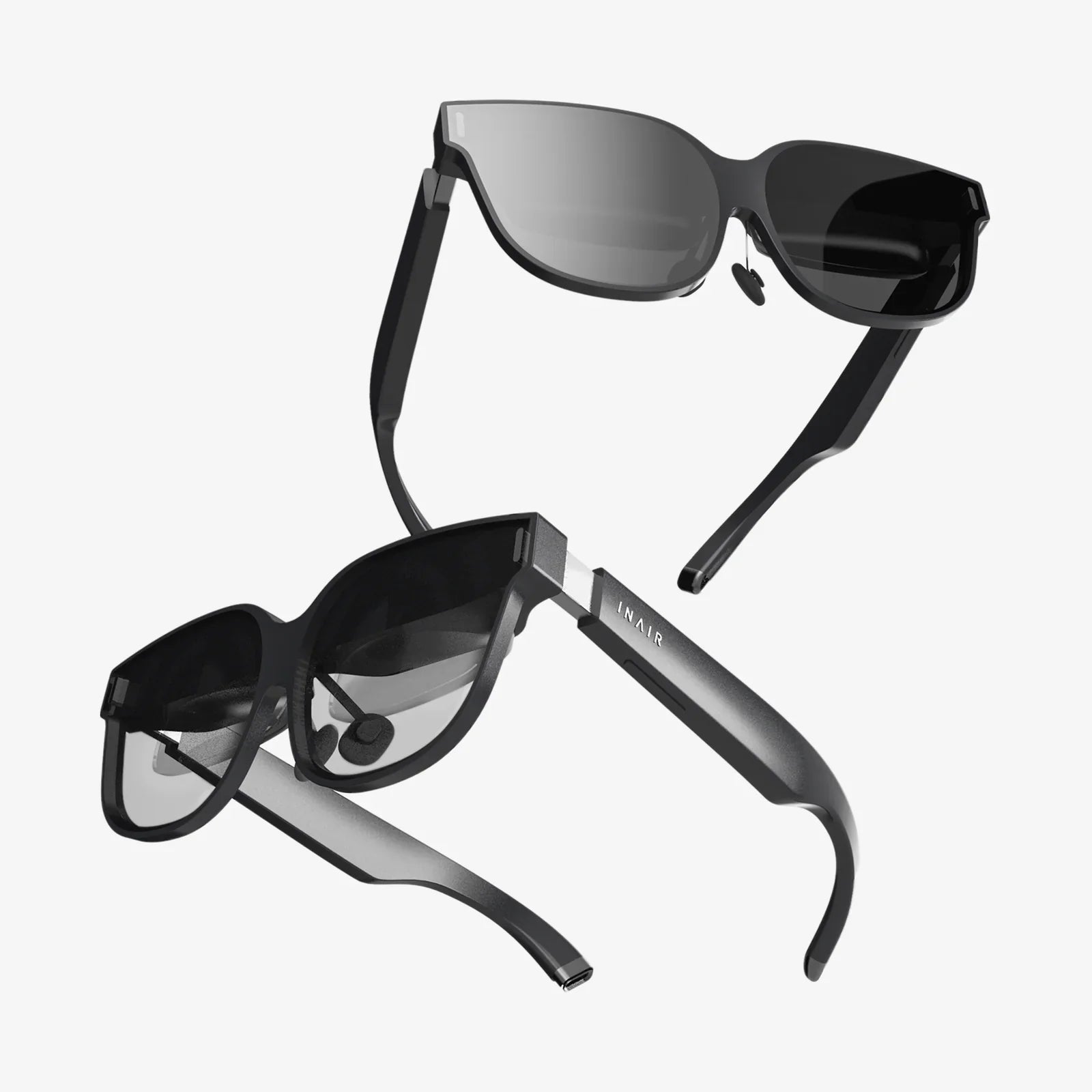
Imagine slipping on a headset and stepping into a fully realized digital universe, or pointing your device at a street corner to see historical figures reenact a moment from the past. Augmented and Virtual Reality feel like the future, a sudden leap in human-computer interaction. But the question of who invented AR and VR is a portal itself, one that opens not onto a single inventor but onto a rich and complex history of visionaries, scientists, and engineers whose collective imagination and perseverance built the foundations for the immersive experiences we have today. The journey to this point is a fascinating saga of concepts that predated the technology to realize them, of prototypes that shocked the world, and of a relentless pursuit to blend the real with the digital.
The Seeds of an Idea: Early Concepts and Prototypes
Long before the silicon chip, the dream of artificial reality was born in the human imagination. The foundational concepts of VR can be traced back to the 19th century with the rise of panoramic paintings and stereoscopic photos, which attempted to create an illusion of depth and immersion for viewers. However, the first true conceptual precursor is often considered to be the Link Trainer, developed by Edward Link in 1929. This electromechanical flight simulator, using pumps and bellows to mimic aircraft movement, was the first functional, albeit non-digital, simulation environment used for training pilots. It proved that a synthetic experience could have real-world value and save lives.
The literary world provided the next crucial piece of the puzzle. In 1935, science fiction writer Stanley G. Weinbaum published a short story titled Pygmalion's Spectacles. In it, the protagonist wears a pair of goggles that transport him into a fictional world that engages all his senses, including taste and smell. This was arguably the first clear conceptualization of a VR headset and the immersive experience it could provide, directly inspiring future generations of technologists.
The Father of Virtual Reality: Morton Heilig's Sensorama
While many contributed ideas, the first person to physically build a comprehensive multi-sensory VR apparatus was the cinematographer Morton Heilig. In the 1950s, Heilig envisioned a cinema of the future that would fully immerse the viewer. By 1962, he had realized his vision with the Sensorama, which he patented as an "Experience Theater."
The Sensorama was a mechanical arcade-style cabinet that offered more than just visual immersion. It featured:
- A stereoscopic 3D display
- Stereo speakers for audio
- Oscillating fans to simulate wind
- A vibrating chair
- Even scent dispensers
Heilig created several short films for his invention, like a motorcycle ride through Brooklyn, designed to engage all these senses simultaneously. While the Sensorama was not a commercial success due to its high cost and complex mechanics, Heilig's work was revolutionary. He had built the first true example of what we now call Virtual Reality, understanding that immersion was a multi-sensory challenge. He also developed a head-mounted display patent, though it was never built.
The Birth of the Head-Mounted Display: Ivan Sutherland's Ultimate Display
If Morton Heilig was the dreamer, then Ivan Sutherland is the undisputed architect of modern VR and AR. A computer scientist, Sutherland took the concept of a head-mounted display and fused it with the digital world. In 1968, with the help of his student Bob Sproull, he created The Sword of Damocles, widely considered the first head-mounted display (HMD) system to use computer graphics.
This device was a monumental leap forward, but it was far from consumer-ready. The headset was so heavy it had to be suspended from the ceiling (hence its dramatic name). It could only render simple, wireframe 3D graphics that were superimposed over the user's real-world view. This crucial detail makes it not just the first VR HMD, but also the first Augmented Reality HMD.
Sutherland's 1965 essay, The Ultimate Display, laid out his visionary philosophy. He described a room where a computer could control the existence of matter, a world where one could not tell the digital from the real. This concept became the guiding star for VR research for decades to come. His work established the core principles of tracking head movements and rendering perspective-correct graphics in real-time, which are the absolute bedrock of all modern AR and VR systems.
The Rise of the Terms: Jaron Lanier and VPL Research
Through the 1970s and early 80s, institutions like NASA and MIT continued to advance the technology, primarily for aviation, military, and scientific simulation. NASA's Ames Research Center developed a sophisticated VR system for astronauts, using LCD technology and data gloves. However, the concepts were still largely confined to labs and lacked a unifying, public identity.
This changed with the charismatic and influential figure of Jaron Lanier. In the mid-1980s, Lanier co-founded VPL Research, the first company to sell VR products. It was Lanier and his colleagues who popularized the term "Virtual Reality." VPL commercialized many of the essential components of a VR system, including:
- The DataGlove, which allowed for hand tracking and interaction within the virtual world.
- The EyePhone, a head-mounted display.
- The DataSuit, a full-body motion capture suit.
VPL's systems were exorbitantly expensive, but they captured the media's and the public's imagination. Lanier became the public face of VR, appearing on talk shows and in magazines, cementing the technology's place in popular culture and demonstrating its potential for creativity and art, not just simulation.
The Parallel Path of Augmented Reality
While VR was developing its identity, Augmented Reality was on a parallel track. The term "Augmented Reality" is credited to Tom Caudell, a researcher at Boeing, in 1990. He and his colleague David Mizell used it to describe a digital head-mounted display system that would guide aircraft electricians by overlaying wire harness schematics onto their physical reality.
However, the first functional AR system appeared much earlier. In 1968, Ivan Sutherland's system was, in effect, the first AR display. Then, in 1974, computer researcher Myron Kruegere developed a series of interactive art installations he called Videoplace, which used projectors, cameras, and on-screen silhouettes to create artificial realities where users could interact with each other and digital objects. He referred to this concept as "Artificial Reality."
A major breakthrough came in 1992 with the Virtual Fixtures system developed by Louis Rosenberg for the U.S. Air Force. This was a complex, immersive AR system that allowed users to control robots in another location by overlaying virtual visuals and physical "fixtures" onto the real world to guide their actions, dramatically improving human performance. This was one of the first functional demonstrations of AR's profound utility.
The Modern Era: From Laboratory to Living Room
The journey from these early innovations to the present day was not linear. The 1990s saw a wave of VR hype followed by a "winter" as the technology failed to live up to its inflated promises. Processing power, graphics capabilities, and display technology were simply not yet ready for a compelling consumer experience.
The resurgence began in the 2010s, driven by the smartphone revolution. The mass production of high-resolution micro-screens, accurate motion sensors, and powerful mobile processors—all developed for phones—provided the perfect, affordable components for a new generation of HMDs. The release of developer kits and crowdfunding campaigns for modern headsets signaled a new chapter.
This era also saw the formalization of AR, with the development of robust computer vision algorithms and simultaneous localization and mapping (SLAM) software, which allowed devices to understand and map their environment in real-time, a prerequisite for convincingly anchoring digital objects to the physical world.
So, who invented AR and VR? The answer is a tapestry woven from many threads. It was Morton Heilig with his multi-sensory Sensorama, Ivan Sutherland with his groundbreaking head-mounted display and visionary philosophy, Jaron Lanier for commercializing the tech and naming Virtual Reality, and Tom Caudell for coining the term Augmented Reality. It was also the countless engineers at NASA, MIT, and universities and companies worldwide who solved countless small but critical problems over decades.
Today, as we use AR apps on our phones and lose ourselves in immersive VR games, we are not experiencing a sudden invention but the culmination of a century-long journey. It is a story that continues to evolve, with each new headset and software update standing on the shoulders of the giants who dared to imagine a reality beyond the one we were given.
You are no longer just reading about history; you are living in the reality these pioneers fought to create. The headsets are lighter, the graphics are photorealistic, and the applications extend from the operating room to the classroom. The foundational work of these early innovators has finally found its technological moment, transforming their once-niche prototypes into the interfaces of tomorrow. The question is no longer who invented these worlds, but what you will create within them.
Share:
VR Headset vs AR Glasses: The Ultimate Showdown for the Future of Reality
How Much Is Smart Glass UK - A 2024 Pricing & Investment Guide