


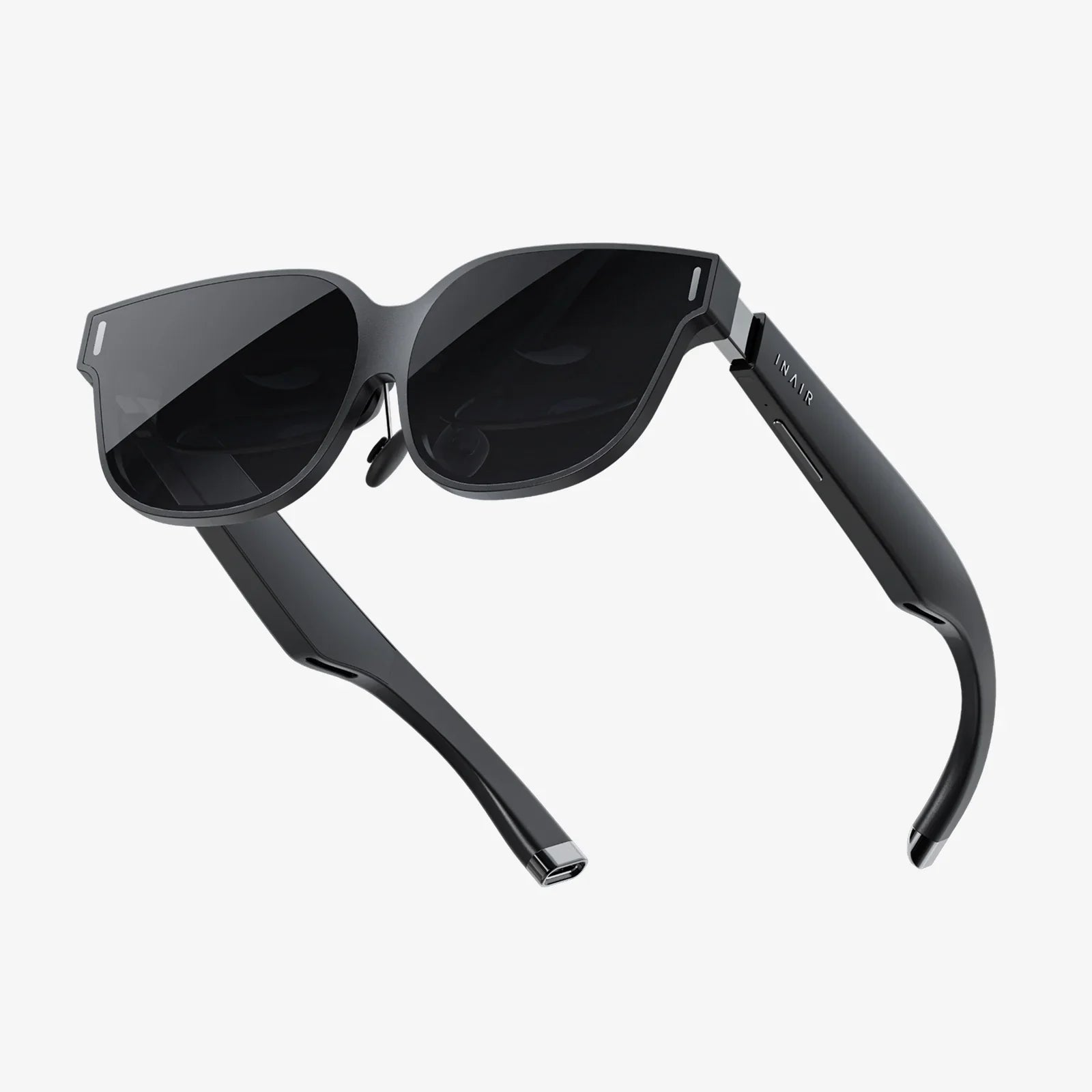
You slip on the headset, and the real world dissolves. You're standing on the surface of Mars, dodging laser fire in a futuristic battle, or simply painting in three-dimensional space. This experience, once the stuff of pure fantasy, is now accessible to millions. But have you ever wondered, in that moment of awe, whose brilliance first conceived the gateway to these digital worlds? The quest to uncover who invented VR goggles is a journey through time, filled with forgotten prototypes, cinematic inspiration, and a series of brilliant minds who dared to imagine a reality beyond our own.
The Seeds of an Idea: From Stereoscopes to Science Fiction
Long before silicon chips and liquid crystal displays, the foundational principles of virtual reality were being explored through simpler optical illusions. In the 19th century, the invention of the stereoscope by Sir Charles Wheatstone provided a crucial insight: presenting two slightly different images, one to each eye, could create a compelling illusion of depth and immersion. This was the very early, mechanical precursor to the modern head-mounted display. Later, Morton Heilig, a cinematographer often called the 'Father of Virtual Reality,' expanded on this concept not with goggles, but with an entire experience. His Sensorama machine, patented in 1962, was an arcade-style cabinet that combined 3D film, stereo sound, blowing wind, and even smells to fully immerse the user. While not a headset in the modern sense, Heilig's work established the philosophical goal of VR: to engage all the senses and create a believable simulated experience.
The True Birth of the Head-Mounted Display
While many laid the philosophical groundwork, the credit for creating the first functional head-mounted display (HMD) system, the direct ancestor of today's VR goggles, belongs to Ivan Sutherland and his student, Bob Sproull. In 1968, at Harvard University, Sutherland unveiled The Sword of Damocles. This device was terrifyingly primitive by today's standards. The headset was so heavy it had to be mechanically counterbalanced from the ceiling, and its wire-frame graphics, which could render simple geometric shapes like a cube, were generated by a computer so powerful for its time it was effectively room-sized. Yet, despite its crude appearance, The Sword of Damocles was revolutionary. It was the first system to use a stereoscopic display to present a computer-generated world that updated in real-time based on the user's head movements. It was the first true example of both virtual reality and augmented reality, establishing the core technical blueprint that all future VR goggles would follow.
The Name and The Commercial Dream
While Sutherland built the first prototype, another key figure gave the technology its memorable name and its first major push into the public consciousness. Jaron Lanier, a charismatic computer scientist and musician, co-founded VPL Research in the mid-1980s. It was Lanier who popularized the term 'Virtual Reality'. More importantly, VPL Research was the first company to sell VR goggles, along with other pioneering gear like the DataGlove, which allowed for hand-tracking within the virtual space. Their EyePhone headset and DataSuit were the first commercially available VR systems, albeit at a price tag that made them accessible only to NASA, military research labs, and major corporations. VPL's work, heavily featured in films and magazines of the era, cemented the idea of VR in the popular imagination as the next great technological frontier, setting the stage for the consumer boom—and bust—that would follow.
The 1990s: The First Consumer Attempt and a Cautionary Tale
Buoyed by hype and the futuristic visions seen in films and media, the 1990s witnessed the first major attempt to bring VR goggles into the living room. Several companies, most notably in the arcade sector, launched VR gaming experiences. However, the technology was simply not ready. Consumer-grade headsets of the era were characterized by low-resolution displays, severe lag (latency) that caused nausea, a lack of compelling software, and extremely high costs. The public's first hands-on experience with VR was often disappointing, leading to a severe backlash. The technology was dismissed as a failed gimmick, and a long 'winter' set in where commercial interest evaporated, even as academic and military research continued quietly in the background.
The Modern Renaissance: A Convergence of Technologies
The VR revolution of the 2010s did not happen because of a single new invention, but because of the convergence and maturation of several unrelated technologies. The widespread adoption of smartphones created a massive, cost-effective supply of high-resolution displays, miniature motion sensors (gyroscopes, accelerometers), and powerful, compact processors. A young entrepreneur and VR enthusiast named Palmer Luckey recognized this opportunity. He built a crude but effective prototype in his garage that leveraged smartphone parts to create a capable yet affordable headset. This prototype, backed by a wildly successful crowdfunding campaign, caught the attention of a major technology company and became the Oculus Rift development kit. Its arrival in 2012 reignited the entire industry, proving that the technology had finally caught up to the decades-old dream. It prompted a massive influx of investment and competition, leading directly to the development of the modern, high-quality VR goggles we have today from a multitude of tech giants.
So, Who Really Invented VR Goggles?
The answer is intentionally complex because it lacks a single name. It was a collaborative evolution across generations.
- Morton Heilig forged the philosophical path with his multi-sensory Sensorama.
- Ivan Sutherland & Bob Sproull built the first functional Head-Mounted Display system with 'The Sword of Damocles'.
- Jaron Lanier & VPL Research gave it a name and made it a commercial (if expensive) product.
- Palmer Luckey & the Oculus Team leveraged modern smartphone tech to make it viable for the mass market, sparking the current era.
Each built upon the work of the last, adding a critical piece to the puzzle. The invention of VR goggles is a story of persistence, a vision passed like a baton from one pioneer to the next, each refusing to let a revolutionary idea fade away.
From the clunky, ceiling-suspended Sword of Damocles to the sleek, wireless devices of today, the evolution of VR goggles is a testament to human imagination. It’s a story that continues to unfold with every new user who, for the first time, steps into a world of someone else’s making and asks, with a sense of wonder, 'How is this even possible?' That question, more than any patent, is the true legacy of the inventors who built our new reality.
Share:
Most Successful Digital Products: The Blueprint for a Revolution
Best AR Brands Pioneering the Future of Immersive Technology and Digital Interaction