


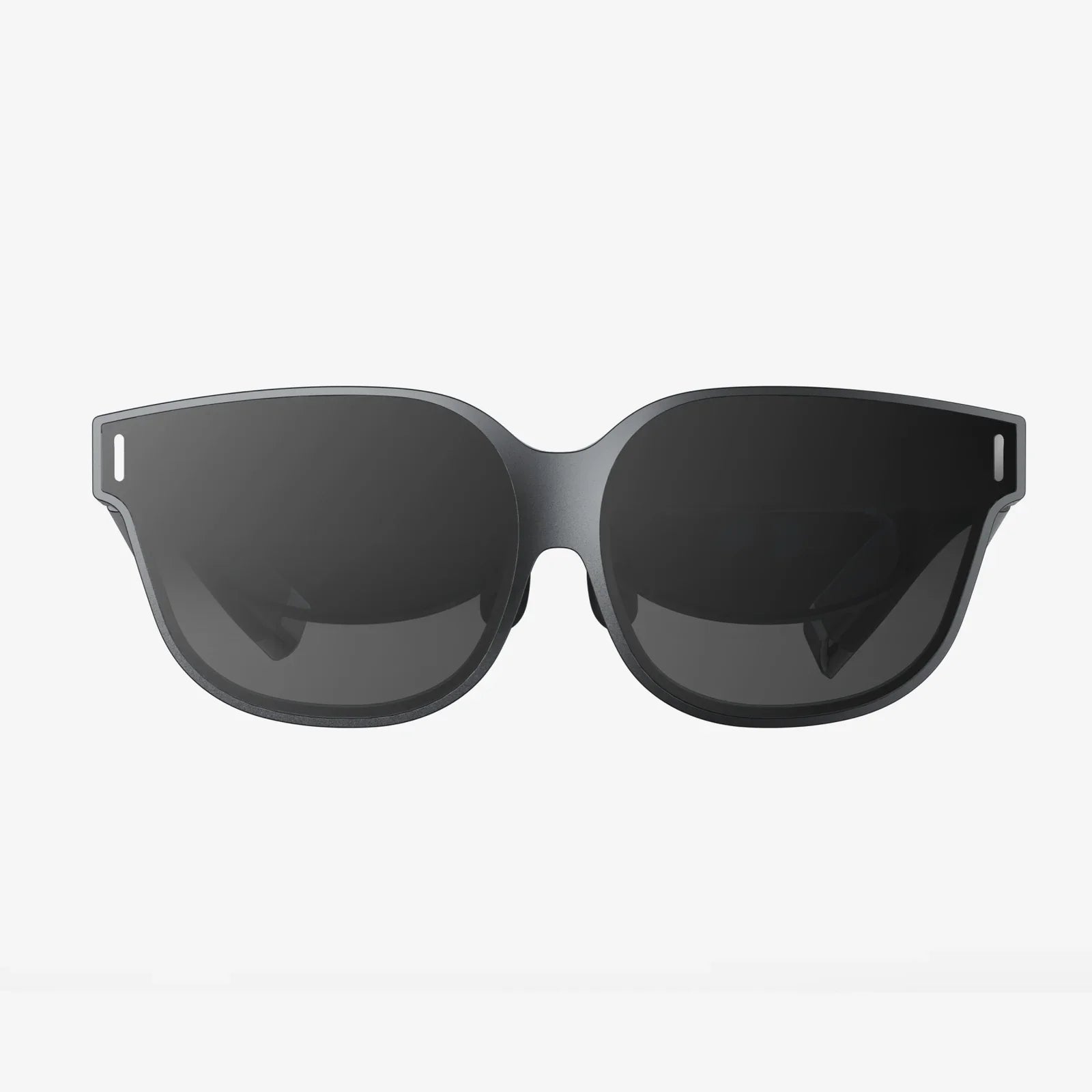
why are ar glasses needed is no longer a hypothetical question for tech enthusiasts; it is quickly becoming a practical concern for anyone who wants to stay ahead in a world where digital information is everywhere. Imagine getting real-time instructions floating in front of your eyes while you repair something, or seeing translations instantly appear above foreign street signs, or navigating a busy city without ever looking down at your phone. These are not distant sci-fi dreams anymore, and understanding why AR glasses matter today could change how you think about your own future.
To answer why are ar glasses needed in a meaningful way, we have to look beyond buzzwords and marketing hype. The real value lies in how they solve specific problems: distraction from screens, information overload, slow workflows, training gaps, safety risks, and accessibility barriers. By overlaying digital content directly onto the physical world, AR glasses promise to deliver information at the right time, in the right place, and in the most natural way possible: through your own line of sight.
why are ar glasses needed beyond novelty and hype
Many people still see augmented reality as a toy or a passing trend. But the deeper you look, the more obvious it becomes that AR glasses address real, persistent challenges in work, learning, communication, and everyday living.
At their core, AR glasses aim to solve three major problems:
- Distraction from handheld screens: Constantly checking phones breaks focus, slows work, and can be dangerous in some environments.
- Context switching: Looking back and forth between a task and instructions on a separate device wastes time and increases errors.
- Limited situational awareness: Traditional screens pull attention away from the real world, whereas AR can enhance awareness instead of replacing it.
By keeping your hands free and your eyes on your surroundings, AR glasses can integrate digital information into real-world tasks instead of forcing you to step away from them. This is the central reason why they are needed: they change the relationship between humans, information, and the physical environment.
How AR glasses change the way we work
One of the strongest answers to why are ar glasses needed comes from the workplace. Across industries, employees struggle with complex procedures, information gaps, and safety requirements. AR glasses can transform these challenges into manageable, guided experiences.
Hands-free guidance for complex tasks
In fields like manufacturing, logistics, maintenance, and construction, workers often rely on thick manuals, printed checklists, or separate screens for instructions. This leads to:
- Frequent pauses to check documentation
- Higher chances of misreading or skipping steps
- Longer training times for new staff
AR glasses can overlay step-by-step instructions directly onto the equipment or workspace. For example, a technician repairing a machine could see highlighted components, arrows indicating which part to remove, and text showing torque specifications, all while keeping both hands on tools. This kind of contextual guidance dramatically reduces errors and speeds up complex tasks.
Remote support and expert collaboration
Another major reason why AR glasses are needed is their ability to bring expert knowledge anywhere in the world instantly. Instead of flying a specialist to a remote site, a local worker can wear AR glasses and stream what they see to an expert elsewhere. The expert can then:
- Draw annotations that appear in the worker’s field of view
- Highlight parts, areas, or tools to use
- Provide real-time verbal guidance based on exactly what the worker is seeing
This approach reduces travel costs, minimizes downtime, and makes expertise more scalable. It is especially powerful for industries where specialized knowledge is scarce or where equipment is spread across multiple locations.
Improved safety and situational awareness
Safety is another critical dimension of why AR glasses are needed. In hazardous environments, workers must constantly balance attention between their surroundings and the information they need to stay safe and effective.
AR glasses can provide:
- Real-time alerts about restricted zones or dangerous equipment
- Visual cues showing safe paths or areas to avoid
- Overlays of sensor data, such as temperature, pressure, or gas levels
Because this information appears directly in the line of sight, reaction times can improve, and workers can stay focused on their environment rather than on handheld devices. In high-risk situations, this difference can be critical.
Transforming education and training
Another compelling answer to why are ar glasses needed lies in education and skills development. Traditional learning methods often struggle to make abstract concepts tangible or to provide realistic practice without high costs.
Turning abstract concepts into visual experiences
Many subjects are easier to understand when learners can see and interact with them. AR glasses can project three-dimensional models, diagrams, and simulations into the real world, allowing learners to walk around them, zoom in, and examine details from any angle.
For example:
- Biology students could explore a life-sized 3D model of the human body, with organs labeled and animated.
- Engineering students could inspect virtual machines, seeing how parts move and interact in real time.
- History students could view reconstructions of ancient structures overlaid on current locations, making the past feel present.
This kind of immersive, spatial learning can improve understanding and retention, especially for visual and kinesthetic learners.
Safe, realistic practice for high-stakes skills
Training for complex or dangerous tasks often requires expensive equipment, controlled environments, or limited access to real-world scenarios. AR glasses can simulate many aspects of these experiences without the same risks or costs.
Consider scenarios such as:
- Medical trainees practicing procedures with virtual overlays guiding each step on physical mannequins or training tools.
- Emergency responders rehearsing disaster scenarios with virtual hazards and victims overlaid on real training grounds.
- Technical apprentices following guided workflows projected onto actual tools and components.
By blending real objects with digital guidance, AR training can offer a powerful mix of realism and safety, answering why are ar glasses needed for modern education systems that must prepare people for increasingly complex roles.
Enhancing everyday life and personal productivity
While the workplace and classroom provide clear use cases, many people still wonder why are ar glasses needed for everyday life. The answer lies in how they can streamline routine tasks, reduce friction, and enhance experiences that already rely heavily on digital information.
Navigation without looking down
Navigation is one of the most intuitive examples. Instead of constantly glancing at a phone for directions, AR glasses can overlay arrows, route lines, or markers directly onto streets and pathways. This has several benefits:
- Less distraction and fewer missed turns
- Safer walking or cycling, with eyes kept forward
- More confidence exploring unfamiliar places
For drivers, heads-up style overlays can provide turn-by-turn instructions, speed limits, and hazard alerts in a way that is more natural than glancing at a dashboard screen.
Real-time translation and communication
Another reason why are ar glasses needed is their potential to remove language barriers. Imagine walking through a foreign city and seeing translated text appear above signs, menus, and notices as you look at them. Or having subtitles appear near a person’s face as they speak another language.
Beyond translation, AR glasses could support communication by:
- Displaying names and relevant details for people you meet, when appropriate and consented
- Providing subtle reminders for talking points during important conversations
- Helping people with hearing difficulties by showing real-time transcriptions of speech
These capabilities can make interactions smoother, more inclusive, and less stressful, especially in unfamiliar environments.
Organizing information in physical space
Everyone deals with information scattered across apps, devices, and notes. AR glasses offer a new way to organize this information: by attaching it to physical locations.
For example:
- Virtual sticky notes could appear on your fridge, desk, or door when you look at them.
- Task lists could float near the tools or areas where you need to take action.
- Calendar reminders could appear in your field of view as you enter relevant spaces.
This spatial organization leverages how human memory naturally works: we remember things better when they are tied to places and contexts. This is a subtle but powerful reason why AR glasses are needed for personal productivity.
Supporting accessibility and independence
One of the most meaningful answers to why are ar glasses needed is their potential to improve accessibility for people with disabilities or age-related challenges. When designed with inclusion in mind, AR glasses can become powerful assistive tools.
Visual support for people with low vision
AR glasses can enhance the visual world in ways that traditional lenses cannot. Potential features include:
- High-contrast outlines around objects and text
- Magnification of distant or small items
- Text-to-speech for reading signs, labels, or documents
- Highlighting obstacles or changes in terrain
By processing visual input in real time and adjusting it to the user’s needs, AR glasses can help people navigate spaces more confidently and independently.
Contextual cues for cognitive support
People with memory or attention challenges may benefit from having contextual prompts appear when and where they are needed. AR glasses could:
- Show reminders when entering a room (for example, “You came here to get your keys”).
- Display step-by-step instructions for daily routines, like cooking or medication management.
- Provide visual cues for recognizing familiar faces, with appropriate privacy controls.
These capabilities highlight why are ar glasses needed not just as gadgets, but as tools that can enhance independence and quality of life for many individuals.
Bridging the gap between digital and physical worlds
Another way to understand why are ar glasses needed is to look at how our lives have already become deeply intertwined with digital information. We constantly move between physical spaces and digital platforms, often with friction and distraction.
AR glasses offer a more seamless bridge between these two worlds:
- Digital content becomes anchored to physical objects and places.
- Interactions can be more natural, using gaze, gestures, and voice instead of tapping on small screens.
- Multiple streams of information can be layered and prioritized based on context.
This does not mean replacing the physical world with a digital one. Instead, it means enriching the physical world with relevant, contextual information that is normally locked inside devices and apps.
Why AR glasses may become as common as smartphones
To fully answer why are ar glasses needed, it helps to compare them with the rise of smartphones. Before smartphones became mainstream, many people questioned whether they were necessary. Over time, they evolved from luxury devices into everyday essentials because they solved real problems and created new possibilities.
AR glasses are on a similar path, driven by several trends:
- Increasing dependence on real-time information: People expect instant access to maps, messages, data, and services.
- Growing fatigue with constant screen use: Many feel the strain of staring down at devices for hours every day.
- Demand for more natural interfaces: Voice, gesture, and spatial computing offer alternatives to typing and tapping.
As AR glasses become lighter, more stylish, and more affordable, their benefits will become harder to ignore. The question will shift from why are ar glasses needed to how did we ever manage without them.
Addressing concerns and limitations
A balanced discussion of why are ar glasses needed must also acknowledge the challenges and concerns that come with them. These devices raise important questions about privacy, social norms, and health.
Privacy and social acceptance
People may worry about being recorded without consent or having their surroundings constantly scanned. For AR glasses to be widely accepted, they must include:
- Clear indicators when cameras or microphones are active
- Robust controls over what data is captured and how it is used
- Transparent policies that respect bystanders as well as users
Social norms will also evolve, much like they did with smartphones. There will likely be situations where AR glasses are welcomed, tolerated, or discouraged, and these boundaries will shape how and where they are used.
Health and cognitive load
Extended wear of any head-mounted device raises questions about comfort, eye strain, and mental fatigue. To truly answer why are ar glasses needed, designers and developers must ensure that:
- Displays are optimized for long-term comfort
- Information density is carefully managed to avoid overload
- Users can easily control when and how notifications appear
When used thoughtfully, AR glasses can reduce cognitive load by presenting the right information at the right moment, rather than bombarding users with constant alerts.
Key scenarios that justify the need for AR glasses
Summarizing the most compelling reasons why are ar glasses needed, we can highlight several concrete scenarios where they offer clear advantages over traditional devices:
- Field service and repair: Technicians receive hands-free, step-by-step overlays and remote expert support.
- Logistics and warehousing: Workers see picking routes, item locations, and inventory data in their field of view.
- Construction and architecture: Plans and models are overlaid on-site, revealing clashes and design issues early.
- Medical and healthcare settings: Clinicians access patient data, imaging, and guidance without looking away from the patient.
- Education and training: Learners interact with 3D models and guided simulations in real environments.
- Tourism and exploration: Travelers see historical overlays, translations, and contextual information as they explore.
- Accessibility support: Individuals receive visual, auditory, or contextual assistance tailored to their needs.
In all of these cases, the key is not just that AR glasses are new or exciting, but that they make tasks easier, safer, faster, or more accessible than before.
How AR glasses reshape human-computer interaction
To truly grasp why are ar glasses needed, it helps to step back and look at the broader evolution of how we interact with technology.
We have moved through several stages:
- Desktop computing: Stationary interaction with screens and keyboards.
- Mobile computing: Portable devices that we carry everywhere but still hold in our hands.
- Spatial computing: Technology that understands and augments the 3D world around us.
AR glasses are a key part of this spatial computing era. They allow computers to understand where we are looking, what objects are around us, and how we move through space. This opens up new forms of interaction, such as:
- Selecting items by looking at them
- Manipulating virtual objects with natural hand gestures
- Receiving feedback based on our position and orientation
These capabilities are not just convenient; they can make technology feel more like an extension of our own perception and less like a separate tool we must constantly pick up and put down.
What needs to happen next
For the full promise behind why are ar glasses needed to be realized, several developments must continue to progress:
- Better hardware: Lighter frames, longer battery life, clearer displays, and more comfortable designs.
- Smarter software: Context-aware systems that understand what users are doing and what information they need.
- Stronger privacy and security frameworks: Clear standards to protect users and bystanders.
- Thoughtful design: Interfaces that enhance human capabilities without overwhelming or distracting.
As these pieces come together, AR glasses will shift from niche devices to everyday tools that quietly, powerfully improve how we live and work.
If you have ever wished your digital tools could simply fade into the background and be there only when you need them, that is the essence of why are ar glasses needed. They offer a path toward technology that feels less like another screen demanding attention and more like a subtle layer of intelligence woven into the world around you. The real question is not whether AR glasses will matter, but how ready you are for a future where the boundary between online and offline nearly disappears.
Share:
My AR Glasses Can See Various State And Transform Daily Life
new ai tool china reshaping innovation, work, and daily life