


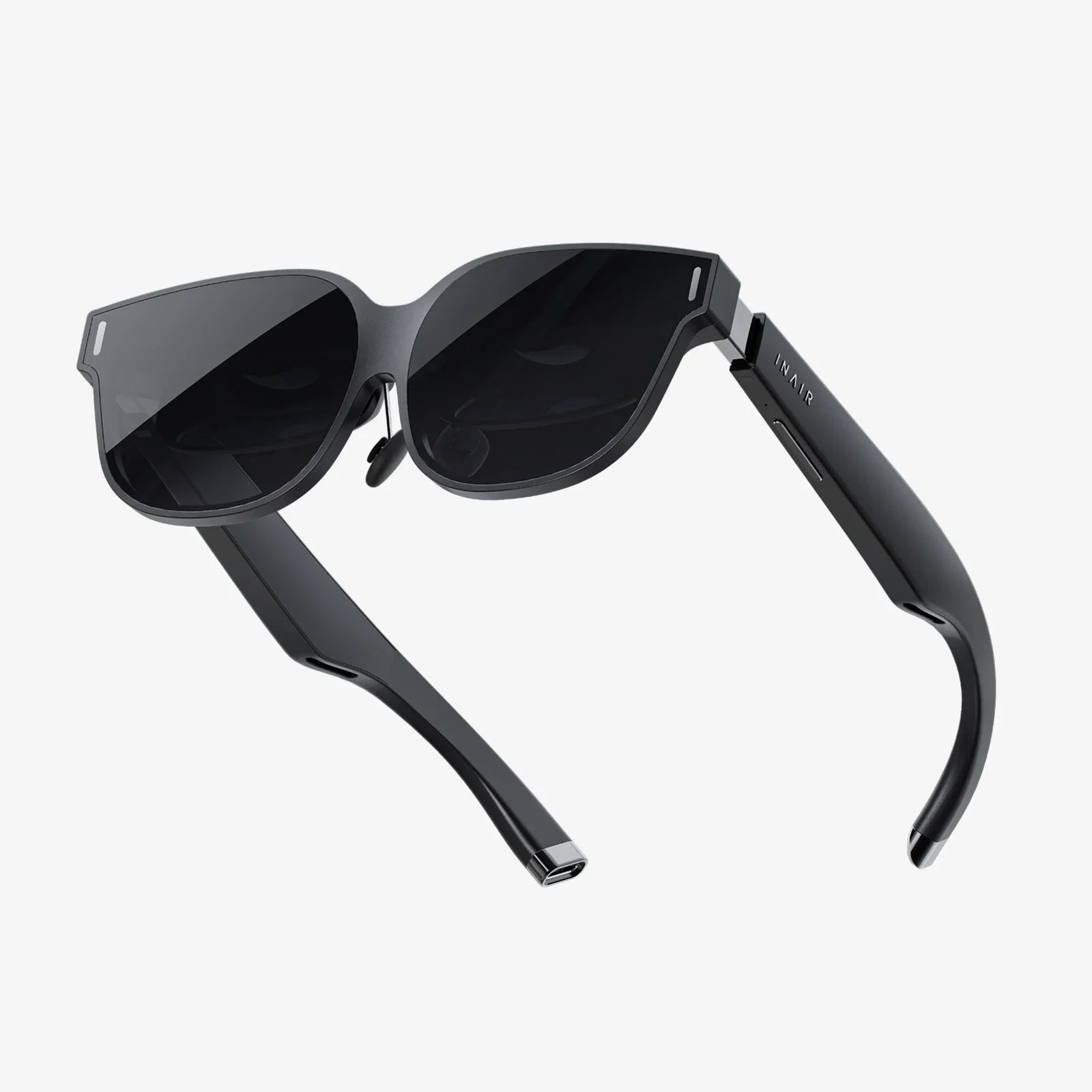
Have you ever stood on the edge of a digital precipice, your heart pounding as you peered into a virtual abyss, knowing the fall wasn't real but feeling the vertigo all the same? This is the captivating paradox of Virtual Reality (VR), a technology that doesn't just show you a new world but convinces your entire being that you are within it. The question, "Why are you interested in virtual reality?" is not a simple inquiry; it's a gateway to understanding a fundamental shift in human experience, a convergence of technology, psychology, and boundless creativity. It’s about the promise of the impossible made palpable, and it’s a siren call that is resonating with millions. This isn't just about putting on a headset; it's about taking off the limitations of the physical world.
The Allure of Presence: The Psychology of "Being There"
At the core of VR's magnetic pull is a concept known as "presence"—the unequivocal sensation of being in a place other than your physical location. This is the magic trick, the holy grail that separates VR from every other medium that came before it. When you watch a film, you are an observer. When you play a traditional video game, you are a controller of a character on a screen. But in a well-crafted VR experience, you are the character. You are in the environment. Your brain, despite knowing you are in your living room, is flooded with stimuli that scream otherwise.
This psychological phenomenon is why someone might flinch from a virtual spider crawling up their virtual arm or feel a genuine sense of awe gazing at a digitally rendered starscape. It triggers deep-seated evolutionary responses. This ability to evoke real emotion and genuine physiological reactions is arguably the primary reason for the profound interest in this technology. It’s a direct line to our senses and our psyche, offering a form of empathy and understanding that is visceral rather than intellectual. We are not just learning about a new environment; we are feeling it, and that is a powerful distinction.
Beyond Entertainment: The Practical and Profound Applications
While gaming and immersive films are the most visible faces of VR, the interest it garners extends far beyond the realm of entertainment. The potential to solve real-world problems and enhance human capability is a huge driver of investment and curiosity.
Revolutionizing Education and Training
Imagine a medical student practicing a complex surgical procedure not on a cadaver or in a textbook, but in a hyper-realistic simulation where every incision and every complication can be experienced risk-free. Imagine a history class not reading about ancient Rome, but walking through its forums, hearing the sounds of the marketplace, and looking up at the towering temples. VR transforms education from a passive absorption of facts into an active, experiential journey. This hands-on learning dramatically improves retention and understanding, making complex subjects accessible and engaging in ways previously unimaginable.
Transforming Healthcare and Therapy
The therapeutic applications of VR are staggering. It is being used for exposure therapy, allowing patients with phobias or PTSD to gradually confront their triggers in a safe, controlled environment. It’s providing pain distraction for burn victims during wound care, immersing them in a calming, cold environment to reduce their perceived pain. Surgeons use VR rehearsals to plan intricate operations, and physical therapists use it to create engaging rehabilitation exercises for patients recovering from strokes or injuries. The interest here is deeply human: it’s a interest in alleviating suffering and improving quality of life.
Redefining Social Connection and Remote Work
In an increasingly global and remote world, VR presents a compelling vision for the future of connection. Video conferencing allows us to see and hear each other, but VR meetings can place avatars of colleagues around a virtual conference table, in a custom-designed workspace, or even on a virtual Mars colony for a creative brainstorming session. The sense of shared space and embodied interaction—using hand gestures, making eye contact with avatars—fosters a level of collaboration and social nuance that flat screens cannot match. It promises to make digital interaction feel less transactional and more human, mitigating the loneliness and disconnection that can come with remote work.
The Ultimate Empathy Machine: Walking in Another's Shoes
One of the most profound answers to "why are you interested in virtual reality?" is its potential as an "empathy machine." Journalists and documentarians are using VR to transport viewers into the heart of stories. You can't just read about the life in a refugee camp; you can spend minutes experiencing a day within one, surrounded by the sights and sounds, creating a powerful, emotional connection to a situation that might otherwise feel distant. This experiential form of storytelling has the power to break down barriers, challenge prejudices, and foster a deeper global understanding by quite literally allowing us to see the world through another person's eyes. It is a tool for building bridges of understanding in a fractured world.
The Artist's New Canvas: Unbound Creative Expression
For creators, VR is a revolution. It is a medium without borders, a canvas that extends in every direction. Painters are no longer confined to a flat rectangle; they can sculpt with light and create three-dimensional paintings that you can walk through and around. Musicians can create immersive soundscapes where the music moves around the listener. Filmmakers can break free from the rectangular frame, telling stories where the audience chooses where to look, becoming an active participant in the narrative. This liberation from traditional constraints is generating immense interest from artists and audiences alike, all eager to explore this new frontier of human creativity where the only limit is imagination.
The Thrill of the Impossible: Tourism, Exploration, and Fantasy
Humanity has an innate desire to explore, but we are bound by physical, financial, and temporal constraints. VR shatters these constraints. Why are you interested in virtual reality? Because it offers a passport to anywhere and anywhen. You can stand on the surface of Mars, dive to the wreck of the Titanic, wander through a reconstructed Jurassic period, or visit the seven wonders of the ancient world—all before lunch. It offers safe adrenaline rushes like wingsuit flying over mountain ranges or racing at breakneck speeds. It fulfills fantasies of flying, wielding magic, or building impossible architectures. It is the ultimate tool for curiosity, granting us superpowers to explore realms that were previously the sole domain of dreams.
The Metaverse: A Persistent Digital Universe
Interest in VR is also fueled by the grand, overarching concept of the metaverse—a persistent, interconnected network of virtual spaces and worlds. This vision suggests a future where our digital and physical lives are seamlessly integrated, where we work, socialize, learn, and play within these expansive digital realms. While still in its early stages, the idea of a fully-realized metaverse captures the imagination, promising a new platform for the economy, culture, and society. It represents the next evolution of the internet: not something we look at, but something we are inside of.
Confronting the Challenges: The Other Side of the Headset
A complete exploration of interest in VR must also acknowledge the valid concerns. Issues of privacy, data security, and the potential for addiction are serious considerations. The social implications of people retreating into idealized virtual worlds at the expense of physical reality are debated by psychologists and sociologists. There are also hardware hurdles: making devices more comfortable, affordable, and accessible to a mass audience. The interest in VR is not a blind optimism; it is a curious and critical engagement with a technology that holds both immense promise and significant peril. The discourse around these challenges is a healthy and necessary part of its development.
The fascination with virtual reality is a tapestry woven from many threads: the engineer's thrill at solving immense technical challenges, the artist's joy at a new medium, the doctor's hope for better patient outcomes, the teacher's desire for deeper engagement, and the universal human yearning for exploration and connection. It is more than a piece of technology; it is a mirror reflecting our deepest desires to transcend our limitations, to tell our stories in new ways, and to understand our world and each other more profoundly. It is the next great step in humanity's endless dance with its own creations, and the invitation to join that dance has never been more compelling. The real question isn't why you are interested, but how soon you will step inside and see for yourself.
Share:
Virtual Reality Outlook: Beyond the Headset to a New Digital Epoch
What Is Virtual Reality Explain: A Journey Into The Digital Frontier