


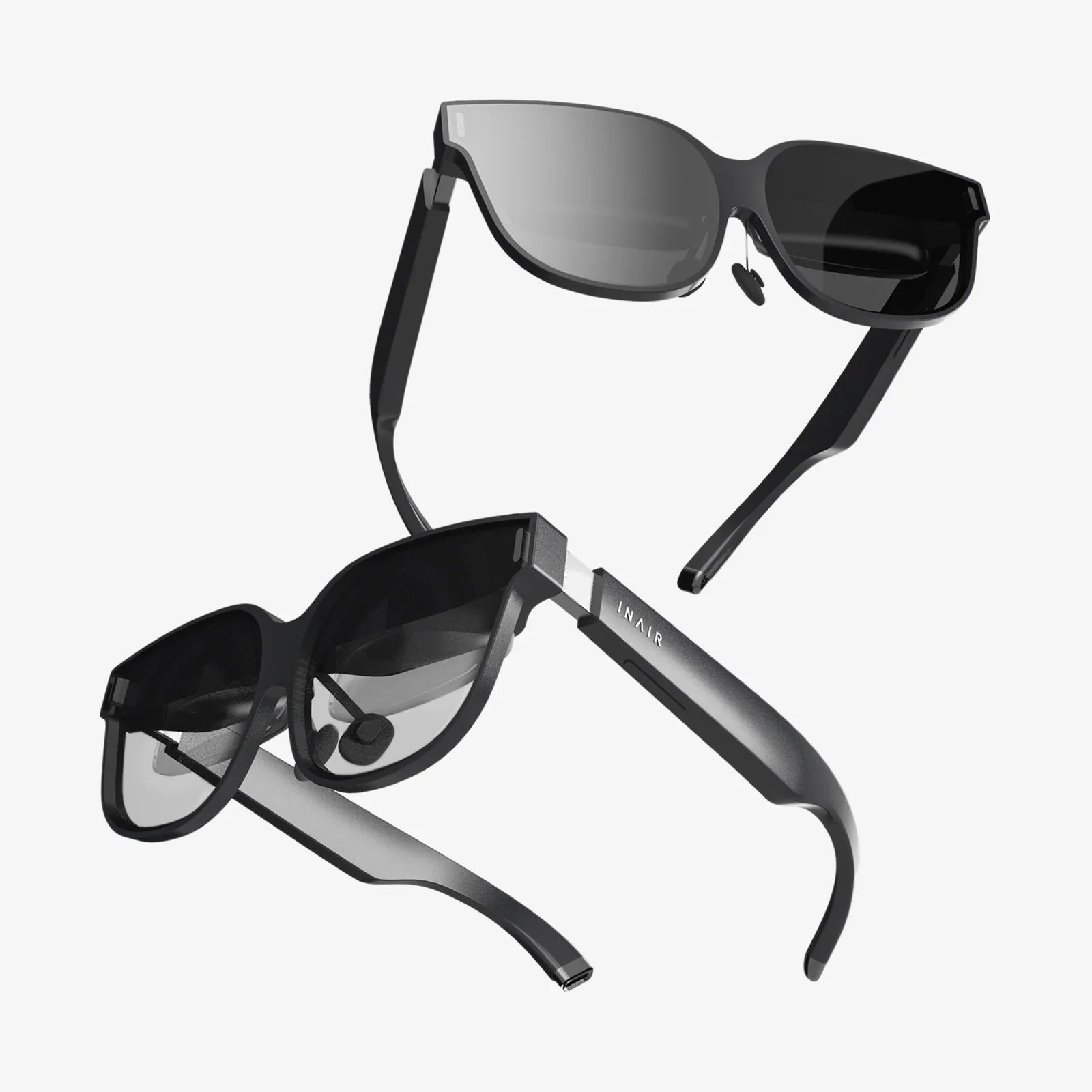
Imagine a world where information doesn't just live on a screen in your pocket but is woven seamlessly into the fabric of your reality, where digital instructions overlay a complex engine repair, historical figures materialize to narrate the ruins before you, and a navigational path glows on the pavement right at your feet. This is not a distant science fiction fantasy; it is the imminent future being unlocked by the augmented reality device, a technology poised to fundamentally redefine our relationship with the digital and physical worlds. The question is no longer if these devices will become ubiquitous, but why we should embrace this next evolutionary leap in human-computer interaction.
Beyond the Screen: Redefining Our Digital Interface
For decades, our primary portal to the digital universe has been the rectangular screen. From the desktop monitor to the smartphone, we have been conditioned to look at a device, a separate object that demands our focused attention and pulls us away from our immediate environment. The augmented reality device shatters this paradigm. It represents a shift from a distractive interface to an assistive one. Instead of pulling us into a confined digital space, it brings contextual, relevant information into our world, enhancing our perception and capabilities without severing our connection to the here and now. This is the core of its promise: technology that serves us on our terms, in our space, amplifying human potential rather than competing with it.
The Engine of Practical Utility: Transforming Professional Fields
The true power of this technology is most evident not in consumer entertainment but in its profound practical applications across countless industries. Here, the device transitions from a cool gadget to an indispensable tool, solving real-world problems with staggering efficiency.
Revolutionizing Manufacturing and Complex Repair
On the factory floor or in a field service scenario, technicians can access interactive 3D schematics overlaid directly onto the machinery they are assembling or fixing. Step-by-step instructions highlight specific components, warn of potential hazards, and allow remote experts to annotate the worker's field of view from across the globe, drastically reducing errors, training time, and downtime.
Architectural and Medical Visualization
Architects and clients can walk through a full-scale, holographic model of a building long before the first brick is laid, experiencing spatial relationships and lighting in a way blueprints cannot convey. In medicine, surgeons can visualize CT scans and MRI data projected directly onto a patient's body, providing a kind of “X-ray vision” that enhances precision and improves surgical outcomes. Medical students can practice complex procedures on detailed holographic anatomies, accelerating learning in a risk-free environment.
Logistics and Navigation
In vast warehouses, workers equipped with this technology can see optimal picking routes and have items visually highlighted, accelerating fulfillment processes to unprecedented speeds. For everyone else, navigating a new city becomes intuitive as directional arrows and points of interest are painted onto the streets, eliminating the constant, head-down glance at a phone map.
Reshaping the Social and Educational Fabric
Beyond the workplace, the implications for how we connect and learn are equally transformative. The technology offers a new medium for storytelling, shared experience, and immersive education.
A New Dimension for Learning
Education can be liberated from textbooks and videos. History lessons can unfold around students as ancient civilizations are reconstructed around them. Biology students can dissect a holographic frog or walk through a beating heart. Astronomy classes can project the solar system into the classroom, allowing students to manipulate planets and witness orbits. This shift from passive absorption to active, experiential learning caters to diverse learning styles and dramatically improves retention and engagement.
The Future of Connection and Remote Presence
While current video calls flatten our interactions into a grid of faces, this technology enables a feeling of genuine “remote presence.” Imagine a family member who lives abroad appearing as a realistic hologram in your living room, able to share your space and context. Remote collaboration becomes more natural, with colleagues appearing as life-sized avatars around a virtual conference table, able to manipulate 3D models together as if they were in the same room. It promises a richer, more human form of digital connection that transcends physical distance.
Navigating the Inevitable Challenges
Such a powerful tool does not arrive without significant questions and challenges that must be proactively addressed. The path to widespread adoption is paved with concerns over privacy, security, and societal impact.
The Privacy Paradigm Shift
A device that constantly scans and interprets the environment raises profound privacy questions. The concept of data collection expands from our online behavior to our physical surroundings, our gestures, and even what we look at. Robust, transparent frameworks must be established to govern what data is collected, how it is used, and who owns it. The potential for unauthorized surveillance and data exploitation is a serious risk that requires stringent ethical guidelines and regulatory oversight from the outset.
The Digital Divide and Accessibility
There is a danger that this technology could exacerbate existing social and economic inequalities, creating a new “digital divide” between those who can afford these advanced tools and those who cannot. Ensuring equitable access, particularly in educational and healthcare settings, will be crucial to prevent a societal split. Furthermore, design must be inclusive, catering to users with different physical abilities and ensuring the technology is a bridge, not a barrier.
Blurring the Lines of Reality
As digital overlays become increasingly convincing, distinguishing between what is real and what is augmented could become more difficult. This raises philosophical questions about our shared reality and the potential for manipulation or misinformation. Establishing digital etiquette—such as when it is appropriate to use the device—will be essential to maintain polite and safe social interactions in public spaces.
The Inevitable Convergence
The development of the augmented reality device is not happening in a vacuum. It represents the convergence of several exponential technologies: advances in micro-optics and display systems, spatial computing, artificial intelligence, and 5G/6G connectivity. AI is the brain that understands the environment and serves up the right information at the right time. High-bandwidth, low-latency networks are the nervous system that allows for complex data processing and seamless remote collaboration. Together, these technologies are maturing to a point where a comfortable, socially acceptable, and powerful device is not just possible, but inevitable.
We stand at the precipice of a new era, one where the line between our physical existence and our digital lives will fade into irrelevance. The augmented reality device is the key that unlocks this fusion, offering a future of heightened efficiency, deeper understanding, and richer connection. It is a tool that promises to augment not just our reality, but our very humanity—expanding the limits of what we can learn, create, and achieve together. The device is coming, and it will change everything; the only question left is how quickly we will adapt to see the world through its new lens.
Share:
What Not to Do During a Virtual Meeting: The Ultimate Guide to Professional Etiquette
Smart Glasses for Sports Activities: The Ultimate Guide to Augmented Athletic Performance