


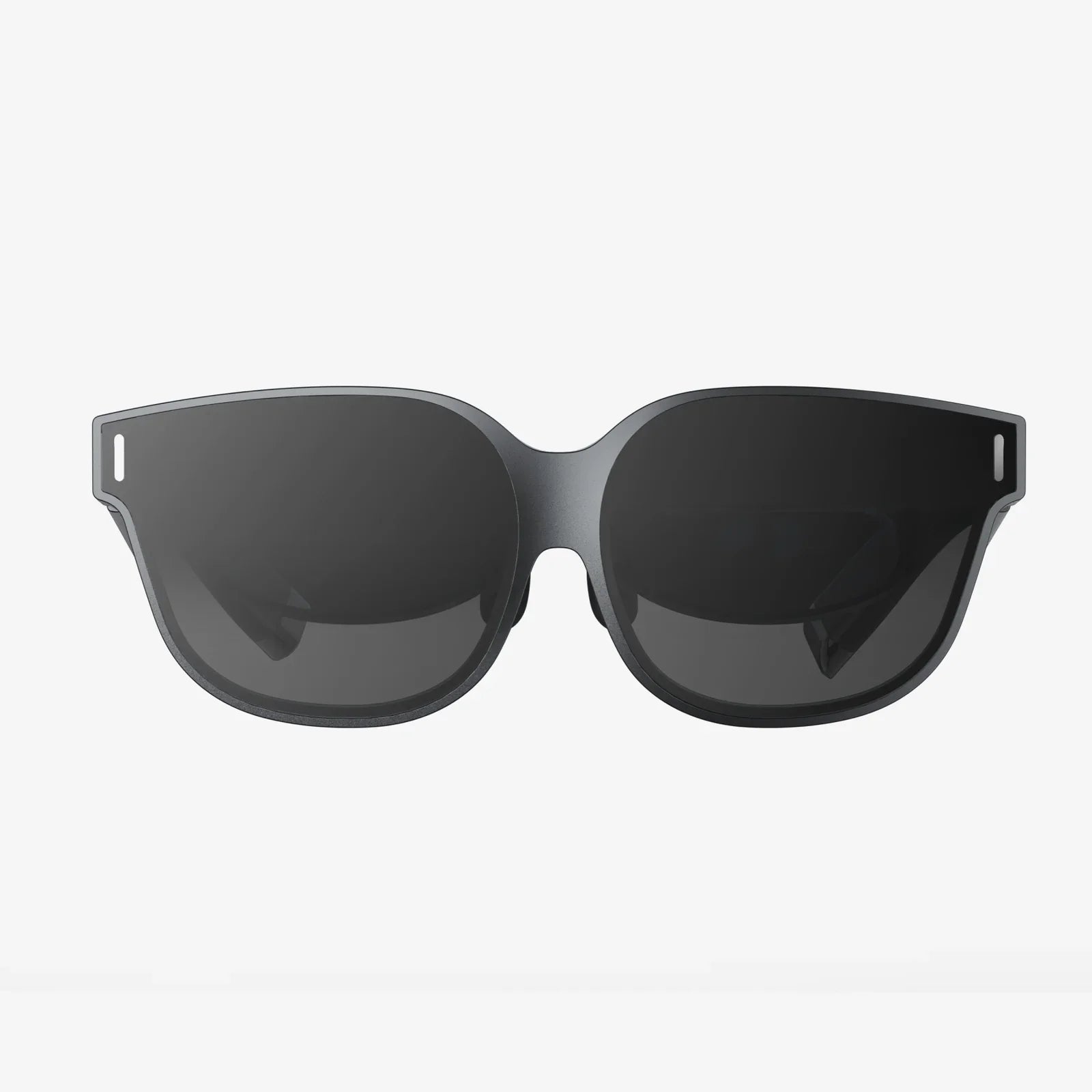
Imagine standing on the surface of Mars, the red dust crunching under your boots as you gaze at the pale, setting sun. Picture sitting front row at a legendary concert that happened decades before you were born, feeling the thrum of the bass in your chest. Envision practicing a complex heart surgery, your hands moving with precision, but without a single life at stake. This is not science fiction; this is the world being unlocked today by virtual reality. For many, VR remains a curiosity, a high-tech toy relegated to the realm of hardcore gamers. But to view it through such a narrow lens is to miss its seismic potential. The question isn't whether VR is entertaining—it's why we, as a society, as learners, as healers, and as human beings, fundamentally need it to navigate the complexities of the 21st century and beyond.
The Empathy Machine: Walking in Another's Shoes
One of the most profound human needs is the capacity for empathy—the ability to understand and share the feelings of another. Yet, true empathy is often hindered by distance, circumstance, and abstraction. We can read about a refugee crisis on the news, but it remains a distant tragedy. We can hear stories about racial or gender discrimination, but we can never fully inhabit another's lived experience. Virtual reality shatters these barriers in a way no other medium can.
VR is uniquely positioned as an "empathy machine." By literally placing you inside a simulated environment, it bypasses the intellectual and emotional filters we use to process traditional media. You are not watching a documentary about a child in a Syrian refugee camp; you are sitting in her tent. You are not hearing a story about workplace sexism; you are experiencing the subtle, dismissive microaggressions firsthand. This visceral, first-person perspective can trigger a deeper cognitive and emotional understanding than any article or video.
This application is crucial for fostering global citizenship and social cohesion. It can be used to train police officers in de-escalation, help corporate managers understand unconscious bias, and allow policymakers to experience the real-world impact of their decisions on diverse communities. In a world that often feels increasingly polarized, VR offers a powerful tool to bridge divides and build the foundational understanding necessary for progress.
Revolutionizing the Classroom: From Memorization to Experience
The traditional model of education, largely unchanged for centuries, is based on a system of abstraction. Students read about historical events, look at diagrams of biological processes, and listen to lectures about geological formations. They are asked to memorize facts and concepts that are, for them, devoid of context and tangible reality. Virtual reality promises to transform this paradigm from one of passive absorption to active, experiential learning.
Why do we need this? Because we learn best by doing and by experiencing. Imagine the difference for a student:
- Instead of reading about ancient Rome, they can walk through a meticulously reconstructed Forum, hearing the chatter of the crowd and seeing the scale of the architecture.
- Instead of watching a video of a cell, they can shrink down to the microscopic level and navigate the intricate landscape of the human body, watching proteins assemble and mitochondria generate energy.
- Instead of struggling to grasp complex astronomical scales, they can stand on the moon and watch the Earth rise, feeling the profound solitude and grandeur of space.
This immersive learning enhances retention, sparks curiosity, and makes education accessible to different learning styles. It allows for safe failure—a student can conduct a volatile chemistry experiment without risk or practice public speaking in front of a virtual audience. For professional training, the implications are staggering: mechanics can learn to repair engines, electricians can wire complex circuits, and astronauts can prepare for missions, all within a risk-free, cost-effective virtual sandbox.
The Future of Healthcare: Healing Minds and Training Hands
The need for innovation in healthcare is constant, and VR is emerging as a transformative tool for both treatment and training. Its applications address some of the field's most persistent challenges, from mental health to surgical precision.
Treatment and Therapy
VR has proven to be remarkably effective in exposure therapy for treating phobias (like fear of heights or flying) and Post-Traumatic Stress Disorder (PTSD). Therapists can gradually and controllably expose patients to their triggers within a safe, virtual environment, something that is often impractical, expensive, or unsafe to do in the real world. For patients suffering from chronic pain, immersive VR experiences can act as a powerful distractor, effectively reducing their perception of pain by hijacking the brain's sensory inputs. Furthermore, VR is being used for cognitive rehabilitation for stroke victims and to provide calming experiences for patients with anxiety and dementia.
Medical Training and Surgery
The adage of "see one, do one, teach one" in surgical training is fraught with risk. VR provides a perfect middle ground. Surgeons can practice complex procedures on virtual anatomy that behaves and bleeds like the real thing, allowing them to hone their skills and develop new techniques without ever touching a patient. This practice improves outcomes, reduces errors, and democratizes access to high-level surgical training for medical professionals around the globe, regardless of their access to a state-of-the-art teaching hospital.
Redefining Remote Work and Collaboration
The global shift to remote work has revealed both the possibilities and the limitations of digital collaboration. Video conferencing keeps us connected, but it is a poor substitute for the nuance and spontaneity of in-person interaction. We need a better way to foster true collaboration and presence when physical proximity isn't possible. Virtual reality provides the answer through the concept of the "metaverse"—a persistent network of shared virtual spaces.
In a VR meeting, you are not a face on a screen; you are an avatar in a room with your colleagues. You can make eye contact, use body language, and gather around a 3D model of a new product design, examining it from every angle as if it were physically present. Architects and engineers can walk through a building design long before ground is broken, identifying potential issues and making changes in real-time. This sense of "shared presence" can rebuild the social fabric of remote teams, sparking the kind of creative, serendipitous interactions that drive innovation.
Preservation and Accessibility: Saving Our Heritage
Human history is fragile. Ancient sites are eroding, languages are disappearing, and cultural practices are fading. We have a deep need to preserve our shared heritage, not just in books and photos, but in experiential form. VR serves as a digital time capsule and a vehicle for universal access.
Organizations are using photogrammetry and 3D scanning to create high-fidelity virtual replicas of endangered sites, from Notre-Dame Cathedral after the fire to ancient ruins threatened by climate change and urban expansion. These digital twins allow anyone, anywhere in the world, to explore and study these places without contributing to their physical wear and tear. Furthermore, VR can archive performances, ceremonies, and stories told by the last remaining speakers of a language, preserving not just the facts, but the context, emotion, and experience of a culture for future generations. It makes the inaccessible accessible, allowing those with physical disabilities to "visit" places otherwise off-limits or to experience a mountain hike they could never undertake physically.
Confronting the Challenges and Looking Ahead
Of course, the integration of such a powerful technology is not without its perils. The need for VR must be balanced with a clear-eyed view of its risks. Issues of data privacy are paramount, as VR headsets can collect incredibly intimate data about our movements, reactions, and even eye-tracking. The potential for addiction and the blurring of lines between the virtual and the real raise important psychological and social questions. There is also the danger of a "digital divide," where access to these transformative experiences becomes a privilege of the wealthy, exacerbating existing inequalities.
These challenges are not reasons to reject the technology, but rather a mandate to develop it responsibly. We need robust ethical frameworks, transparent data policies, and a commitment to making this technology as inclusive and accessible as possible. The goal is not to escape reality, but to augment, enhance, and understand it better.
The shimmering promise of virtual reality extends far beyond a headset in a game store; it represents a fundamental shift in how we connect, learn, and perceive our world. It is a tool for healing trauma, for erasing the limitations of physical distance, and for preserving the echoes of our past. It is a canvas for unimaginable creativity and a bridge to deeper human understanding. This technology is not about rejecting our reality, but about expanding its very definition, offering us new lenses through which to see ourselves, our potential, and our place in the universe. The journey into the virtual is, ultimately, a journey to the very heart of what makes us human.
Share:
Virtual Reality Meaning and Examples: A Deep Dive Into the Digital Frontier
Virtual Reality Interactive Action: The Dawn of a New Physical Digital Paradigm