


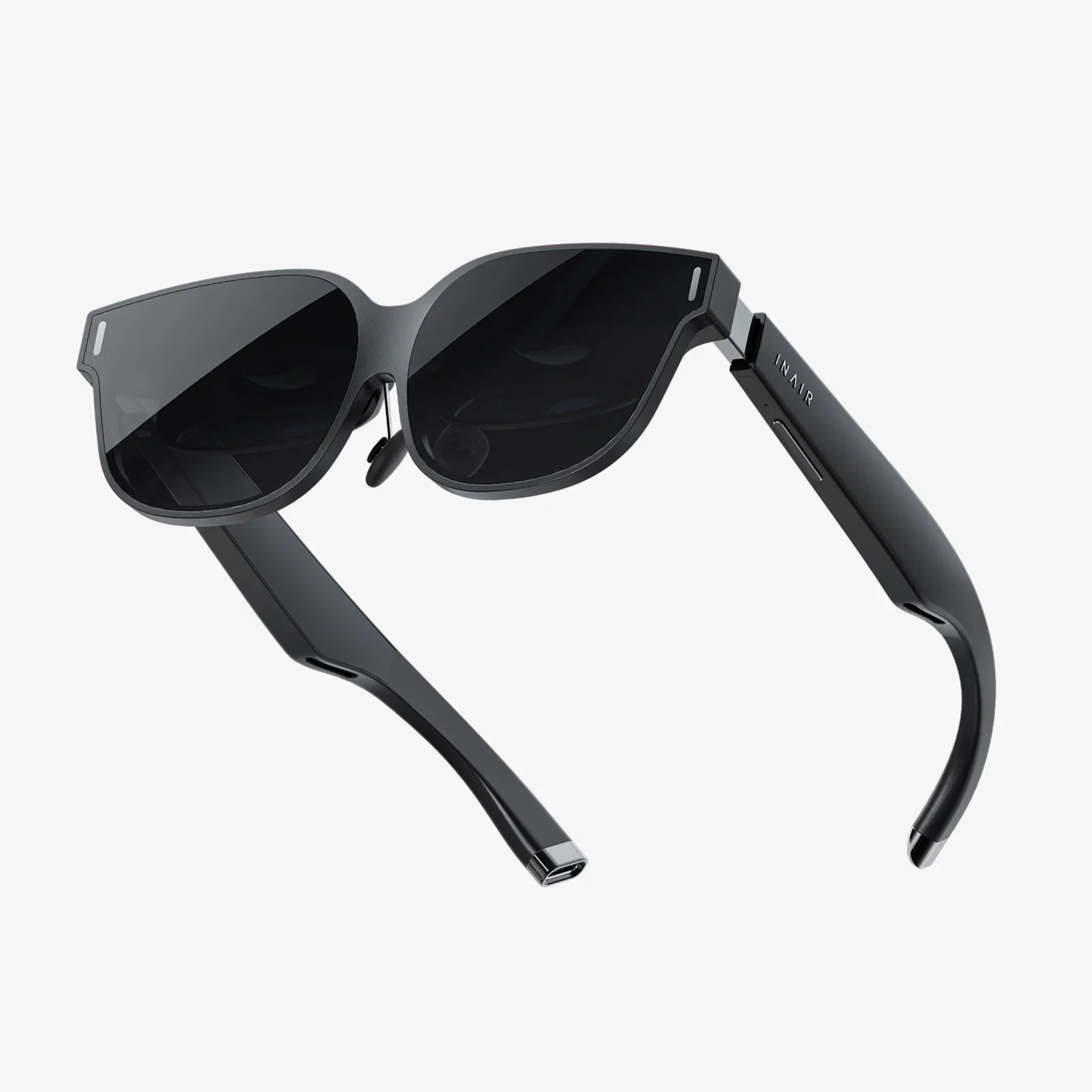
You've just unboxed your sleek new VR headset, the gateway to breathtaking virtual landscapes, heart-pounding games, and immersive social spaces. You place it over your eyes with anticipation, only to be met with a frustrating, blurry mess. The epic dragon is a smudge, the text is unreadable, and a dull headache begins to form behind your eyes. This disappointing first step into the metaverse is a reality for millions who require vision correction, and it all boils down to a fundamental question: why is something designed to mimic reality so bad at seeing the world the way you do? The answer lies at the intersection of human biology, optical physics, and digital engineering.
The Human Eye: Your Personal Biological Lens
To understand why you might need glasses in a virtual world, we must first understand how we see the real one. Vision is a complex process where light rays bounce off objects and enter the eye through the cornea, the eye's clear outer layer. The cornea does most of the focusing. Then, the light passes through the pupil to the lens, which fine-tunes the focus by changing shape—a process called accommodation. Finally, the focused light hits the retina, a layer of light-sensitive cells at the back of the eye. The retina converts the light into electrical signals that travel via the optic nerve to the brain, which interprets them as the sharp images we perceive.
This process is perfectly tuned for viewing objects at varying distances in the real world. However, several common conditions disrupt this delicate system:
- Myopia (Nearsightedness): Occurring when the eyeball is slightly too long or the cornea is too steep, light rays focus in front of the retina, making distant objects appear blurry.
- Hyperopia (Farsightedness): The opposite of myopia, where the eyeball is too short or the cornea is too flat. Light focuses behind the retina, causing close-up objects to be blurry.
- Astigmatism: Caused by an irregularly shaped cornea or lens, which prevents light from focusing to a single point on the retina. This results in overall blurred or distorted vision at any distance.
- Presbyopia: An age-related condition where the eye's natural lens loses flexibility, making it difficult to focus on close objects. It affects nearly everyone after the age of 40.
Traditional eyeglasses and contact lenses correct these refractive errors by bending the light rays entering the eye to ensure they land perfectly on the retina, delivering a crisp image to the brain.
The VR Headset: A Fixed-Focus Optical Machine
A VR headset is, at its core, a sophisticated optical device. Its primary job is to take two small two-dimensional screens placed just inches from your eyes and trick your brain into perceiving a vast, three-dimensional world. It accomplishes this feat using a set of specialized lenses that sit between the screens and your eyes.
These headset lenses have two critical functions:
- Magnification: They magnify the small screen to fill your entire field of view.
- Refocusing: They bend the light from the screens to make it appear as if it's coming from a distance, typically a virtual focal plane of 1.5 to 2 meters (about 5 to 6.5 feet) away. This is known as the focal distance or accommodation distance.
This is the crucial piece of the puzzle. The VR headset creates a visual environment where all virtual objects, whether a character standing right in front of you or a mountain on the horizon, are optically projected to this fixed focal distance. Your eyes are not focusing on the screen two inches away; they are focusing, or attempting to focus, as if they are looking at something several feet away.
The Collision of Biology and Technology
Herein lies the fundamental conflict. The VR headset assumes the user has perfect vision for viewing objects at its fixed focal distance. If you have a refractive error like myopia, hyperopia, or astigmatism that affects your vision at that specific distance, the virtual image will be blurry.
For example, if you are nearsighted and struggle to see objects clearly beyond a few feet, the headset's simulated 2-meter world will appear just as blurry as it would in reality. Your eyes cannot properly focus the pre-bent light from the headset's lenses onto your retina. The headset's optics are doing their job, but your eyes cannot complete the process. The result is the same blurry vision you'd experience in the real world without your glasses, defeating the entire purpose of immersion.
This fixed-focus design also explains a phenomenon that puzzles many new users: why text and objects seem clear, but the world feels "off" or straining. This eye strain, often leading to headaches and fatigue, is frequently caused by a mismatch known as the Vergence-Accommodation Conflict (VAC). In the real world, your eyes converge (cross slightly) and accommodate (focus) in tandem when looking at a nearby object. In VR, your eyes might converge on a virtual object that appears close, but they must still accommodate for the fixed focal distance of the headset itself. This unnatural decoupling of two linked biological processes is a primary source of visual discomfort in early VR systems.
Beyond Blurriness: The Criticality of Comfort and Safety
Wearing the correct vision correction in VR isn't just about achieving a clear picture; it's a fundamental requirement for comfort and safety. Experiencing a blurry virtual world is not only disappointing but can actively discourage use. However, the problems run deeper.
Prolonged use of an uncorrected headset forces your eyes to strain constantly in an attempt to resolve the blurry image. This excessive effort can lead to:
- Severe headaches and migraines
- Eye fatigue and dryness
- Feelings of nausea or simulator sickness
- General discomfort that shortens play sessions and taints the overall experience
Furthermore, visual clarity is directly tied to physical safety in VR. Most VR experiences require movement. A blurry environment makes it difficult to judge distances, perceive obstacles in your physical play space, and interact with virtual objects accurately. This significantly increases the risk of tripping over furniture, bumping into walls, or misjudging a swing of the controller. Clear vision is non-negotiable for safe navigation in both the virtual and physical realms simultaneously.
Addressing the Need: Solutions for a Clearer View
Thankfully, the industry recognizes that a one-size-fits-all approach to vision doesn't work. There are several effective solutions to achieve visual clarity in VR, each with its own advantages.
1. Wearing Your Regular Eyeglasses
The simplest solution is to wear your existing prescription glasses inside the headset. Most modern headsets are designed with extra space, known as an eye relief adjustment, to accommodate glasses frames. However, this method has drawbacks: it can be uncomfortable, with the headset pressing the frames into your nose and temples. There's also a risk of the glasses' lenses scratching the headset's delicate Fresnel lenses. It often creates a less-than-ideal fit, allowing light to leak in from the sides and break immersion.
2. Prescription Lens Inserts
For frequent VR users, custom prescription lens inserts are widely considered the optimal solution. These are custom-made magnetic or clip-in lenses that attach directly over the headset's built-in lenses. They are precision-ground to your exact prescription, effectively making the headset's optics work perfectly for your eyes.
The benefits are immense:
- Superior Comfort: No more cramped, pressed-in glasses. The headset fits as intended.
- Optimal Clarity: Lenses are perfectly aligned with the headset's optics.
- Protection: They act as a permanent protective barrier, preventing scratches on the headset's original lenses.
- Improved Immersion: With a better fit and no light gaps from glasses frames, the sense of presence is greatly enhanced.
3. Customizable Software IPD Adjustment
While not a replacement for refractive correction, another critical visual setting is Interpupillary Distance (IPD)—the distance between the centers of your pupils. Headsets with physical IPD adjustment allow you to mechanically shift the lenses to align with your eyes. Software IPD adjustment can digitally shift the image. Proper IPD alignment is essential for maximizing the stereoscopic 3D effect, ensuring scale feels correct, and reducing eye strain. It works in tandem with your prescription to create a comfortable experience.
The Future is Clear: Vision Technology on the Horizon
The future of VR is moving towards solving these visual challenges seamlessly. Researchers and engineers are actively developing next-generation technologies aimed at making vision correction obsolete within the headset itself.
One promising area is varifocal displays. These advanced systems use eye-tracking to determine exactly where you are looking in the virtual scene and then mechanically or electronically adjust the focus of the lenses in real-time to match the simulated distance of that object. This would mimic the natural behavior of the human eye, potentially eliminating the Vergence-Accommodation Conflict and creating a more natural and comfortable experience for everyone, regardless of their prescription.
Other concepts involve light-field technology and holographic displays that can project light rays in a way that mimics real-world light fields, allowing your eyes to focus naturally at different depths. While these technologies are still in the R&D phase for consumer hardware, they represent the ultimate goal: a VR headset that adapts to your eyes, not the other way around.
Don't let blurry vision be the barrier between you and the incredible experiences waiting in virtual reality. Understanding that a VR headset has a fixed focal plane is the first step to realizing that your everyday prescription is just as crucial inside the headset as it is outside. Investing in the right solution, whether it's perfectly fitting inserts or simply ensuring your glasses are comfortable, isn't a compromise—it's the key to unlocking the full, breathtaking, and comfortable potential of the digital realm. Your passport to these worlds requires a clear vision, so make sure yours is up to date.
Share:
Augmented Reality Stories Are Redefining the Very Fabric of Human Narrative
Augmented Reality Directions Are Revolutionizing How We Navigate the World