


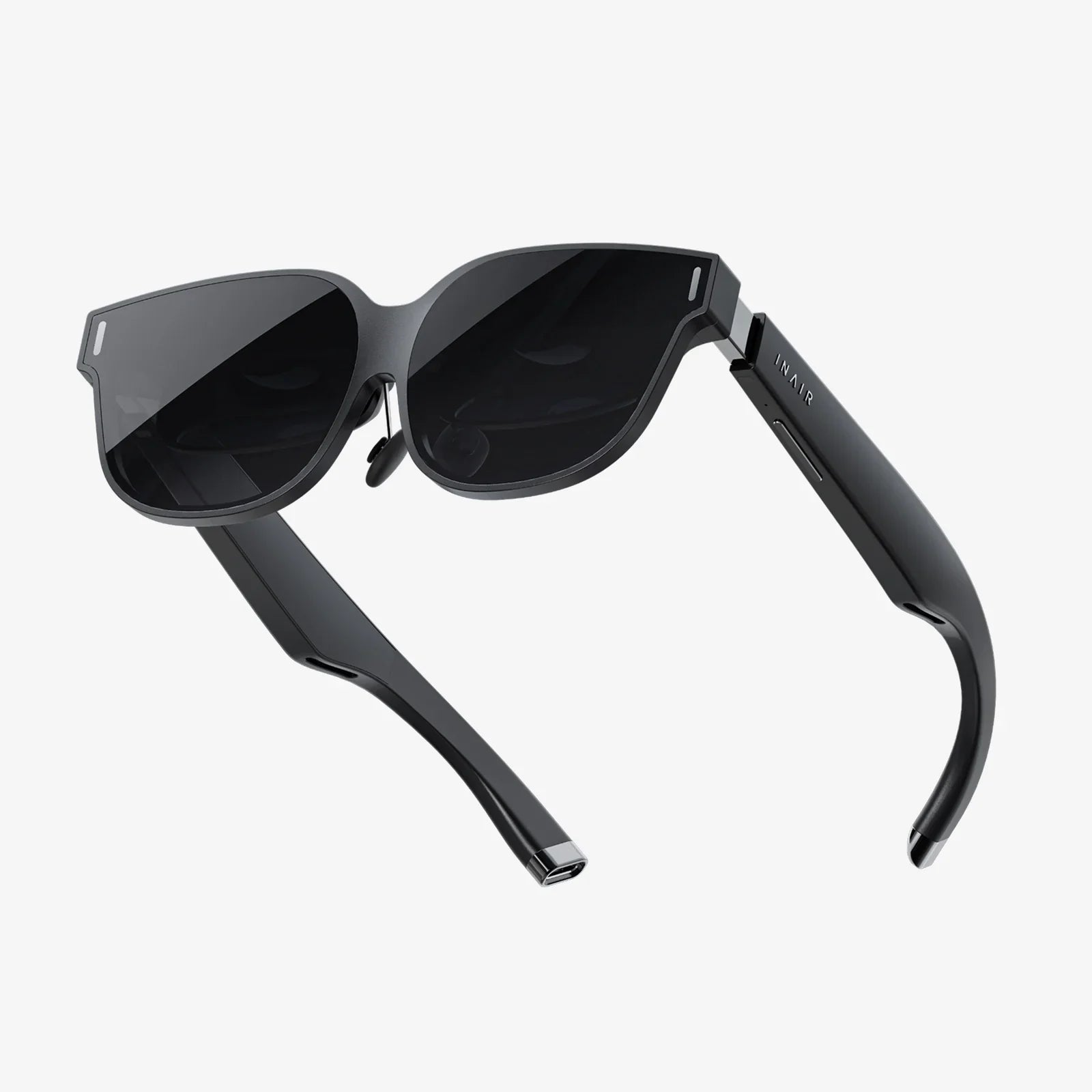
Imagine a world where digital information doesn’t confine you to a screen but instead, bleeds seamlessly into your physical environment. Where learning complex surgery involves a hovering, interactive hologram of the human heart, where shopping for a new sofa means seeing it in your living room before you buy, and where a factory technician can see vital diagnostics overlaid directly onto a malfunctioning machine. This is not a distant sci-fi dream; this is the tangible, transformative power of augmented reality, and it’s already here. The question is no longer if AR will change everything, but why you should be using it right now to enhance your work, learning, and play.
Beyond the Novelty: Defining Augmented Reality's Core Value
At its essence, augmented reality (AR) is a technology that superimposes computer-generated perceptual information—be it visual, auditory, haptic, or somatosensory—onto our real-world environment. Unlike Virtual Reality (VR), which creates a completely immersive digital experience, AR enhances reality by adding a digital layer to it. This fundamental distinction is key to understanding its utility. AR doesn’t seek to replace our world but to augment it with contextual, relevant, and interactive data exactly when and where we need it most. This bridge between the digital and the physical is why AR’s applications are so vast and its potential so profound. It’s a tool for enhancing human capability, not replacing it.
Revolutionizing Learning and Skill Development
One of the most powerful applications of AR lies in education and training. Traditional methods often rely on abstract concepts, static images, and theoretical knowledge. AR shatters these limitations, creating immersive, interactive, and deeply memorable learning experiences.
Interactive and Immersive Education
Textbooks come alive with AR. A student studying astronomy can point a device at the night sky to see constellations labeled and planets identified. A medical student can practice procedures on a detailed, layered holographic human body, understanding anatomy in a way a 2D diagram could never convey. This kinesthetic learning—learning by doing—dramatically improves information retention and comprehension. Complex systems in biology, engineering, and history become tangible, turning abstract ideas into interactive models that students can explore from every angle.
Enhanced Professional Training and Upskilling
In industrial and corporate settings, the stakes are even higher. AR provides a risk-free environment for mastering dangerous or expensive tasks. Technicians can learn to repair complex machinery by following digital instructions overlaid onto the physical equipment, reducing errors and improving safety. This "see-what-I-see" capability also allows for remote expert guidance, where a seasoned professional can annotate a junior worker's live field of view from thousands of miles away, circling components and providing instructions in real-time. This drastically reduces downtime, travel costs, and the skills gap across various industries.
Transforming Commerce and the Retail Experience
The retail sector has been fundamentally disrupted by e-commerce, but a significant hurdle remains: the inability to physically interact with a product before purchase. AR is the key to solving this, merging the convenience of online shopping with the confidence of an in-store experience.
Try Before You Buy: The End of Buyer's Remorse
Why guess if a new piece of furniture will fit in your space or match your décor? AR apps allow you to project true-to-scale 3D models of products into your home. You can walk around a virtual sofa, see how a new lamp casts light in your room, or even try on watches, glasses, and makeup digitally. This not only empowers consumers with confidence but also significantly reduces return rates for retailers. It transforms the shopping journey from one of uncertainty to one of informed decision-making, enhancing customer satisfaction and loyalty.
Interactive Marketing and Brand Engagement
Marketing is no longer about shouting the loudest; it's about engaging the deepest. AR creates unforgettable interactive campaigns. A movie poster can come alive with a trailer. A product package can unlock games, additional product information, or exclusive content. This creates a powerful, shareable experience that connects brands with consumers on a deeper level, fostering engagement that far surpasses traditional advertising.
Driving Efficiency and Innovation in Industry and Manufacturing
Perhaps the most significant and immediate ROI for AR is found in industrial applications. Here, AR is not a gimmick; it's a critical tool for improving efficiency, accuracy, and safety.
Streamlined Design and Prototyping
Engineers and designers can use AR to visualize and interact with 3D prototypes overlaid onto the real world. This allows for collaborative design reviews where teams can assess the form, fit, and function of a product long before expensive physical prototypes are built. Potential design flaws can be identified and rectified early in the process, saving immense amounts of time and resources.
Powerful Assembly, Maintenance, and Logistics
On the factory floor and in warehouses, AR is a game-changer. Workers equipped with AR smart glasses can see digital work instructions, diagrams, and safety information directly in their line of sight, freeing their hands for the task. This guides them through complex assembly processes, reduces errors, and accelerates training for new employees. In logistics, AR can visually show warehouse workers the most efficient route to pick items, highlight the correct products on a shelf, and display crucial information about handling, streamlining the entire supply chain.
Enhancing Everyday Life and Human Connection
Beyond enterprise and commerce, AR is weaving its way into the fabric of our daily lives, enhancing how we navigate, communicate, and connect.
Navigation and Contextual Information
Forget holding your phone out to follow a blue dot on a map. The future of navigation is AR arrows and directions painted onto the street through your screen or glasses, guiding you intuitively to your destination. Point your device at a restaurant to see its reviews and menu hover above it. Look at a landmark to get a historical overview. AR provides a contextual layer of information about the world around you, making exploration and navigation richer and more intuitive.
New Dimensions of Social Interaction and Entertainment
AR is creating new shared experiences. Social AR filters are just the beginning. Imagine watching a live sports game with real-time stats and player information overlaid on your view, or playing a game that transforms your entire neighborhood into a digital playground. Furthermore, AR has immense potential for enhancing connection, allowing for more expressive and immersive remote communication where digital avatars and shared holograms can make it feel like you’re truly in the same room with someone far away.
The Future is Augmented: A Compelling Call to Action
The trajectory is clear. As AR hardware becomes more advanced, affordable, and socially accepted—moving from smartphones to sleek glasses—its integration into our daily routines will become seamless and ubiquitous. The foundational technologies of 5G connectivity, edge computing, and artificial intelligence will further supercharge AR, enabling more complex, responsive, and persistent digital overlays. The businesses, educators, and innovators who begin exploring and integrating AR today are the ones who will define the standards of tomorrow. They will be positioned to capture market share, attract top talent, and build deeper, more meaningful relationships with their audiences.
The initial barrier to entry is lower than ever. Robust software development kits and accessible platforms empower creators of all technical backgrounds to build AR experiences. The question of why to use augmented reality is answered by its unparalleled ability to enhance human understanding, streamline complex processes, bridge physical distances, and create wonder. It’s a tool for solving real-world problems, for telling better stories, and for building a more efficient, informed, and connected world. The digital and physical realms are converging, and augmented reality is the lens through which we will see this new, enhanced world come into focus. Will you be looking through it?
Share:
What Is Augmented Reality Meaning: Bridging Our Digital and Physical Worlds
Great VR Glasses: A Portal to New Realities and Limitless Potential