


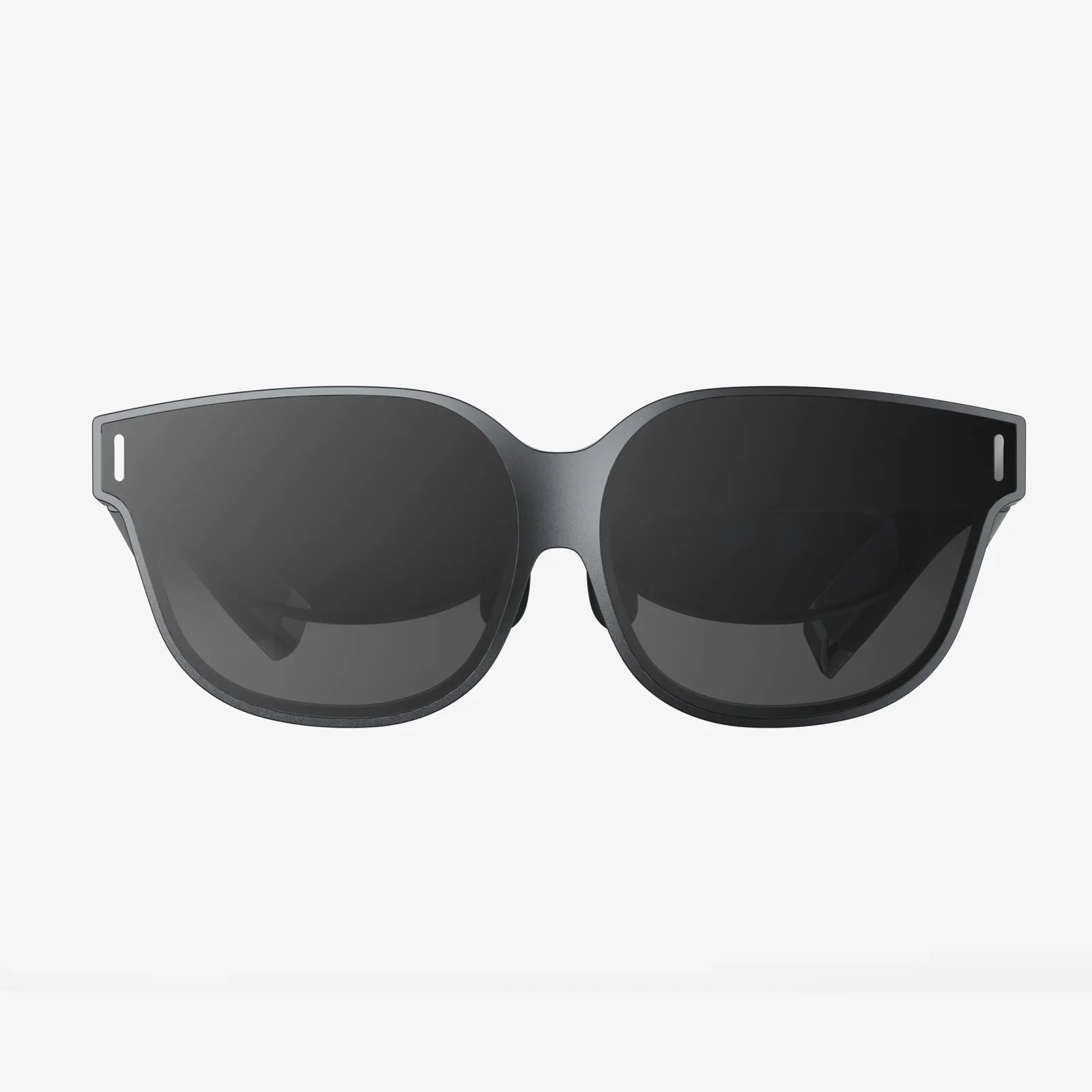
Imagine a world where your entire digital life—your messages, your maps, your memories, your work—floats seamlessly in the space around you, accessible with a glance, a gesture, or a quiet word. The clunky rectangle in your pocket vanishes, replaced by a sleek pair of glasses that augment your reality instead of distracting from it. This isn't just science fiction; it's the ambitious promise driving the next potential revolution in personal technology. The question is no longer if we will wear computers on our faces, but when, and more importantly, whether these devices will ultimately dethrone the ubiquitous smartphone.
The Inescapable Reign of the Smartphone
To understand the possibility of replacement, we must first acknowledge the monumental achievement of the smartphone. It is more than a device; it is a portal, a remote control for modern life. Its success is built on a potent trifecta: unparalleled convenience, a universally intuitive touch interface, and a vast ecosystem of applications that cater to every conceivable human need. It consolidated the camera, the map, the music player, the game console, and the communication hub into a single, pocket-sized slab of glass and metal. For billions, it is the first and last thing they see each day, the primary lens through which they interact with the digital world.
The Inevitable Rise of Augmented Reality
Yet, for all its power, the smartphone has a fundamental flaw: it creates a barrier. To access the digital realm, we must lower our heads and retreat into a small, isolated screen, disconnecting from the physical world around us. Augmented reality proposes a more elegant synthesis. AR, at its core, is the seamless overlay of digital information and objects onto the user's view of their real-world environment. Unlike Virtual Reality (VR), which seeks to replace reality with a simulated one, AR aims to enhance and enrich it.
The seeds of this future are already sprouting. We see it in navigation apps that superimpose arrows onto live street views, in furniture apps that let you visualize a new sofa in your living room, and in social media filters that playfully alter our appearance. However, these smartphone-based AR experiences are merely a glimpse, a proof-of-concept hampered by the very device they run on. True, transformative AR requires a dedicated, wearable form factor—the AR glasses.
The Case for Replacement: Why AR Glasses Could Win
The argument for AR glasses replacing phones hinges on the concept of a more natural, efficient, and contextually aware interface.
Ubiquitous and Hands-Free Computing
The most immediate advantage is liberation. AR glasses promise constant access to information without the need to physically hold a device. Imagine following GPS directions with arrows painted onto the road itself, reading a recipe with instructions floating beside your mixing bowl, or watching a tutorial with diagrams overlaid on the engine you're repairing—all while keeping your hands free to drive, cook, or work. This shift from pull computing (where we actively retrieve information from a device) to ambient computing (where information is passively and contextually presented to us) represents a fundamental change in our relationship with technology.
Spatial Computing and a Infinite Canvas
Smartphones are confined to a finite screen. AR glasses offer an infinite, three-dimensional canvas limited only by your field of view. A video call is no longer a small window but a life-sized projection of the person sitting across from you at the table. Your work desktop is no longer cramped on a 15-inch display but spread across the virtual space of your office. This spatial context allows for incredibly intuitive interactions—grabbing, moving, and resizing digital objects with gestures as naturally as you would physical ones.
Enhanced Contextual Awareness and AI Integration
Equipped with a suite of sensors—cameras, LiDAR, microphones, inertial measurement units (IMUs)—AR glasses can perceive the world in detail. Coupled with powerful on-device artificial intelligence, this enables a level of contextual awareness a phone can never achieve. The glasses could translate a foreign street sign in real-time, identify a plant species during a walk, or alert you to the name of a colleague you met years ago as they approach. This proactive, intelligent assistance moves beyond simple commands into the realm of a true digital companion.
The Daunting Hurdles on the Road to Adoption
Despite the compelling vision, the path to replacing the smartphone is fraught with immense technological, social, and practical challenges.
The Form Factor Conundrum
For AR glasses to achieve mass adoption, they must be socially acceptable. This means they need to be indistinguishable from regular eyewear—lightweight, comfortable, and stylish enough to wear all day. Current technology forces a trade-off between performance and form factor. High-resolution displays, powerful processors, and batteries capable of all-day use generate heat and add significant bulk. Bridging this chasm between the desired form and the required function is the single greatest engineering challenge in the field.
The Battery Life Barrier
The smartphone's daily charge cycle is a tolerated inconvenience. For a device intended to be worn all day, a battery that dies after a few hours of active use is a non-starter. Powering high-resolution displays, multiple sensors, and constant wireless data processing is incredibly energy-intensive. Breakthroughs in battery technology, ultra-low-power displays, and radically efficient processing architectures are essential before always-on AR becomes a reality.
The Interface Dilemma: Beyond Touch
We all know how to use a touchscreen. The interface for AR is still being invented. Will it be voice control? Hand gestures? A combination of both? Each has drawbacks. Voice control can be socially awkward and ineffective in noisy environments. Precise hand gestures can be fatiguing and may lack the tactile feedback we crave. Developing a universally intuitive, private, and effortless control scheme is critical.
The Privacy Paradox
A device that records the world through cameras and microphones constantly raises profound privacy concerns, both for the user and for everyone around them. The societal implications of pervasive, always-on recording and facial recognition are staggering. Robust, transparent, and user-controlled privacy frameworks will need to be established, both technically and legally, to prevent a dystopian future of constant surveillance.
A More Likely Future: Coexistence and Convergence
Given these formidable obstacles, a sudden, outright replacement of the smartphone within the next decade seems improbable. A more plausible scenario is a prolonged period of coexistence and convergence, much like the transition from desktop computers to laptops.
Initially, AR glasses will function as a companion device, reliant on a smartphone for processing power and connectivity (a concept known as "tethered" AR). Your phone will remain in your pocket, acting as the brain, while the glasses serve as the eyes. This allows early AR devices to be lighter and more affordable while the underlying technology matures.
Over time, as the glasses become more self-sufficient, the phone's role will diminish. We might see a future where the smartphone evolves into a simple puck-like device—a personal compute unit—that you carry with you but rarely look at, its sole purpose to power your glasses, your watch, and other wearables. The smartphone, in its familiar form, fades into the background, its functionality absorbed by a network of specialized, interconnected devices worn on the body.
The Societal Implications of an Augmented World
The shift to primary AR wearables will ripple far beyond convenience, reshaping society in ways we are only beginning to comprehend.
The digital divide could widen into a chasm, separating those who can afford advanced AR technology and those who cannot. Will access to real-time translation, contextual information, and enhanced learning become a prerequisite for success? Furthermore, the very nature of attention and presence will be challenged. If we can constantly layer digital distractions onto our visual field, will we lose our capacity for undivided attention and deep, uninterrupted thought? The potential for new forms of advertising, spam, and digital graffiti in our personal space is both a commercial goldmine and an ethical nightmare.
Conversely, the potential for good is immense. AR could revolutionize fields from medicine, where surgeons could see vital stats and 3D scans overlaid on a patient, to education, where students could explore ancient Rome or the human bloodstream from their classroom. It could provide incredible assistive technology, offering real-time captioning for the hearing impaired or enhanced navigation for the visually impaired.
The journey from the telephone to the smartphone was about putting a computer in everyone's pocket. The journey from the smartphone to AR glasses is about dissolving that computer into the world around us. It's a transition from a device we use to a technology we wear and experience. The question of replacement is less about a sudden obsolescence and more about a gradual, fundamental redefinition of what a personal computer is. The rectangle in our pocket won't vanish overnight; it will simply become less important, its soul migrating to a pair of glasses that finally allows our digital and physical lives to become one.
We stand on the precipice of this new reality, not as passive consumers, but as the architects of the world we want to build. The technology will arrive, but its ultimate shape and its impact on humanity will be determined by the choices we make today—choices about privacy, equity, and the kind of future we choose to augment.
Share:
Convert 2D to 3D Software: A Comprehensive Guide to Unlocking the Third Dimension
Ultra Wide Screen Dimensions: The Ultimate Guide to Immersive Display Ratios