You’ve seen the headlines, the flashy promotional videos, and the science fiction dreams. You’ve perhaps even strapped a headset to your own face, feeling that first jolt of wonder as you were transported to another world. Yet, for most, that headset now gathers dust in a closet, a testament to a promise not yet fully realized. The question lingers, not as a whisper but as a fundamental challenge to technologists and dreamers alike: after all this time, with so much potential, will virtual reality ever truly happen? The journey to answer that is a story of fits and starts, of breathtaking innovation running headlong into immutable human nature, and of a future that remains tantalizingly within reach.
The Ghost in the Machine: A History of Promises
To understand VR's present, we must first exorcise its ghosts. The concept is far older than most realize. In the mid-20th century, cinematographer Morton Heilig developed the Sensorama, a bulky arcade cabinet that aimed to immerse the user in a short film with stereo sound, wind, and smells. It was a mechanical precursor to the digital dreams that would follow. The term "virtual reality" itself was popularized in the late 1980s by Jaron Lanier, whose company VPL Research developed some of the first commercial goggles and datagloves. This early boom was fueled by cyberpunk ethos and tech-optimism but was swiftly followed by a spectacular bust. The technology was simply not ready; it was low-resolution, nauseatingly laggy, and astronomically expensive.
The pattern repeated itself in the early 2010s. The kickstarter campaign for the Oculus Rift headset reignited the flame, promising high-fidelity, affordable immersion. It sparked a new gold rush, with countless companies investing billions in the belief that VR was the next computing platform. And once again, after an initial surge of enthusiasm, the mass audience failed to materialize. Consumers balked at the cost, the technical complexity, and the lack of compelling software that justified the investment beyond a novel weekend experience. This cycle of hype and disappointment has left a lasting scar on VR's reputation, making the question of its viability not just technological, but psychological. Can the market believe again?
The Immovable Objects: The Technological and Human Hurdles
For VR to "happen," it must overcome a series of profound challenges that have, so far, proven stubbornly resistant to innovation. These are the immovable objects standing between a niche hobby and a universal tool.
The Friction of Entry
Currently, high-end VR requires a significant upfront investment. This isn't just financial, though the cost of a headset and a powerful computer to run it is a major barrier. It's also a friction of effort. Setting up base stations, clearing play space, updating drivers, and troubleshooting software is a world away from the seamless experience of turning on a television or unlocking a smartphone. While standalone headsets have dramatically reduced this friction, they often come with a trade-off in processing power and graphical fidelity, creating a catch-22 for developers and users.
The Comfort Conundrum
There are two primary aspects to comfort: physical and psychological. Physically, even the best headsets are still heavy, often hot, and can cause facial strain during prolonged use. The quest for smaller, lighter, more glasses-like form factors is the industry's holy grail. Psychologically, VR-induced nausea, or cybersickness, remains a problem for a significant portion of the population. It's caused by a mismatch between the visual motion cues the eyes see and the vestibular system's sense of stillness. Until this latency and simulation sickness can be eradicated for nearly all users, VR will have a hard ceiling on its adoption.
The Killer App Dilemma
Every successful technological platform has its killer application—the one use case so compelling it drives mass adoption. For PCs, it was the spreadsheet. For the internet, it was email and the web browser. For smartphones, it was the app store and the camera. VR has yet to find its undeniable killer app. Gaming is its strongest suit, offering unparalleled immersion, but it still caters largely to a specific enthusiast demographic. Social VR platforms are innovative but feel more like tech demos than essential daily services. For enterprise, VR is excellent for training and design prototyping, but these are specialized, not universal, uses. Without a reason for the average person to need VR daily, it risks remaining a peripheral device.
The Isolation Paradox
VR is, by its very nature, an isolating experience. You put on a headset and effectively leave the physical world and the people in it behind. This creates a social barrier. It is antisocial in a shared physical space and can even be isolating within virtual spaces if the interactions feel artificial or limited. For a technology to become ubiquitous, it must weave itself into the fabric of human connection, not replace it with a poorer digital substitute. Augmented Reality (AR), which overlays digital information onto the real world, is often seen as a more socially acceptable path for this reason, and the ultimate convergence of VR and AR into a single device may be the solution.
The Unstoppable Force: The Case for an Inevitable Future
Despite these formidable hurdles, the trajectory of technological progress suggests that VR's eventual emergence is not a matter of if, but when and in what form. The forces pushing it forward are powerful and multifaceted.
The Law of Accelerating Returns
Processing power, display resolution, and sensor technology are all improving at an exponential rate while simultaneously shrinking in size and cost. The headsets of today are orders of magnitude better than those from just five years ago. We are rapidly approaching a point where photorealistic graphics, wide field-of-view displays, and imperceptible latency will be possible in a device the size and weight of sunglasses. This will solve the core comfort and fidelity issues. Advancements in inside-out tracking, eye-tracking, and foveated rendering (which focuses processing power only where the user is looking) are making the hardware more efficient and intuitive.
Beyond Entertainment: The Enterprise and Practical Applications
While the consumer market waxes and wanes, VR is quietly revolutionizing fields far beyond gaming. It has already "happened" in these sectors:
-
Medicine: Surgeons practice complex procedures in risk-free simulations. Medical students explore detailed anatomical models. Therapists use VR to treat PTSD, anxiety, and phobias through controlled exposure therapy.
-
Architecture and Design: Architects walk clients through unbuilt buildings. Car designers inspect virtual prototypes, saving millions in physical materials.
-
Remote Work and Collaboration: As hybrid work becomes standard, VR offers the potential for truly immersive meetings where teams can interact with 3D models and feel a sense of shared presence that video calls cannot provide.
-
Education: Students can take field trips to ancient Rome, the bottom of the ocean, or the surface of Mars, transforming abstract concepts into experiential learning.
In these areas, the ROI is clear and compelling, ensuring continued investment and development that will, in turn, improve the technology for everyone.
The Metaverse: A New Frontier or a New Brand?
The recent fervor around the "metaverse" has become inextricably linked with VR. While the term is often overhyped and poorly defined, it points to a genuine vision: a persistent network of interconnected virtual spaces where people can work, socialize, and play. For this vision to feel truly immersive and embodied, VR is the logical endpoint interface. It is the difference between looking at a map and being in a place. Whether the metaverse evolves as a single corporate entity or a decentralized web of experiences, it represents a powerful driver for making virtual spaces more meaningful and, consequently, for making VR hardware more essential.
The Convergence Point: How VR Will Finally "Happen"
The breakthrough will not come from a single revolutionary product but from a convergence of trends. VR won't "happen" like an earthquake; it will happen like the arrival of summer—slowly, and then all at once. We will know it has arrived when we stop talking about "VR" as a distinct concept and it simply becomes part of the toolkit of daily life. This will be marked by several key developments:
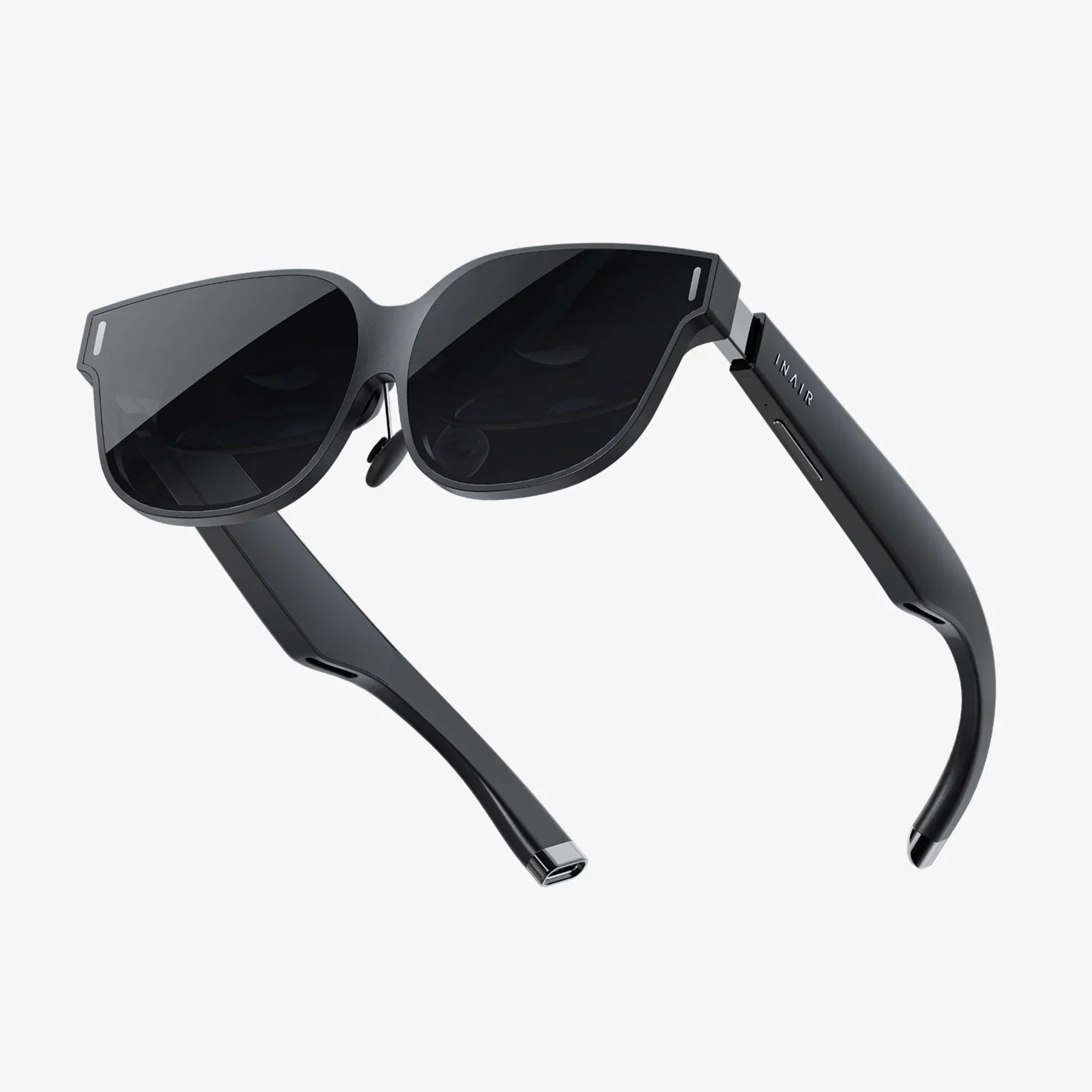
First, the form factor will dissolve. The headset will evolve into stylish glasses, something you can comfortably wear for hours, both for fully immersive virtual experiences and for AR overlays on your real world. The distinction between VR and AR will blur into a spectrum of mixed reality (MR).
Second, the interface will become intuitive. We will move beyond handheld controllers to natural interaction using hand-tracking, voice commands, and eventually, direct neural interfaces that read subtle intentions, making the technology accessible to all, regardless of technical proficiency.
Finally, and most crucially, the digital and physical worlds will become deeply integrated. You'll use your MR glasses to get directions painted onto the street, translate a foreign menu in real time, or have a face-to-face conversation with a holographic colleague who appears to be sitting across your table. VR, in its fully immersive form, will be the mode you switch to for a concert, a deep work session, or a specialized training simulation. It will be a context, not the entire context.
The dust collecting on that headset in the closet is not a memorial to a failed idea, but a snapshot of a technology in its awkward adolescence. The path to maturity is being paved by relentless engineers, visionary artists, and pragmatic enterprises finding real value in the virtual. The promise of VR is not just about escape; it's about augmentation. It's about enhancing our human ability to learn, to connect, and to understand our world and others. The virtual will not replace the real. Instead, it will become a seamless layer upon it, a dynamic canvas for human experience. The revolution isn't being televised; it's being rendered, polygon by polygon, and it's putting on its glasses, ready for us to see it clearly for the very first time.