


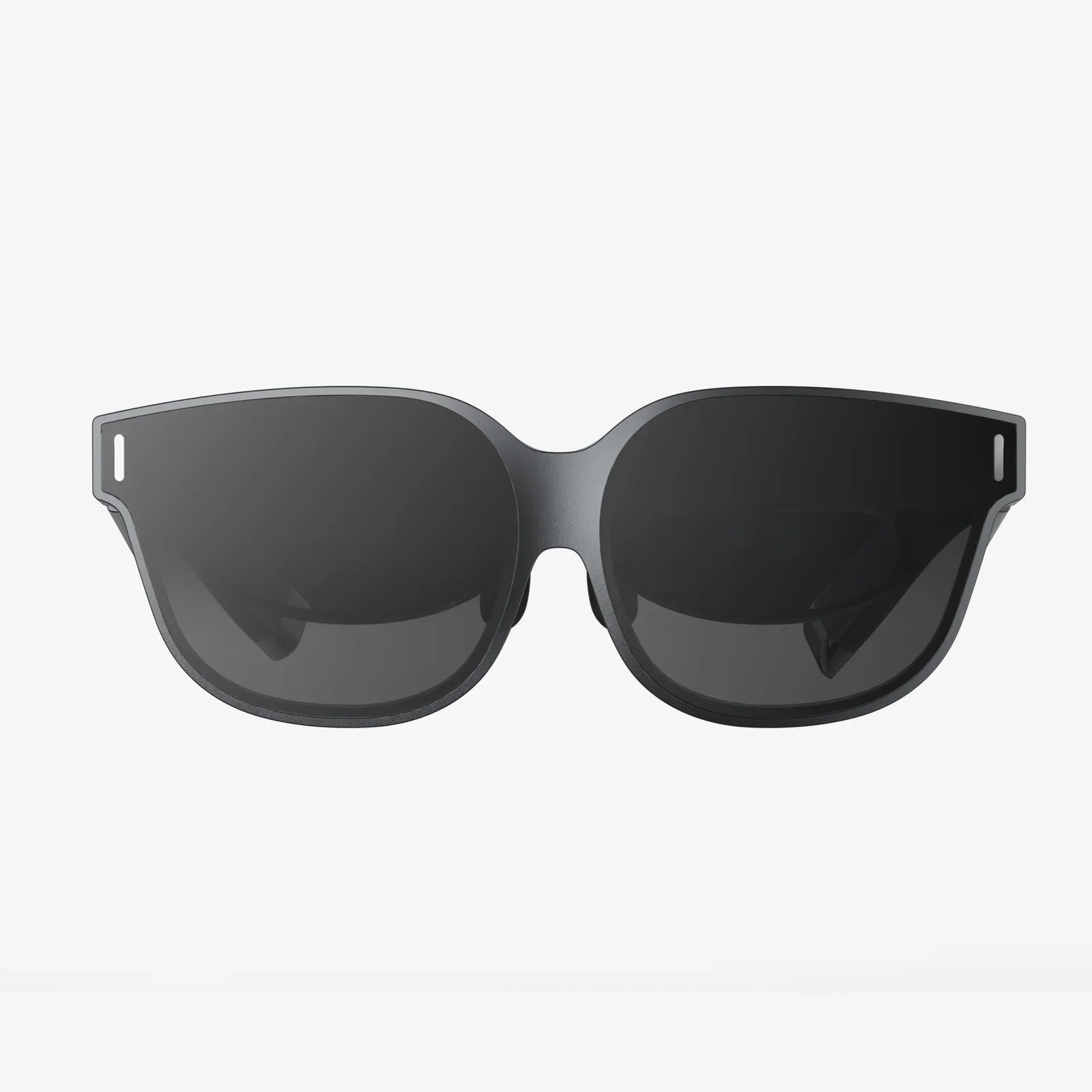
- by wangfred
Wireless Charging Smartglasses: The Invisible Revolution on Your Face
- by wangfred
Imagine a world where your most personal computer doesn't live in your pocket or on your wrist, but sits right before your eyes, so seamlessly integrated into your day that you forget it's even there—until you need it. This is the promise of the next computing revolution, and it’s not on a screen; it’s on your face. The final, most stubborn barrier to making smartglasses an all-day, everyday reality has always been the dreaded low-battery warning. But what if that anxiety could be erased, not by a bigger battery, but by no cable at all? The emergence of wireless charging smartglasses isn't just a minor feature upgrade; it's the key that unlocks a future of truly ambient, frictionless computing.
For years, the development of smart eyewear has been a story of incredible innovation hamstrung by a fundamental problem: power delivery. Early iterations often felt like prototypes, with bulky frames necessary to house a sufficient battery, or designs that required constant tethering to an external battery pack via an unsightly cable. This created a user experience paradox. The goal of smartglasses is to provide information and utility without intrusion, to augment reality, not detract from it. A dangling wire or the daily ritual of hunting for a specific, tiny port to plug in directly contradicts that core philosophy.
This cable dependency created significant friction. Users had to remember one more charger, one more device to add to their nightly charging routine. It limited design, forcing engineers to compromise on form factor to accommodate ports and battery size. Most critically, it reminded the wearer that they were using a device, preventing the technology from fading into the background and becoming a true extension of the self. Wireless charging smashes this paradigm, offering a path toward the ultimate goal: forgettability.
The magic of wireless charging for smartglasses hinges on the principle of inductive charging. At its heart are two coils: a transmitter coil housed in a charging dock, mat, or case, and a receiver coil miniaturized and ingeniously embedded within the frame of the glasses. When an electric current passes through the transmitter coil, it generates an oscillating magnetic field. This field, in turn, induces an alternating current in the receiver coil nestled in the glasses, which is then converted back into direct current to replenish the battery.
However, implementing this in eyewear is a feat of micro-engineering. The challenges are immense:
The most elegant solutions often involve a dedicated charging case. This case acts as both a protective storage unit and a powerful charging hub, often containing a larger battery itself to provide multiple full charges on the go. Placing the glasses inside the case automatically aligns them and initiates charging, making the process as simple and thoughtless as closing a book.
While the convenience of dropping your glasses on a pad instead of fumbling with a cable is obvious, the implications of wireless charging run much deeper, fundamentally reshaping the product category.
Without the need for a physical port, designers are granted newfound freedom. The elimination of a charging port is more than just removing a hole; it allows for stronger, more water-resistant, and dust-proof designs. The frame can be cleaner, more minimalist, and more closely resemble traditional eyewear. This is not a trivial matter. For mass adoption, smartglasses must first be glasses—a fashion item people are proud to wear. Wireless charging is a silent enabler of better aesthetics.
The true potential of augmented reality is realized when digital information is persistently and contextually available. This requires the device to be worn for long stretches without causing battery anxiety. Wireless charging enables micro-charging opportunities throughout the day. A short meeting where the glasses rest in their case? They're charging. A lunch break? A quick top-up. This creates a fluid power ecosystem where the glasses are always ready, moving users away from a mindset of single-battery lifecycles to one of continuous power availability.
Physical charging ports are points of failure. They are vulnerable to corrosion from moisture, clogging from lint and debris, and mechanical damage from repeated plugging and unplugging. By hermetically sealing the device, wireless charging significantly improves its longevity and robustness, ensuring the sophisticated electronics inside are better protected from the elements and everyday wear and tear.
For individuals with dexterity or vision impairments, aligning a tiny plug with an even tinier port can be a frustrating, if not impossible, task. A wireless charging system, especially one with magnetic guidance, dramatically simplifies the process, making the technology accessible to a much wider audience. This inclusive design benefit is a powerful, often overlooked advantage of moving away from physical connectors.
The current state of wireless charging for smartglasses is just the beginning. The technology is on a rapid evolutionary path that promises to make power management even more invisible.
As with any emerging technology, there are factors early adopters should consider. The charging ecosystem is still fragmented, meaning you'll likely need the specific dock or case designed for your glasses. Charging speed, while sufficient for overnight top-ups, may not be as rapid as a wired connection. Furthermore, users must now keep track of another accessory—the charging dock—though this is often traded for the hassle of managing a specific cable.
Despite these minor trade-offs, the direction is clear. The benefits of a sealed, durable, and convenient design overwhelmingly point toward wireless power as the definitive standard for the next generation of wearable technology.
The humble cable has served technology well for decades, but its time is ending. For smartglasses to transcend their status as a gadget and become a seamless part of our personal landscape, they must be free from the literal and figurative tethers of the past. Wireless charging is the technology that cuts that final cord. It’s the silent, unseen force that empowers designers to create, engineers to innovate, and users to finally experience digital augmentation not as something they use, but as something they wear—effortlessly, continuously, and without a second thought. The future on your face won't have a plug; it will just have potential.