


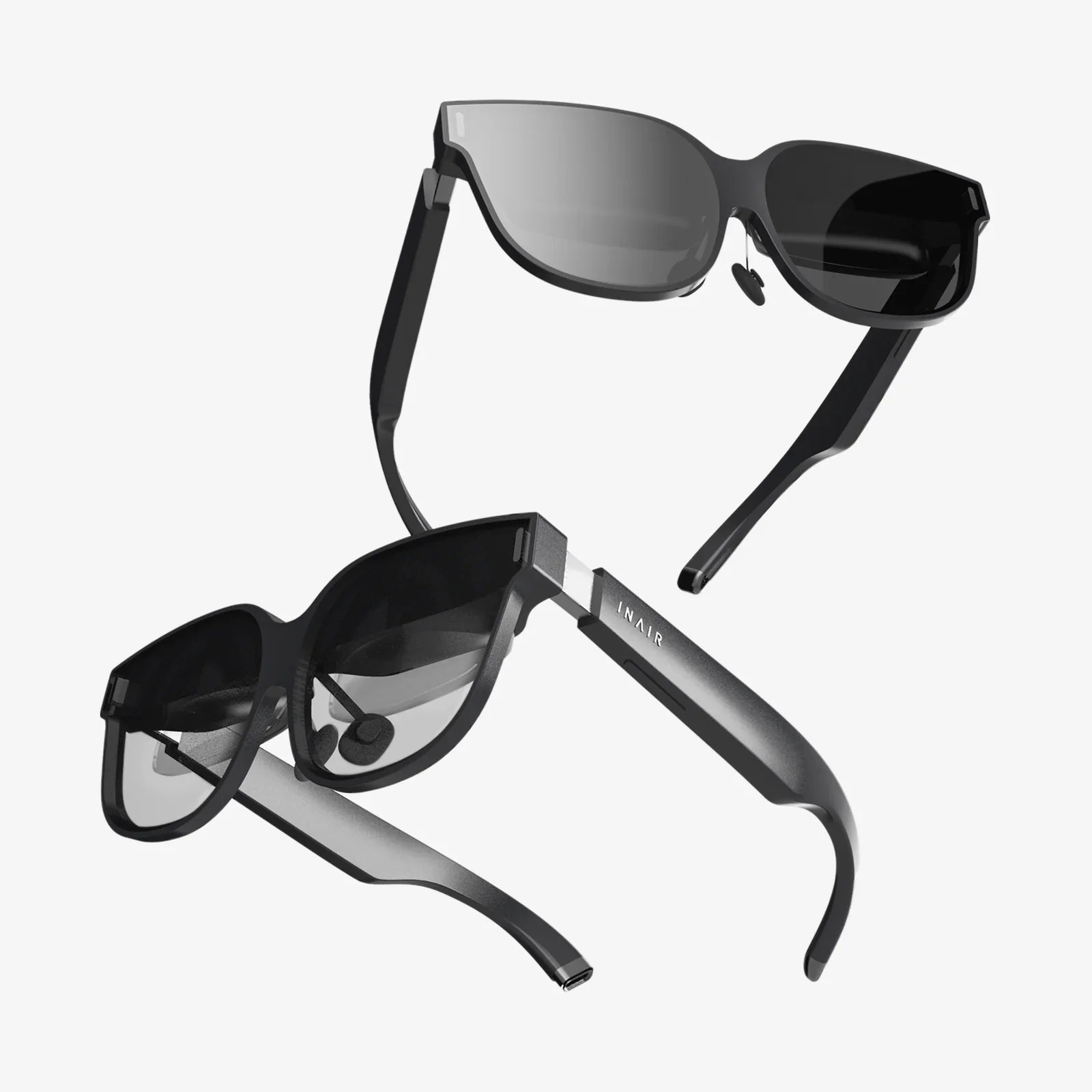
Imagine a world where your favorite playlist scores your morning commute, an important conference call connects with a tap on your temple, and immersive directions guide you through a new city—all without a single wire or earbud obstructing your ears. This isn't a glimpse into a distant future; it's the reality being crafted today by the innovative fusion of audio technology and eyewear. Wireless headset glasses are quietly emerging from the realm of sci-fi fantasy into a tangible, sophisticated product category poised to revolutionize personal audio. They promise not just a new gadget, but a fundamental shift in our auditory experience, offering liberation from the physical and social isolation of traditional headphones. This is the story of how two everyday objects merged to create something far greater than the sum of their parts, an invisible revolution that is changing how we hear our world.
The Genesis of an Idea: From Concept to Wearable Reality
The journey of wireless headset glasses began not as a singular eureka moment, but as a natural evolution of two parallel technological tracks: the miniaturization of audio components and the advancement of smart wearables. For decades, eyeglasses have been a passive, corrective tool, while headphones evolved from large, cumbersome headsets to tiny, wireless earbuds. The logical next step was a convergence, a move towards integrated, contextual computing where technology fades into the background of our lives.
Early attempts were often clunky, prioritizing function over form and resulting in products that felt more like prototype machinery than lifestyle accessories. They suffered from poor battery life, questionable audio quality, and a design that screamed "tech geek" rather than sophisticated wearer. However, the core idea was powerful: to provide audio functionality without the physical barrier of headphones, allowing users to remain connected to their digital world while staying fully present in their physical environment.
Breakthroughs in several key areas turned this awkward concept into a viable product. The development of low-energy audio codecs and more efficient Bluetooth chips solved the power dilemma, enabling all-day use. Bone conduction technology, which transmits sound waves through the bones of the skull to the inner ear, offered an alternative to traditional speakers, though many modern designs now use miniature, directional speakers placed just in front of the ear. These micro-speakers project a beam of sound directly into the ear canal, allowing the user to hear audio clearly while leaving the ear open to ambient noise. This combination of technological maturation is what finally allowed wireless headset glasses to shed their bulky past and embrace a sleek, fashionable future.
Unboxing the Technology: How They Actually Work
At first glance, a pair of these advanced glasses might look deceptively normal. The magic lies in the elegant integration of sophisticated hardware into the familiar form factor of spectacles. The technology is distributed seamlessly across the frame, creating a balanced and comfortable wearable computer for your ears.
- The Audio System: This is the heart of the device. Instead of large drivers that cover the ear, engineers employ tiny speakers or acoustic actuators embedded within the arms of the glasses, precisely aligned to sit near the entrance of the ear canal. These speakers are engineered for "open-air" listening, creating a personal sound bubble without sealing the ear. Advanced models use algorithms to minimize sound bleed, ensuring your audio remains private even to those standing close by.
- The Brain: Nestled within the thicker arms of the frames is a miniature computer. This includes a Bluetooth receiver to wirelessly connect to your smartphone, laptop, or other devices. A powerful, tiny CPU manages this connection, handles voice assistant integration, and processes audio streams.
- The Power Source: The battery is perhaps the most challenging component to integrate. It needs to be large enough to provide useful battery life—typically between 6 to 12 hours of audio playback—but small and flexible enough to fit into the arms of the glasses without making them too heavy or imbalanced. Often, the battery is distributed between both arms to maintain symmetry and comfort. Charging is usually accomplished via a proprietary magnetic or pogo-pin connector.
- The Control Interface: Forget fumbling for your phone. Interaction is handled through intuitive touch surfaces on the arms, often with swipe and tap gestures to control volume, skip tracks, and manage calls. Built-in microphones, equipped with beamforming and noise suppression technology, ensure your voice is picked up clearly during calls, even in noisy environments.
A Symphony of Use Cases: More Than Just Music
The true power of wireless headset glasses is revealed in their versatility. They are the Swiss Army knife of personal audio, adeptly handling a wide range of scenarios where traditional headphones fall short.
For the urban professional, they are a productivity powerhouse. Imagine walking to your next meeting, listening to a pre-read document or podcast, and taking a hands-free call without ever needing to pause your audio or insert a device. The seamless transition between audio playback and phone calls is effortless. For those working in open-plan offices, they provide a way to listen to focus-enhancing ambient noise or music while remaining approachable and aware of colleagues trying to get your attention.
For the fitness enthusiast and runner, they are a revelation. They provide the motivational beat of a workout playlist without the danger of noise-cancelling earbuds that block out traffic, other people, and the environment. situational awareness is paramount for safety when cycling, running, or walking in urban settings. Furthermore, they eliminate the discomfort of earbuds falling out mid-sprint or the sweat-soaked discomfort of over-ear headphones.
For individuals with hearing impairments or those who simply find earbuds physically uncomfortable, these glasses offer a compelling alternative. They provide a clear audio channel without the need to insert anything into the ear, which can be a significant benefit for long-term wear.
And in our daily social lives, they shine by reducing the friction of technology. You can enjoy audio content while still engaging in conversation with the person next to you. You can order a coffee without removing an earbud. You remain connected to your surroundings, hearing announcements, nature, and the people around you, all while maintaining a private audio stream. This mitigates the "anti-social" signal that headphones can sometimes project.
Navigating the Compromise: Challenges and Considerations
Despite their impressive advantages, wireless headset glasses are not a perfect, one-size-fits-all solution. They represent a different paradigm in audio, and with that comes a set of trade-offs that potential users must consider.
The most significant compromise is audio fidelity. While the sound quality has improved dramatically, it cannot yet match the rich, deep bass and immersive soundscape provided by high-quality noise-cancelling over-ear headphones or even some premium earbuds. The open-air design is inherently leaky, and bass response is its biggest challenge. For an audiophile seeking a pristine, isolated listening experience, these glasses may not satisfy. They are designed for convenience and awareness, not for critical listening sessions.
Privacy can also be a concern. Although technology has minimized sound bleed, in a perfectly quiet room, someone sitting very close to you might be able to faintly hear your audio. They are not suitable for listening to confidential material in a shared, silent space.
Furthermore, the integrated nature of the technology means customization is limited. Unlike traditional eyewear, where you can choose independent frames and lenses from a vast market, your choices are confined to the styles and prescription options offered by the technology manufacturer. While some companies partner with optical labs to provide prescription lens integration, it adds an extra step and cost. For those who do not need corrective vision, non-prescription "plano" lenses are standard.
Finally, as with all technology, they represent another device to charge and maintain. While battery life is sufficient for a day's use, forgetting to charge your glasses overnight means heading out the door with a dead device, something that never happens with a standard pair of frames.
The Future is Clear: What Lies Ahead for Audio Eyewear
The current generation of wireless headset glasses is impressive, but it is merely the foundation for a much more immersive and intelligent future. The trajectory points towards deeper integration and more contextually aware capabilities.
We can anticipate the arrival of more advanced augmented reality (AR) displays. Micro-projectors embedded in the frames could overlay information, directions, and notifications onto the real world, turning the glasses into a comprehensive heads-up display for life. This would seamlessly blend the auditory and visual digital realms.
Artificial intelligence will become the central nervous system of these devices. Imagine glasses that not only translate conversations in real-time but also provide contextual information about what you're looking at, remember the names of people you meet, and filter audio to enhance the sounds you want to hear while dampening background noise dynamically.
Biometric sensors will transform them into health monitors, tracking not just your activity but also potentially measuring vital signs like temperature, heart rate, and even blood oxygen levels through sensors on the arms that contact the temples. The form factor will continue to evolve, becoming lighter, more energy-efficient, and available in a wider array of styles to suit every taste, from classic to bold fashion statements.
The ultimate goal is a device that feels less like a piece of technology and more like a natural extension of our own senses—a tool that enhances our perception of the world without isolating us from it.
The age of stuffing technology into our ears is slowly coming to a close, making way for a more elegant, integrated, and aware future. Wireless headset glasses are not merely a novelty; they are the vanguard of a fundamental shift in human-computer interaction. They challenge the very definition of wearable tech, moving it from something we carry to something we are. This is the promise of technology at its best: invisible, intuitive, and empowering, freeing us to look up, listen to the world, and truly connect with the life happening right in front of us, all while our personal soundtrack plays on, perfectly in sync.
Share:
What Does HUD Stand For? The Ultimate Guide to Head-Up Displays
Android Eye Glasses: The Future of Wearable Tech is on Your Face