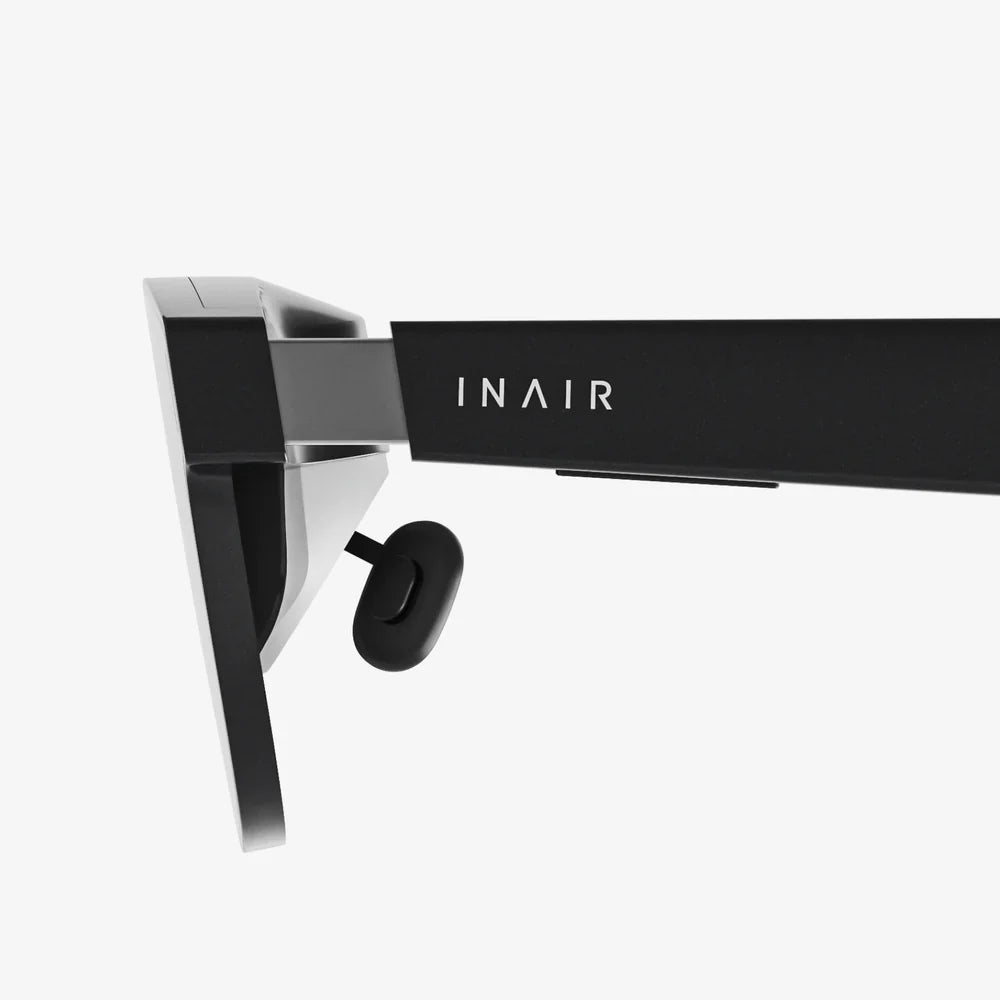
The world is on the cusp of a paradigm shift, a moment where the digital and physical realms are no longer separate but seamlessly intertwined. The device that will catalyze this fusion isn't in your pocket; it will be on your face. For developers, designers, and visionaries, the call to action is clear: the time to begin the monumental task of building for this new canvas is now. The future will be built by those who understand how to develop for AR smart glasses, creating experiences that are not just applications but extensions of our reality, enhancing human capability and connection in ways we are only beginning to imagine.
The Dawning of the Spatial Computing Era
The evolution of personal computing has been a journey of increasing intimacy and immersion. We moved from room-sized mainframes to desktops, from desktops to laptops, and from laptops to smartphones that we carry with us everywhere. Each transition shrunk the barrier between us and our digital information. Augmented Reality (AR) smart glasses represent the next, and perhaps final, step in this journey: the disappearance of the interface altogether. Instead of looking at a screen, we will have information and experiences layered contextually onto the world around us. This isn't just a new product category; it's the foundation for spatial computing, a fundamental shift in how humans interact with technology.
Beyond the Novelty: Defining the "Smart" in Smart Glasses
True intelligence in this context transcends mere connectivity. Smart glasses must be:
-
Contextually Aware: They must understand where you are, what you're looking at, who you're with, and what you might need at that precise moment. This requires a sophisticated fusion of data from cameras, microphones, inertial measurement units (IMUs), and other environmental sensors.
-
Proactive and Assistive: Instead of responding to commands, they should anticipate needs. Imagine your glasses highlighting the exact wrench you need from a cluttered toolbox or translating a street sign in real-time without a prompt.
-
Unobtrusive and Frictionless: The technology must fade into the background. Interactions should feel natural and effortless, whether through subtle gestures, gaze tracking, or voice commands, without requiring the user to learn a complex new language of control.
The Developer's New Toolkit: Core Technologies to Master
Building for this platform requires a deep understanding of a unique and converging set of technologies.
Computer Vision and Scene Understanding
This is the bedrock of AR. Your application must perceive the world to augment it. Mastery involves:
-
Simultaneous Localization and Mapping (SLAM): The algorithm that allows the device to understand its position in an unknown environment while simultaneously mapping that environment in real-time. This creates a persistent spatial map for digital objects to inhabit.
-
Object Recognition and Tracking: Going beyond mapping geometry to identifying specific objects (e.g., a coffee mug, a car engine, a person) and tracking their position and orientation reliably.
-
Surface Detection: Differentiating between horizontal planes (tables, floors), vertical planes (walls), and complex, irregular surfaces to allow for believable digital object placement.
Display Technologies and Visual Design
The limitations and possibilities of the display are paramount. Developers must design for:
-
Optical See-Through (OST) vs. Video See-Through (VST): OST glasses allow you to see the real world directly through lenses, with digital light projected onto them. VST uses cameras to capture the real world and displays a fused video feed on micro-displays. Each has implications for latency, resolution, and user safety.
-
Field of View (FOV): A major technical constraint. A narrow FOV creates a "letterbox" effect, limiting immersion. Designs must be conscious of placing critical information within the user's central vision.
-
Holographic Design Principles: This is a departure from flat UI design. Elements must have volume, respect real-world lighting and physics (casting shadows, occluding behind real objects), and use depth, scale, and spatial audio to guide user attention without causing overload.
Interaction Paradigms
The mouse and touchscreen are obsolete here. New, intuitive methods are emerging:
-
Voice Commands: The most natural form of input for many tasks, perfect for system-level commands and complex queries.
-
Hand and Gesture Tracking: From simple pinches and swipes in the air to complex manual manipulations of 3D objects. The challenge is to design gestures that are both powerful and difficult to perform accidentally.
-
Gaze and Dwell-Based Selection: Using eye-tracking to select an object simply by looking at it, often combined with a secondary confirmatory signal like a dwell time or a subtle gesture.
-
Complementary Devices: A smartwatch or a phone can serve as a tactile controller for more precise input when needed.
The Human Factor: Designing for Comfort, Safety, and Ethics
Technical prowess is meaningless if the experience is uncomfortable, unsafe, or unethical. This is the most critical pillar of development.
User Comfort and Avoiding Fatigue
"VR fatigue" is well-documented, and AR presents its own challenges. Mitigation strategies include:
-
Minimizing Latency: Any lag between real-world movement and digital display can cause nausea and disorientation. Code must be ruthlessly optimized.
-
Thoughtful UI Placement: Avoid forcing users to hold their necks in uncomfortable positions for extended periods. The "comfort zone" is typically within a 30-degree downward gaze.
-
Information Density: Resist the urge to fill the field of view with data. The mantra should be "less is more." Provide information on demand, not all at once.
Safety in the Physical World
Users will wear these devices while walking, driving, and operating machinery. Developers have a profound responsibility:
-
Contextual Safety Warnings: The system must recognize dangerous situations (e.g., a user about to step into a street) and override the experience with critical alerts.
-
Passthrough Clarity: For VST systems, video quality must be exceptionally high to avoid tripping hazards or missing real-world cues.
-
Distraction Management: Designing notifications and experiences that demand attention only when absolutely critical.
The Ethical Imperative
AR glasses, with their always-on cameras and microphones, are arguably the most privacy-invasive consumer technology ever conceived. Navigating this is non-negotiable.
-
Privacy by Design: Data should be processed on-device whenever possible. User data must be anonymized and encrypted. Clear, explicit user consent is required for recording environments, especially those containing other people.
-
Social Acceptance: The infamous "Google Glass backlash" was a lesson in social dynamics. How do we design devices and experiences that don't make wearers look awkward or threaten the privacy of bystanders? Features like a clear "recording" light are a basic necessity.
-
Digital Divide: As this technology becomes powerful for productivity and education, ensuring equitable access is crucial to prevent a new societal schism.
From Concept to Code: A Framework for Development
Turning a great idea into a functional application requires a structured approach.
-
Idea Validation: Does your idea truly need AR? The best AR applications solve a problem that is impossible or inefficient to solve with a 2D screen. If it can be done better on a phone, it should be.
-
Prototyping and Storyboarding: Before writing a line of code, storyboard the user's journey through the experience. Use paper prototypes or simple 3D tools to map out interactions and spatial relationships.
-
Choosing a Platform and Engine: Major platforms offer Software Development Kits (SDKs) that provide the essential tools for tracking, surface detection, and interaction. Cross-platform game engines have become the standard for building complex AR experiences due to their powerful 3D rendering capabilities and physics engines.
-
Iterative Testing: Test early and often, and most importantly, test in the real world. An experience that works perfectly in a clean office may fail utterly in a busy, sunlit street. Gather feedback on comfort, intuitiveness, and value.
-
Performance Optimization: This is a constant process. Target a high, consistent frame rate (e.g., 90fps) to maintain comfort. Optimize 3D models, textures, and code to preserve precious battery life.
Industries Transformed: The Killer Apps Await
The potential applications are vast, but several industries are poised for immediate and profound disruption.
-
Industrial and Manufacturing: Providing hands-free schematics, remote expert guidance, and step-by-step assembly instructions overlaid directly on machinery.
-
Healthcare: Assisting surgeons with vital data and 3D visualizations during procedures, helping medical students learn anatomy through interactive holograms, and aiding in physical therapy with guided movement overlays.
-
Education and Training: Transforming abstract concepts into tangible 3D models students can walk around and interact with, from historical battles to molecular structures.
-
Retail and E-Commerce: Allowing users to visualize products like furniture, art, or clothing in their home at true scale before purchasing.
-
Navigation and Maps: Painting directions onto the sidewalk ahead, eliminating the need to look down at a phone while navigating a new city.
The journey to perfect, ubiquitous AR smart glasses is a marathon, not a sprint. It will be defined by incremental improvements in battery technology, processing power, and display miniaturization. But the software experience is what will ultimately determine its success or failure. The pioneers who are willing to grapple with the unique challenges of this medium—who prioritize human-centric design, wrestle with profound ethical questions, and master a new suite of spatial technologies—are the ones who will author the next chapter of human-computer interaction. They will not just be building apps; they will be defining a new layer of reality itself, creating a future where technology enhances our perception of the world without overshadowing its beauty. The tools are here, the path is being forged, and the opportunity to shape this future has never been more real.