


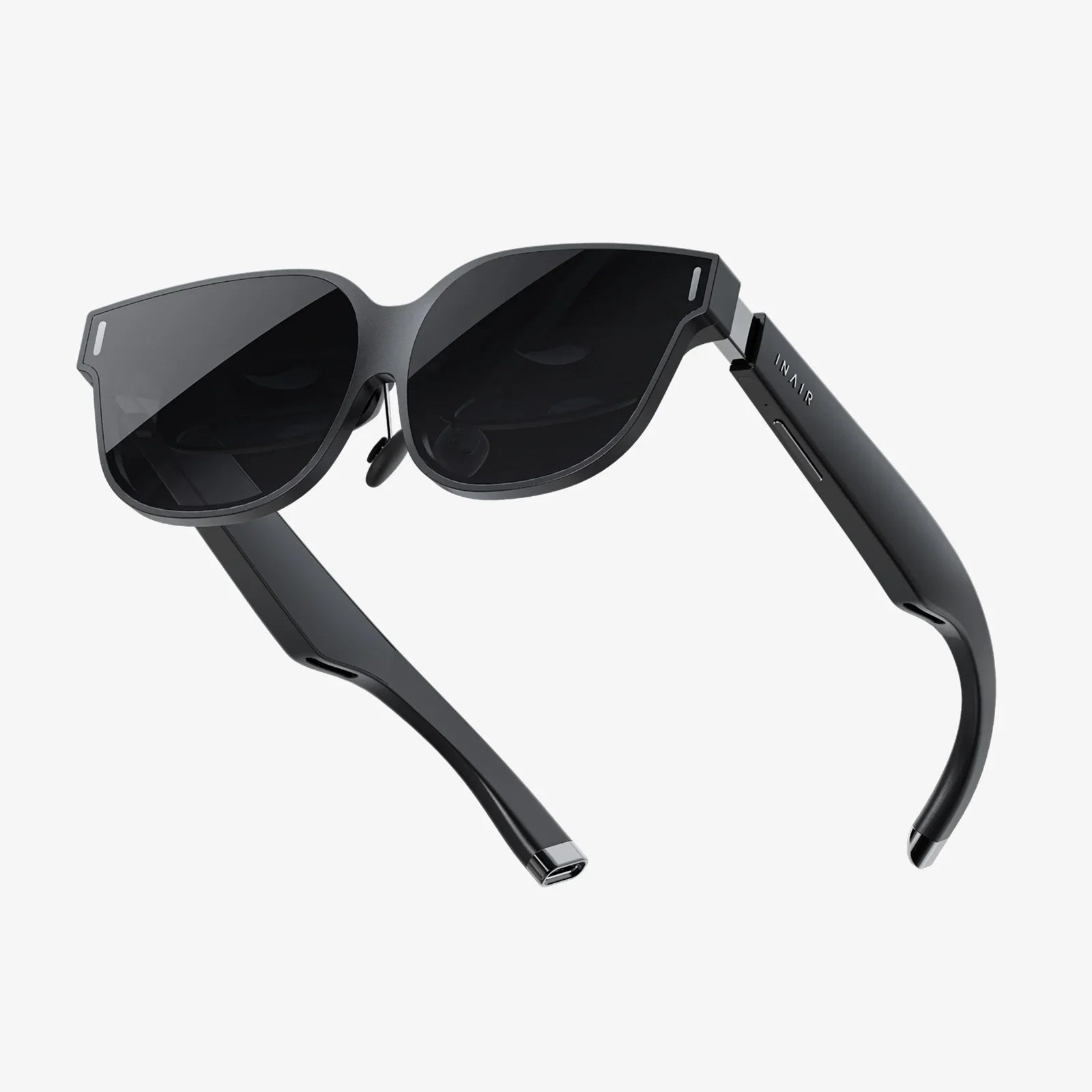
Imagine the rustle of leaves not just in your ears, but swirling around your head. A car in a movie scene doesn't just pan from left to right; it whooshes past you, from behind your shoulder to right in front of your nose. A singer’s voice isn't a flat wall of sound emanating from two points; it’s a palpable presence in the center of a room, with instruments placed precisely around you in a 360-degree sphere of auditory bliss. This is no longer the stuff of high-end, niche audio labs. This is the promise and reality of a new era in personal audio, an era defined by the widespread adoption of universal spatial audio features. This technology is fundamentally rewiring our relationship with sound, shifting it from something we simply hear to an environment we actively experience.
The Sonic Revolution: From Stereo to Sphere
For decades, the pinnacle of consumer audio has been stereo. Two channels, left and right, created a convincing illusion of directionality and depth that was a monumental leap from mono. We learned to appreciate the subtle placement of a guitar solo on one side and a backing vocal on the other. But stereo is inherently limited. It creates a sonic stage in front of the listener, a window through which we observe the performance. Spatial audio shatters that window and invites you to step inside the performance itself.
The core principle behind this technology is the replication of how humans naturally perceive sound in a three-dimensional space. Our brains are expert triangulators, using incredibly subtle cues to pinpoint the location of a sound source. These cues are divided into two main categories:
- Interaural Time Difference (ITD): This is the minute difference in the time it takes for a sound to reach your left ear versus your right ear. A sound coming from your right will hit your right ear a fraction of a second before it reaches your left. Your brain uses this tiny delay to calculate the sound's horizontal position.
- Interaural Level Difference (ILD): Also known as the head shadow effect, this is the difference in sound pressure level (volume) between your two ears. Your head itself acts as a barrier, slightly muffling a high-frequency sound coming from the right before it reaches your left ear. This helps with determining direction, especially for higher pitches.
But what about sounds above, below, or behind you? This is where things get even more fascinating. The complex shape of our outer ears, or pinnae, subtly alters the frequency content of a sound depending on its vertical origin. A sound from above will reflect off the folds of your ear differently than a sound from below, and your brain has learned to decode these spectral signatures over a lifetime. Spatial audio technologies use advanced Head-Related Transfer Functions (HRTFs) to digitally mimic these natural phenomena. HRTFs are essentially acoustic filters that apply these precise timing, level, and frequency alterations to a sound, tricking your brain into believing it's coming from a specific point in space around you, even when it's just emanating from two headphone drivers.
The Engine Room: How Universal Spatial Audio Works Its Magic
The term "universal" is the true game-changer here. It signifies a move away from proprietary, walled-garden implementations towards an open, standardized ecosystem. This universality is built on a foundation of sophisticated software and hardware integration.
At the heart of the system is object-based audio. Unlike traditional channel-based audio (like a 5.1 or 7.1 mix, where sound is assigned to specific speakers), object-based audio treats individual sounds—a bird chirping, a character's dialogue, a crashing wave—as discrete "objects" in a digital space. Each object is tagged with metadata that defines its intended location in a three-dimensional coordinate system (X, Y, Z axes).
Your playback device—be it a smartphone, tablet, or computer—acts as the conductor of this digital orchestra. It reads the metadata for every sonic object and, in real-time, processes each one through the appropriate HRTF filters based on your head's position. This is where the second critical component comes in: head tracking. Using built-in gyroscopes and accelerometers, the device constantly monitors the tiny movements of your head. If you turn your head to the left, the audio scene rotates accordingly; the cello that was in front of you is now on your right, and the soundscape remains fixed in its virtual space, just as it would in the real world. This creates an astonishingly stable and realistic sonic image that is completely divorced from the physical position of your headphones.
This combination of object-based audio, personalized HRTF processing, and dynamic head tracking is what elevates spatial audio from a neat gimmick to a profound sensory experience. It’s a computationally intensive process, but it’s now being efficiently handled by chipsets in devices across the price spectrum, making the feature truly universal.
A Universe of Applications: Beyond the Hype
The implications of universal spatial audio extend far beyond making your favorite album sound more immersive. It is poised to revolutionize every facet of media we engage with.
Music: The Concert Hall in Your Cranium
For music lovers, spatial audio is nothing short of a renaissance. Artists and mixing engineers can now create soundscapes with incredible depth and placement. You’re no longer just listening to a band; you’re in the studio with them. You can discern the lead vocalist dead center, the backup singers arranged in an arc behind, the drummer placed further back in the mix, and subtle ambient echoes that fill the space around you. It allows for a level of artistic expression previously impossible. Listening to a classic album remixed in spatial audio can feel like hearing it for the first time, revealing layers and details that were buried in the stereo field.
Film and Television: Total Narrative Immersion
In cinematic content, sound is half the story. Spatial audio completes the picture. The creak of a floorboard isn't just a spooky noise; it's a precise cue located directly behind the protagonist, raising your heart rate. The roar of a T-Rex in Jurassic Park doesn't just get louder; it feels massive, all around you, and above you. Dialogue remains anchored to the actor on screen, even if you glance away. This creates a level of immersion that pulls you into the narrative completely, making the viewing experience more impactful, emotional, and visceral. It’s the closest one can get to having a theater-quality audio system personally tuned for their headspace.
Gaming: The Ultimate Competitive Edge
In the gaming world, spatial audio is more than an enhancement; it's a tactical tool. Competitive gamers have long relied on high-quality stereo headphones to hear "footsteps" and gauge direction. Spatial audio takes this to a new level of precision. Hearing the reload of a weapon exactly 45 degrees to your rear-left or the flutter of wings from above in a fantasy RPG provides a critical situational awareness that can mean the difference between virtual life and death. It deepens the immersion in expansive open worlds, making the environments feel alive, reactive, and truly three-dimensional.
The Future: Calls, Conferencing, and Augmented Reality
The applications spill over into our daily digital communication. Imagine a conference call where each participant's voice emanates from a distinct point in a virtual meeting room, making it effortless to track who is speaking. In the burgeoning field of Augmented Reality (AR), spatial audio is indispensable. Directions from a mapping app could sound as if they are coming from the street corner you need to turn at. An AR museum guide could have the narrator's voice appear next to each exhibit you look at. This seamless blending of digital audio with the physical world is the key to creating believable and useful AR experiences.
The Human Element: A More Natural Way to Listen
Perhaps the most significant benefit of spatial audio is often overlooked: listening fatigue. Traditional stereo headphones force all sound directly into your ear canals from two fixed points, a phenomenon known as "in-head localization." This is an unnatural way to experience sound and can cause ear strain and fatigue over long listening sessions.
By externalizing sound—making it seem like it's coming from the environment around you rather than inside your head—spatial audio provides a much more relaxed and natural listening experience. Many users report being able to listen for longer periods at lower volumes, which is a significant win for long-term hearing health. It reduces the pressure on the ears and allows the brain to process sound in the way it evolved to, making extended music binges, movie marathons, or work-from-home conference calls far more comfortable.
Embracing the Spatial Soundscape
Of course, the transition to this new audio standard is not without its challenges. The quality of the experience can vary based on the implementation and the source material. A poorly mixed spatial audio track can sound hollow or disconnected. Furthermore, the "universal" aspect is still a work in progress, with different codecs and standards vying for dominance. However, the industry-wide momentum is undeniable. From streaming services and Hollywood studios to game developers and tech giants, the entire content creation chain is rapidly adopting and refining this technology.
The move towards universal spatial audio features represents a fundamental shift in our auditory paradigm. It’s a testament to the idea that the next great leaps in technology are not just about higher resolution or faster speeds, but about deeper, more human, and more immersive experiences. It’s about closing the gap between the digital and the physical, between hearing and feeling.
Ready to truly step inside your favorite song, be at the heart of the action in your next movie, or gain an edge in your virtual battles? The doorway is now open, and it sounds more incredible than ever. This isn't just an upgrade to your playlist; it's an invitation to experience sound in its fullest, most dimensional form, and it’s a revolution that is playing out all around you.
Share:
What Works With Spatial Audio: A Deep Dive into Immersive Soundscapes
Immersive Mixed Reality Design: Blending Realities to Redefine Human Experience