


- by wangfred
Work MacConnected Augmented Reality: The Future of the Hybrid Office is Here
- by wangfred
Imagine a world where your digital workspace isn't confined to the glowing rectangle on your desk but spills out into the room around you, where complex data becomes a tangible 3D model you can walk around, and your colleague, sitting thousands of miles away, appears as a holographic presence pointing to a detail on a shared schematic. This is not a distant sci-fi fantasy; it is the emerging reality of the modern workplace, powered by the convergence of powerful computing, sophisticated headwear, and immersive software. At the heart of this revolution is a simple yet profound concept: a Mac-connected Augmented Reality ecosystem that is poised to redefine what it means to be productive, collaborative, and creative.
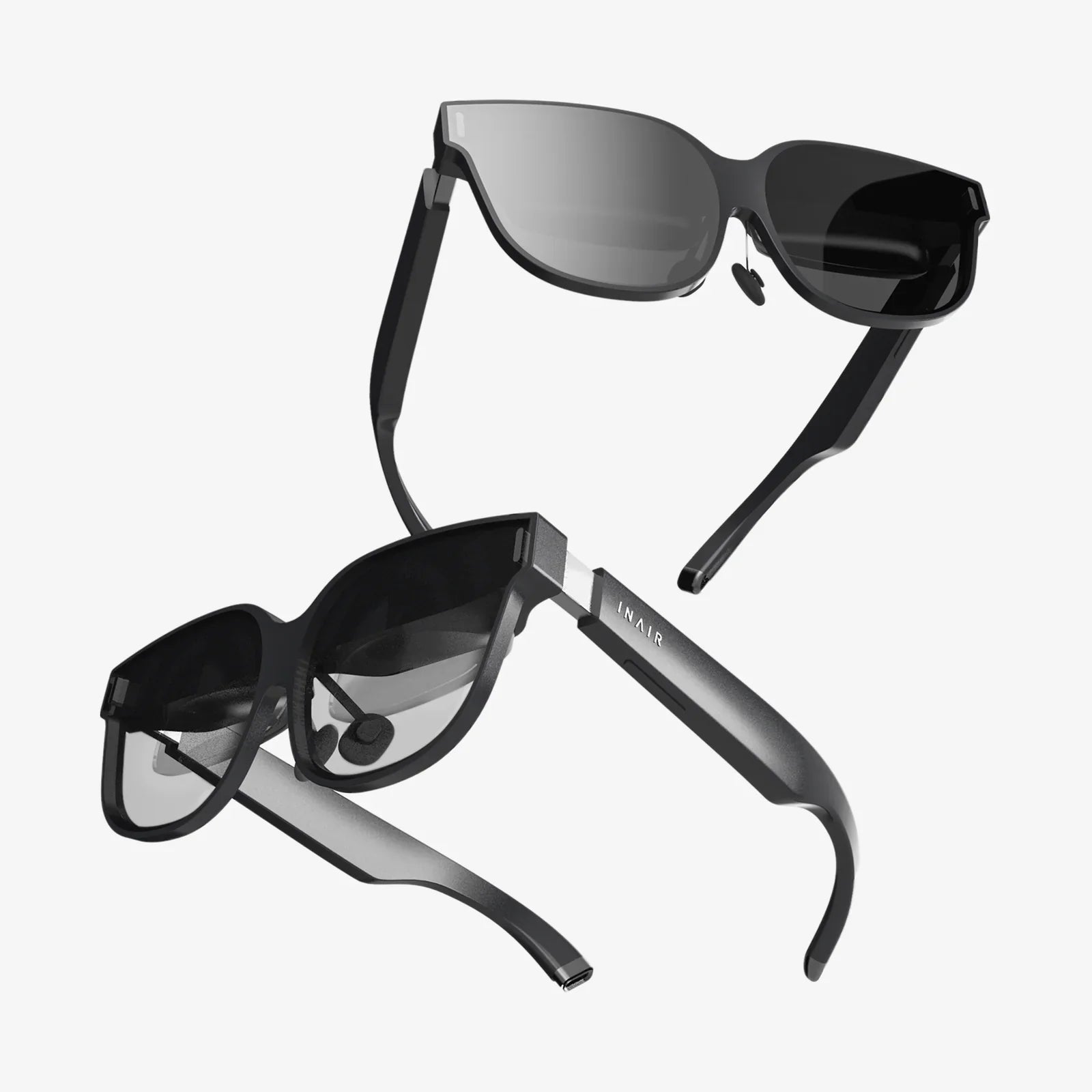
The term "MacConnected Augmented Reality" describes a specific workflow and technological synergy. It centers on using a powerful computer as the central processing hub, which then streams complex AR experiences to more lightweight, wearable displays. This setup leverages the formidable computational power, high-resolution graphics capabilities, and robust software ecosystem of a desktop or laptop computer to handle the intense number-crunching required for convincing AR. The wearable device, in turn, focuses on what it does best: tracking the user's environment and displaying the digital overlay with precision and low latency. This division of labor is crucial. It allows for incredibly rich, detailed, and processor-intensive augmented experiences without being constrained by the battery life, thermal management, and miniaturization compromises inherent in a fully standalone, all-in-one headset. The computer acts as the brain, while the headwear serves as the eyes and ears, creating a seamless and powerful partnership for professional work.
The seismic shift towards hybrid and remote work has exposed the limitations of traditional video conferencing tools. A grid of faces on a screen is a poor substitute for the nuanced interaction of a shared physical space. MacConnected AR shatters this limitation, creating a shared virtual workspace that feels palpably real.
Architects and engineers in different countries can don their headsets and examine a full-scale, 3D architectural model of a new building. They can walk through it together, make real-time annotations that appear anchored to specific walls or beams, and instantly see proposed changes materialize before their eyes. A project manager can overlay a complex Gantt chart across an entire wall, physically interacting with timelines and dependencies by simply reaching out and moving them. For training and onboarding, the implications are staggering. A new technician can be guided through repairing a intricate piece of machinery by a remote expert who can draw arrows and highlight components directly onto the real-world equipment, reducing errors and drastically cutting down on travel costs and time. This is not just video calling with a fancy filter; it is the creation of a persistent, collaborative spatial canvas where distance becomes irrelevant.
For creative and design-led professions, MacConnected AR is nothing short of a paradigm shift. The ability to visualize work in the context of the real world unlocks unprecedented creative potential and operational efficiency.
The true power of this technology lies in its seamless integration into existing professional workflows. These systems are designed to work harmoniously with the suite of productivity and creative software that professionals already use. The ability to drag a 3D asset from a modeling application directly into your physical space, or to have multiple virtual desktops and browser windows arrayed around you, creates a continuous flow of work. File sharing, version control, and project management become spatial activities. A designer can "pin" a crucial feedback document to a specific part of a virtual model, ensuring the next person who reviews it sees the note in its proper context. This creates a persistent digital layer over the physical workspace, an always-on extension of the computer's capabilities that is both intuitive and powerfully expansive.
Of course, the path to widespread adoption is not without its hurdles. The cost of high-end AR hardware, though decreasing, remains a significant investment for many businesses. There are also challenges related to user interface design—creating intuitive ways to interact with spatial data that don't require a steep learning curve. Issues of privacy, data security in a spatially-aware environment, and potential digital fatigue are all areas requiring careful consideration and development.
However, the trajectory is clear. As the technology becomes more affordable, comfortable, and socially accepted, its adoption will accelerate. We are moving towards a future where the distinction between working on a computer and working with a computer in our environment will blur into insignificance. The potential for AI integration is particularly exciting; imagine an AR assistant that can visually identify components, pull up relevant manuals, and guide your actions based on what it sees through your display.
The office of the future won't be defined by four walls and a desk. It will be a fluid, dynamic space enhanced by a digital layer, accessible anywhere. It will be an environment where creativity is unbounded by screens, collaboration is undiminished by distance, and complex information is understood not just intellectually, but physically. The revolution is not coming; it is already being prototyped, designed, and experienced in cutting-edge firms around the globe, all through the lens of a headset and the power of a connected computer. This is the dawn of spatial computing, and it will change everything about how we work, create, and connect.
You've read about the potential, but to truly grasp the seismic shift awaiting the professional world, you need to see it for yourself—this isn't just an upgrade to your desktop, it's an entirely new dimension of productivity waiting to be unlocked.