


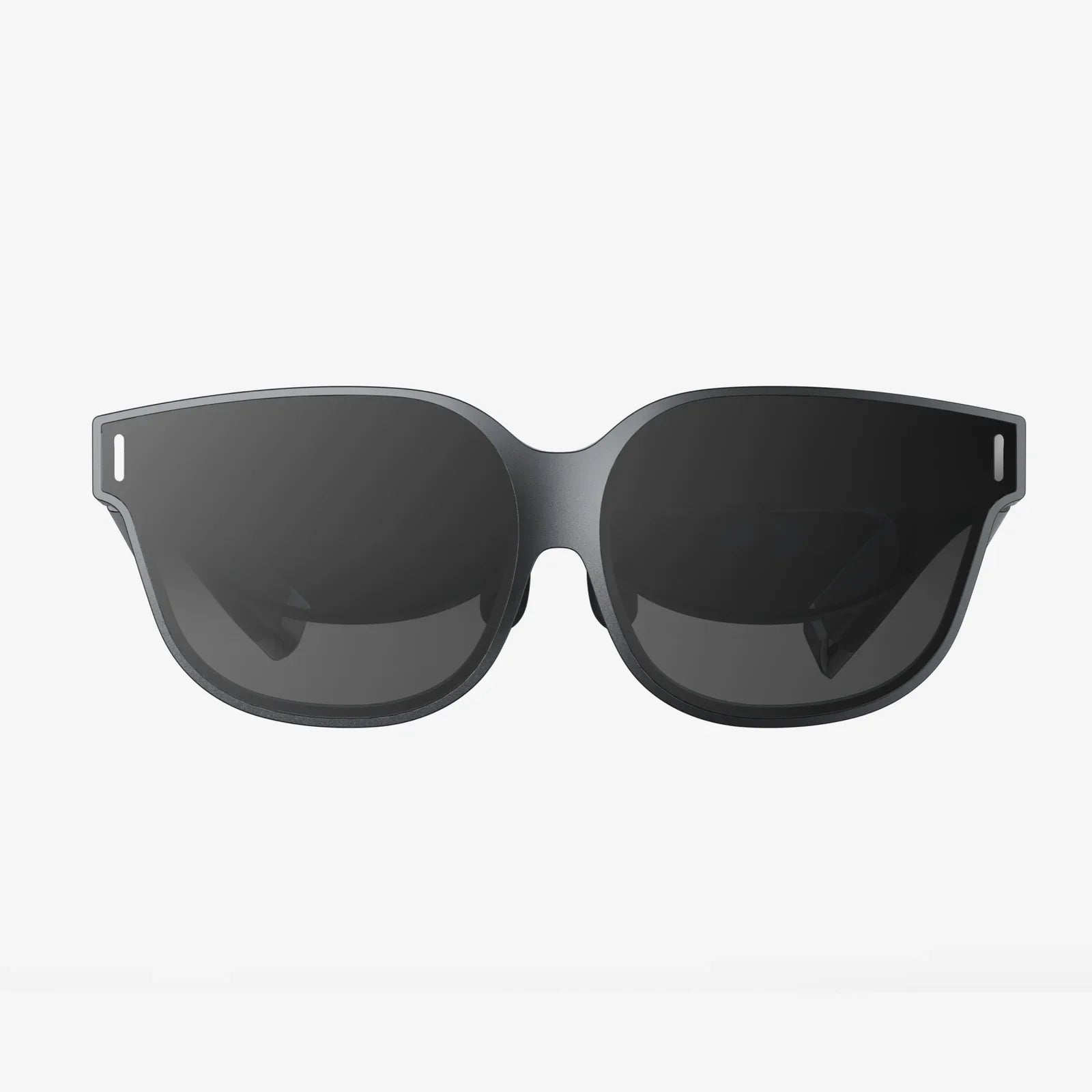
Imagine a world where the digital and the physical are no longer separate realms, but a single, fluid continuum. A world where learning is a full-body immersion into ancient history, where a doctor in one country can guide a procedure in another with holographic precision, and where your living room can transform into a concert hall or a strategic war room at a moment's notice. This is not a distant sci-fi fantasy; it is the emerging reality being built today, not by flashy headsets alone, but by the sophisticated, often invisible, software that brings them to life: the XR app.
Demystifying the XR Universe: More Than Just Acronyms
Before we delve into the engine—the XR app itself—it's crucial to understand the landscape it powers. Extended Reality (XR) is the umbrella term encompassing all immersive technologies that blend the virtual and real worlds. It’s a spectrum, with each point offering a different ratio of reality to digital creation.
On one end, we have Virtual Reality (VR). A VR app is a total immersion tool. It completely occludes the user's physical environment, transporting them to a fully digital, computer-generated world. Whether it's for a heart-pounding game, a serene meditation session, or a complex team training simulation for a hazardous environment, a VR app is your ticket to another place entirely.
On the opposite end of the spectrum lies Augmented Reality (AR). An AR app is an enhancement engine. It overlays digital information—text, images, 3D models, animations—onto the user's real-world view, typically through the camera of a smartphone or tablet or through transparent lenses on smart glasses. Think of trying out a new piece of furniture in your actual living room before you buy it, or getting animated repair instructions overlaid directly onto a malfunctioning engine. The AR app acts as a digital layer of context and interaction atop our existing world.
Bridging the gap between these two is Mixed Reality (MR). This is where the true magic of an advanced XR app begins to shine. An MR app doesn't just overlay digital content; it anchors it to the real world, understanding and interacting with the physical environment. A virtual character in an MR app can hide behind your real sofa. A digital tennis match can play out on your real driveway, with the ball bouncing off the actual pavement. The XR app here is not just creating or projecting; it is seamlessly integrating and cohabiting with reality.
The Anatomy of an XR App: The Engine Under the Hood
So, what exactly is an XR app? At its core, it is a sophisticated software application designed to run on specialized hardware—headsets, glasses, smartphones—to deliver an immersive experience. But it is far more complex than a standard mobile or desktop application. Its architecture is a marvel of modern software engineering, built to handle immense computational loads in real-time.
The foundation of any robust XR app is its ability to understand space. This is achieved through a process called spatial mapping. Using cameras and sensors (LiDAR, depth sensors, etc.), the app continuously scans the user's environment, creating a dense 3D mesh. This digital twin of the room allows the app to place virtual objects in a way that feels physically present, respecting occlusions and interacting with surfaces. This is the first critical task of the XR app: building a understanding of the world it's about to augment.
Next comes tracking, which is arguably the most crucial element for user comfort and believability. There are two primary types: 3DoF (Degrees of Freedom) and 6DoF. A 3DoF XR app can track rotational movements of the head—looking up, down, left, and right. However, a 6DoF XR app is the gold standard for high-end immersion. It tracks both rotation and positional movement—leaning forward, crouching down, walking around. This allows the user to move naturally within the digital space, and it is this freedom that makes an experience feel truly real and prevents the disorientation of simulator sickness.
Finally, the XR app must render high-fidelity, convincing graphics at a blisteringly fast pace. To feel immersive, most experts agree a frame rate of at least 90 frames per second (FPS) is required. Any lag or stutter between a user's movement and the visual update on the screen instantly shatters the illusion of presence. This demand for high-performance, low-latency rendering pushes the boundaries of graphics processing and optimization within the app itself.
Beyond Gaming: The Enterprise Revolution Powered by XR Apps
While consumer entertainment captures headlines, the most profound and immediate impact of XR apps is happening in the enterprise and industrial sectors. Here, the technology is moving from novelty to necessity, solving real-world problems and delivering staggering returns on investment.
In manufacturing and design, XR apps are revolutionizing prototyping and assembly. Engineers and designers can collaborate on a full-scale, interactive 3D model of a new vehicle or aircraft long before a single physical part is manufactured. They can walk around it, inside it, and test ergonomics and maintenance procedures. An XR app can guide a technician on the assembly line with precise, hands-free instructions, highlighting the exact bolt to tighten and the correct torque to apply, drastically reducing errors and training time.
The medical field is experiencing a paradigm shift thanks to specialized XR apps. Surgeons use them to visualize complex patient anatomy in 3D before making an incision, planning their approach with unprecedented clarity. Medical students can practice procedures on hyper-realistic virtual patients, making mistakes without consequence. Furthermore, telemedicine is being redefined; a specialist can join a consultation remotely, seeing what a local doctor sees through their headset and annotating the real world with diagnostic notes and guidance.
In retail and e-commerce, the XR app is becoming the ultimate try-before-you-buy tool. Customers can use an AR app to see how a new sofa fits their lounge, how a pair of glasses frames their face, or even how a new shade of paint transforms their bedroom walls. This dramatically reduces purchase uncertainty and product return rates, building consumer confidence and driving sales.
Field service and remote assistance have been utterly transformed. A field technician repairing a complex piece of machinery can be guided by an expert thousands of miles away. The expert can see the technician's view through their smart glasses and draw arrows, highlight components, and pull up schematics directly into the technician's field of view. The XR app here acts as a collaborative telepresence platform, saving immense time and travel costs.
The Human Connection: Social Interaction and Storytelling Reimagined
Perhaps the most exciting frontier for XR apps is their potential to redefine human connection and narrative. Social XR apps are creating new forms of shared presence, allowing people to meet, interact, and share experiences in a shared virtual space as if they were physically together.
These platforms go far beyond a video call. In a social XR app, your avatar—a digital representation of yourself—can convey body language, make eye contact, and use spatial audio, so conversations sound and feel natural as you move around a virtual room. You can watch a movie on a giant virtual screen, attend a live concert with friends from across the globe, or simply hang out and play games in a environment you design yourselves. The XR app becomes a portal for shared experiences, collapsing geographical distance and fostering a deeper sense of connection than traditional digital communication allows.
Similarly, storytelling and media are being reborn. An XR app for narrative is an immersive storytelling machine. Instead of watching a documentary about climate change, you can stand on a virtual melting glacier. Instead of reading about ancient Rome, you can walk its streets, hear the marketplace, and look up at the towering temples. The storyteller's palette expands from a flat canvas to an entire world that the audience can inhabit and explore, creating empathy and understanding on a visceral level.
Navigating the Frontier: Challenges and Considerations
The path forward for XR apps is not without its obstacles. For the technology to achieve ubiquitous adoption, several significant challenges must be addressed.
Hardware Limitations: For all-day comfort and use, devices need to become smaller, lighter, more powerful, and have longer battery life. The ideal form factor—something akin to regular eyeglasses—is the holy grail but remains a significant engineering challenge. The XR app ecosystem is intrinsically tied to the evolution of the hardware it runs on.
User Experience (UX) Design: Designing for an XR app is fundamentally different from designing for a 2D screen. How does a user interact with a menu that floats in mid-air? What are the intuitive gestures for manipulating a 3D object? How do you prevent user fatigue? Creating comfortable, intuitive, and accessible interfaces for spatial computing is a new and evolving discipline that developers are only just beginning to master.
The Privacy Paradox: An XR app, by its very nature, is a data collection powerhouse. To function, it needs to see and understand your environment. This raises profound questions about privacy and data security. The continuous capture of video and depth data from living rooms, offices, and public spaces necessitates robust, transparent, and ethical data handling policies. Users must have absolute control over their data.
Accessibility and the Digital Divide: As with any transformative technology, there is a risk that XR apps could exacerbate existing social and economic inequalities. Ensuring the technology is affordable, accessible to people with different abilities, and developed with diverse perspectives in mind is critical to building an inclusive future.
The Invisible Fabric of Tomorrow
The true endpoint of this technological evolution is not a world where we all live with headsets glued to our faces. It is a world where the technology becomes so seamless, so integrated, and so intuitive that it fades into the background. The XR app will become like the operating system on your smartphone—an invisible framework that empowers everything you do, without you ever having to think about it.
We are moving towards a future of ambient computing, where intelligence is embedded in the world around us, and context-aware information is available precisely when and where we need it. The XR app is the key that unlocks this future. It will be the interface through which we interact with this intelligent world, the lens that adds a layer of useful magic to our reality, and the thread that weaves the digital and physical into a single, cohesive fabric of human experience. The revolution won't be televised; it will be overlayed, integrated, and experienced through the quiet, persistent power of the XR app.
This invisible engine is already humming, quietly transforming how we work, connect, and see the world around us. The line between what's real and what's rendered is blurring faster than ever, and the most compelling experiences won't be the ones that take us completely out of our world, but those that enhance it, inform it, and connect us to it—and to each other—in ways we are only beginning to imagine. The next time you look at your living room, just imagine what could be added to it; the potential is limited only by the creativity of the developers building the next generation of world-bending XR apps.
Share:
3D Holographic Imaging: The Future of Visual Technology is Here
Hologram Display Technology is Revolutionizing Our Visual and Interactive Experience