


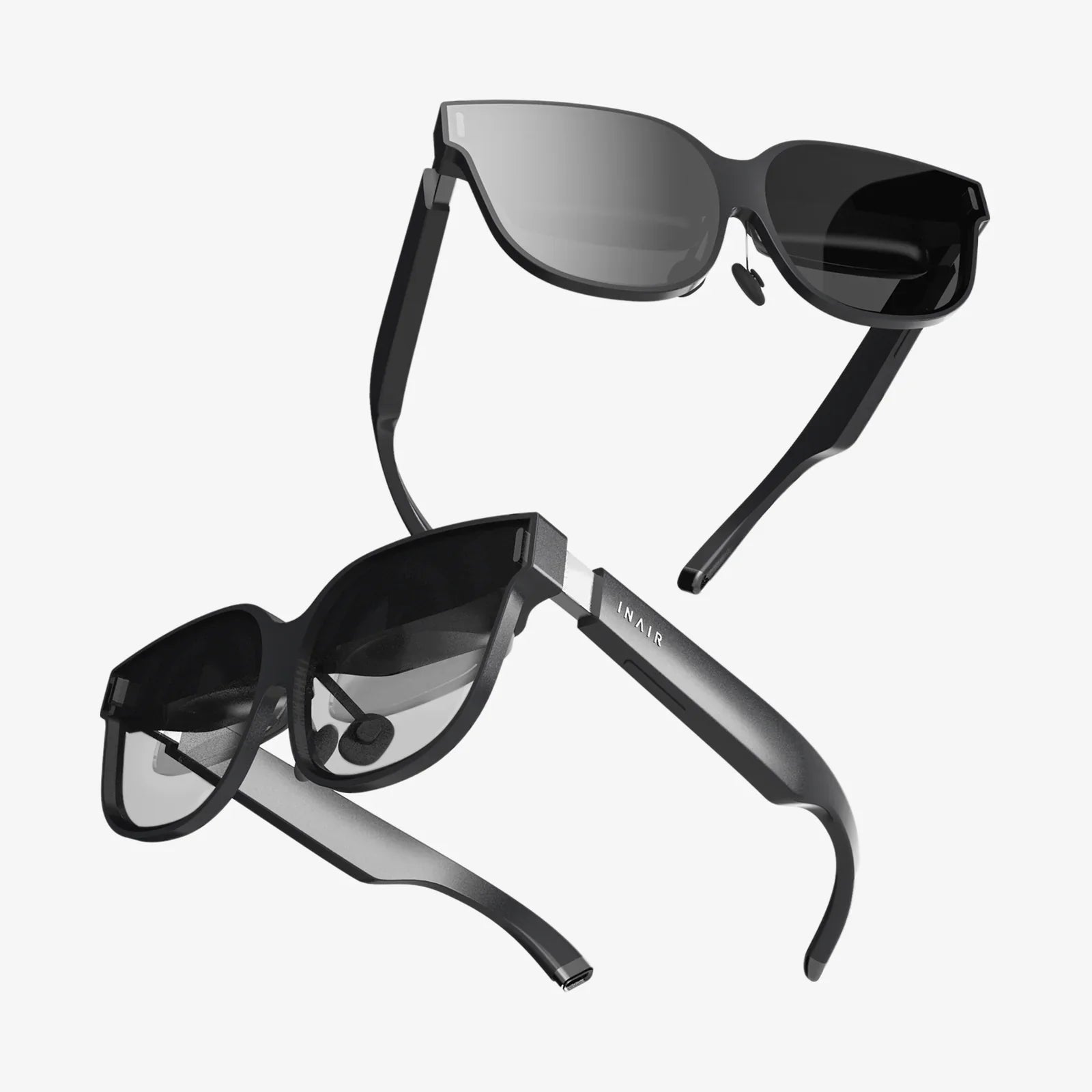
Imagine a world where information doesn’t live on a screen in your hand, but floats effortlessly in the air before you. Where directions are painted onto the street, historical figures reenact battles on the very ground they were fought, and a colleague from across the globe can stand in your living room, pointing to a holographic model you’re building together. This isn’t a distant science fiction fantasy; it’s the imminent future being unlocked by the rapid evolution of XR AR glasses, a technological leap poised to be as disruptive as the smartphone, quietly weaving a digital layer over the very fabric of our existence.
The Spectrum of Immersion: Defining the XR Landscape
To understand the significance of XR AR glasses, one must first navigate the acronyms that define this new frontier. Often used interchangeably, but with distinct meanings, they form a spectrum of immersive technologies.
Augmented Reality (AR) overlays digital information—images, text, animations—onto the user’s view of the real world. The key principle is that the physical environment remains central, enhanced by contextual data. Think of seeing recipe instructions hover beside your mixing bowls or a network’s name appear when you look at your router.
Virtual Reality (VR) is at the opposite end of the spectrum. It completely occludes the real world, transporting the user to a fully digital, computer-generated environment. It’s immersive escapism, used primarily for gaming, simulation, and virtual training.
Extended Reality (XR) is the umbrella term that encompasses all these technologies—AR, VR, and everything in between, including Mixed Reality (MR), which involves more complex interactions between real and virtual objects. XR AR glasses, therefore, are the hardware designed primarily for augmented and mixed reality experiences, serving as your window into this blended world.
From Clunky to Invisible: The Hardware Evolution
The dream of augmented reality has been decades in the making, but the hardware has only recently begun to catch up to the ambition. Early iterations were plagued by limitations that hindered mass adoption.
The single greatest challenge has been miniaturization. Packing the necessary processing power, sensors, batteries, and display technology into a form factor that resembles everyday eyewear is a monumental feat of engineering. Early prototypes were often bulky, tethered to a powerful computer, and delivered a limited field of view, making the digital content feel like a small window rather than a seamless overlay.
Today, we are witnessing a dramatic shift. Advancements in several key areas are converging to make truly wearable XR AR glasses a reality:
- Waveguide Displays: This is the magic behind see-through AR. These ultra-thin glass substrates use diffraction gratings to bend light from a micro-projector into the user’s eye, allowing digital images to be superimposed on the real world without blocking the user’s vision. Refinements in this technology are crucial for improving clarity, brightness, and field of view.
- Spatial Mapping: For digital objects to interact convincingly with the real world, the device must understand its environment. A combination of cameras, LiDAR (Light Detection and Ranging), depth sensors, and inertial measurement units (IMUs) continuously scans and maps the room, creating a 3D mesh. This allows a virtual character to hide behind your real sofa or a digital lamp to sit convincingly on your physical desk.
- On-Device AI and Processing: The sheer amount of data from these sensors requires immense, instantaneous processing to track the user’s head movements, understand hand gestures, and anchor digital content. The integration of specialized AI chips capable of handling these complex computer vision tasks locally, with low latency, is essential for a smooth and responsive experience, free from the lag that can cause nausea.
- Battery Technology and Thermal Management: All this power demands energy. Innovations in battery density and efficiency, alongside sophisticated thermal dispersion systems, are extending usage times and preventing the devices from becoming uncomfortably warm on the face.
The ultimate goal is social acceptance. The next generation of XR AR glasses is striving for a look that is indistinguishable from fashionable prescription glasses, making them something people would be comfortable wearing all day, every day.
A World Remixed: Transformative Applications Across Industries
The true power of XR AR glasses is not in the technology itself, but in its applications. By superimposing information and interfaces onto our field of view, they unlock intuitive and powerful ways to work, learn, and connect.
Revolutionizing the Workplace
The professional sphere stands to be one of the biggest beneficiaries. Imagine a field technician wearing XR AR glasses while repairing a complex piece of machinery. Instead of juggling a physical manual or a tablet, schematic diagrams, torque specifications, and animated repair guides are projected directly onto the equipment itself, highlighting exactly which bolt to turn and how. This hands-free access to information dramatically improves efficiency, reduces errors, and shortens training times.
For designers and engineers, collaborative 3D modeling becomes a tangible experience. Teams distributed across the globe can meet in a shared virtual space and interact with a life-size holographic prototype of a new product, examining it from every angle, making annotations in mid-air, and making decisions in real-time as if they were in the same room.
Redefining Education and Training
Education transforms from passive learning to active experience. Medical students can practice complex surgical procedures on hyper-realistic holographic patients, receiving real-time feedback without any risk. History classes can walk through ancient Rome, witnessing the architecture and daily life unfold around them. Mechanics can learn to assemble an engine by following step-by-step holographic instructions overlaid on the physical parts.
This experiential learning leads to dramatically improved knowledge retention and understanding, creating a powerful "see it, do it" methodology that textbooks could never provide.
Enhancing Daily Life and Navigation
On a consumer level, the implications are vast. Navigation becomes intuitive, with glowing arrows and street names painted onto the pavement, guiding you to your destination without ever needing to look down at your phone. Cooking becomes effortless with a recipe floating beside your ingredients, timers attached to specific pots, and measurements visualized for you.
Shopping allows you to see how a new piece of furniture would look in your home at full scale before you buy it, or how a pair of virtual sunglasses looks on your face. Language barriers dissolve with real-time translation subtitles appearing under a speaking person, and social interactions can be enriched with contextual information about the people and places around you.
The Invisible Hurdles: Challenges on the Path to Adoption
Despite the exciting potential, the path to ubiquitous XR AR glasses is not without significant obstacles that developers and society must overcome.
Privacy and Security: These devices, by their very nature, are equipped with always-on cameras and microphones constantly scanning your environment. This raises profound questions. Who has access to this data? How is it stored and used? The potential for surveillance, both corporate and governmental, is a serious concern. Robust, transparent data policies and perhaps even hardware features like physical camera shutters will be non-negotiable for user trust.
Social Etiquette and the Attention Economy: If someone is wearing glasses that can record video, how will others know? New social norms will need to develop. Furthermore, the constant barrage of digital notifications and information could lead to unprecedented levels of distraction, pulling our attention away from the physical world and the people in it. Managing digital intrusion will be a critical design and personal challenge.
Accessibility and the Digital Divide: As with any transformative technology, there is a risk of exacerbating inequality. High initial costs could create a divide between those who can afford this new layer of reality and those who cannot. Furthermore, ensuring the technology is accessible to people with different physical and cognitive abilities is paramount.
Health and Safety: Long-term effects of having displays so close to the eyes are still being studied. Issues like eye strain, headaches, and the psychological effects of blending realities need ongoing research. Safety in public spaces is also a concern; a user immersed in digital content must remain aware of their physical surroundings to avoid accidents.
The Next Decade: A Blended Future Awaits
The development of XR AR glasses is following an exponential curve. We are moving from the early adopter phase, dominated by specialized industrial use, toward a consumer-ready future. Within the next decade, we can expect devices that are lighter, more powerful, and—crucially—more affordable.
They will likely become the successor to the smartphone, not by replacing it overnight, but by gradually absorbing its functions into a more intuitive, spatial interface. We will stop pulling a device from our pocket and instead simply glance at the world to access the information we need. The internet will cease to be a destination we visit and will become an invisible, intelligent layer integrated into our perception of reality itself.
This transition represents a fundamental shift in human-computer interaction, from a tool we hold to an environment we inhabit. It promises to make us more capable, more connected, and more knowledgeable by contextualizing the vast digital universe within our physical one. The revolution won't happen on a screen; it will happen all around you, visible only to those who choose to look through a new lens.
You won't hear this revolution coming; it won't be announced with fanfare or a loud launch event. It will arrive quietly, perched on the bridge of your nose, waiting for you to put them on and see the world not as it is, but as it could be—a place where every blank space is a canvas for imagination and every moment is an opportunity to learn, create, and connect in ways we are only beginning to dream of.
Share:
Can You Use VR with Glasses? A Complete Guide to Virtual Reality and Eyewear
What Does Augmented Reality Mean? The Digital Layer on Our World