


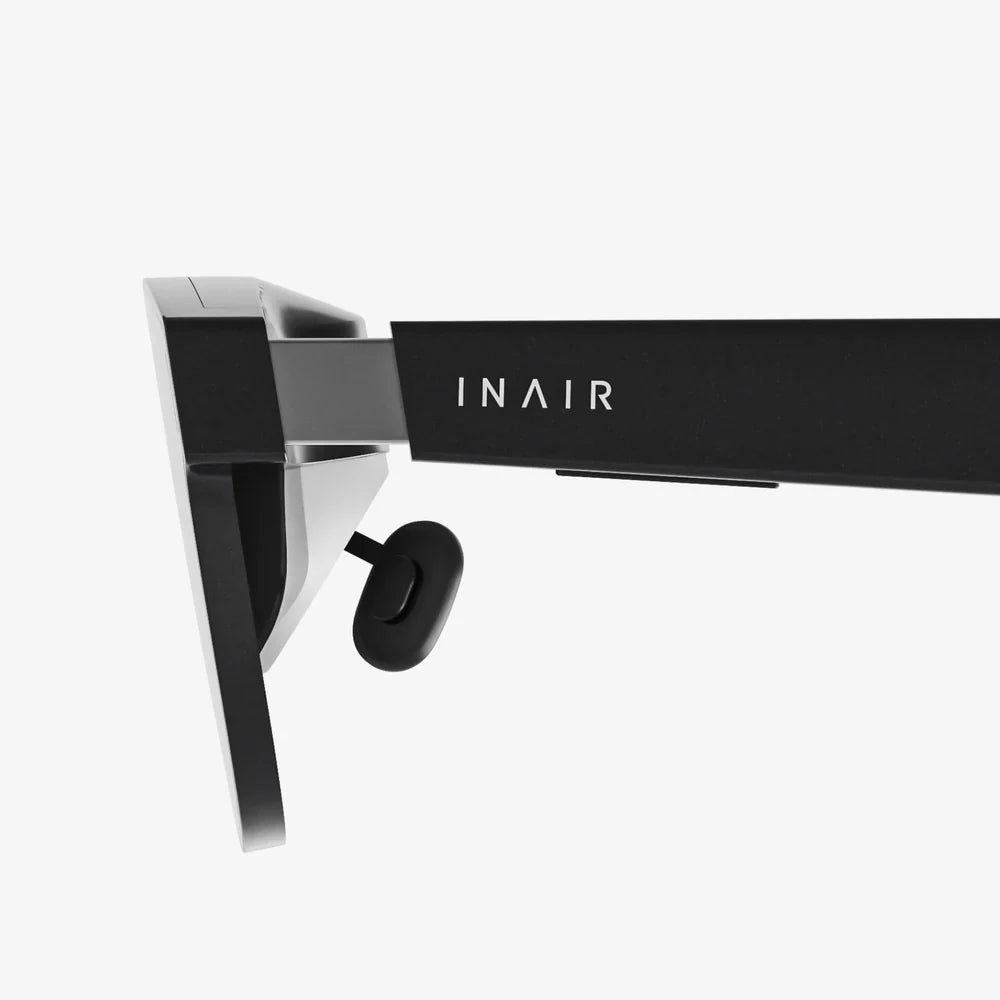
- by wangfred
XR AR MR: Navigating the Blended Realities of Our Digital Future
- by wangfred
Imagine a world where the digital and the physical are no longer separate realms, but a seamless, interactive tapestry of information, entertainment, and connection. This is the promise held within three powerful acronyms: XR, AR, and MR. These technologies are rapidly moving from science fiction to mainstream reality, poised to fundamentally alter how we work, learn, play, and perceive the world around us. The journey into this blended reality is not a distant future concept; it is happening now, and understanding its layers is the first step to navigating its immense potential.
Before diving into the applications, it's crucial to understand the distinct yet interconnected nature of these terms. They are often used interchangeably, but they represent different points on a continuum of immersive technology.
Extended Reality, or XR, is the overarching term that encompasses all real-and-virtual combined environments and human-machine interactions generated by computer technology. It is not a specific technology itself but a catch-all category that includes:
Think of XR as the entire universe of immersive tech. Any experience that blends the physical and digital worlds or creates a fully synthetic one falls under the XR umbrella. Its goal is to extend the reality we experience by either adding to it or completely replacing it.
Augmented Reality enhances your real-world view by superimposing digital information—images, text, 3D models, or animations—onto it. The key principle of AR is that it adds to reality without changing your environment's fundamental nature. You remain present in your physical space, and the digital elements simply provide an additional layer of context or interaction.
This is most commonly experienced through the camera on a smartphone or tablet. For instance, using a furniture app to see how a new virtual sofa would look in your actual living room is a classic AR application. The environment is real; the sofa is a digital overlay. Another prevalent form is through transparent lenses or glasses, which project information directly into your field of vision, allowing you to see directions, messages, or data without looking down at a screen.
If AR is about overlaying, Mixed Reality is about integrating. MR is the most advanced and complex form of immersive technology, representing the merger of real and virtual worlds to produce new environments and visualizations where physical and digital objects co-exist and interact in real-time.
This requires advanced technology that can understand and map the physical environment in intricate detail. MR systems use a combination of cameras, sensors, and sometimes LIDAR to create a spatial map of a room. This allows digital objects to be placed within that space with a sense of permanence and physics. A virtual character in MR can walk behind your real-world desk and disappear from view. A digital ball can bounce off your real wall and land on your real floor. This seamless interaction is the hallmark of true MR, creating a believable, interactive fusion that feels tangible.
The magic of XR doesn't happen by chance. It's powered by a sophisticated suite of hardware and software working in concert.
For AR and MR to function, the device must first understand the world it's in. This is achieved through a array of components:
The data from these sensors is processed in real-time by powerful chipsets. This field of processing is often called spatial computing. The computer must simultaneously understand the geometry of the room, track the user's position within it, render high-fidelity graphics, and ensure the digital content aligns perfectly with the physical world—all without any perceptible lag, which can cause user discomfort.
How the blended image is presented to the user varies:
The theoretical potential of XR is vast, but its real-world applications are already delivering tangible value across numerous sectors.
Perhaps the most significant adoption is happening in industrial settings. Companies are leveraging these technologies to improve efficiency, reduce errors, and enhance safety.
In medicine, where precision is paramount, XR is proving to be a game-changer.
From the classroom to the shopping aisle, immersive experiences are enhancing how we learn and shop.
Despite the exciting progress, the widespread adoption of XR faces significant hurdles that must be addressed.
For true MR to become ubiquitous, the devices need to become smaller, lighter, more powerful, and far more socially acceptable. The goal is a pair of glasses that look no different from standard eyewear but pack enough processing power and battery life to deliver compelling all-day experiences. We are still years away from this ideal.
As these technologies become more pervasive, they raise profound questions:
The path forward requires a collaborative effort from technologists, policymakers, ethicists, and society at large to build an XR future that is inclusive, ethical, and human-centric.
The line between our physical existence and our digital lives is not just blurring; it is being actively rewoven by the threads of extended reality. This is not a passive technological shift but an active invitation to participate in shaping what comes next. The potential to enhance human capability, bridge vast distances, and solve complex problems is literally before our eyes. The journey into this blended world is just beginning, and its ultimate destination will be defined by our creativity, our caution, and our collective choice to build a future that is not just technologically advanced, but profoundly human.
Share:
New VR Headset 2026: The Dawn of a Hyper-Realistic Digital Epoch
Wearing Headphones with Glasses: The Ultimate Guide to Uncompromised Comfort and Audio