


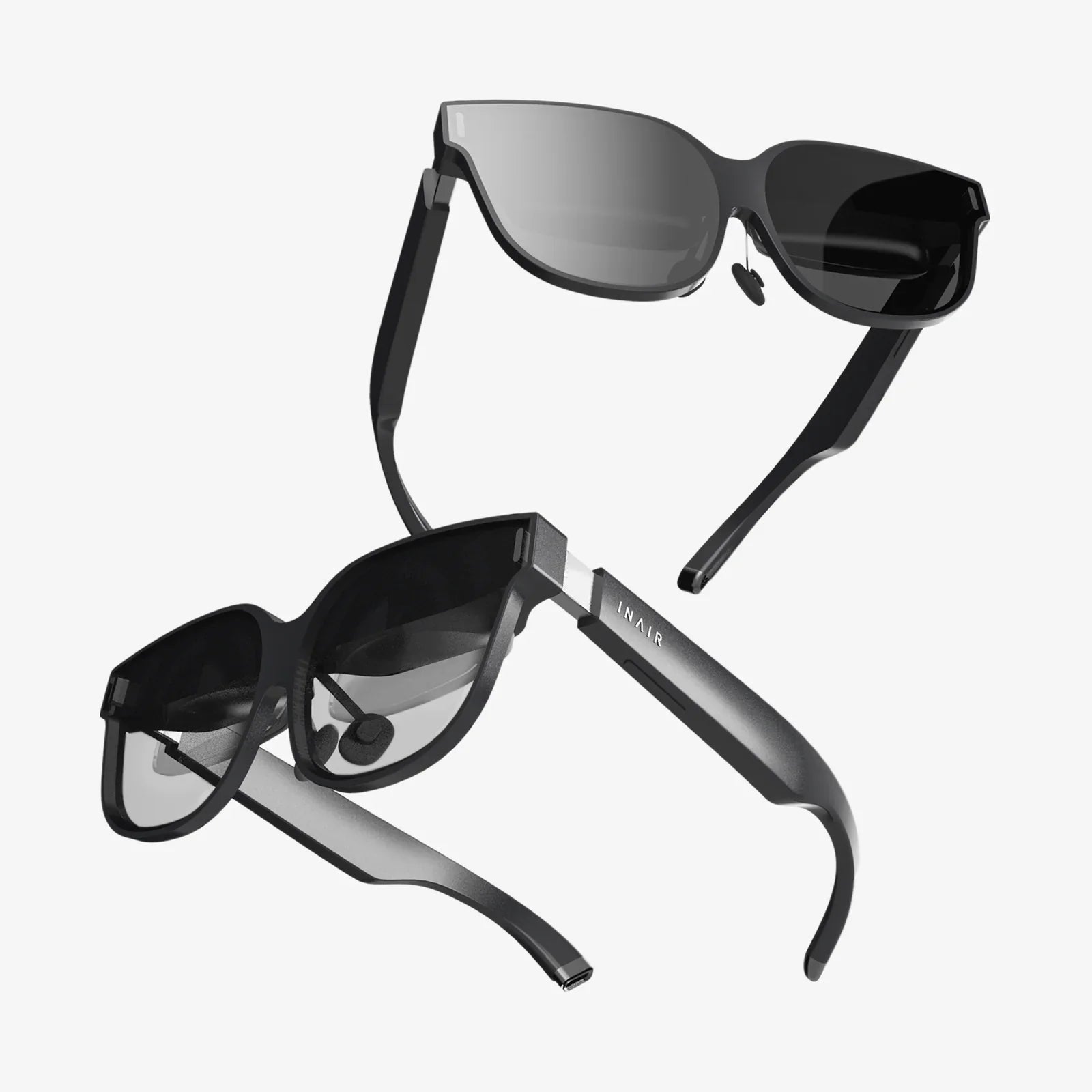
Imagine a world where a surgeon practices a complex procedure on a perfect holographic heart before ever stepping into an operating room, where a factory worker in another country can guide your hands through a delicate repair via a pair of smart glasses, and where architects can walk clients through a building that exists only as a digital blueprint. This is not a distant science fiction fantasy; it is the tangible, operational reality being built today by a burgeoning ecosystem of XR companies. These innovators are not just creating games and entertainment; they are constructing the very fabric of the next industrial revolution, seamlessly blending our physical and digital existences to unlock unprecedented levels of efficiency, safety, and human understanding.
The Foundation: Defining the Extended Reality Spectrum
Before delving into the transformative applications, it is crucial to understand the technological landscape. Extended Reality (XR) serves as an umbrella term encompassing a spectrum of immersive technologies.
- Virtual Reality (VR) creates a completely digital, computer-generated environment that fully immerses the user, typically experienced through a head-mounted display (HMD) that blocks out the physical world. It is a gateway to entirely synthetic worlds.
- Augmented Reality (AR) overlays digital information—such as images, text, or 3D models—onto the user's view of the real world. This is often experienced through smartphones, tablets, or increasingly, through transparent glasses. It enhances reality rather than replacing it.
- Mixed Reality (MR) represents the most advanced segment, where digital and physical objects not only coexist but can interact in real-time. A digital ball in MR can bounce off a real-world table, and a virtual control panel can be affixed to a physical wall.
XR companies specialize across this entire spectrum, developing the hardware, software, platforms, and content that power these experiences. Their work is moving these technologies out of niche labs and into the core operational workflows of global enterprises.
Revolutionizing Training and Skill Development
One of the most powerful and rapidly adopted applications of enterprise XR is in the realm of training and simulation. Traditional training methods often involve expensive physical setups, potential safety risks, and significant downtime. XR solutions elegantly solve these problems.
In high-stakes fields like healthcare, XR companies are providing platforms for surgical training. Medical professionals can rehearse complex procedures on hyper-realistic virtual patients, allowing for mistake-driven learning without any risk to human life. This hands-on practice improves muscle memory, spatial awareness, and decision-making skills far more effectively than textbooks or videos.
Similarly, in heavy industries like oil and gas, manufacturing, and aviation, XR is used to simulate dangerous scenarios. Technicians can practice responding to high-pressure emergencies—a gas leak, an electrical fire, a mechanical failure—in a completely safe, controlled virtual environment. This not only ensures they are better prepared but also drastically reduces training costs associated with taking equipment offline or building physical mock-ups. These immersive simulations lead to higher knowledge retention and greater confidence when employees face real-world situations.
Transforming Design, Prototyping, and Manufacturing
The product development lifecycle is undergoing a seismic shift thanks to XR. The traditional process of design, physical prototyping, review, and iteration is notoriously slow and expensive. XR companies are injecting agility and collaboration into this process.
Automotive and aerospace engineers can now don VR headsets to examine a full-scale 3D model of a new engine or airframe. They can literally walk around the design, inspect components from every angle, and identify potential interference issues or design flaws long before a single piece of metal is cut. This "digital twin" philosophy allows for rapid iteration and validation.
On the factory floor, AR is becoming an indispensable tool. Assembly line workers can wear AR glasses that project digital work instructions directly into their field of view. These instructions can highlight the exact part to pick, show the precise orientation for installation, and display torque specifications, reducing errors and speeding up complex assembly processes. This guided workflow is invaluable for training new employees and for managing the assembly of highly customized products. Furthermore, remote experts can see what a field technician sees through their glasses, annotate the real-world view with arrows and notes, and provide real-time guidance, eliminating the need and cost for experts to travel to every site.
Redefining Remote Collaboration and Communication
The global shift to remote work exposed the limitations of traditional video conferencing tools for complex collaborative tasks. A flat 2D screen is a poor medium for discussing 3D problems. XR companies are solving this by building the collaborative spaces of the future—the enterprise metaverse.
Imagine a team of engineers from different continents meeting inside a virtual prototype of their project. As lifelike avatars, they can point to specific components, make adjustments in real-time, and experience the design together as if they were in the same physical room. This shared presence fosters a deeper level of understanding and creativity than a screen share ever could.
Architects and construction firms are using these platforms to conduct virtual walkthroughs of buildings with clients, making changes to layouts, materials, and lighting on the fly. Retailers are designing virtual store layouts and testing customer flow. This technology dissolves geographical barriers, creating a persistent space for ideation and decision-making that mimics the best aspects of in-person collaboration.
Creating Next-Generation Marketing and Customer Experiences
Forward-thinking businesses are leveraging XR to engage customers in profoundly new ways, moving beyond traditional advertising to create memorable, interactive experiences. XR companies provide the tools to build these captivating campaigns.
Furniture retailers allow customers to use their smartphone cameras to see how a new sofa or table would look and fit in their actual living room. Automotive companies offer AR experiences that let potential buyers place a new car model in their driveway, explore its features, and even change its color. This "try before you buy" approach in the consumer's own environment significantly reduces purchase hesitation and lowers return rates.
Furthermore, brands are creating immersive virtual showrooms and branded experiences. Customers can explore products in a rich, engaging digital environment, attend virtual launch events, and interact with products in ways that are impossible on a standard e-commerce website. This level of engagement builds stronger emotional connections between the customer and the brand.
Navigating the Challenges and the Road Ahead
Despite the immense potential, the path to widespread enterprise XR adoption is not without its hurdles. Key challenges remain that XR companies are actively working to overcome.
- Hardware Limitations: For true ubiquity, devices need to become lighter, more comfortable, have longer battery life, and offer higher-resolution displays—all at a more accessible price point. The ideal AR glasses for all-day wear are still on the horizon.
- Connectivity and Latency: High-fidelity, collaborative XR experiences require massive amounts of data and extremely low latency. The rollout of 5G and future networks is critical to enabling seamless cloud-based XR.
- Content Creation: Developing enterprise-grade XR content can be complex and resource-intensive. The industry is moving towards more powerful and user-friendly creation tools to democratize content development.
- Data Security and Privacy: As XR devices collect vast amounts of spatial and biometric data, robust security frameworks and clear ethical guidelines are paramount to gaining enterprise trust.
The future of XR is converging with advancements in Artificial Intelligence (AI) and the Internet of Things (IoT). AI will power more intelligent and responsive virtual environments and assistants, while IoT integration will allow XR systems to interact with and visualize data from millions of real-world sensors. This will create a truly symbiotic relationship between the physical and digital realms.
The silent revolution orchestrated by XR companies is already rewriting the rules of business, creating a world where the line between what is real and what is digital is not just blurred but purposefully erased to enhance human capability. From the operating room to the factory floor, the boardroom to the living room, they are building a more intuitive, efficient, and connected world—one immersive experience at a time. The enterprise metaverse is not coming; it is already here, and it is being built by the relentless innovation of the XR industry.
Share:
Do VR Headsets Need a PC? The Ultimate Guide to Standalone and Tethered Virtual Reality
Human Computer Interaction Market: The Invisible Hand Reshaping Our Digital Destiny