


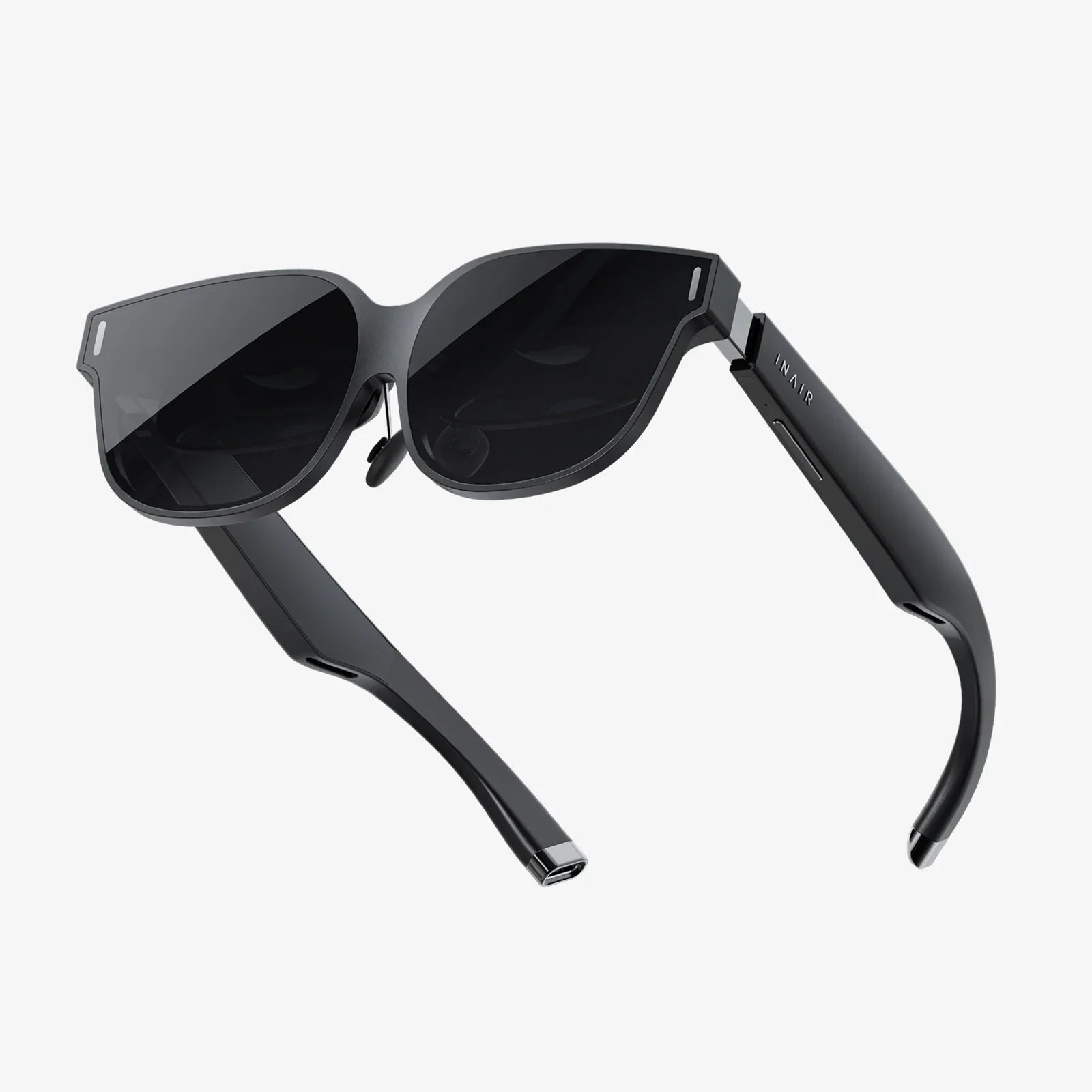
Imagine a world where the digital and physical seamlessly intertwine, where you can train for complex surgery, walk on Mars, or design a new car—all from your living room. This is no longer the realm of science fiction; it is the burgeoning reality being shaped by a transformative technological force. To truly grasp the future of human-computer interaction, we must first start with the fundamental question: how do we XR define? This term, once confined to tech conferences and research papers, is now poised to redefine entire industries, reshape social connections, and alter our very perception of reality itself. This journey into the heart of Extended Reality is not just about understanding a new acronym; it's about preparing for the next great technological evolution.
Deconstructing the Acronym: What Does XR Define?
At its core, XR define simply means Extended Reality. It serves as an umbrella term that encompasses all immersive technologies, both those that exist today and those yet to be invented. The "X" in XR is a variable, representing the spectrum of realities that can be created by blending the physical and virtual worlds. It is the unifying concept that brings together a family of technologies designed to extend the reality we experience through either fully digital or digitally enhanced environments.
The primary goal of XR is to break down the barriers between the user and the digital experience. It moves beyond the flat, two-dimensional screen, creating a sense of presence—the convincing feeling of being physically located in a virtual space or having virtual elements authentically present in your world. This shift from observation to immersion is what makes XR such a powerful and disruptive paradigm.
The Three Pillars of Extended Reality
To fully XR define, we must examine its three primary components, each representing a different point on the reality-virtuality continuum. While often discussed separately, their convergence under the XR umbrella highlights their shared goal of extending human experience.
1. Virtual Reality (VR): The Digital Immersion
Virtual Reality is the most immersive end of the XR spectrum. It transports the user into a completely computer-generated, digital environment, effectively replacing the real world. This is achieved through a head-mounted display (HMD) that blocks out the physical surroundings and tracks the user's head movements, updating the visual display in real-time to create a convincing sense of being inside the simulation.
Key characteristics of VR include:
- Full Immersion: The user's visual and auditory senses are entirely occupied by the virtual world.
- Isolation from Physical Reality: The real environment is obscured, allowing for complete focus on the digital experience.
- Interactivity: Users can navigate and manipulate the virtual world, often using handheld controllers or gloves for haptic feedback.
Applications for VR are vast, ranging from immersive gaming and virtual tourism to high-stakes training simulations for pilots, surgeons, and soldiers, where mistakes in the real world would be catastrophic.
2. Augmented Reality (AR): The Enhanced World
If VR replaces reality, Augmented Reality enhances it. AR overlays digital information—such as images, text, or 3D models—onto the user's view of the physical world. Rather than creating a new reality, it annotates and adds a layer of data to the existing one. This technology is often experienced through smartphone cameras, smart glasses, or transparent displays embedded in windshields or windows.
Key characteristics of AR include:
- Real-World Foundation: The experience is anchored in and interacts with the user's immediate physical environment.
- Contextual Information: Digital content is relevant to the location, object, or task at hand (e.g., navigation arrows on the street, repair instructions over a machine).
- Accessibility: Often requires less specialized hardware than VR, making it more readily available to a mass audience.
From popular mobile games that place characters in your backyard to complex industrial applications where technicians see wiring diagrams overlaid on machinery, AR is already weaving a digital fabric into our everyday lives.
3. Mixed Reality (MR): The Seamless Blend
Mixed Reality sits at the most complex and advanced point on the spectrum. It goes beyond simple overlay to create environments where physical and digital objects not only coexist but can interact with each other in real-time. In a true MR experience, a virtual ball can bounce off a real-world table, and a digital character can sit on your physical sofa, casting a realistic shadow.
This requires sophisticated technology, including advanced sensors, powerful spatial mapping, and a deep understanding of the geometry and lighting of the physical environment. MR headsets use cameras to scan the room and then anchor digital objects persistently within that space.
Key characteristics of MR include:
- Bidirectional Interaction: Digital objects react to the physical world and vice-versa.
- Spatial Anchoring: Virtual content is fixed to a point in real space and remains there even if the user walks away and returns.
- The Pinnacle of Blending: It represents the most seamless and convincing merger of real and virtual realms currently possible.
MR is the foundation for the future of collaborative design, remote assistance, and the next generation of spatial computing interfaces.
The Technology Behind the Magic
To XR define is also to appreciate the complex symphony of hardware and software that makes these experiences possible. Several core technologies work in concert to create convincing extended realities.
Sensing and Tracking
Understanding the user's position in space is paramount. This is achieved through a combination of:
- Inside-Out Tracking: Cameras and sensors on the headset itself scan the environment to track movement without external hardware.
- Outside-In Tracking: External sensors or cameras placed in the room track the position of the headset and controllers.
- Eye and Hand Tracking: Advanced systems can track where a user is looking or the precise movement of their fingers, enabling more natural and intuitive interaction.
Display and Optics
Presenting a believable image is a monumental technical challenge. XR displays must offer high resolution, high refresh rates (to prevent motion sickness), and a wide field of view. Different approaches include:
- OLED and LCD Panels: Provide the core imagery.
- Pancake Lenses: Fold the optical path to create more compact and comfortable headsets.
- Waveguide Technology: Used in AR glasses to project images onto transparent lenses, allowing the user to see the digital overlay and the real world simultaneously.
Computational Power and Latency
XR applications are incredibly computationally intensive. They must render complex 3D environments at extremely high frame rates. Any delay, or latency, between a user's movement and the update of the display can break immersion and cause discomfort. This demands powerful processors, efficient software, and increasingly, cloud-based rendering to offload processing from the device itself.
Transforming Industries: The Practical Applications of XR
Moving beyond theory, the true power of XR is revealed in its practical, world-changing applications. Nearly every sector is finding innovative uses for these technologies.
Healthcare and Medicine
XR is revolutionizing medicine. Surgeons use VR to meticulously plan and practice complex procedures on patient-specific 3D models before ever making an incision. AR can project vital signs, ultrasound data, or surgical guides directly into a surgeon's field of view during an operation. Furthermore, VR is proving highly effective in exposure therapy for treating PTSD, phobias, and anxiety disorders, as well as in physical rehabilitation, making exercises more engaging.
Education and Training
XR creates experiential learning opportunities that were previously impossible. History students can take a virtual walk through ancient Rome. Mechanics can train on the intricate systems of a jet engine without needing access to a multi-million dollar physical model. This "learning by doing" in a safe, virtual environment accelerates skill acquisition, improves knowledge retention, and eliminates the risks associated with training for high-consequence jobs.
Enterprise and Manufacturing
From design and prototyping to maintenance and logistics, XR is streamlining enterprise workflows. Designers and engineers across the globe can collaborate in a shared virtual space on a full-scale 3D model of a new product. Field service technicians wearing AR glasses can receive remote expert guidance, with annotations appearing directly on the equipment they are fixing, drastically reducing downtime and errors.
Retail and Commerce
Try before you buy is being redefined. AR apps allow customers to see how a new sofa would look in their living room, how a pair of glasses fits their face, or how a shade of paint changes a room's ambiance—all from their phone. This not only enhances customer confidence but also reduces return rates, creating a more efficient and satisfying shopping experience.
The Human and Societal Impact
As we XR define its potential, we must also confront the profound questions and challenges it presents. This technological shift will not be without its growing pains and ethical considerations.
The Metaverse: The Ultimate XR Ambition?
The concept of a persistent, shared, and interconnected virtual universe—a metaverse—is the logical endpoint of XR evolution. It envisions a network of 3D virtual worlds focused on social connection, where people can work, play, socialize, and create. XR, particularly MR and VR, is viewed as the primary gateway to this envisioned future, offering the immersion and presence necessary to make it feel real.
Ethical Considerations and Challenges
The path forward is fraught with challenges that society must address:
- Privacy: XR devices, with their always-on cameras and microphones, collect unprecedented amounts of intimate data about our homes, behaviors, and even biometric responses.
- Safety and Security: Protecting users from harassment in virtual spaces and securing these new platforms from malicious attacks is critical.
- The Reality Gap: Prolonged immersion in virtual worlds could potentially lead to issues of dissociation, addiction, or the blurring of lines between what is real and what is not.
- Accessibility and the Digital Divide: Ensuring these powerful tools do not become a luxury that further widens socioeconomic gaps is a crucial challenge.
The Future is Extended
The trajectory of XR points toward more powerful, affordable, and socially integrated technology. We are moving toward sleek, lightweight glasses that can seamlessly switch between AR and VR modes. Advances in artificial intelligence, 5G/6G connectivity, and brain-computer interfaces will further dissolve the boundary between user and system, making interactions more intuitive and natural than ever before.
The ultimate goal is not to escape reality, but to augment our human capabilities, to connect and share experiences in ways previously unimaginable, and to solve complex problems with new tools for visualization and collaboration. To XR define is to map the future of human experience, a future where our digital and physical lives are not separate realms, but a continuous, integrated, and enriched existence.
The door to these new worlds is now open, and the journey is just beginning. The next time you look at your screen, remember it's a portal to a flat representation of information. Now, imagine looking through a lens that layers data onto your city streets, or stepping through a portal into a fully realized digital dimension. This is the promise of Extended Reality—a promise that is rapidly becoming our new normal, reshaping everything from how we work and learn to how we connect and perceive the very fabric of the world around us. The question is no longer what XR can do, but what will you do with it?
Share:
What Is Digital Content: The Lifeblood of the Modern World
Where Can You Buy VR - Your Ultimate Guide to Purchasing Virtual Reality Systems