


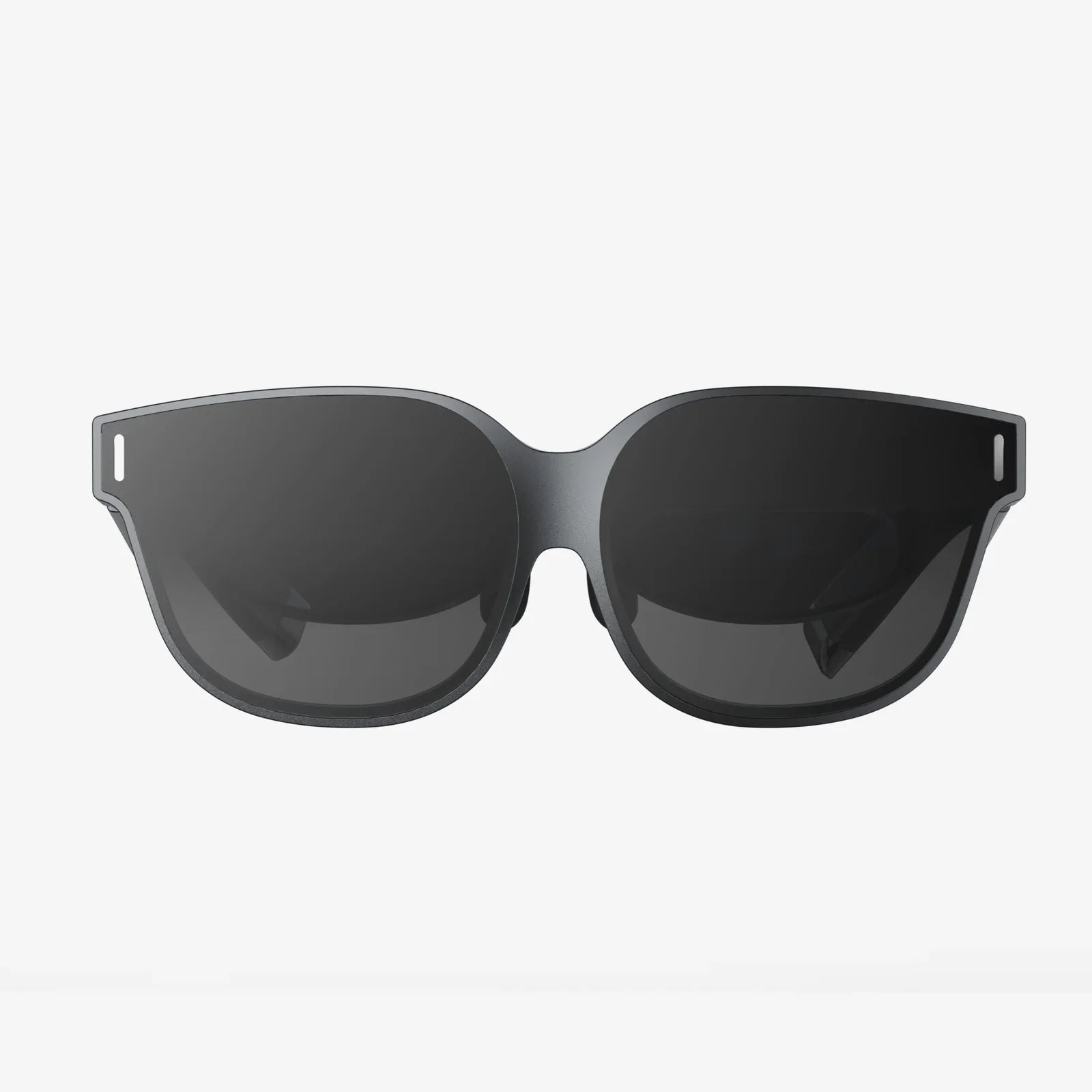
Imagine a world where the digital and physical seamlessly intertwine, where developers hold the keys to crafting experiences that redefine human interaction, training, and entertainment. This isn't a distant sci-fi fantasy; it's the palpable reality being built today by Extended Reality (XR) developers, and the pace of change is nothing short of breathtaking. Keeping your finger on the pulse of XR developer news is no longer a niche interest—it's a strategic imperative for anyone looking to shape the future of computing. The landscape is shifting daily, with new tools, frameworks, and paradigms emerging to challenge our very understanding of what's possible. From groundbreaking advancements in cross-platform development to the silent integration of artificial intelligence, the stories unfolding in the XR dev community are writing the first draft of our immersive future.
The Hardware-Agnostic Revolution: Building for All Realities
For years, one of the most significant hurdles in XR development was platform fragmentation. Creating an experience often meant choosing a specific headset ecosystem, locking your application into a walled garden and drastically limiting its potential audience. Recent XR developer news, however, highlights a powerful and persistent trend: the move towards truly hardware-agnostic development. The industry is rallying around open standards and cross-platform tools that allow creators to build once and deploy everywhere.
The momentum behind initiatives like OpenXR is a central theme in developer circles. This open, royalty-free standard provides a universal API for developing applications that run across a wide spectrum of VR and AR hardware. For developers, this means drastically reduced porting efforts and a more consistent user experience. Instead of writing unique code for different device runtimes, they can write to a single, unified specification. This shift is empowering smaller studios to compete on a global scale, as their resources are no longer stretched thin by the demands of multi-platform development.
Furthermore, major game engines have wholeheartedly embraced this philosophy. Their latest updates consistently emphasize features that abstract away the complexities of individual headsets. Developers can now drag and drop core XR functionality into their projects with unprecedented ease, from basic locomotion and object interaction to more complex spatial mapping and anchor persistence. This abstraction layer is crucial; it allows creators to focus on what matters most—designing compelling user experiences—rather than getting bogged down in the low-level intricacies of different tracking systems and display technologies. The message from the leading edge of XR developer news is clear: the future is open, accessible, and interconnected.
The Spatial Web and WebXR: Democratizing Access to Immersion
If hardware-agnostic tools are breaking down walls between headsets, then the rise of the spatial web and WebXR is demolishing the barrier to entry entirely. This is arguably the most democratizing force in recent XR developer news. WebXR is a web standard that allows users to experience immersive content directly through a browser, without the need for dedicated applications or complex installation processes. A user can simply click a link on their phone, computer, or compatible headset and be instantly transported into a 3D environment.
The implications for distribution and accessibility are monumental. Suddenly, an immersive product catalog, a virtual museum tour, or a collaborative design review is just a URL away. There's no friction—no app store approvals, no download waiting times, no concerns about device storage. This drastically lowers the barrier for end-users to experience XR, which in turn creates a massive new market for developers. The development workflow is also transformed. WebXR leverages familiar web technologies like JavaScript and WebGL, allowing the vast existing community of web developers to transition into the XR space using skills they already possess.
Updates to major browsers are continuously enhancing their WebXR capabilities, supporting more advanced features like AR cloud anchors, which allow digital objects to persist in the real world across sessions and for multiple users. This evolution is turning the internet itself into a vast, connected spatial canvas. For developers, staying abreast of WebXR advancements is no longer optional; it's essential for building the lightweight, accessible, and instantly shareable experiences that will drive the next wave of mass adoption.
AI and Machine Learning: The Silent Partners in XR Development
While flashy headsets often grab headlines, some of the most transformative XR developer news revolves around the quiet integration of Artificial Intelligence and Machine Learning. AI is becoming the indispensable silent partner, supercharging development and enabling previously impossible experiences. From streamlining asset creation to powering intelligent interactions, AI is embedded throughout the modern XR toolkit.
Procedural generation, powered by AI algorithms, is revolutionizing content creation. Developers can now generate vast, complex, and unique environments—lush forests, derelict space stations, intricate dungeons—in a fraction of the time it would take a human artist. This is a game-changer for creating the expansive worlds demanded by users. Beyond environments, AI is crucial for natural user interactions. Advanced gesture recognition systems use ML models to understand subtle hand movements, allowing for intuitive and controller-free interfaces. Real-time neural voice processing can create dynamic, responsive non-player characters (NPCs) that hold natural conversations, enhancing storytelling and training simulations.
Perhaps most impressively, AI is tackling one of XR's oldest challenges: user comfort. Machine learning algorithms can now predict and mitigate simulator sickness by dynamically adjusting field-of-view, movement patterns, and rendering techniques in real-time based on user biometric feedback. For developers, leveraging these AI-powered plugins and services within their engines is becoming standard practice. They are tools that not only increase efficiency but also fundamentally expand the creative palette, enabling more personal, adaptive, and immersive experiences.
The Evolving Skillset: What It Takes to Be an XR Developer Today
The rapid evolution of the field means the profile of a successful XR developer is constantly changing. Staying current with XR developer news isn't just about following tech updates; it's about understanding the shifting landscape of required skills. While proficiency in a primary engine remains the bedrock, a new set of interdisciplinary talents is rising in importance.
3D Math and Spatial Design: A deep, intuitive understanding of 3D mathematics—vectors, matrices, quaternions—is non-negotiable. This is the language of spatial computing. Coupled with this is the principle of spatial design, which focuses on designing user interfaces and interactions that feel natural and comfortable within a 3D space, avoiding classic pitfalls that lead to user fatigue.
Performance Optimization: XR development is a relentless battle for performance. Maintaining a high, consistent frame rate is critical for user comfort and immersion. Developers must be masters of optimization, skilled in profiling their applications, understanding GPU and CPU bottlenecks, and implementing advanced techniques like foveated rendering (where available) and efficient level-of-detail systems.
UX/UI Psychology: Designing for XR is a unique challenge in human-computer interaction. It requires a strong grasp of UX principles tailored to immersive environments. How does a user feel when a menu is anchored to their face versus the world? What are the best practices for guiding a user's attention in 360 degrees? The answers to these questions are constantly being refined and are a hot topic in developer forums and conferences.
Cross-Disciplinary Collaboration: Modern XR projects are rarely built by solitary coders. They require close collaboration between programmers, 3D artists, sound designers, narrative writers, and user researchers. Effective communication and an understanding of these adjacent disciplines are now core skills for any developer looking to contribute to a major project.
Beyond Entertainment: The Enterprise and Industrial Metaverse
While consumer gaming and social experiences capture the public imagination, a significant portion of impactful XR developer news is emerging from the enterprise sector. The so-called "Industrial Metaverse" is where XR is demonstrating immense tangible value and return on investment. Developers are building applications that are transforming how companies design, manufacture, train, and maintain their operations.
In architecture, engineering, and construction (AEC), AR applications allow architects to walk clients through full-scale holographic models of unbuilt structures, making changes in real-time. On factory floors, technicians wearing AR glasses can see schematics overlaid onto machinery, receive remote expert guidance from across the globe, and follow animated step-by-step instructions for complex assembly tasks, drastically reducing errors and training time.
Medical training is another area seeing explosive growth. Surgeons practice complex procedures on hyper-realistic virtual patients, and medical students can explore detailed anatomical models from every angle. These enterprise applications place a different set of demands on developers: a focus on robustness, security, integration with existing enterprise software systems (like PLM and ERP), and a deep understanding of specific industry workflows. The code written for these applications isn't just for entertainment; it's directly improving safety, efficiency, and outcomes in the physical world.
Navigating the Challenges: Privacy, Ethics, and the Responsibility of Creation
With great power comes great responsibility, and this adage has never been more relevant than for XR developers. As the technology becomes more pervasive and capable, the community is engaging in serious discussions about privacy, ethics, and the societal impact of the worlds they are building. This is a critical, if less technical, strand of XR developer news.
XR devices are data collection powerhouses. They have the potential to map our homes, understand our behaviors, track our eye movements, and even read our facial expressions. Developers are on the front line of deciding how this data is collected, stored, and used. There is a growing push for ethical design frameworks that prioritize user privacy by default, ensuring data is minimized, anonymized, and used transparently. The concept of "ethical XR" is gaining traction, urging developers to consider the psychological effects of persistent immersion, the potential for manipulation, and the importance of designing inclusive experiences that are accessible to people with diverse abilities.
These conversations are moving from academic papers into mainstream developer discourse. Conference panels, dedicated working groups, and industry coalitions are forming to establish best practices. For a modern developer, being ethical isn't an afterthought; it's a core component of their professional responsibility. Building trust with users is paramount for the long-term health of the entire ecosystem, and that trust is built on a foundation of transparent and ethical development practices.
A Glimpse Into the Future: What's on the Horizon
Peering into the future based on the current trajectory of XR developer news reveals several exciting possibilities. Haptic feedback technology is moving beyond simple controllers to full-body suits and gloves, promising the ability to feel the texture of a virtual object or the impact of a virtual punch. Advances in varifocal and light field displays aim to finally solve the visual comfort issues that have plagued headsets for years, making long-term immersion a comfortable reality.
Perhaps most intriguing is the development of Brain-Computer Interfaces (BCIs) for XR. While still in early stages, prototypes demonstrate the potential for users to control interfaces with their thoughts alone. This could lead to the most intuitive and immersive interactions imaginable. For developers, this means the fundamental nature of input and interaction design will continue to evolve at a breakneck pace. The tools and skills learned today are the foundation, but the willingness to continuously learn and adapt will be the single most important trait for the developers who will define the next decade of spatial computing.
The stream of XR developer news is a torrent of innovation, a live feed from the frontier of a digital revolution. It tells a story of tools becoming more powerful and accessible, of applications solving real-world problems, and of a community grappling with the profound responsibility of building new layers of reality. For those with the skill and vision to interpret this news, the opportunity is not just to participate in the future, but to actively construct it, one line of code at a time. The next click could transport you into a world of limitless possibility, and the developers reading the headlines today are the ones who will build it.
Share:
MR vs VR Headset: The Ultimate Showdown for the Future of Reality
What Do AI Sunglasses Do - The Future on Your Face