


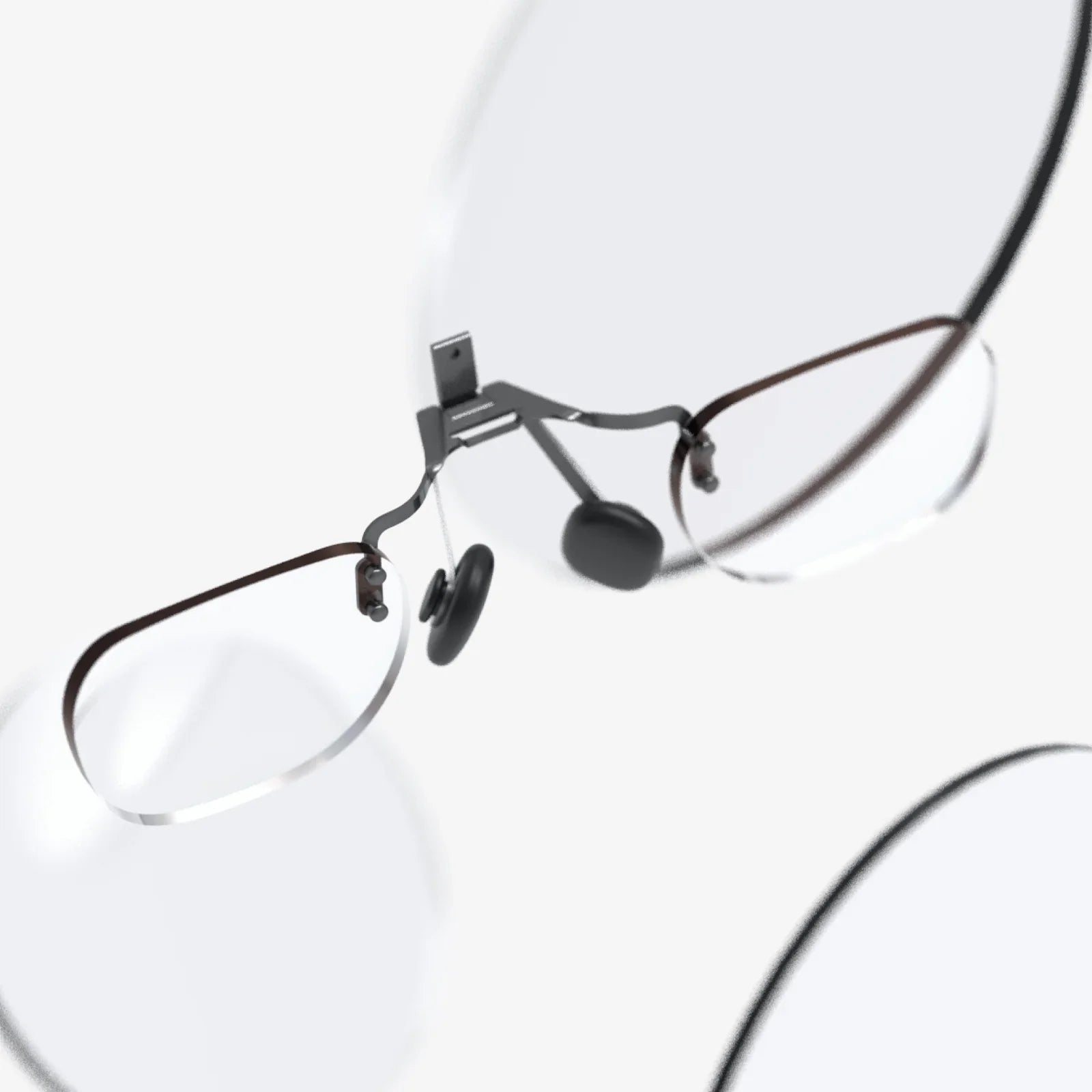
Imagine a device so powerful it can transport you to the summit of Mount Everest, overlay a life-sized digital dinosaur into your living room, or allow you to collaborate with colleagues as lifelike holograms from across the globe—all without leaving your home. This is not a glimpse into a distant science fiction future; it is the present reality made possible by a single, revolutionary piece of technology. The gateway to these blended realities, the key that unlocks this new dimension of human experience and digital interaction, is the hardware that makes it all tangible. The magic doesn't happen in the abstract; it happens through a wearable portal that sits on your head, connecting your perception to the digital ether. This is the foundational truth: XR is XR headset.
Demystifying the Acronym: What Exactly is XR?
Before we can fully appreciate the hardware, we must first understand the spectrum it enables. Extended Reality, or XR, is not a single, specific technology but rather an umbrella term that encompasses all combined real-and-virtual environments and human-machine interactions generated by computer technology. It's the entire continuum of experiences that blend the physical and digital worlds. This continuum is primarily made up of three distinct but related technologies:
Virtual Reality (VR): The Total Immersion
At one end of the spectrum lies Virtual Reality. VR is a fully digital, computer-generated simulation of an environment. When you engage with VR, you are completely immersed in a synthetic world, completely disconnected from your immediate physical surroundings. The goal of VR is to create a convincing, interactive simulation that replaces the real world, making you feel as if you are truly present in a spaceship, a deep-sea trench, or a fantasy landscape. It is an exercise in transportation, moving your consciousness to another place entirely.
Augmented Reality (AR): The Digital Overlay
On the opposite end of the spectrum is Augmented Reality. Unlike VR, AR does not seek to replace the real world but to supplement it. It superimposes digital information—images, text, 3D models, animations—onto your view of the physical environment. Think of a navigation arrow painted onto the road in front of you through your car's windshield, or a virtual piece of furniture you can place in your room to see how it fits before you buy. AR enhances your reality by adding a digital layer of context and interaction, blending the virtual and the real seamlessly.
Mixed Reality (MR): The Seamless Fusion
Occupying the crucial middle ground is Mixed Reality. MR is the most advanced and complex form of XR, where digital and physical objects not only coexist but can interact with each other in real-time. In a true MR experience, a virtual ball can bounce off your real-world table, and a digital character can sit on your physical sofa, casting a realistic shadow. This requires a sophisticated understanding of the geometry, lighting, and physics of the user's environment. MR is the pinnacle of the blend, creating a cohesive experience where the line between what is real and what is digital becomes almost indistinguishable.
The Hardware: The Engine of the Experience
This entire spectrum of experiences—from VR to AR to MR—remains a theoretical concept without the physical device to render it. This is the core of our premise: XR is XR headset. The headset is the engine, the translator, and the window. It is the indispensable hardware that takes digital code and transforms it into a perceptual reality. While software and content are vital, they are passengers in the car; the headset is the car itself.
The Core Components of an XR Headset
All XR headsets, regardless of their position on the reality spectrum, share a common set of core components that work in concert to create the illusion:
- Displays: High-resolution screens (one for each eye) are placed mere centimeters from the user's face. These are the canvases upon which the virtual world is painted. Their quality, resolution, refresh rate, and field of view are paramount to achieving visual fidelity and avoiding user discomfort or nausea.
- Lenses: Positioned between the displays and the user's eyes, specialized lenses (often Fresnel or pancake lenses) focus and reshape the light from the flat screens to create a stereoscopic 3D image that appears to exist in a vast space, not just on a tiny panel.
- Tracking Systems: This is the heart of spatial computing. A combination of internal and external sensors—including gyroscopes, accelerometers, magnetometers, and outward-facing cameras—constantly tracks the rotation and translation of the user's head. This ensures that when you turn your head, the virtual world responds instantly and accurately, maintaining the crucial illusion of presence.
- Processors and Compute Power:
Rendering complex, high-frame-rate 3D environments is incredibly computationally intensive. This processing can happen in one of two places: inside the headset itself (a standalone device) or on an external, more powerful computer or console to which the headset is tethered (a PC-connected device). The choice here represents a trade-off between mobility and raw graphical power.
- Controllers and Input Methods: To interact with the digital world, users need tools. These range from handheld motion-tracked controllers with buttons and joysticks to more advanced systems like hand-tracking cameras that use computer vision to see and interpret the user's bare hands, allowing for natural gestures like pinching, grabbing, and pointing.
- Audio Systems: Spatial audio is a critical, often overlooked, component of immersion. Advanced audio algorithms simulate how sound waves behave in a 3D space, so a virtual bee buzzing around your head will sound like it's moving from your left ear to your right, dramatically enhancing the sense of being "there."
Beyond Gaming: The Expansive Applications of XR
While entertainment and gaming were the initial driving forces, the applications for XR technology now extend into nearly every professional and personal domain. The headset is becoming a tool for productivity, connection, and advancement.
Revolutionizing Enterprise and Workforce Training
Industries are adopting XR for training simulations that are both incredibly effective and completely safe. Surgeons can practice complex procedures on virtual patients, mechanics can learn to repair new engine models without a physical engine present, and warehouse employees can learn safety protocols in a virtual replica of their workspace. This allows for risk-free practice, muscle memory development, and standardized training at scale.
Transforming Design and Prototyping
Architects, engineers, and designers are using XR to step inside their creations long before the first brick is laid or the first part is manufactured. An automotive design team can inspect a full-scale 3D model of a new car, walking around it and sitting in the virtual driver's seat to assess ergonomics and sightlines. This drastically reduces prototyping costs and accelerates the iterative design process.
Enhancing Remote Collaboration and Communication
XR headsets are poised to redefine the concept of a "meeting." Instead of a grid of faces on a flat screen, remote collaboration platforms in XR allow participants to join as avatars or holograms in a shared virtual space. They can interact with 3D models, write on virtual whiteboards, and communicate with body language, recreating the nuance and effectiveness of an in-person meeting from anywhere in the world.
Expanding Healthcare and Therapeutic Practices
The medical field is finding profound uses for XR. It is used for exposure therapy to help patients confront phobias in a controlled environment, for physical rehabilitation to make exercises more engaging, and for cognitive therapy for conditions like Alzheimer's. It also provides powerful tools for visualizing complex medical data, such as MRI scans, in an immersive 3D format.
The Future Horizon: Where is XR Headset Technology Going?
The current generation of headsets is impressive, but they are merely stepping stones. The future trajectory of this technology points toward devices that are more powerful, more comfortable, and more socially acceptable.
The Quest for Visual Fidelity: Retina-Resolution and Beyond
The "screen door effect," where users can perceive the gaps between pixels, is already fading in high-end devices. The next goal is displays with such high pixel density (often called "retina resolution") and dynamic range that the virtual image is visually indistinguishable from reality. This, combined with vastly expanded fields of view, will be the final step in achieving perfect visual immersion.
The Evolution of Form Factor: From Headsets to Eyewear
The ultimate goal for AR and MR is to condense the technology into a form factor that resembles everyday eyeglasses. This involves monumental breakthroughs in miniaturization of components, battery technology, and waveguide displays that can project light directly onto the retina. This shift is critical for all-day wear and mass consumer adoption beyond niche applications.
The Rise of Neural Interfaces and Haptics
Future interaction may move beyond handheld controllers. Research into haptic gloves that provide realistic touch feedback and even non-invasive neural interfaces that can interpret user intent directly from brain signals is underway. This could lead to control systems that are more intuitive and immersive than anything available today.
Navigating the Challenges: The Path to a Blended Future
The road to a ubiquitous XR future is not without its significant hurdles. Technical challenges like battery life, processing power, and display technology are being actively worked on. However, the larger challenges may be social and ethical.
The Privacy Imperative
An XR headset with always-on cameras and microphones is, by its nature, a powerful data collection device. It can map the geometry of your home, recognize faces, and record conversations. Establishing clear, transparent, and robust data privacy frameworks is not optional; it is essential for earning public trust. Users must have absolute control over their data.
Bridging the Digital Divide
There is a real risk that the transformative benefits of XR could create a new digital divide, separating those who can afford access to these new realities from those who cannot. Ensuring the technology becomes accessible and affordable will be crucial to its success as a unifying, rather than divisive, force.
Defining New Social Norms
As people begin to spend more time in virtual spaces, society will need to develop new etiquettes and norms. How do we interact with someone who is partially in the real world and partially in a virtual one? How do we prevent the technology from being used for manipulation or escapism at the expense of real-world connections? These are profound questions that we are only beginning to grapple with.
The promise of XR is a world where our digital and physical lives are no longer separate, competing realms but a harmonious and enhanced whole. It’s a vision of boundless creativity, effortless global connection, and solutions to problems we once thought were immutable. But this future is not built on code alone; it is built on a foundation of silicon, glass, and sensors. It is built on the device that serves as our lens, our conduit, and our passport. The software may dream, but the hardware makes it real. The potential is infinite, but it must be worn to be realized. This is the undeniable, transformative equation: the experience of extended reality is, and will always be, fundamentally dependent on the device you wear.
Share:
AR Glasses Price Range: A Comprehensive Guide to What You Get for Your Money
Human Computer Interaction Examples That Are Reshaping Our Digital World