


Imagine a world where the digital and the physical are no longer separate realms but a seamless continuum, where you can learn, work, create, and connect in ways previously confined to science fiction. This is the promise held within just two letters: XR. The quest to understand the XR meaning is more than a dive into tech jargon; it's a journey to the frontier of human-computer interaction, a peek into a future that is already beginning to unfold around us.
Deconstructing the Acronym: What Does XR Actually Mean?
At its core, XR stands for Extended Reality. It serves as an umbrella term that encompasses all combined real-and-virtual environments generated by computer technology and wearables. The "extension" refers to the technology's power to extend the reality we experience by either blending the virtual and real worlds or by creating a fully immersive, digital environment. It’s a catch-all phrase that acknowledges the spectrum of realities that exist between the completely physical and the entirely virtual.
Think of XR not as a single technology but as a spectrum. On one end, you have the reality you're experiencing right now. On the other, a completely computer-generated reality. XR covers every point in between. This conceptual model helps clarify the relationship between its core components: Virtual Reality (VR), Augmented Reality (AR), and Mixed Reality (MR). While often used interchangeably in casual conversation, each occupies a distinct and vital position on the XR continuum.
The Pillars of Extended Reality: VR, AR, and MR
To truly grasp the XR meaning, one must understand the unique characteristics of its constituent parts. They are the pillars upon which the entire concept of extended reality is built.
Virtual Reality (VR): Total Immersion
Virtual Reality represents the far end of the spectrum. It is a fully digital, computer-simulated environment that completely replaces the user's real-world surroundings. By wearing a head-mounted display (HMD) or headset, the user is visually and audibly transported into a synthetic world. Advanced systems may also include haptic feedback through controllers or suits, allowing users to "feel" and interact with virtual objects.
The key principle of VR is immersion. The goal is to create a sense of presence—the convincing feeling of being somewhere else. This is achieved by tracking the user's head and, often, hand movements, updating the perspective in the virtual world in real-time to match. VR is predominantly used for gaming and entertainment, but its applications have expanded dramatically into training simulations (for surgeons, pilots, and soldiers), therapeutic treatments (for phobias or PTSD), and virtual social spaces.
Augmented Reality (AR): Digital Overlays on the Physical World
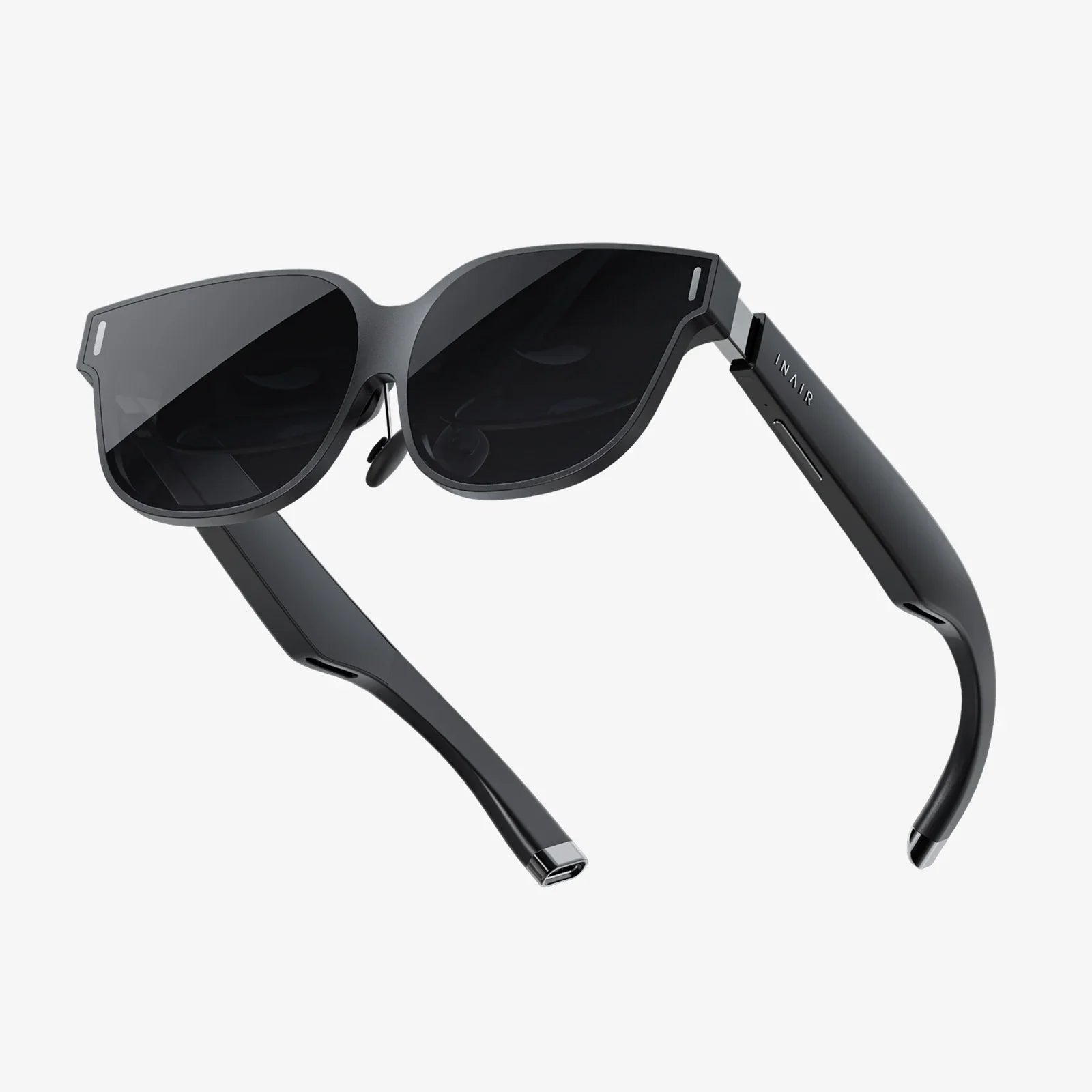
If VR replaces reality, Augmented Reality enhances it. AR overlays digital information—images, text, 3D models, animations—onto the user's view of the real world. Unlike VR, AR does not require a fully immersive headset. It can be experienced through smartphones, tablets, smart glasses, and even car windshields. The real world remains the primary backdrop, but it is augmented with contextual digital layers.
The magic of AR lies in its ability to provide information and interaction within the context of your immediate environment. Imagine pointing your phone at a historical monument and seeing a reconstruction of its past appear on your screen, or looking at a complex piece of machinery through smart glasses and seeing animated repair instructions overlaid onto the exact components you need to adjust. This blend of information and environment makes AR incredibly powerful for navigation, education, retail (trying on clothes or placing furniture in your home virtually), and industrial maintenance.
Mixed Reality (MR): The Seamless Blend
Mixed Reality is often considered the most advanced and nuanced point on the spectrum. It doesn't just overlay digital content onto the real world (like AR); it anchors that content to the physical environment and allows for real-time interaction between the digital and the physical. In MR, virtual objects can be occluded by real-world objects, respond to lighting conditions, and exist spatially as if they were truly present.
For example, an MR application could allow you to place a virtual television on your real wall. You could then walk around the room, and the TV would remain fixed in place, its size and perspective changing correctly as you move. If you were to stand between the virtual TV and your real couch, the TV would appear behind you. This requires sophisticated sensors and cameras to map and understand the geometry of the physical space in real-time. MR represents the next step in the evolution of interactive computing, where the line between what's real and what's digital becomes profoundly blurred.
The Technological Engine Room: How XR Works
The magic of XR doesn't happen by accident. It is powered by a sophisticated suite of technologies working in concert to create convincing and interactive experiences.
- Sensors and Cameras: These are the eyes of an XR device. They scan the surrounding environment, tracking surfaces, objects, and depth to understand the physical space. This is crucial for placing digital objects convincingly in AR and MR and for enabling six-degrees-of-freedom (6DoF) movement in VR.
- Processing Power: XR demands immense computational power to render high-fidelity 3D graphics in real-time, process sensor data, and run complex algorithms for tracking and spatial mapping. This processing can happen on a connected computer, a console, or increasingly, on the wearable device itself.
- Displays and Optics: High-resolution displays, often one for each eye to create stereoscopic 3D vision, are housed within complex optical systems that focus the image and widen the field of view to sell the illusion of immersion.
- Tracking Systems: Using a combination of internal sensors (like gyroscopes and accelerometers) and external cameras or lasers, XR systems precisely track the position and orientation of the user's head and hands, ensuring the digital world responds naturally to their movements.
- Haptic Feedback: To move beyond visual and auditory immersion, haptic technology provides tactile sensations, simulating the feel of touching a virtual object through vibrations, resistance, or force feedback.
Beyond Novelty: The Real-World Applications of XR
While gaming remains a popular entry point, the XR meaning extends far beyond entertainment. Its ability to simulate, visualize, and interact with data is transforming core industries.
Revolutionizing Education and Training
XR is creating unparalleled opportunities for experiential learning. Medical students can practice complex surgical procedures on virtual patients without risk. History students can take immersive walks through ancient civilizations. Mechanics can train on virtual engines, disassembling and reassembling them countless times with no cost for parts or wear-and-tear. This "learning by doing" in a safe, controlled, yet highly realistic environment dramatically improves knowledge retention and skill acquisition.
Transforming Enterprise and Manufacturing
In the industrial sector, XR is a powerhouse for efficiency. AR smart glasses can guide warehouse workers to items instantly, displaying picking instructions and confirming accuracy. Field service technicians can receive remote expert guidance, with an expert seeing what they see and annotating their field of view to highlight components and steps. Architects and engineers can walk clients through 3D holographic models of unbuilt structures, making changes in real-time. This reduces errors, saves time, and cuts down on travel costs.
Enhancing Healthcare and Therapy
The healthcare industry is leveraging XR for both treatment and training. Surgeons use AR to overlay CT scans and vital statistics directly onto their view of a patient during an operation. VR is proving highly effective in physical rehabilitation, turning repetitive exercises into engaging games, and in mental health, as a tool for exposure therapy to treat anxiety, phobias, and PTSD in a controlled and safe setting.
Redefining Retail and Remote Collaboration
XR is breaking down geographical barriers. Virtual meeting rooms in MR allow participants from across the globe to collaborate on 3D models as if they were in the same physical space. In retail, AR apps let customers visualize products in their own home before purchasing—from seeing how a new paint color looks on their wall to how a sofa fits in their living room. This builds consumer confidence and reduces return rates.
Navigating the Challenges and Ethical Considerations
The path of XR is not without its obstacles. For the technology to achieve widespread adoption, several significant hurdles must be overcome.
Technical Limitations: Issues like display resolution, field of view, latency (which can cause motion sickness), and the need for powerful, untethered computing remain active areas of development. Creating truly comfortable, all-day wearable devices that are socially acceptable and aesthetically pleasing is a key challenge.
Social and Psychological Impacts: As we spend more time in blended or virtual spaces, questions arise about the long-term effects on human psychology, social skills, and our relationship with the physical world. The concept of the "metaverse"—a persistent network of shared virtual spaces—brings with it concerns about addiction, identity, and new forms of social inequality.
Data Privacy and Security: XR devices are data collection powerhouses. They have the potential to record not just what you look at, but how you look at it, your physiological responses, the detailed layout of your home, and your most intimate interactions. This creates unprecedented privacy concerns. Who owns this data? How is it used and secured? Establishing robust ethical frameworks and regulations is paramount.
The Future is Extended: Where is XR Heading?
The evolution of XR points toward a future where the technology becomes increasingly invisible, contextual, and integrated into the fabric of daily life. We are moving toward lighter, more powerful glasses that will eventually resemble ordinary eyewear. The development of brain-computer interfaces could one day allow us to interact with XR environments through thought alone. Furthermore, the convergence of XR with Artificial Intelligence (AI) and 5G/6G connectivity will enable even more sophisticated, responsive, and shared experiences that feel truly magical and intuitive.
The ultimate expression of the XR meaning may be what some technologists call the "Mirrorworld" or the "Spatial Web"—a 1:1, real-time digital copy of the physical world, imbued with information, functionality, and intelligence. In this future, every person, place, and thing could have a digital twin, unlocking possibilities we are only beginning to imagine.
So, the next time you hear the term XR, see it not as a niche gadget for gamers, but as a fundamental shift in the paradigm of computing. It's a movement away from screens we look at and toward experiences we live inside. It’s the next great medium for human connection and the next great engine for human progress, promising to reshape everything from how we perform surgery to how we socialize, forever extending the very boundaries of our reality.
Share:
VR Head Mounted Display: A Portal to New Realities and Its Transformative Potential
AR Screen: The Invisible Canvas Revolutionizing Our Digital and Physical Worlds