


- by wangfred
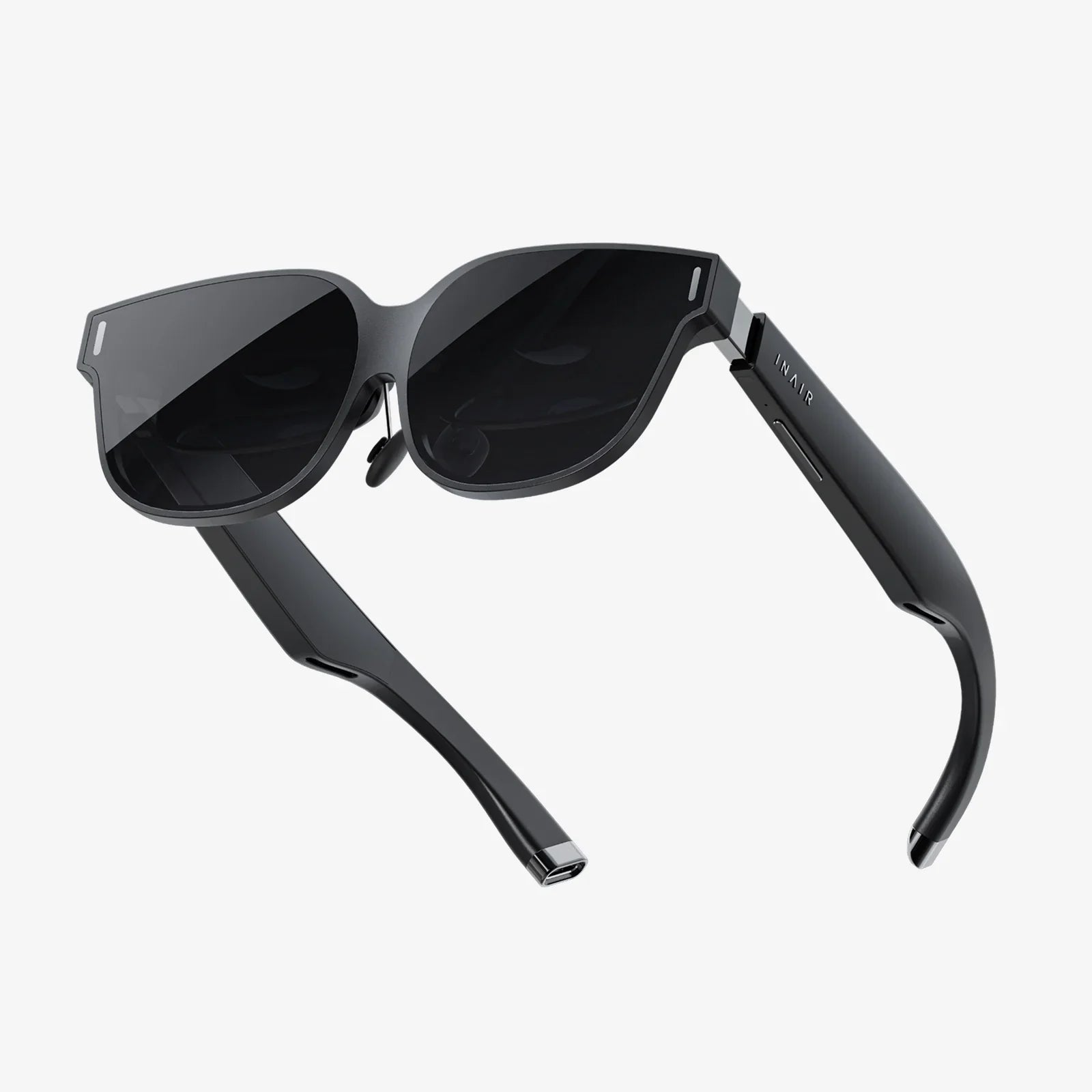
XR VR Glasses: The Ultimate Portal to Blended Realities and Immersive Futures
- by wangfred
Imagine a device that doesn’t just sit in your pocket but transports you, one that can overlay a universe of information onto your morning coffee or instantly teleport you to a concert on the other side of the planet with a friend. This is no longer the stuff of science fiction; it’s the emerging reality being built today, and it’s all happening through a single, sleek visor: XR VR glasses. These are not the clunky, tethered headsets of yesteryear but sophisticated, all-in-one portals designed to seamlessly blend our physical and digital existences, promising to revolutionize everything from how we work and learn to how we connect and play.
To understand XR VR glasses, one must first decode the acronym. XR, or Extended Reality, is the umbrella term encompassing all combined real-and-virtual environments. It’s a spectrum, with the fully real world at one end and a fully immersive virtual world at the other.
On one end of this spectrum lies Virtual Reality (VR). This is a complete digital immersion. When you don a headset for a VR experience, your physical surroundings are replaced entirely by a computer-generated environment. You are no longer in your living room; you are on the surface of Mars, in the cockpit of a starfighter, or standing on a virtual stage. The goal of VR is to create a sense of presence—the undeniable feeling of "being there."
On the opposite end is Augmented Reality (AR). Rather than replacing your world, AR enhances it. Digital elements—images, data, 3D models—are superimposed onto your view of the real world through a transparent lens or a camera feed. Think of navigation arrows painted onto the street in front of you or a digital dinosaur stomping through your local park. AR aims to augment your reality with contextual and helpful information.
Bridging the gap between these two is Mixed Reality (MR). This is where the magic of modern XR VR glasses truly shines. MR doesn’t just overlay digital content; it allows that content to interact with and be aware of the physical world. A virtual character can hide behind your real sofa. A digital chessboard can sit solidly on your actual coffee table, casting accurate shadows. This requires a sophisticated understanding of the user's environment, achieved through advanced sensors and computer vision.
Modern XR VR glasses are, in essence, MR-capable devices. They are designed to fluidly transition across this spectrum, offering immersive VR experiences, contextual AR overlays, and interactive MR applications from a single device. They are the Swiss Army knives of spatial computing.
The leap from early VR prototypes to today’s sophisticated glasses is a story of breathtaking technological convergence. Several key innovations had to mature simultaneously to make these devices possible.
The window to these new worlds is the display. Early systems suffered from the "screen door effect," where users could see the fine lines between pixels, shattering immersion. Modern XR VR glasses utilize high-resolution micro-OLED or Fast-Switch LCD panels, packed with pixels to create a crisp, clear image that is critical for both reading text in AR and believing in a VR world.
Equally important is the lens technology. Fresnel lenses were common but introduced visual artifacts like glare and god rays. Advanced pancake lenses are now becoming standard, using a folded optics design to create a much thinner and lighter form factor while providing a larger "sweet spot" and a clearer image across the entire field of view.
Gone are the days of external sensors or base stations cluttering your room. Contemporary XR VR glasses use inside-out tracking. A array of high-resolution cameras on the headset itself constantly scans the environment. By tracking the relative movement of fixed points in the room, the headset calculates its precise position and orientation in space with six degrees of freedom (6DoF)—meaning it can track your movement forward/back, up/down, left/right, and also your rotation pitch, yaw, and roll.
This camera array also performs spatial mapping. In real-time, it constructs a 3D mesh of your environment, identifying floors, walls, ceilings, furniture, and other objects. This digital twin of your room is what allows for those compelling MR interactions, enabling virtual objects to collide with reality and occlude realistically.
Perhaps the most critical feature for MR is high-fidelity color passthrough. The headset's cameras feed a live video feed of your surroundings to the internal displays. The quality of this feed is paramount. Low-resolution, grainy, or laggy passthrough makes AR experiences uncomfortable and unusable. The latest devices offer full-color, high-frame-rate passthrough that begins to feel like looking through a pair of sunglasses, making the blending of digital and physical elements feel natural and seamless.
Driving these high-resolution displays and complex computer vision algorithms requires serious processing power. Some devices are tethered to a powerful external computer, offering the highest fidelity experiences. However, the trend is decisively toward standalone functionality. These all-in-one headsets contain a mobile system-on-a-chip (SoC), similar to those in high-end smartphones but often optimized for the intense thermal and computational demands of XR.
This on-device processing is increasingly augmented by cloud computing. Complex rendering tasks or AI-driven interactions can be offloaded to remote servers, with the results streamed back to the headset, effectively allowing these lightweight glasses to tap into near-infinite computational power.
The true potential of XR VR glasses is revealed not in their specifications, but in their application. They are poised to disrupt and enhance nearly every facet of professional and personal life.
This is where XR is already making a significant economic impact. Companies are using these glasses for immersive training simulations that are both safer and more effective than traditional methods. A surgeon can practice a complex procedure on a virtual patient, a mechanic can learn to repair a new engine model with digital instructions overlaid onto the physical machinery, and a warehouse worker can have order-picking information visually guided directly to the correct bin. This reduces errors, cuts training costs, and improves retention.
XR VR glasses are dismantling the limitations of video conferencing. Instead of staring at a grid of faces on a screen, teams can meet in a shared virtual space. Colleagues from across the globe can stand around a 3D model of a new product design, manipulating it together as if it were physically present. Whiteboarding sessions become immersive, with ideas sketched in mid-air for all to see and interact with. This "spatial computing" approach to collaboration fosters a level of presence and understanding that flat screens cannot replicate, making remote work more connected and productive.
In education, XR glasses can turn abstract concepts into tangible experiences. Students can take a guided tour of ancient Rome, walk through a beating human heart, or conduct chemistry experiments with volatile virtual substances without any risk. This experiential learning leads to dramatically improved engagement and comprehension.
In healthcare, the applications are life-changing. Beyond training, therapists are using VR for exposure therapy to treat PTSD and phobias in controlled environments. Surgeons can use AR overlays during operations to display vital signs or MRI data directly in their field of view. XR can also be a powerful tool for pain management and rehabilitation, making physical therapy exercises more engaging.
On a personal level, XR offers profound new ways to connect. Social platforms in VR allow you to meet friends in virtual worlds, watch movies together in a private cinema, or simply hang out as expressive avatars that convey body language and nuance beyond a text message or emoji. It combats the isolation of physical distance with a new form of digital togetherness.
Entertainment is being completely reimagined. You are no longer just watching a movie; you can be inside it. Interactive storytelling puts you at the center of the narrative. Live events, from sports games to music concerts, can be attended virtually from the best seat in the house, with social features to share the experience with others.
For all their promise, the path to an XR-ubiquitous future is not without its significant hurdles and ethical questions.
Privacy and Data Security: These devices are data collection powerhouses. They have cameras and microphones that map the most intimate spaces of our lives: our homes. The data they collect—detailed 3D maps of our living rooms, our eye movements, our interactions—is incredibly sensitive. Robust, transparent policies on data ownership, usage, and security are non-negotiable. The industry must prioritize privacy-by-design to avoid a dystopian future of perpetual surveillance.
The Social and Psychological Impact: As these worlds become more compelling, what happens to our connection to physical reality? Will we see a rise in escapism? How do we prevent the digital divide from widening into an "immersion divide"? Furthermore, the concept of identity becomes fluid through avatars, raising questions about authenticity and behavior in virtual spaces. Establishing norms and safeguards for this new medium is a societal challenge we are only beginning to face.
Accessibility and the Hardware Hurdle: While improving, the hardware still has barriers. Achieving true all-day comfort, perfect visual clarity for all users, and solving complex challenges like simulating realistic haptic feedback are ongoing engineering battles. Furthermore, cost remains a significant factor for widespread consumer adoption, though enterprise adoption is driving innovation that will eventually trickle down.
The current generation of XR VR glasses feels revolutionary, but it is merely the foundation. The next decade will see exponential progress. We can expect form factors to shrink toward something resembling everyday eyewear, driven by advancements in holographic optics and laser beam scanning. Battery technology and computational efficiency will improve, enabling all-day use.
Most importantly, the user interface will evolve beyond controllers. The ultimate goal is a seamless, intuitive interface controlled by our eyes, voice, and hands. Neural interfaces, while far off for consumer use, hint at a future where we might manipulate digital objects by thought alone. The line between interacting with a computer and interacting with the world will blur into invisibility.
We are standing at the precipice of a fundamental shift in human-computer interaction, a move away from screens we look at and toward an environment we are in. XR VR glasses are the key that unlocks this spatial computing revolution, offering a glimpse into a future where our digital and physical lives are not separate realms, but a single, continuous, and enhanced experience.
The doorway to blended realities is now open, inviting us to step through and shape what lies on the other side. The next chapter of human experience is being written not on a page, but in the space all around us, waiting for you to put on a pair of glasses and see it for yourself.