


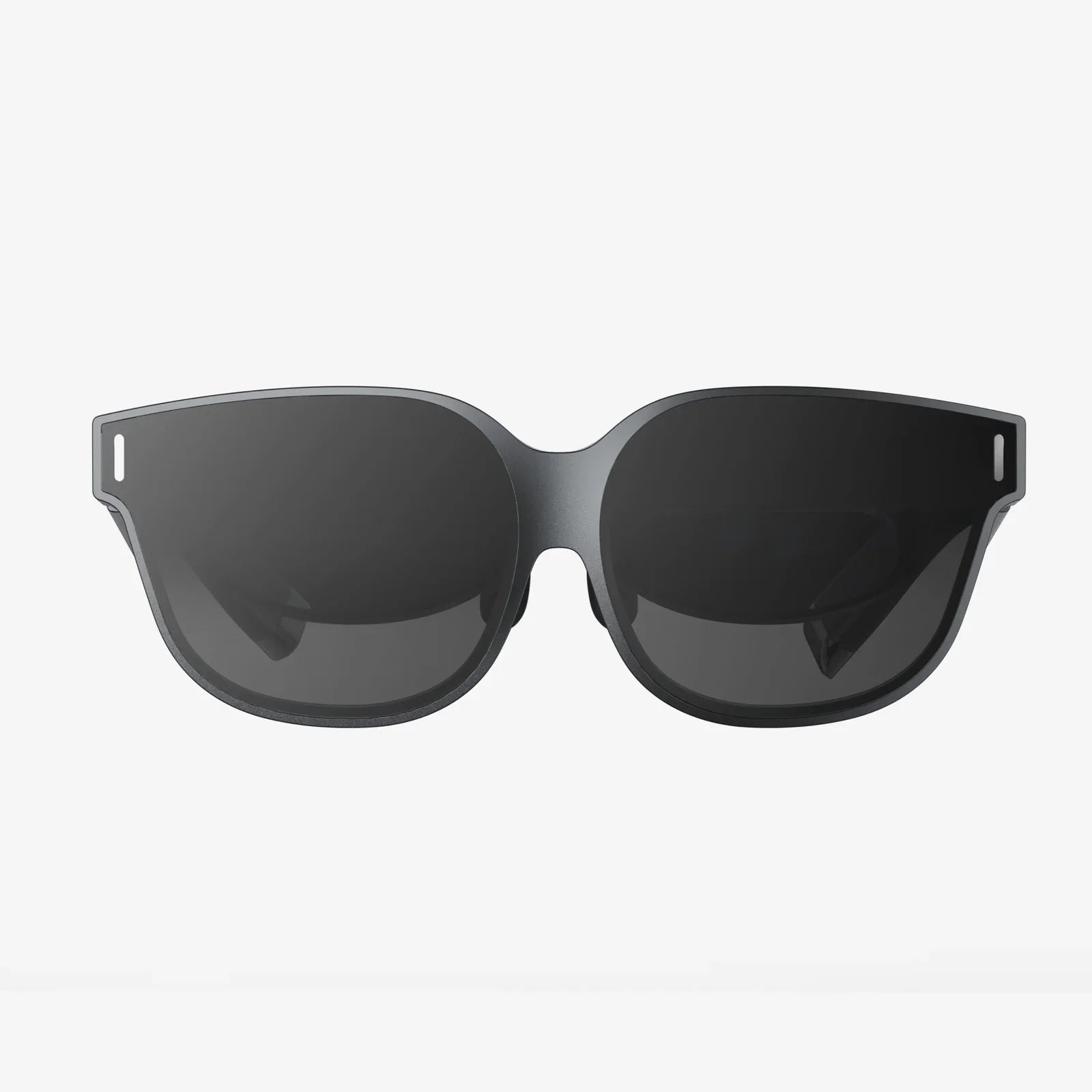
You’ve seen the headlines, watched the futuristic demos, and maybe even tried a pair on for yourself. The world of immersive technology is exploding, but the terminology can feel like a maze. Are you stepping into a fully virtual world or augmenting your own? The choice between XR and VR glasses is more than a semantic one—it’s a decision about how you want to interact with digital information and experience reality itself. This isn't just about the next generation of gaming; it's about the next generation of human-computer interaction, and understanding the distinction is your first step into that future.
Demystifying the Terminology: More Than Just Acronyms
Before we dive into the deep end, it's crucial to establish a clear lexicon. The terms XR, VR, AR, and MR are often used interchangeably, but they represent distinct points on a spectrum of immersion.
Virtual Reality (VR) Glasses: The Total Escape
Virtual Reality is the most well-known and established of the immersive technologies. VR glasses are fully occluding headsets designed to completely replace your field of vision with a computer-generated environment. When you wear a pair, you are visually and audibly transported to a digital world, whether it's a game level, a simulation, or a 360-degree video. The core principle of VR is immersion through isolation. By blocking out the physical world, it aims to create a powerful sense of "presence"—the convincing feeling that you are actually "there."
The hardware required for this is significant. High-resolution displays are placed mere centimeters from your eyes, and advanced lenses warp the image to fill your peripheral vision. Sophisticated tracking systems—using external sensors or built-in cameras—monitor the movement of your head and, often, your hands via controllers, allowing you to navigate and interact with the virtual space. This creates a compelling, and often intense, experience that is primarily focused on entertainment, training, and simulation.
Extended Reality (XR): The Umbrella Term for It All
Here’s where confusion often sets in. Extended Reality (XR) is not a type of headset you can buy off the shelf. Instead, it is an umbrella category that encompasses all combined real-and-virtual environments, including VR, Augmented Reality (AR), and Mixed Reality (MR). Think of XR as the entire universe of immersive tech, with VR and AR being specific planets within it.
Therefore, the phrase "XR glasses" is typically used to describe a more advanced class of headset that is capable of blending the real and the virtual. These are often referred to as MR (Mixed Reality) headsets. They achieve this through a combination of high-resolution passthrough cameras and powerful spatial mapping. Instead of opaque displays, they use cameras to feed a live video feed of your real environment to internal screens, and then seamlessly overlay digital objects onto that feed.
The key differentiator for true XR/MR glasses is the ability for digital content to interact with and understand the physical world. A virtual character can sit on your real couch. A digital TV can be "placed" on your real wall and stay there even if you leave the room and come back. This requires a deep understanding of the geometry and surfaces of your environment, a feat accomplished through advanced sensors, depth cameras, and computer vision algorithms.
The Core Divide: Immersion vs. Integration
The fundamental difference between dedicated VR glasses and advanced XR glasses boils down to their relationship with your reality.
- VR Glasses: Replace your reality. Their goal is to make you forget your physical surroundings. They are a portal to another place.
- XR Glasses: Enhance your reality. Their goal is to bring valuable digital information into your existing space. They are a layer of magic applied to the world you already live in.
This philosophical difference drives every aspect of their design, from the weight and form factor to the processing power and intended use cases.
Under the Hood: A Technical Showdown
The divergent goals of VR and XR necessitate different engineering approaches and hardware capabilities.
Display and Optics: To See or Not to See
VR glasses use opaque displays, primarily OLED or LCD, which offer deep blacks and vibrant colors crucial for creating believable worlds. The user sees nothing but the screen.
XR glasses, on the other hand, face a more complex challenge. They primarily use one of two methods:
- Optical See-Through (Traditional AR): Simpler, often glasses-like devices use transparent waveguides or holographic optical elements. Light from the real world passes through a lens, while a projector displays digital images onto that lens, superimposing them onto the user's view. This method can be lighter but often has issues with limited field of view and dim digital images.
- Video See-Through (Modern XR/MR): More advanced headsets use high-resolution cameras to capture the real world and display it on internal screens alongside digital objects. This allows for more vivid graphics and easier blending of realities but introduces challenges like latency (which can cause nausea) and the potential for a "screen door" effect if the passthrough video quality is low.
Tracking and Sensors: Mapping the World
Both types of headsets use Inside-Out tracking, using cameras on the headset itself to track its position in space. However, the requirements differ.
VR headsets need to track the headset and controllers relative to a virtual space. XR headsets must do that and perform environmental understanding. They need depth sensors (like LiDAR or time-of-flight cameras) to scan the room, identify surfaces (floors, walls, tables), and create a 3D mesh of the environment. This constant, real-time mapping is computationally intensive but is what allows virtual objects to be occluded by real furniture or to bounce convincingly on the floor.
Processing Power and Form Factor
The demanding task of processing high-fidelity passthrough video, running environmental understanding algorithms, and rendering complex 3D graphics requires immense processing power. This is why many advanced XR glasses are "tethered" to a powerful external computer or a dedicated processing puck, similar to high-end VR setups.
There is a strong push towards making all-in-one (standalone) devices for both categories. Standalone VR glasses have become the consumer norm, packing a mobile processor, battery, and all components into the headset. Standalone XR glasses are the bleeding edge, striving to pack that immense computational requirement into a sleek, wearable form factor, often with trade-offs in battery life and graphical fidelity.
A World of Applications: Where They Shine
The "better" technology depends entirely on the task at hand. Their strengths lie in completely different domains.
The Realm of Virtual Reality
- Gaming and Entertainment: This is VR's undisputed kingdom. The total immersion is perfect for losing yourself in another world, whether it's a thrilling shooter, a peaceful puzzle game, or a heart-pounding horror experience.
- Training and Simulation: From training surgeons without risk to a patient to preparing soldiers for combat missions or allowing architects to walk clients through unbuilt designs, VR provides a safe, controlled, and repeatable environment for high-stakes training.
- Therapy and Rehabilitation: VR is being used to treat phobias (like fear of heights or flying) through controlled exposure therapy. It's also used for physical rehab, turning exercises into engaging games.
The Realm of Extended Reality
- Remote Collaboration and Design: Imagine engineers from around the world examining a full-scale 3D model of a jet engine as if it were in the room with them. XR allows for natural collaboration where digital models are anchored in shared physical space.
- Industrial and Field Work: A technician repairing a complex machine can see schematics and instructions overlaid directly on the equipment. A warehouse worker can see navigational arrows on the floor leading them to the next item to pick.
- Spatial Computing: This is the ultimate vision for XR: replacing your multiple 2D screens (monitors, TVs, phones) with persistent, floating virtual windows. You could have your email, web browser, and video call pinned around your home office, accessible wherever you go.
The Future is a Spectrum, Not a Choice
The line between VR and XR is becoming increasingly blurred. Many modern VR headsets now include high-quality color passthrough cameras, effectively giving them the core functionality of an XR device. With a simple double-tap, a user can switch from a fully immersive VR game to an AR view of their room, perhaps to check their phone or take a drink without removing the headset.
This convergence suggests that the future headset won't be strictly "VR" or "XR." It will be a versatile spatial computer capable of sliding along the reality-virtuality continuum. The hardware will provide the capability, and the software or user will decide the level of immersion required for any given task.
The challenges ahead are significant. For XR to become ubiquitous, we need breakthroughs in battery technology, display miniaturization (like microLED), and more intuitive user interfaces beyond controllers—think hand tracking, eye tracking, and eventually brain-computer interfaces. Social acceptance and establishing norms for using this technology in public spaces remain a hurdle.
Yet, the trajectory is clear. These technologies are moving from niche novelties towards fundamental tools that will reshape how we work, learn, play, and connect. The dream of having information and experiences contextually relevant to our immediate surroundings is a powerful one. Whether you’re a gamer seeking the ultimate escape or a professional looking for the next leap in productivity, the evolution of these glasses means that the digital world is no longer confined to a rectangle in your pocket or on your desk—it’s beginning to spill out, interact with our lives, and change our perception of reality itself. The question is no longer if you will adopt this technology, but when, and for which slice of this exciting new reality you will use it first.
Share:
What Does AR Mean in Glasses Prescription? The Essential Guide to Anti-Reflective Coating
Major VR Headset Brands: A Deep Dive into the Titans Shaping Our Virtual Future