


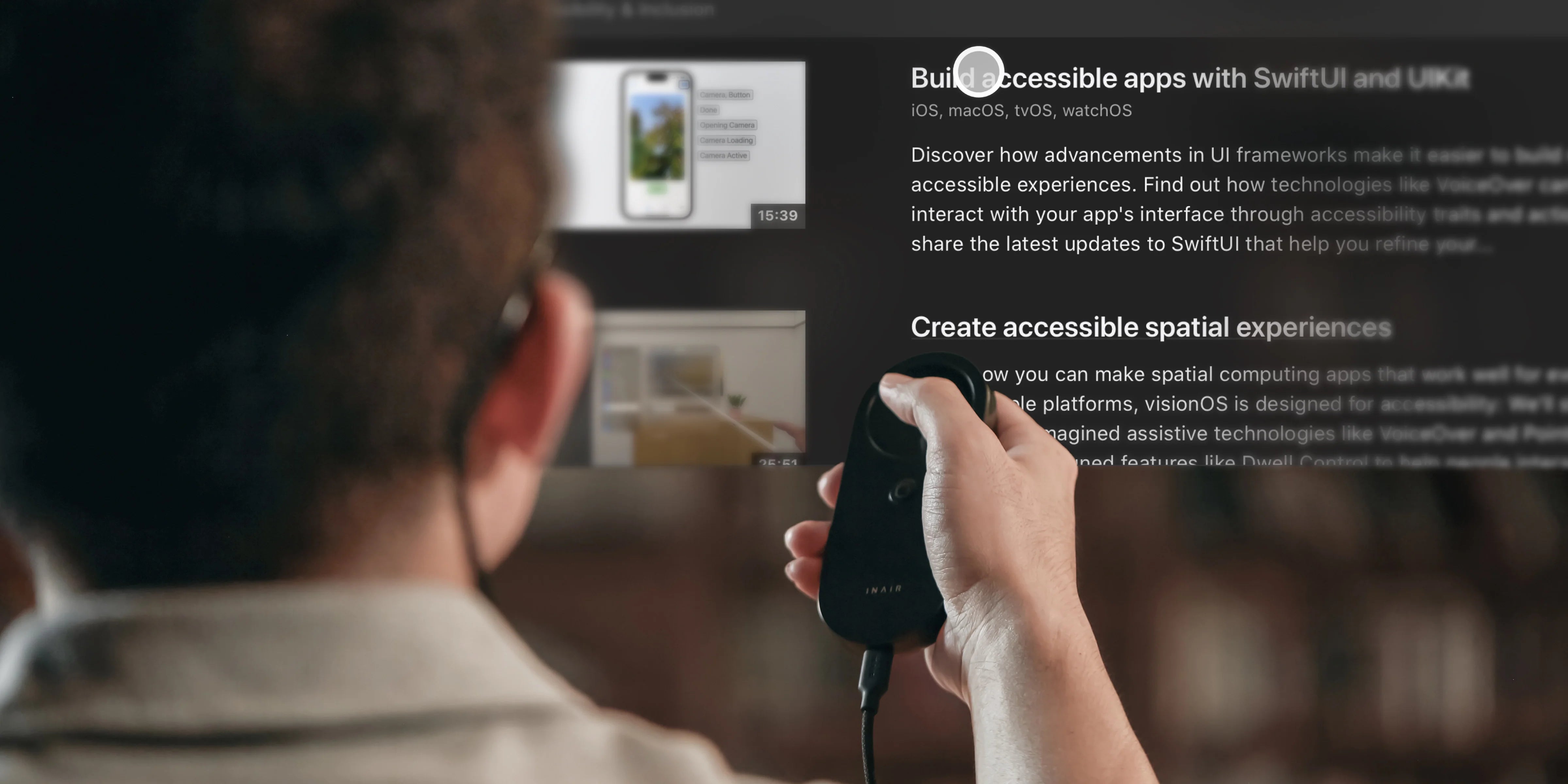
Your Next Computer Won’t Have a Screen (And That’s Amazing)
What on earth is a screenless computer, and why should I care?
For over half a century, our relationship with computers has been defined by a rectangle. A bezel. A glowing pane of glass that confines our digital worlds. Every innovation, from the hulking CRT to the wafer-thin OLED, has been an iteration on the same fundamental constraint. But what if the ultimate form factor for personal computing isn’t a better screen, but no screen at all? Envision a powerful computing engine, a veritable powerhouse of silicon, so compact it fits in your pocket—with no display whatsoever. Its visual output is beamed directly into your perception through elegant AR glasses. This is the screenless computer, and it’s not a gimmick; it’s the key to unlocking a future of radical portability, impeccable privacy, and a fundamentally more human way to interact with the digital universe.
Breaking the Bezel: Your World is the Canvas
We’ve been thinking inside the box for too long. Literally. Spatial computing shatters that box and throws the pieces away. Your workspace is no longer measured in diagonal inches but in the expanse of your environment. A legal document can hang, crisp and clear, next to your physical bookshelf. A video conference can feel like your colleagues are sitting across your actual kitchen table. A complex 3D model of a new product design can be rotated, examined, and manipulated with natural hand gestures, as if it were sitting on your desk. This transition is as profound and foundational as the leap from command-line interfaces to the graphical desktop. It’s a shift from looking at a tool to working within an environment you command. The potential for creativity, analysis, and collaboration is not just incrementally better—it’s categorically different.
The Unbeatable Alchemy: Pocket-Sized Power, Mind-Sized Display
The holy grail of personal tech has always been the marriage of raw power with ultimate portability. Laptops made a valiant attempt, but they are forever burdened by the physics of the screen—the weight, the bulk, the fragility, the battery drain. The screenless computer performs a brilliant piece of alchemy: it separates the “brain” from the “eyes.” You get the uncompromised performance of a desktop-class chipset in a device smaller than a wallet. Paired with it, you get a display system (the glasses) that can project a screen equivalent to 100 inches or more, with perfect privacy and stunning clarity. It’s the end of compromise. You are no longer forced to choose between power and portability; you simply have both. This convergence makes the very idea of a clamshell laptop feel instantly, irrevocably archaic—a relic of a two-dimensional past.
Embracing the Invisible Infrastructure
Some will hesitate, asking, “But where is it?” The beauty lies in its quiet discretion. The most powerful technologies often become invisible, weaving themselves into the fabric of our lives. The screenless computer doesn’t demand your attention on a desk; it waits patiently in your pocket or bag, ready to transform any space into a mission-control center at a moment’s notice. This is computing that serves you on your terms, unassuming yet omnipotent. It’s for the executive who needs a full financial dashboard during a commute, the student who turns a park bench into a research library, or the creative who finds inspiration under the open sky. This isn’t just the next product cycle; it’s the next logical chapter in our eternal quest to make technology adapt to human life, not the other way around.
Share:
Escape the Desk:Building Your Dream Mobile Office with AR
Goodbye, Tech Neck: How AR Creates a Healthier, Happier Workday