


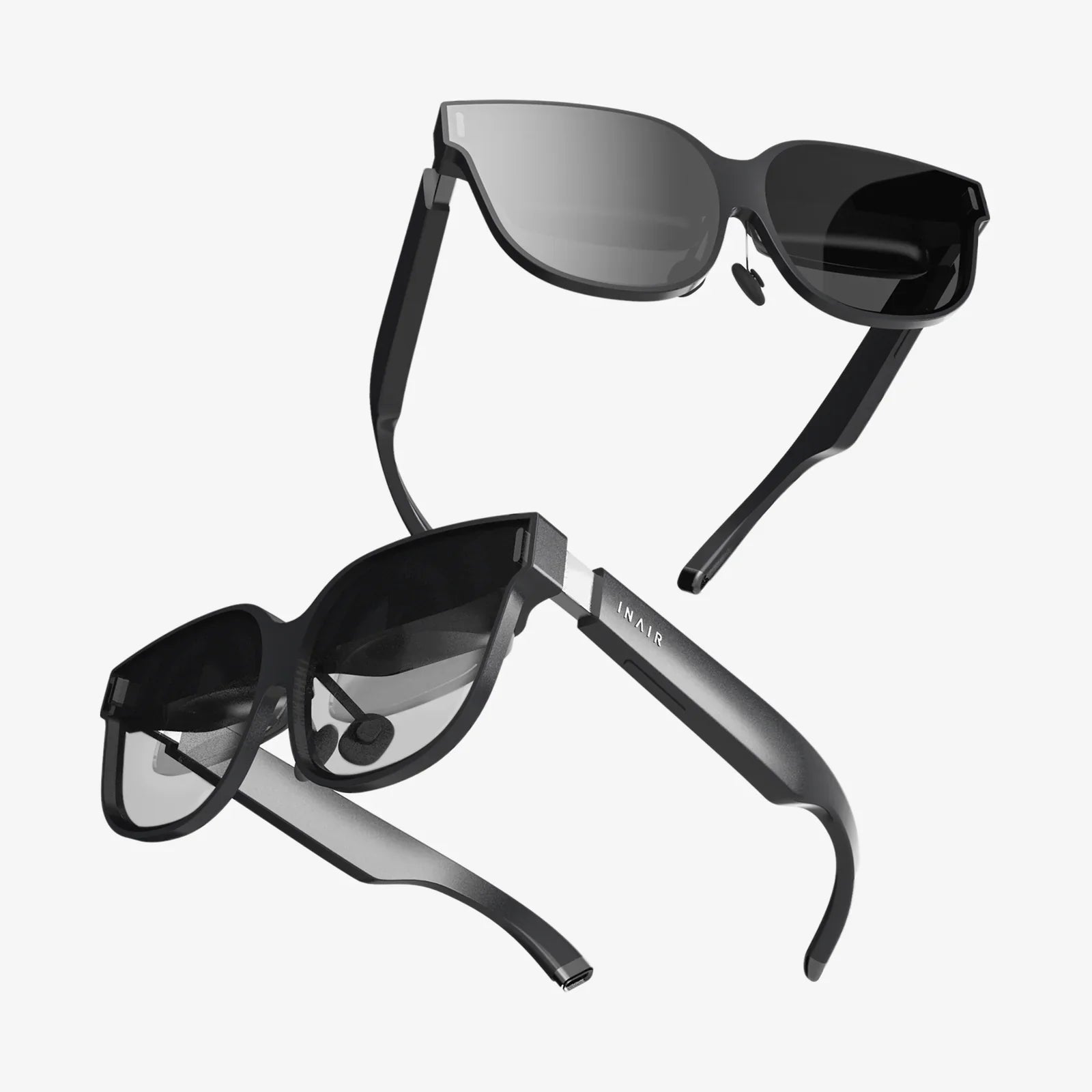
Imagine a world where the digital and the physical are no longer separate realms, but a single, enhanced layer of existence. Information doesn’t live on a screen you hold in your hand; it lives on the world itself, accessible with a glance, a gesture, or a simple voice command. This is the promise of Augmented Reality (AR), a technology that is rapidly moving from science fiction to an integral part of our daily lives and industries. It’s not about escaping reality but about making it richer, more informed, and profoundly more interactive. The potential is staggering, and we are only just beginning to scratch the surface of how this technology will redefine human experience.
1. Revolutionizing Retail and Try-Before-You-Buy Experiences
The days of buying furniture only to discover it doesn't fit your space or clashes horribly with your décor are numbered. AR is fundamentally changing the retail landscape by allowing consumers to visualize products in their own environment before making a purchase. Through a smartphone or tablet camera, users can see how a new sofa would look in their living room, accurately scaled to size. They can "try on" watches, sunglasses, or makeup, seeing a realistic overlay on their own reflection. This immersive shopping experience drastically reduces purchase hesitation and product returns, while simultaneously increasing consumer confidence and engagement. For the retail industry, it’s a powerful tool that bridges the gap between online convenience and in-store assurance.
2. Transforming Education and Interactive Learning
Textbooks are evolving from static pages of text and images into dynamic, interactive portals. AR brings learning to life. A student studying anatomy can point a device at a textbook diagram to see a beating 3D heart model, which they can rotate, zoom into, and explore layer by layer. History lessons can be transformed as students explore ancient Roman ruins rebuilt in stunning detail right in their classroom. Complex scientific concepts, from planetary orbits to molecular structures, become tangible and easier to comprehend. This hands-on, visual approach caters to diverse learning styles, fosters deeper engagement, and turns abstract information into memorable experiences, making education not just informative but truly captivating.
3. Empowering Complex Manufacturing and Assembly
On factory floors and in complex assembly environments, AR is becoming an indispensable tool for efficiency and accuracy. Technicians wearing AR smart glasses can see digital work instructions overlaid directly onto the physical machinery they are repairing. Animated arrows can show the exact sequence of assembly, torque values can be displayed next to bolts, and safety warnings can be highlighted in real-time. This eliminates constant referrals to paper manuals or computer screens, keeping hands free and focus undivided. For training new employees, it accelerates the learning curve and reduces errors, ensuring complex procedures are followed with precision, thereby enhancing safety and productivity.
4. Enhancing Navigation and Wayfinding
Navigation is moving beyond the flat, top-down view of traditional maps. AR navigation apps use your smartphone's camera to overlay directional arrows, street names, and points of interest onto a live view of the street in front of you. This makes navigating complex urban environments, large airports, or sprawling shopping malls incredibly intuitive. Instead of figuring out if you need to turn "left" or "right," you simply follow the floating arrow down the correct corridor or street. This technology is also being developed for use in vehicles, where driving directions can be projected onto the windshield, aligning with the real road, allowing drivers to keep their eyes on the path ahead while receiving guidance.
5. Pioneering Medical Training and Surgical Assistance
The medical field is embracing AR to enhance both training and actual surgical procedures. For training, medical students can practice surgeries on detailed, virtual holograms of human anatomy, gaining valuable experience without risk to patients. During live surgery, surgeons can wear AR headsets that project critical information—such as 3D reconstructions of a patient’s anatomy from CT or MRI scans—directly onto their field of view, superimposed onto the patient’s body. This can highlight tumor margins, show the precise location of blood vessels, or guide the placement of surgical instruments, improving accuracy and potentially reducing operation times. It provides a powerful, X-ray-like vision that was previously unimaginable.
6. Enabling Remote Assistance and Expert Collaboration
Geographical barriers are dissolving with AR-powered remote assistance. A field technician troubleshooting a malfunctioning piece of equipment can wear AR glasses and share their live point-of-view with an expert located thousands of miles away. The remote expert can then draw digital annotations—circles, arrows, notes—directly into the technician's field of vision, guiding them step-by-step through the repair process. This is like having a expert looking over your shoulder, providing instant guidance without the cost and delay of travel. This application is invaluable for maintaining critical infrastructure, training personnel in remote locations, and ensuring that expert knowledge is available anywhere, at any time.
7. Creating Immersive Entertainment and Gaming
The success of games that blend digital creatures with real-world environments demonstrated the mass-market appeal of AR for entertainment. This genre has expanded far beyond catching virtual monsters. AR allows for interactive storytelling where narratives unfold in your own home, board games where characters leap off the table, and music apps that let you play virtual instruments placed on your desk. Museums and historical sites are creating AR experiences that resurrect historical figures and events for visitors. This fusion of the real and virtual creates a uniquely personal and engaging form of entertainment that encourages physical movement and social interaction in shared spaces.
8. Preserving and Exploring Cultural Heritage
AR offers a powerful medium for preserving the past and making it accessible in the present. At historical sites, visitors can use their devices to see ancient ruins rebuilt to their former glory overlaid on the current remains. They can witness historical reenactments or see informational plaques come to life with videos and 3D models. Museums can use AR to unlock additional content from artifacts—a static pottery shard can be digitally restored to a complete vessel, or a painting can reveal the story behind its subjects. This technology makes cultural heritage more dynamic, educational, and engaging, allowing us to experience history rather than just observe its remnants.
9. Optimizing Design and Prototyping
In fields like architecture, automotive design, and industrial engineering, AR is revolutionizing the design and prototyping phase. Instead of relying solely on physical scale models or 3D renders on a screen, designers and clients can project and interact with life-size 3D holograms of their creations. An architect can walk a client through a full-scale model of a building before a single brick is laid, allowing for real-time changes to layouts, materials, and lighting. Automotive designers can examine a full-scale virtual prototype of a car's interior, assessing ergonomics and aesthetics in a real-world context. This streamlines the design process, improves collaboration, and saves significant resources by identifying and resolving issues early.
10. Reinforcing Workforce Training and Safety
From training electricians on high-voltage equipment to preparing soldiers for combat scenarios, AR provides a safe and controlled environment for high-stakes training. Trainees can practice dangerous procedures on realistic virtual simulations, receiving real-time feedback and guidance without any actual risk. Safety procedures can be rehearsed repeatedly until they become second nature. In active work environments, AR can provide constant safety overlays, highlighting hazardous areas, displaying emergency exit routes during a drill, or ensuring that a worker is wearing the correct personal protective equipment. This proactive use of AR has the potential to drastically reduce workplace accidents and improve preparedness.
The journey of Augmented Reality is just beginning. These ten uses are not a definitive endpoint but a glimpse into a foundational shift in how we compute, learn, work, and play. As the technology matures—becoming more seamless through advanced wearables like smart glasses and integrating with Artificial Intelligence and the Internet of Things—its applications will become even more pervasive and invisible. We are marching towards a future where contextual, digital information is woven into the very fabric of our perception, creating a smarter, safer, and infinitely more connected world. The boundary between what is real and what is digital will blur, not to obscure our reality, but to truly augment it, unlocking human potential in ways we are only starting to imagine.
Share:
Augmented Reality Cost: A Comprehensive Breakdown for Business Implementation
Can You Wear Glasses With VR? A Complete Guide to Virtual Reality Comfort