


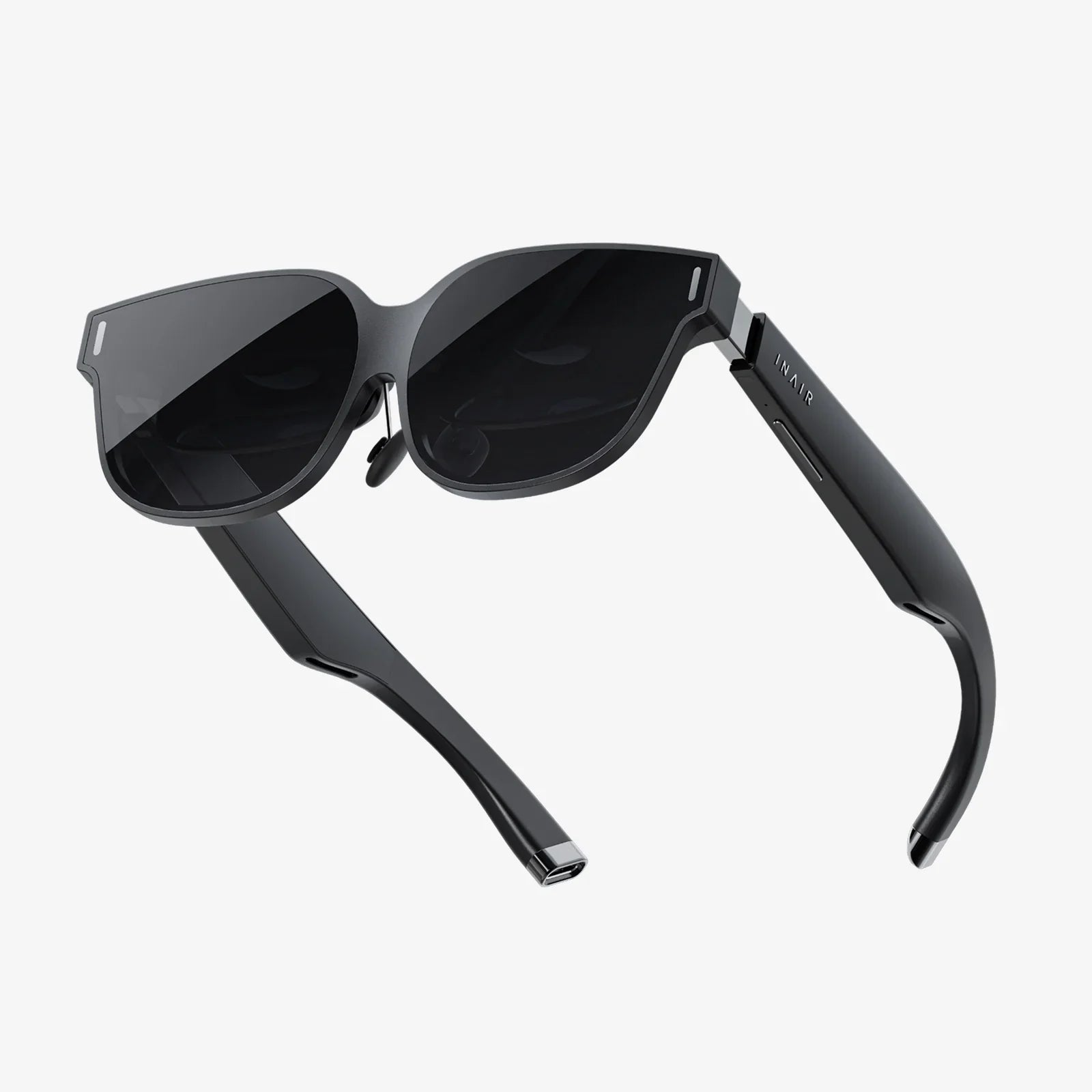
Imagine a world where digital information doesn't live on a screen in your hand but is seamlessly woven into the fabric of your reality. Directions float on the pavement ahead of you, a colleague's avatar helps you fix a complex engine thousands of miles away, and your favorite movie plays on a virtual big screen against your living room wall. This is the promise of Augmented Reality (AR) smart glasses, a technology poised to revolutionize how we work, play, and connect. The future is not just coming; it's about to be projected directly onto your retinas. This guide cuts through the hype to bring you the definitive list of the most compelling AR eyewear, helping you find the perfect pair to see the world anew.
The Dawn of a New Visual Era
The journey from clunky, experimental prototypes to sleek, sophisticated wearables has been remarkable. Early iterations were often burdened by limited field of view, short battery life, and a distinct lack of style. Today, the landscape is dramatically different. We are witnessing a convergence of powerful micro-displays, advanced waveguide optics, spatial audio, and miniaturized sensors, all packaged into forms that range from bold tech statements to near-indistinguishable-from-regular-eyewear designs. This evolution marks a shift from technology you tolerate to technology you genuinely want to wear.
Beyond the Hype: What AR Glasses Actually Do
At their core, AR smart glasses are wearable computers that project a digital overlay—images, text, videos, 3D models—onto the user's field of view. This is achieved through a combination of technologies:
- Optical Waveguides: Thin, transparent lenses that pipe light from micro-projectors into your eyes, allowing you to see digital content while still seeing the real world.
- Micro-OLED Displays: Tiny, incredibly bright and efficient screens that generate the crisp imagery.
- Spatial Sensors: Cameras, depth sensors, and inertial measurement units (IMUs) that map your environment and understand your head and hand movements, anchoring digital objects in physical space.
- Bone Conduction Audio: A technology that transmits sound through the bones of your skull, leaving your ears open to hear ambient noises for safety and awareness.
How to Choose Your Digital Companion
With a variety of options available, selecting the right pair depends heavily on your intended use. Key considerations include:
- Display Quality: Consider Field of View (FOV—how large the digital canvas is), resolution, and brightness (nits). A wider FOV is more immersive but often requires a larger form factor.
- Form Factor & Design: Are you looking for a standalone device or a companion that tethers to your phone or computer? Do you prioritize a discreet look or a feature-packed, modern design?
- Battery Life: This varies wildly, from a few hours of intensive use to all-day battery for simpler notifications. Many systems use a separate battery pack to keep the glasses themselves light.
- Interaction: How do you control the experience? Look for touchpads on the temples, voice commands, handheld controllers, or even innovative gesture recognition.
- Connectivity & Ecosystem: Ensure compatibility with your existing devices (iOS, Android, Windows) and check the available apps and software development kit (SDK) for developers.
The Leading Contenders in Augmented Vision
The current market offers a spectrum of devices, each with a unique approach to merging the digital and physical realms. Here is an overview of the standout categories and their representatives.
1. The All-in-One Powerhouse
This category represents the most advanced and immersive consumer-grade experiences available. These glasses are designed as full-fledged computers you wear on your face, offering a wide field of view and powerful, standalone processing. They are ideal for developers, enterprise users, and early adopters who want the most feature-complete experience without being tethered to another device. They often feature high-resolution passthrough cameras, allowing for both AR and VR experiences in a single headset.
2. The Stylish Mainstream Vision
This approach focuses on normalizing AR by prioritizing a familiar and fashionable form factor. The goal is to create glasses that people would be comfortable wearing every day, seamlessly integrating notifications, calls, music, and basic AR interactions into a design that looks like high-end sunglasses or prescription eyewear. They typically connect to a smartphone to handle the heavy computing, keeping the glasses themselves light, cool, and efficient.
3. The Dedicated Spatial Computing Display
This innovative category reimagines the glasses as a pure display peripheral. Instead of being a standalone computer, they act as a wearable monitor for your other devices. You can plug them into a compatible laptop, game console, or even a phone to enjoy a massive, private virtual screen floating in your vision. This makes them exceptionally compelling for productivity on the go, media consumption, and gaming, offering a giant screen experience that fits in your pocket.
4. The Enterprise & Industrial Specialist
While consumer glasses capture the imagination, some of the most robust and proven applications are in enterprise and industrial settings. Glasses in this category are built for durability, safety, and specific workflows. They are designed to withstand harsh environments like factory floors, warehouses, and field service operations. They empower workers with hands-free access to manuals, remote expert guidance, data visualization, and step-by-step instructions, dramatically improving efficiency and accuracy.
5. The Developer's Sandbox
The health of any tech ecosystem depends on a vibrant developer community. Several options are aimed primarily at creators, developers, and researchers. These kits provide powerful sensors and open software platforms for experimenting with AR applications, prototyping new interfaces, and pushing the boundaries of what's possible. They are the testbeds where the killer apps for the next generation of consumer glasses are being built.
6. The Niche Audio-Focused Innovator
Some devices take a unique path, focusing less on high-intensity visual overlays and more on contextual, audio-visual assistance. They employ a minimalist display that provides subtle but crucial information—translations, navigation cues, product information—paired with advanced audio technology. This creates a less obtrusive experience that feels more like a helpful assistant in your periphery rather than a screen in front of your eyes.
The Software That Brings the Magic to Life
Hardware is nothing without software. The operating systems and applications are what transform these glasses from curious gadgets into indispensable tools. We are seeing the emergence of dedicated spatial operating systems designed around the principles of AR, where apps are not confined to rectangles but exist as persistent objects in your environment. From 3D design tools and immersive training simulations to multiplayer games that transform your local park into a battlefield, the app ecosystem is the true measure of a platform's potential.
A Glimpse into the Crystal Ball: The Future of AR
The current generation is impressive, but it is merely a stepping stone. The future of AR glasses points toward even greater miniaturization, eventually converging with standard prescription eyewear. We can expect:
- True Holographic Displays: Technologies like holographic optics and laser beam scanning promise even brighter, more vivid images with perfect focus at any depth.
- Advanced AI Integration: On-device artificial intelligence will act as a true contextual assistant, anticipating your needs and providing information before you even ask.
- Neural Interfaces: Further into the future, we may move beyond voice and gesture to more direct brain-computer interfaces for effortless control.
- The Metaverse Gateway: AR glasses will become the primary portal for interacting with the persistent digital layer over our world, the much-discussed metaverse.
Addressing the Challenges: Privacy, Safety, and Society
As with any transformative technology, AR glasses bring important questions. The constant presence of cameras and sensors raises legitimate privacy concerns for both users and non-users. Societal norms around recording in public will need to evolve. Furthermore, safety is paramount; displaying information directly in a user's line of sight must be done responsibly to avoid dangerous distractions. Manufacturers and developers have a profound responsibility to build these considerations into the core of their products, ensuring that the augmented future is an ethical and beneficial one for all.
The race to perfect augmented reality eyewear is more than a tech competition; it's a fundamental reimagining of human-computer interaction. From the powerful standalone workhorses and the stylish everyday companions to the specialized industrial tools, each device on this list represents a unique vision of that future. They are the prototypes for the next great platform, one that promises to unlock new levels of creativity, productivity, and connection by finally breaking information free from the screen and letting it live all around us. The perfect pair for you is out there, waiting to open your eyes to a world of limitless possibility.
Share:
State of the Art Virtual Reality and Augmented Reality Knowhow Reshaping Our World
AR Glasses for Everyday Wear: The Invisible Revolution on Your Nose