


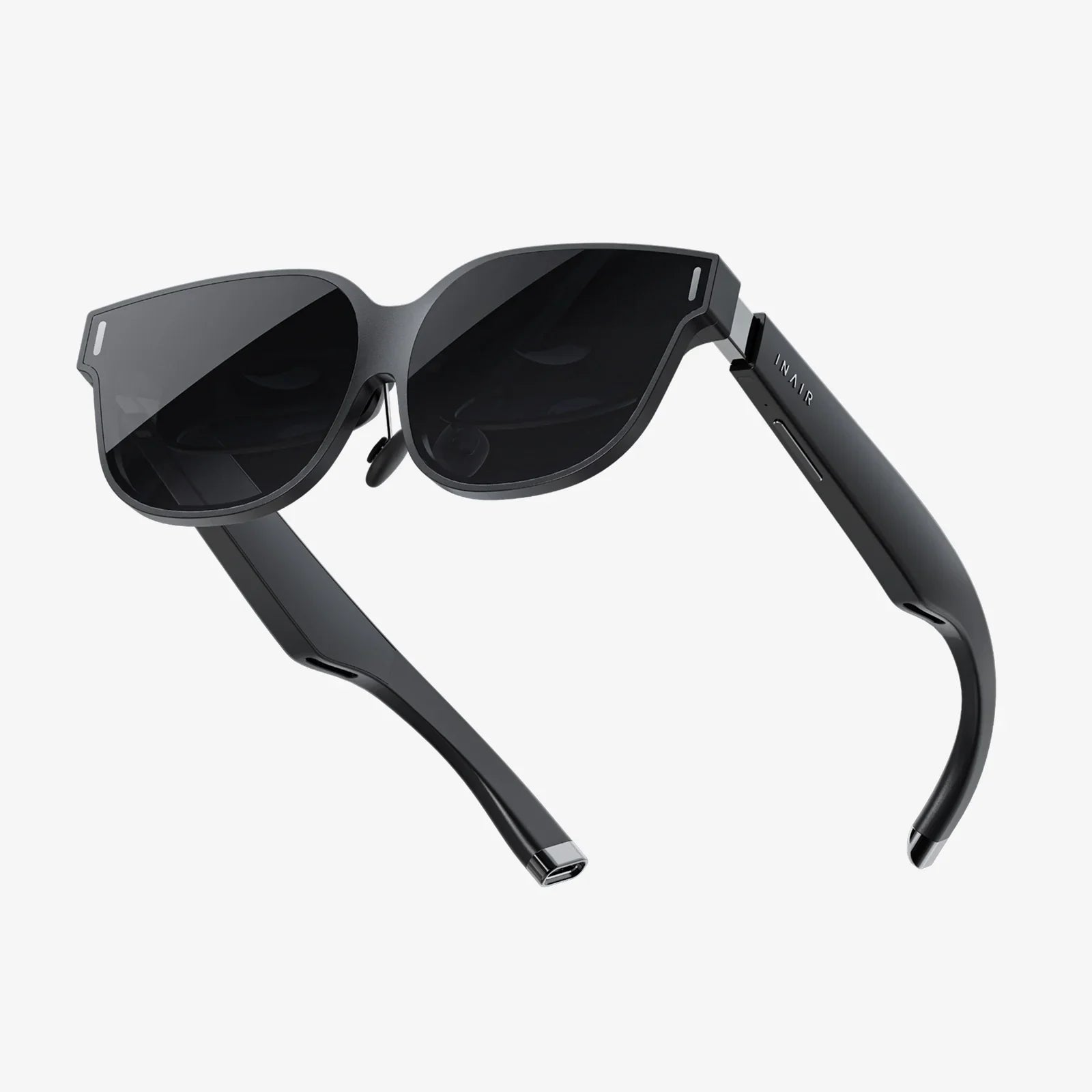
Imagine a world where the digital and physical realms don’t just coexist on a screen you hold in your hand, but are elegantly woven into the very fabric of your perception. A world where information, communication, and entertainment are not things you look down at, but layers of context that appear effortlessly around you. This is the promise of augmented reality, and for decades, it has felt like a distant sci-fi fantasy. But that future is closer than you think, and it’s arriving not on a clunky headset, but on a pair of sleek, unassuming glasses designed for everyday wear. The revolution won't be televised; it will be projected directly onto your retina.
From Science Fiction to Social Acceptance
The journey to creating AR glasses that people would actually want to wear all day has been a long and challenging one. Early iterations were often burdened by a fundamental conflict: the immense computational and optical power required for compelling AR experiences resulted in devices that were large, heavy, expensive, and socially awkward. They were engineering marvels, but fashion failures. They screamed "techie" in a world that demands subtlety and style.
The turning point lies in a paradigm shift. Instead of asking, "How can we pack the most powerful AR into a glasses form factor?" the industry's leading minds began asking, "What is the minimum viable, yet truly useful, AR experience that can be delivered in a package indistinguishable from classic eyewear?" This focus on wearability first has been the key to unlocking mainstream potential. The goal is no longer to create a blindingly obvious portal to the metaverse, but to design a subtle assistant that enhances your reality without replacing it.
The Anatomy of Invisible Augmentation
Creating this seamless experience requires breakthroughs across several technological fronts, all miniaturized to fit within the slim profile of standard eyeglass frames.
Optical Engine: Waveguides and Micro-LEDs
At the heart of any AR glasses is the optical engine—the system that generates digital images and superimposes them onto your view of the real world. The dominant technology enabling everyday wearables is the waveguide. Think of it as a flat, transparent piece of glass or plastic that acts like a highway for light. Tiny projectors, often using incredibly small and efficient Micro-LED displays, shoot light into the edge of the waveguide. This light travels through the material via internal reflection until it hits a diffractive or holographic optical element (DOE or HOE) that acts as an off-ramp, bending the light directly into your eye. The result is a bright, sharp digital image that appears to float in space several feet away, all while the lenses themselves remain clear and unobstructed.
Processing: On-Device vs. Companion Streaming
There are two primary models for handling the intense computation needed for AR. The first is on-device processing, where a miniaturized chipset within the glasses themselves handles everything from graphics rendering to computer vision tasks like tracking and object recognition. This offers maximum freedom and low latency but demands extreme power efficiency to avoid overheating and preserve battery life.
The second, and currently more prevalent model for sleek designs, is companion streaming. Here, the glasses act as a sophisticated wireless display, leveraging the processing power of a nearby device in your pocket. This smartphone or a dedicated compute puck handles the heavy lifting, wirelessly streaming the visual output to the glasses. This approach allows the glasses to be significantly lighter, cooler, and have longer battery life, trading some independence for a more comfortable form factor.
Battery Life: The All-Day Power Challenge
For glasses to be truly all-day companions, they cannot be tethered to a wall outlet. Battery technology remains a significant hurdle. Solutions are diverse, often involving a combination of a small cell within the glasses themselves—perhaps integrated into the thickest part of the temples—and a larger, pocketable battery pack for extended use. The ultimate goal is a pair of glasses that can last from morning to night on a single charge under typical usage patterns, a feat that requires relentless optimization of every component for power sipping, not guzzling.
Transforming the Mundane: Use Cases for Daily Life
The technology is impressive, but its value is defined by its utility. What can these glasses actually do for you throughout an average day?
Navigation and Contextual Awareness
Imagine walking through a new city. Instead of constantly glancing down at your phone, digital arrows and street names are painted onto the sidewalk in your field of view. You look at a restaurant, and its ratings and today's specials materialize next to the door. You glance at a historical monument, and a brief history lesson pops up. This is contextual awareness at its best, delivering information precisely when and where you need it, hands-free.
Communication Reimagined
Communication moves from active to passive and seamless. A call comes in, and a small, discreet notification appears in the corner of your vision; you accept it with a voice command or a subtle gesture, and the caller's video feed appears like a picture-in-picture in your world, allowing you to maintain eye contact with your surroundings while conversing. Real-time transcription of conversations could appear subtitled below the speaker, a powerful tool for those with hearing impairments or in loud environments.
Productivity and Multitasking
For the modern professional, AR glasses could be the ultimate productivity tool. Instructions for a complex repair could be overlaid directly onto the machinery. A virtual, pinable desktop could extend from your laptop screen, allowing you to arrange windows and apps across your physical space. During a presentation, your notes could be visible only to you, creating a more natural and engaging delivery. It’s a constant, personalized heads-up display for your life.
Accessibility and Assisted Living
The potential for positive impact in accessibility is profound. For individuals with low vision, the glasses could highlight obstacles, enhance contrast, and read text aloud from the environment. They could recognize faces and whisper a name into the user's ear via bone conduction audio, a boon for those with prosopagnosia (face blindness). For those navigating cognitive challenges, they could provide step-by-step visual guides for daily tasks, fostering greater independence.
The Hurdles on the Road to Ubiquity
Despite the exciting progress, significant challenges remain before these devices become as common as smartphones.
The Social Hurdle: The "Glasshole" Stigma
Previous attempts at always-on wearable tech famously faltered on the rocks of social awkwardness. The fear of being recorded or the simple oddity of someone interacting with a hidden interface created a social barrier. Overcoming this requires a combination of impeccable, transparent design that clearly indicates when recording is active (like a prominent LED light) and a cultural shift where glancing at a notification in your glasses becomes as socially acceptable as glancing at a smartwatch.
Privacy and the Ethical Minefield
This is arguably the most critical challenge. A device that sees what you see and hears what you hear is a privacy nightmare if not managed correctly. Robust data encryption, clear user controls over what data is collected and stored, and on-device processing for sensitive information (like facial recognition) are non-negotiable. Society will need to establish new norms and potentially new laws around acceptable use in public and private spaces to prevent a dystopian future of constant, unsolicited surveillance.
Finding the "Killer App"
While the use cases are numerous, the platform needs its defining application—the equivalent of the web browser for the PC or the social feed for the smartphone. It could be an ultra-immersive social network, a revolutionary navigation tool, or an enterprise application that dramatically improves workflow. Until that killer app emerges and demonstrates indispensable value, AR glasses risk remaining a curious novelty for early adopters.
A Glimpse into the Augmented Decade
The development of AR glasses is not a single event but a steady march of iteration. We are currently in the era of monochromatic, limited-field-of-view displays that handle notifications, basic navigation, and simple data overlays. The next five to ten years will see a rapid expansion of capabilities: full-color displays, wider fields of view that fill more of your vision, more advanced gesture and eye-tracking controls, and increasingly powerful on-device AI that understands your context and intentions without being explicitly told.
Eventually, the technology will mature to the point where a single device can replace your phone, your watch, your laptop screen, and your television, serving as your primary portal to both the digital and physical worlds. It will become the ultimate convergent device, simplifying our tech ecosystem rather than adding to it.
The true success of AR glasses for everyday wear will be measured by their absence. You won't put them on to "experience AR"; you'll put them on to see better, to navigate your day more efficiently, and to connect with people and information more naturally. The technology will fade into the background, and the enhanced human experience will move to the foreground. We are on the cusp of a fundamental shift in how we interact with information, and it’s all happening on a device that looks, feels, and fits like the most ordinary object in the world—a simple pair of glasses. The next time you see someone glancing at the empty space next to a building, they might not be daydreaming; they might be reading the menu, checking the weather, or following a path only they can see, seamlessly blending the digital dream with waking life.
Share:
11 Best AR Smart Glasses: The Ultimate Guide to the Future on Your Face
How Many Milliamps Are in AR Glasses: The Power Behind the Digital Lens