


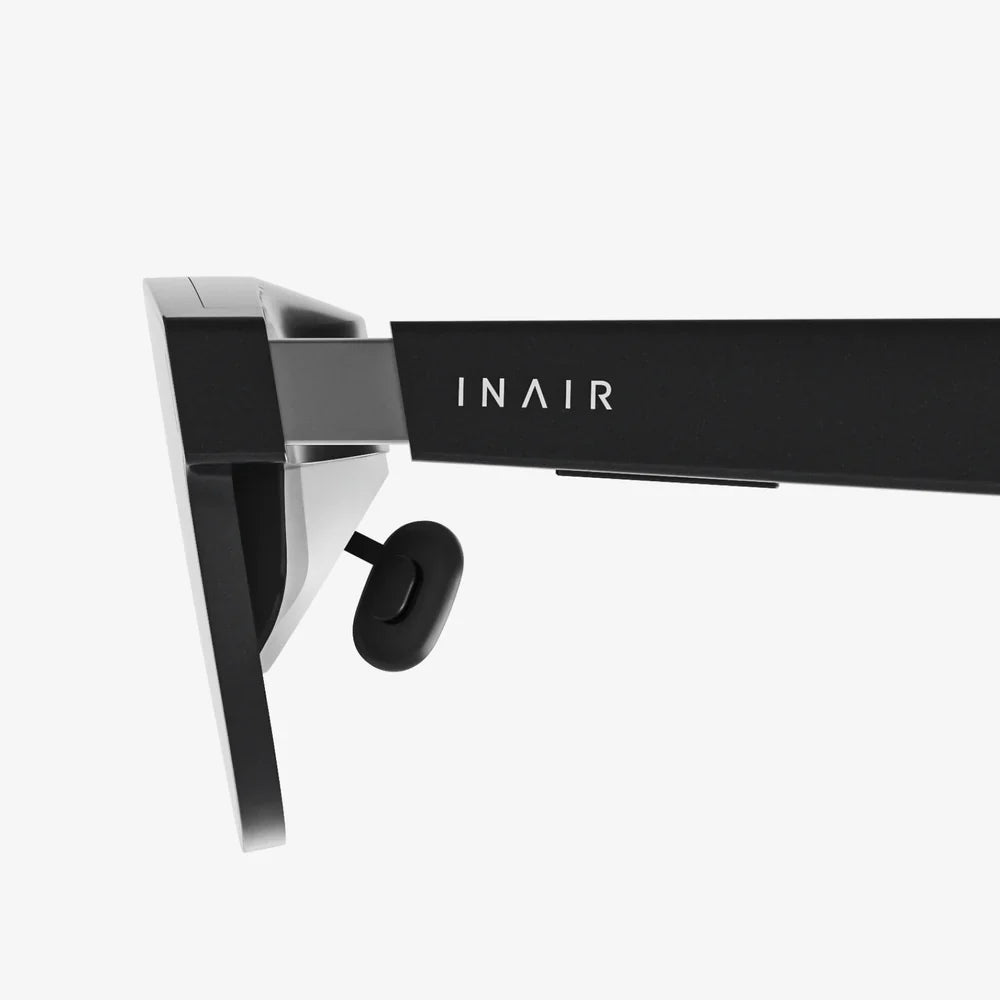
You slip on a pair of sleek frames, and suddenly the world is transformed—digital maps hover over city streets, virtual colleagues sit in your living room, and information layers seamlessly over reality. This is the promise of augmented reality glasses, a portal to a blended world of bits and atoms. But this magic has a very real, very physical cost: power. Every hologram, every tracked movement, every processed byte of data draws from a finite reservoir of energy, measured in the humble milliamp-hour. The question isn't just a technical curiosity; it's the key to unlocking whether your AR experience is a fleeting demo or an all-day companion. How many milliamps are in AR glasses? The answer defines the very boundaries of our digital future.
The Language of Power: Understanding Milliamps and Battery Capacity
Before we can delve into the specifics of AR glasses, we must first speak the language of electrical current. The milliampere (mA) is a unit of electric current, representing one-thousandth of an ampere. Think of electric current as the flow rate of water through a pipe; milliamps measure how fast that electrical "water" is flowing.
However, when discussing battery capacity, we are less concerned with the instantaneous flow and more with the total volume available. This is where the milliampere-hour (mAh) comes in. If current is the flow rate, then mAh is the total amount of water in the tank. A battery rated at 1000 mAh can theoretically supply a current of 1000 milliamps (1 amp) for one hour, 500 milliamps for two hours, or 100 milliamps for ten hours. It's a measure of energy storage.
For AR glasses, the mAh rating of their internal battery is the single most telling spec for estimating runtime. But it is not the whole story. Two devices with identical mAh batteries can have wildly different battery lives based on one critical factor: their power draw, or how many milliamps they consume per hour during operation.
Deconstructing the Power Drain: Where Do the Milliamps Go?
An AR glasses is a complex symphony of miniaturized technology. Every component is a tiny drain on the battery, and understanding where the milliamps go is essential to understanding the final capacity number. The power budget is typically dominated by four key subsystems:
1. The Display System: The Biggest Power Hog
The technology used to project images onto your retina is, by far, the most significant consumer of power. Different display technologies have vastly different power appetites, measured in milliamps of draw:
- Waveguide-Based Displays (e.g., Birdbath, Diffractive, Holographic): These systems use a combination of micro-displays (like OLEDoS or LCOS) and optical combiners to pipe light to the eye. They are relatively efficient but still require a bright micro-display to overcome optical losses, often drawing several hundred milliamps.
- MicroLED Displays: The holy grail for AR, MicroLED technology promises incredible brightness with extremely low power consumption, potentially drawing only tens of milliamps for comparable light output. However, it remains a nascent and expensive technology.
The brighter the display needs to be to be visible in ambient sunlight, the more milliamps it will consume. This is a fundamental trade-off between visibility and battery life.
2. The Processing Unit: The Brain's Thirst
AR is not just about displaying an image; it's about understanding the environment. This requires serious computational power for:
- Computer Vision: Processing camera feeds to track surfaces, objects, and gestures.
- Simultaneous Localization and Mapping (SLAM): Building a real-time 3D map of your surroundings.
- Rendering Graphics: Generating the complex 3D models and interfaces that are overlaid onto the world.
This processing can be handled in one of two ways, each with a different power profile:
- On-Device Processing: Glasses with a dedicated onboard processor (SoC) offer untethered freedom but pay a high price in milliamps. A powerful mobile processor can draw anywhere from 500 mA to over 1,000 mA under load, quickly depleting a small battery.
- Tethered/Companion Processing: Many designs offload the heavy computation to a nearby smartphone or a dedicated processing puck. This drastically reduces the power draw of the glasses themselves, perhaps to under 100 mA, as they primarily act as a display and sensor peripheral. The power cost is simply shifted to the companion device's larger battery.
3. Sensors and Cameras: The Eyes and Ears
A modern AR headset is packed with sensors: inertial measurement units (IMUs) for head tracking, depth sensors for mapping, ambient light sensors for display adjustment, and high-resolution cameras for video passthrough and recording. While each individual sensor may only draw a few milliamps, the collective drain of an entire array can add up to a significant portion of the power budget, especially when all data is being sampled at high frequencies.
4. Wireless Connectivity: Staying Connected
Bluetooth for connecting to a phone, Wi-Fi for streaming content, and ultra-wideband (UWB) for precise location tracking—all these radios are essential for a connected AR experience but are constant, low-level drains on the battery. Maintaining a stable connection can add a steady tens of milliamps to the overall consumption.
The Spectrum of AR: From Simple Notifications to Immersive Worlds
There is no single answer to "how many milliamps are in AR glasses" because the category itself is incredibly broad. The intended use case dictates the technology, which in turn dictates the power requirements and battery capacity.
Category 1: Notification-Centric Smart Glasses
These devices prioritize style and all-day wearability. They feature simple monochrome displays (often using LED or LCoS technology) that show basic notifications, step counts, or directions. Their processing needs are minimal, often handled by a low-power microcontroller.
Typical Power Profile: Very low power draw, often in the range of 20-50 mA during active use. This allows them to incorporate smaller batteries, often in the 100-200 mAh range, and still achieve multi-day battery life. The milliamps here are spent almost exclusively on the minimalist display and Bluetooth radio.
Category 2: Standalone AR Glasses
This is the true middle-ground—a self-contained wearable computer. They feature full-color, brighter displays (waveguide-based) and a integrated processor powerful enough for basic environmental tracking and app usage without a phone.
Typical Power Profile: This is where power consumption skyrockets. The combination of a power-hungry display and a mobile-class SoC can lead to an average active power draw between 500 mA and 1500 mA. To provide a usable 2-4 hours of runtime, these devices require much larger batteries, typically ranging from 1500 mAh to 3500 mAh—often housed in bulky temple tips or a front-mounted bar. The milliamps are fought over by the display and processor in a constant tug-of-war.
Category 3: Tethered AR Headsets (For Spatial Computing)
While not strictly "glasses" due to their larger form factor, these devices represent the high-end of AR and Mixed Reality. They are designed for immersive work and play, featuring ultra-high-resolution displays, extensive sensor arrays, and powerful computing—either from a wired connection to a powerful computer or a large internal battery.
Typical Power Profile: Power draw is extreme, often requiring a steady 2-4 amps (2000-4000 mA) or more. This is why they are either tethered to a wall outlet (via a computer) or use massive batteries with capacities of 6000 mAh to 10,000 mAh or more, resulting in a device that is heavy and has limited untethered runtime. In this category, the question of milliamps is answered by sheer force, prioritizing performance above all else.
The Eternal Balancing Act: Performance vs. Endurance
For AR glasses manufacturers, the design process is a relentless series of trade-offs centered on the milliamp. Every decision has a direct consequence for the user experience:
- Brightness vs. Battery Life: A brighter display is essential for outdoor use but can double or triple the power draw. Do they optimize for indoor clarity or outdoor usability?
- Processing Power vs. Freedom: Adding a faster processor enables more immersive experiences but guzzles milliamps, requiring a larger, heavier battery that compromises comfort and style.
- Feature Set vs. Form Factor: Every additional sensor, camera, or microphone is a drain on the system. Engineers must decide which features are worth their cost in milliamps and physical space within the frame.
The ultimate goal is to improve power efficiency—achieving more visual and computational output for fewer milliamps consumed. This is the driving force behind advancements in display technology like MicroLED, low-power AI accelerators, and more efficient software algorithms.
Beyond the Number: What mAh Really Means for You
So, when you see a product spec sheet listing a battery capacity, say, 1800 mAh, how do you translate that into real-world use? It's impossible to say without knowing the average power draw, but you can make educated guesses based on the device's category.
An 1800 mAh battery in a pair of notification glasses could mean weeks of use. That same battery in a pair of standalone AR glasses might only last 90 minutes to two hours under heavy use. This is why manufacturers often advertise "up to" a certain number of hours of video playback or typical use—a best-case scenario that depends heavily on display brightness and application usage.
The true metric to look for is energy density—how many milliamps can be packed into a gram of battery. Advancements in battery chemistry are slowly but steadily increasing this density, allowing for either longer runtimes in the same size or the same runtime in a smaller, lighter form factor.
Ultimately, the quest to answer "how many milliamps are in AR glasses" reveals a deeper truth about the technology itself. The number is not just a statistic; it is a direct reflection of ambition, a measure of the gap between the dream of seamless, all-day augmented reality and the physical constraints of lithium-ion chemistry and electrical engineering. The milliampere-hour is the currency of immersion, and every minute spent in a digitally-augmented world is purchased with a tiny fraction of it. As this currency grows more valuable through efficiency, the devices that spend it wisely will be the ones that finally move from our pockets and onto our faces, not as gadgets we use, but as lenses through which we see.
Share:
AR Glasses for Everyday Wear: The Invisible Revolution on Your Nose
Virtual Reality in Retail Market Size: A Deep Dive into the Billion-Dollar Transformation