


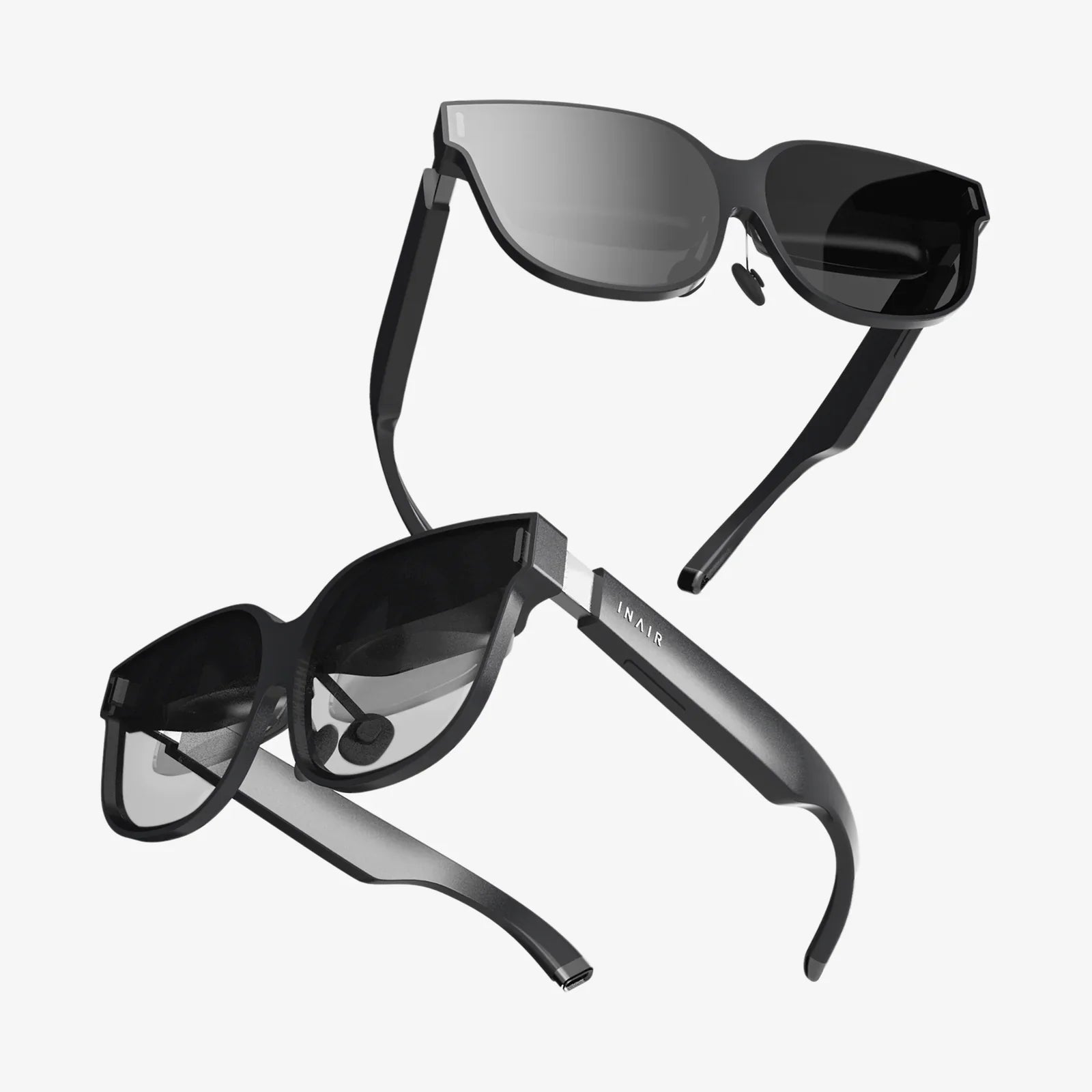
Imagine a world where the digital and physical realms are no longer separate, but seamlessly intertwined. A world where you can preview a new sofa in your living room before buying it, learn complex human anatomy by walking through a beating heart, or collaborate with a colleague on a holographic engine design from across the globe. This is not a distant sci-fi fantasy; it is the rapidly emerging reality being built by the convergence of sophisticated 3D and Augmented Reality (AR) platforms. This powerful synergy is poised to become the next fundamental layer of computing, fundamentally altering how we work, learn, shop, and connect.
The Confluence of Two Powerful Technologies
To understand the power of a unified platform, one must first appreciate the individual components. 3D technology involves the creation, manipulation, and rendering of objects within a three-dimensional digital space. For decades, this has been the domain of specialized industries like gaming, film visual effects, and architectural visualization. The process was often siloed, requiring expensive hardware, deep expertise, and proprietary software. Models were created to exist in a purely digital void.
Augmented Reality, on the other hand, is a technology that superimposes computer-generated content onto the user's view of the real world. Unlike Virtual Reality (VR), which creates a completely artificial environment, AR enhances reality by adding digital layers to it. The early iterations of AR were often simple marker-based experiences, but modern AR, powered by advanced computer vision and simultaneous localization and mapping (SLAM) algorithms, can understand and interact with complex environments without any predefined markers.
A 3D and AR platform represents the essential bridge between these two worlds. It is a comprehensive software environment that provides the tools, services, and infrastructure to efficiently create high-fidelity 3D content and then meaningfully deploy it into the user's physical space through AR. This eliminates the previous friction between content creation and content consumption, creating a seamless pipeline from the digital studio to the real world.
Core Components of a Modern 3D and AR Platform
The architecture of a robust platform is multifaceted, designed to cater to both creators and end-users. Key components include:
- 3D Asset Creation and Management: Tools for modeling, sculpting, texturing, and animating 3D objects. Crucially, this includes powerful optimization features to ensure complex models can run smoothly on consumer-grade devices, often through automated retopology and level-of-detail (LOD) generation.
- Robust Tracking and Spatial Mapping: The platform's engine must be capable of accurately understanding the physical environment. This goes beyond simple horizontal plane detection to include recognition of objects (like a chair or a table), understanding of lighting conditions for realistic shading, and persistent alignment so digital content stays locked in place.
- Cross-Device Deployment: A key value proposition is the ability to create once and deploy everywhere. The platform must support a wide array of devices—from smartphones and tablets to advanced AR glasses—abstracting away the hardware complexities for the developer.
- Cloud Services and Persistence: For shared and persistent experiences, cloud anchors allow multiple users to see and interact with the same digital object in the same physical location simultaneously. This is the foundation for collaborative AR applications.
- User Interaction Framework: Intuitive methods for users to interact with AR content, such as gesture recognition, voice commands, and touch controls, are built into the platform's core SDKs.
Revolutionizing Retail and E-Commerce
Perhaps the most immediate and impactful application of 3D and AR platforms is in the world of commerce. The "try before you buy" dilemma has long been the Achilles' heel of online shopping. These platforms are solving it in spectacular fashion.
Shoppers can now use their smartphone cameras to place true-to-scale 3D models of furniture, lighting, and decor directly into their homes. They can walk around a virtual sofa, check if it fits the space, and see how the color and material look under their own lighting. This drastically reduces purchase hesitation and, consequently, return rates. The fashion industry is leveraging AR for virtual try-ons for clothes, sunglasses, and makeup, while automotive companies are enabling customers to configure their dream car and then project a life-sized model into their driveway. This immersive product visualization is transforming browsing into an engaging, confident, and entertaining experience, closing the experiential gap between online and physical retail.
Transforming Education and Training
The educational potential of immersing learners within a subject is boundless. 3D and AR platforms are moving learning beyond static textbooks and videos into interactive, spatial experiences. Medical students can dissect virtual cadavers or explore intricate anatomical structures layered over their own bodies. History classes can walk through digitally reconstructed ancient ruins, watching historical events unfold around them. Mechanics-in-training can practice complex repair procedures on interactive 3D models of machinery, receiving guidance overlaid directly onto the components.
This type of experiential learning dramatically improves knowledge retention and understanding of spatial relationships and complex systems. It provides a safe, cost-effective, and infinitely repeatable environment for training in high-stakes fields like surgery, aircraft maintenance, and heavy machinery operation, where mistakes in the real world can have severe consequences.
Empowering Enterprise and Industrial Design
In the industrial sector, 3D and AR platforms are driving the fourth industrial revolution, or Industry 4.0. They are becoming critical tools for design, manufacturing, and maintenance. Designers and engineers can collaborate in real-time on life-sized 3D prototypes, making iterative changes and assessing ergonomics and aesthetics without the cost and time of physical prototyping.
On the factory floor, technicians wearing AR glasses can see digital work instructions overlaid directly onto the machinery they are assembling or repairing. They can visualize internal components, access real-time data streams, and connect with remote experts who can annotate their field of view to provide guidance. This "see-what-I-see" remote assistance reduces downtime, minimizes errors, and empowers frontline workers with instant expertise. Furthermore, architects and construction managers can walk through building plans at full scale on an empty construction site, identifying potential design clashes and planning workflows before a single brick is laid.
The Creative and Social Metaverse
The concept of the metaverse—a persistent network of shared 3D virtual spaces—is intrinsically linked to the evolution of 3D and AR platforms. While much of the current discourse focuses on fully virtual worlds accessed through VR, the most accessible and pervasive entry point to the metaverse will likely be through AR, blending our digital and physical social lives.
These platforms provide the foundational tools for creators to build immersive experiences that exist in our world. Imagine attending a concert where a beloved animated band performs on your coffee table, or playing a tabletop game where the board and pieces come to life with dynamic animations and effects. Social media is poised to evolve from flat feeds into shared AR experiences where friends can leave virtual notes, drawings, or memories geotagged to specific locations for others to discover. This shifts content consumption from a solitary screen-based activity to a shared, spatial, and context-aware interaction with the environment.
Overcoming the Challenges to Mainstream Adoption
Despite the immense potential, several hurdles remain before these platforms become ubiquitous. Creating high-quality 3D content has traditionally been resource-intensive. However, platforms are combating this with photogrammetry services (creating 3D models from photographs) and AI-powered tools that can automatically generate 3D assets from 2D images, dramatically lowering the barrier to entry.
Hardware limitations, particularly battery life and thermal performance on mobile devices when running complex AR experiences, are a constant challenge. The eventual widespread adoption of comfortable, socially acceptable, and powerful AR glasses with all-day battery life is seen as the key to unlocking persistent AR. Furthermore, establishing universal standards for the 3D web (such as glTF) is crucial for ensuring interoperability and preventing a future of walled-garden experiences where content is locked to specific platforms.
A Glimpse into the Future
The trajectory of 3D and AR platforms points toward a future where they become as fundamental to digital interaction as the web browser is today. We are moving towards a world of ambient computing, where digital information is contextually presented within our environment, available when we need it and invisible when we don't.
Advancements in AI will supercharge these platforms, enabling them to not just understand the geometry of a space but its semantics—knowing the difference between a wall intended for art and a window intended for a view. The line between creator and consumer will continue to blur, with intuitive tools allowing anyone to sculpt, place, and share their own AR creations. As the infrastructure matures and 5G/6G networks reduce latency, complex, shared, and persistent AR worlds will become commonplace, fundamentally reshaping urban planning, navigation, and live events.
The screen, as we know it, is beginning to fade. In its place, a new canvas is emerging—one that encompasses the world around us. 3D and AR platforms are the brushes and paints for this new era, empowering a generation of creators and businesses to build upon reality itself, unlocking a dimension of interaction that promises to be more intuitive, more impactful, and more human than anything we have experienced before. The future isn't just on its way; it's already being layered over the present, waiting for you to look up and see it.
Share:
Comparing Resolution Quality of AR Headsets: The Ultimate Guide to Visual Fidelity
Comparing Resolution Quality of AR Headsets: The Ultimate Guide to Visual Fidelity