


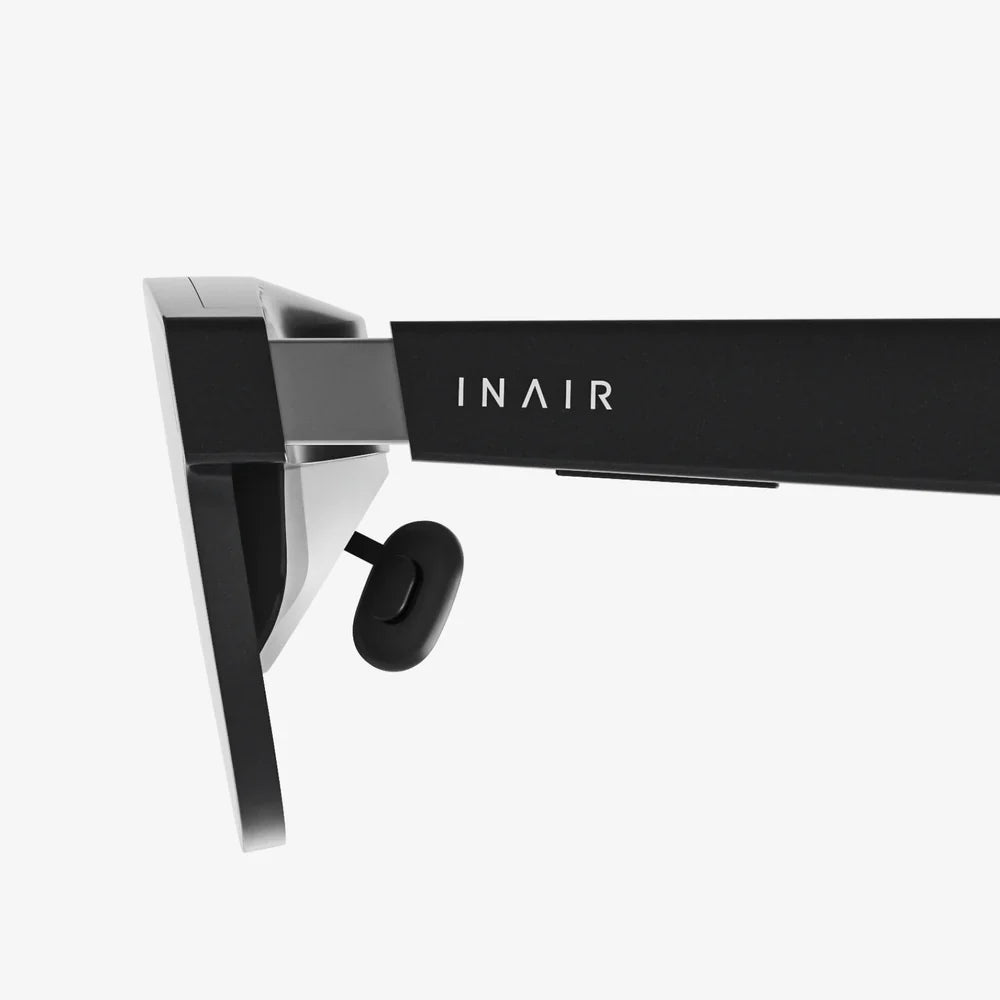
- by wangfred
3D Display Technology The Next Evolutionary Leap in Visual Experience
- by wangfred
Imagine a world where digital content leaps out of the screen, not as a flat image, but as a tangible, three-dimensional entity you can almost reach out and touch. This is no longer the stuff of science fiction; it is the rapidly evolving reality of 3D display technology, a field poised to fundamentally redefine our visual interaction with the digital universe. The journey from flickering stereoscopic images to sophisticated, glasses-free volumetric displays represents one of the most thrilling frontiers in modern engineering and design, promising to dissolve the final barrier between the pixel and the physical.
The human quest for visual depth perception is centuries old. The stereoscope, invented in the 1830s, was the first device to convincingly trick the brain into seeing a single 3D image from two slightly offset two-dimensional pictures. This principle of stereoscopy laid the foundational stone for all subsequent 3D technology. For over a century, this was the dominant paradigm, finding its way into photography, cinema, and eventually, early television experiments. However, these systems universally relied on an external apparatus—typically specialized glasses using color filters (anaglyph) or polarized lenses—to deliver a different image to each eye. This dependency on eyewear was a significant barrier to mainstream adoption, often seen as cumbersome and gimmicky.
The digital revolution of the late 20th and early 21st centuries provided the necessary computational firepower to move beyond simple stereoscopy. The development of autostereoscopic displays, which generate 3D effects viewable with the naked eye, marked a critical turning point. Early versions often used a lenticular lens sheet or a parallax barrier overlay on a standard LCD screen to direct different images to the left and right eyes depending on the viewer's position. While a massive leap forward, these first-generation autostereoscopic displays were plagued by limited viewing angles, low resolution, and a requirement for the viewer to be in a specific "sweet spot" to experience the effect, often leading to visual fatigue and a less-than-ideal user experience.
At its heart, all 3D display technology exploits the key mechanism of human depth perception: binocular disparity. Our two eyes are spaced apart, so each receives a slightly different view of the world. The brain seamlessly fuses these two distinct 2D images into a single perception with depth and volume. Modern 3D displays artificially recreate this phenomenon by presenting unique imagery to each eye.
The technological approaches to achieving this have diversified and become highly sophisticated:
While consumer entertainment is the most visible application, the transformative power of 3D display technology is perhaps even more profound across various professional and medical fields.
Despite incredible progress, significant hurdles remain before glasses-free 3D becomes a ubiquitous living room technology. The quest for the perfect display involves navigating a complex trade-off between several key factors.
Resolution and the "Resolution Tax": On a standard 2D display, every pixel is dedicated to a single image. In most autostereoscopic displays, the available pixels must be divided between the multiple views (often 8, 16, or more) required to create the 3D effect for different viewing positions. This results in a effective resolution that is a fraction of the panel's native specification, often leading to a perceived loss of sharpness. Overcoming this requires panels with extraordinarily high native resolutions, which are expensive and technologically demanding.
The Vergence-Accommodation Conflict: This is a primary source of eye strain and visual discomfort in many current 3D systems. In the real world, when our eyes converge (turn inward) to focus on a nearby object, the lenses in our eyes also accommodate (adjust focus) for that specific distance. On a 3D display, the eyes may converge on a virtual object that appears to be in front of the screen, but they must still focus (accommodate) on the physical surface of the screen itself. This mismatch between where the eyes point and where they focus confuses the brain, causing fatigue. Next-generation displays are exploring solutions like light field technology, which can project multiple focal planes, allowing the eyes to focus naturally at different depths.
Viewing Angle and Freedom: A truly social and practical technology must allow multiple people to view a compelling 3D image from a wide range of angles simultaneously. Early systems had very narrow fields of view. Modern solutions with high-precision eye-tracking are improving this for a single user, but creating a "multi-view" experience for a group without sacrificing resolution or brightness remains a formidable engineering challenge.
Content Creation: The ecosystem for native 3D content is still in its infancy. Creating compelling experiences requires new tools, techniques, and creative languages. While 2D content can be converted to 3D, the results are often unimpressive. The industry needs a new wave of content specifically designed from the ground up to exploit the unique properties of depth and immersion.
The trajectory of 3D display technology points toward more immersive, comfortable, and integrated experiences. Several cutting-edge developments are paving the way forward.
Light Field Displays: Rather than emitting a single ray of light per pixel toward a specific eye, light field displays aim to replicate the plenoptic function—the full field of light rays traveling in every direction through a space. By controlling the direction, intensity, and color of millions of individual light rays, these displays can recreate light as it behaves in the real world, effectively solving the vergence-accommodation conflict and creating incredibly natural and comfortable 3D imagery that can be viewed from a wide range of perspectives.
AI-Powered Enhancement: Artificial intelligence and machine learning are becoming indispensable tools. AI algorithms can intelligently convert vast libraries of 2D content into high-quality 3D, upscale the resolution of 3D streams, and power the ultra-fast, accurate eye-tracking required for next-generation autostereoscopic displays. AI will be the invisible engine that makes advanced 3D both possible and accessible.
Integration with Augmented and Virtual Reality (AR/VR): 3D display technology is the core enabling hardware for AR and VR headsets. As these headsets become lighter, more powerful, and socially acceptable, they will serve as the primary personal windows into 3D digital worlds for work, play, and social connection. The development of varifocal and light field displays within these headsets is crucial for achieving all-day comfort and photorealism.
Holographic Telepresence: The ultimate expression of communication technology may be life-size, volumetric 3D holograms of people, allowing for remote interactions with a sense of physical presence and shared space that video conferencing can never match. While still a distant prospect for the home, research in this area continues to advance, promising a future where distance is truly rendered meaningless.
The flat screen has been the dominant interface for digital information for decades, but its reign is now being challenged. 3D display technology is not merely an incremental improvement; it is a fundamental shift toward a more intuitive and natural way of seeing and interacting with data, stories, and each other. The challenges of resolution, comfort, and content are significant, but the pace of innovation is relentless. We are standing at the threshold of a new dimension in visual computing, one that will reshape our reality from the operating room to the living room, unlocking possibilities we are only beginning to imagine.