


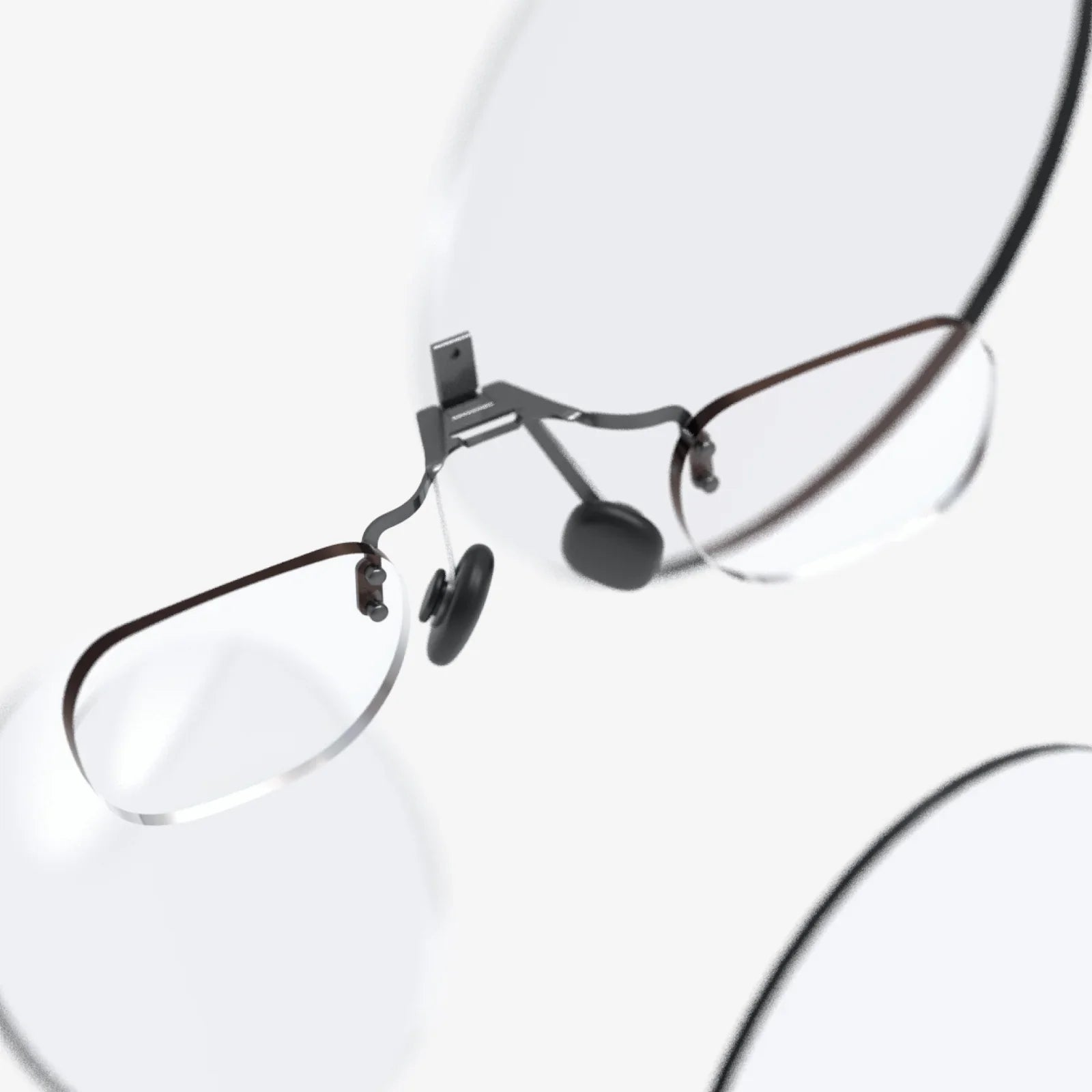
Imagine sitting in a darkened theater, the air buzzing with anticipation. The screen flickers to life, and as you slip on a pair of seemingly simple glasses, the world before you transforms. Flat images erupt into a breathtaking landscape of depth and dimension, pulling you into the heart of the action. This is the magic of 3D eyeglasses, a technological marvel that has revolutionized how we consume visual media. But these devices are far more than just a gateway to blockbuster entertainment; they are a sophisticated fusion of optical science, engineering, and creative vision, with a history as rich and layered as the images they produce. The journey of 3D eyeglasses is one of constant innovation, pushing the boundaries of perception and challenging our very understanding of sight.
The Science of Sight and Stereopsis
To truly appreciate the ingenuity of 3D eyeglasses, one must first understand the biological hardware they mimic: the human visual system. Our ability to perceive depth and dimension, known as stereopsis, is a direct result of having two eyes spaced approximately two-and-a-half inches apart. This separation means each eye sees the world from a slightly different perspective. The brain is a masterful processor, taking these two distinct two-dimensional images and fusing them into a single, coherent three-dimensional picture, complete with depth, distance, and volume.
3D technology, in all its forms, works by artificially recreating this natural process. It presents a unique image to each eye, tricking the brain into constructing a three-dimensional scene from two flat sources. The core challenge, and the primary function of all 3D eyeglasses, is to ensure that each eye sees only the image intended for it. This process of delivering separate images to each eye is the fundamental principle upon which all 3D viewing systems are built. The evolution of these systems is a story of solving this challenge with ever-increasing elegance and efficiency.
A Journey Through Time: The Evolution of 3D Viewing
The concept of stereoscopic viewing is not a product of the digital age. Its roots stretch back to the 19th century with the invention of the stereoscope, a handheld device that presented two nearly identical photographs, one to each eye, creating a compelling illusion of depth. This was the precursor to all modern 3D eyeglasses. The 20th century saw this technology leap onto the silver screen, with various waves of 3D cinema captivating and sometimes nauseating audiences.
The earliest and simplest method used anaglyph technology. This involved encoding the two perspectives necessary for 3D using color filters. The left-eye image is printed or projected in one color (typically red), and the right-eye image in a complementary color (typically cyan). The viewer wears passive eyeglasses with corresponding colored lenses. The red lens filters out the red part of the image, allowing only the cyan image to be seen by the left eye, and vice versa. While inexpensive and easy to implement, anaglyph systems are notorious for their poor color fidelity and potential for visual fatigue, as the color filtering can cause retinal rivalry where the brain struggles to reconcile the conflicting color information.
The quest for a higher-fidelity experience led to the development of polarized 3D systems. This method uses light's wave property: polarization. The two images are projected onto the screen simultaneously using light polarized at different angles—often one image with light polarized at 45 degrees and the other at 135 degrees. The passive eyeglasses worn by the viewer have lenses that are polarized to match. Each lens acts as a filter, allowing only light waves oscillating in its specific orientation to pass through. This ensures the left eye sees only the left perspective and the right eye the right, with minimal crosstalk or color distortion. This technology became the standard for modern 3D cinema, offering bright, clear, and comfortable viewing for mass audiences.
The Digital Revolution: Active Shutter Technology
As high-definition televisions entered homes, a new demand for high-quality 3D entertainment emerged. This ushered in the era of active shutter 3D systems. This technology represents a significant departure from passive methods. Instead of filtering constant light, it operates on a principle of precise timing and synchronization.
In an active shutter system, the display shows the left-eye frame and then the right-eye frame in rapid succession, typically at a high frequency of 120Hz or 240Hz to prevent flicker. The viewer wears sophisticated electronic eyeglasses. These are not simple filters; they are battery-powered devices containing liquid crystal shutters in each lens. The glasses synchronize with the display, often via an infrared or Bluetooth signal. When the left-eye image is on the screen, the left lens becomes transparent while the right lens darkens, blocking the view. In the next instant, the process reverses for the right-eye image. This happens so quickly that the brain seamlessly merges the alternating images into a continuous, fluid 3D picture.
The primary advantage of active shutter systems is their ability to deliver full high-definition resolution to each eye, as the entire screen is dedicated to one perspective at a time. This results in a exceptionally sharp and detailed 3D image. However, the drawbacks include the cost and weight of the glasses, the need for batteries and recharging, potential flicker if the synchronization is imperfect, and sensitivity to bright ambient light which can interfere with the signaling mechanism.
Beyond Entertainment: The Expanding Universe of 3D Applications
While cinema and gaming are the most visible applications, the utility of 3D eyeglasses extends far beyond leisure. They are powerful tools in numerous professional and scientific fields.
In medicine, surgeons use high-resolution 3D monitors and glasses to perform minimally invasive laparoscopic surgery. The enhanced depth perception provides a critical sense of scale and spatial relationships between organs, vessels, and instruments, increasing precision and improving patient outcomes. Medical students use 3D visualizations to study complex anatomy, gaining a more intuitive understanding of the body's structure than flat textbooks or screens could ever provide.
In architecture, engineering, and industrial design, 3D modeling is standard practice. Viewing these models with specialized glasses allows designers and clients to walk through virtual buildings, inspect mechanical assemblies from every angle, and identify potential design flaws long before physical construction begins. This saves immense amounts of time and resources.
Even the military and aerospace sectors utilize advanced head-mounted displays that incorporate 3D vision for piloting drones, simulating flight, and providing soldiers with enhanced situational awareness on the battlefield. The technology that begins in the movie theater often finds its most critical and impactful uses in these high-stakes environments.
The Viewer Experience: Comfort, Accessibility, and Challenges
Despite the technological wonders, the experience of wearing 3D eyeglasses is not universally perfect. A significant portion of the population experiences discomfort, ranging from mild eye strain to severe headaches and nausea, a condition often referred to as cybersickness. This is usually caused by a conflict between the visual system perceiving motion and depth and the vestibular system in the inner ear sensing that the body is stationary. Vergence-accommodation conflict is another key issue: our eyes naturally converge (cross) and their lenses accommodate (focus) on objects at different distances. With 3D screens, the eyes converge on a virtual object that appears to be in front of or behind the screen, but must still focus on the physical screen itself, creating a sensory mismatch that can cause fatigue.
Furthermore, accessibility remains a concern. Individuals with visual impairments in one eye, or those with conditions like amblyopia (lazy eye) or strabismus (crossed eyes), may be unable to perceive the 3D effect at all, as it relies on binocular vision. The industry continues to research and develop new display technologies, like autostereoscopic displays that don't require glasses, to overcome these hurdles and make 3D experiences more comfortable and inclusive for everyone.
The Future is Clear: What Lies Ahead for 3D Vision?
The future of 3D eyeglasses is inextricably linked to the future of virtual reality (VR) and augmented reality (AR). While current consumer VR headsets are essentially sophisticated, head-mounted 3D displays, the goal is to make the technology smaller, lighter, and less obtrusive. The holy grail is a pair of eyeglasses that look no different from standard prescription eyewear but can seamlessly switch between AR overlays, VR immersion, and clear normal vision.
Advancements in light-field technology and holography promise to solve the vergence-accommodation conflict by creating light fields that more accurately mimic natural vision, allowing the eyes to focus naturally at different depths within the image. Nanotechnology and new metamaterials could lead to lenses that can dynamically control light polarization and focus without the need for bulky components. As these technologies mature, the distinction between the digital and physical worlds will continue to blur, with 3D eyeglasses acting as our primary lens to a new layered reality.
The humble 3D eyeglass, often taken for granted as a mere accessory, is a testament to human ingenuity. It is a key that unlocks a deeper layer of reality, transforming pixels and light into immersive worlds of wonder. From the simple red-and-blue filters of the past to the synchronized electronic shutters of the present and the holographic waveguides of the future, these devices continue to evolve, pushing the limits of our perception and forever changing how we see, work, and play. The next dimension of sight is already being crafted, waiting for us to put on our glasses and see it clearly.
Share:
How Does Smart Technology Work: Demystifying the Invisible Intelligence of the Modern World
2D to 3D Video Converter APK: Unlocking a New Dimension in Mobile Viewing