


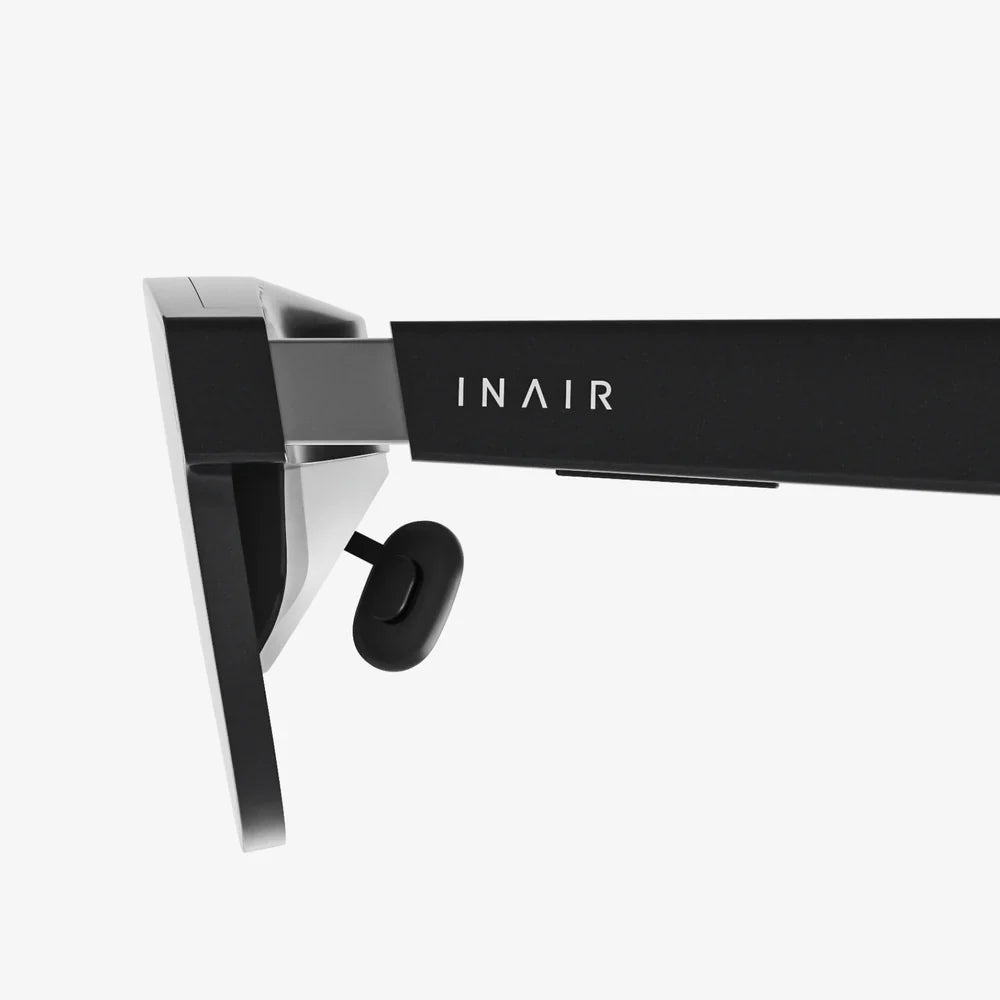
Imagine slipping on a pair of seemingly ordinary glasses and being instantly transported into a world where images leap from the screen with breathtaking depth and realism. This is the magic promised by 3D glasses technology, a field that has evolved from simple colored cellophane to sophisticated electronic systems, fundamentally altering our cinematic, gaming, and even professional experiences. The journey from novelty to nuanced technology is a fascinating tale of physics, physiology, and innovation, creating windows into worlds that feel tangibly close yet remain tantalizingly out of reach.
The Foundation: How We Perceive Depth
To understand how 3D glasses work, one must first grasp the fundamentals of human depth perception. Our ability to see the world in three dimensions is a sophisticated biological trick. The key lies in stereoscopy—the process of creating the illusion of depth from two flat, two-dimensional images.
Humans have binocular vision, meaning we use two eyes, spaced approximately two and a half inches apart. This separation means each eye sees a slightly different view of the same object—a phenomenon known as binocular disparity. Your brain is a masterful processor; it takes these two distinct two-dimensional images, compares them, and calculates the differences to construct a single, coherent three-dimensional picture with depth and volume. This process is called stereopsis. 3D glasses technology artificially recreates this natural process by presenting a unique image to each eye, tricking the brain into perceiving depth where none physically exists on the flat screen.
A Spectrum of Solutions: The Different Types of 3D Glasses
The core principle of delivering a separate image to each eye has been achieved through several distinct technological pathways, each with its own advantages, drawbacks, and applications.
Anaglyph 3D Glasses: The Classic Red and Cyan
The oldest and most universally recognized system is the anaglyph. These are the iconic glasses with one red lens and one cyan (or blue) lens. The technology is brilliantly simple. The 3D content is prepared by superimposing two images of the same scene, each filtered in a different color—typically one in red and one in cyan. The red lens on the glasses filters out the red part of the image, allowing only the cyan image to pass through to that eye. Conversely, the cyan lens filters out the cyan image, allowing only the red image to reach the other eye. The brain then fuses these two color-filtered, offset images into a single grayscale or color-manipulated 3D picture.
While incredibly affordable and compatible with virtually any display, anaglyph technology suffers from significant color distortion and visual fatigue, limiting its use primarily to novelty items and low-budget productions today.
Polarized 3D Glasses: The Cinema Standard
This is the technology that brought 3D back to mainstream cinemas. Polarized glasses use the principles of light wave orientation. Normal light waves vibrate in all directions. A polarizing filter only allows light waves vibrating in a specific direction to pass through—like sliding a letter through a mail slot.
In a modern cinema, the projector displays two images simultaneously onto the screen, each polarized differently—one with light waves oriented vertically and the other with waves oriented horizontally (or more commonly, using circular polarization: clockwise and counterclockwise). The glasses have corresponding lenses: one lens has a filter that only admits vertically polarized light, and the other only admits horizontally polarized light. This ensures each eye sees only the image intended for it. The brain performs its usual magic, synthesizing the 3D effect.
The major advantages are that the glasses are passive (requiring no batteries or electronics), lightweight, relatively inexpensive, and provide full-color perception. The downside is that the screen must be specially treated to preserve polarization, and the viewer must maintain a fairly level head position for the effect to work perfectly.
Active Shutter 3D Glasses: The Home Theater Powerhouse
Active shutter technology represents a more complex, electronic approach. These glasses are “active” because they contain electronic components, including batteries, infrared (or Bluetooth) receivers, and liquid crystal shutters in each lens.
The display (a TV or monitor) shows the images for the left and right eyes in rapid alternation—at a very high frequency, often 120Hz or 240Hz, meaning the image switches 120 or 240 times per second. The glasses synchronize with the display via a wireless signal. When the screen displays the right-eye image, the electronic shutter in the left lens darkens, blocking the view to the left eye, and vice versa. This happens so quickly that the brain cannot perceive the flickering and instead blends the rapid succession of alternating images into a smooth, continuous 3D picture.
This method offers excellent full-HD resolution to each eye and allows for a greater range of head movement compared to polarized systems. However, the glasses are bulkier, more expensive, require charging, and can cause fatigue for some viewers due to the rapid switching. They are also susceptible to “crosstalk” or “ghosting,” where a faint image from the opposite eye is visible if the shutters are not perfectly timed.
Beyond Entertainment: The Expanding Applications of 3D Vision
While movies and video games are the most visible applications, 3D glasses technology is a critical tool in numerous professional fields.
- Medical Imaging and Surgery: Surgeons use high-resolution 3D displays to perform minimally invasive laparoscopic surgery. The depth perception provided by 3D systems offers a significant advantage over traditional 2D monitors, improving precision and reducing operation times.
- Architecture and Engineering (CAD): Professionals use 3D modeling and visualization to walk through virtual building designs, inspect mechanical assemblies, and identify potential design conflicts before physical prototypes are ever built.
- Scientific Visualization: Researchers in fields like molecular biology, geology, and astrophysics use 3D to visualize complex data sets, from the intricate structure of proteins to the vast formations of galactic clusters.
- Education and Training: From virtual dissections in biology class to immersive historical recreations, 3D technology provides powerful educational experiences that enhance understanding and retention.
The Future is Clear: Autostereoscopy and Beyond
The next frontier in 3D technology is the elimination of glasses altogether. This is known as autostereoscopy. Technologies like lenticular lenses and parallax barriers are embedded directly into the screen to direct different images to the viewer's left and right eyes without the need for headgear. While seen in some handheld gaming devices and experimental displays, widespread autostereoscopic technology for large-scale viewing remains a challenge. It often requires the viewer to be in a specific “sweet spot” and struggles to provide a consistent experience for multiple viewers simultaneously.
Future advancements may lie in light field technology and holography, which aim to recreate light fields identical to those reflected from real objects, creating a true 3D image that can be viewed from any angle without any special glasses. Furthermore, the convergence of 3D technology with Virtual Reality (VR) and Augmented Reality (AR) headsets is creating entirely new paradigms. These headsets use a form of advanced stereoscopy, presenting a unique high-resolution image to each eye to create completely immersive or augmented environments, pushing the boundaries of perception far beyond the screen.
The evolution of 3D glasses technology is a testament to our endless pursuit of richer, more immersive visual experiences. From the simple color filters of the past to the synchronized electronic shutters of the present, each iteration brings us closer to seamlessly blending the digital and physical worlds. As the line between viewer and content continues to blur, these devices will become less of a barrier and more of a gateway, offering glimpses into realities previously confined to the imagination. The next time you pick up a pair, you're not just wearing glasses; you're holding a key to another dimension.
Share:
AI Glasses Features 2025: The Dawn of Seamless Augmented Reality
Screen Projection Glasses: The Ultimate Guide to Your Personal Heads-Up Display